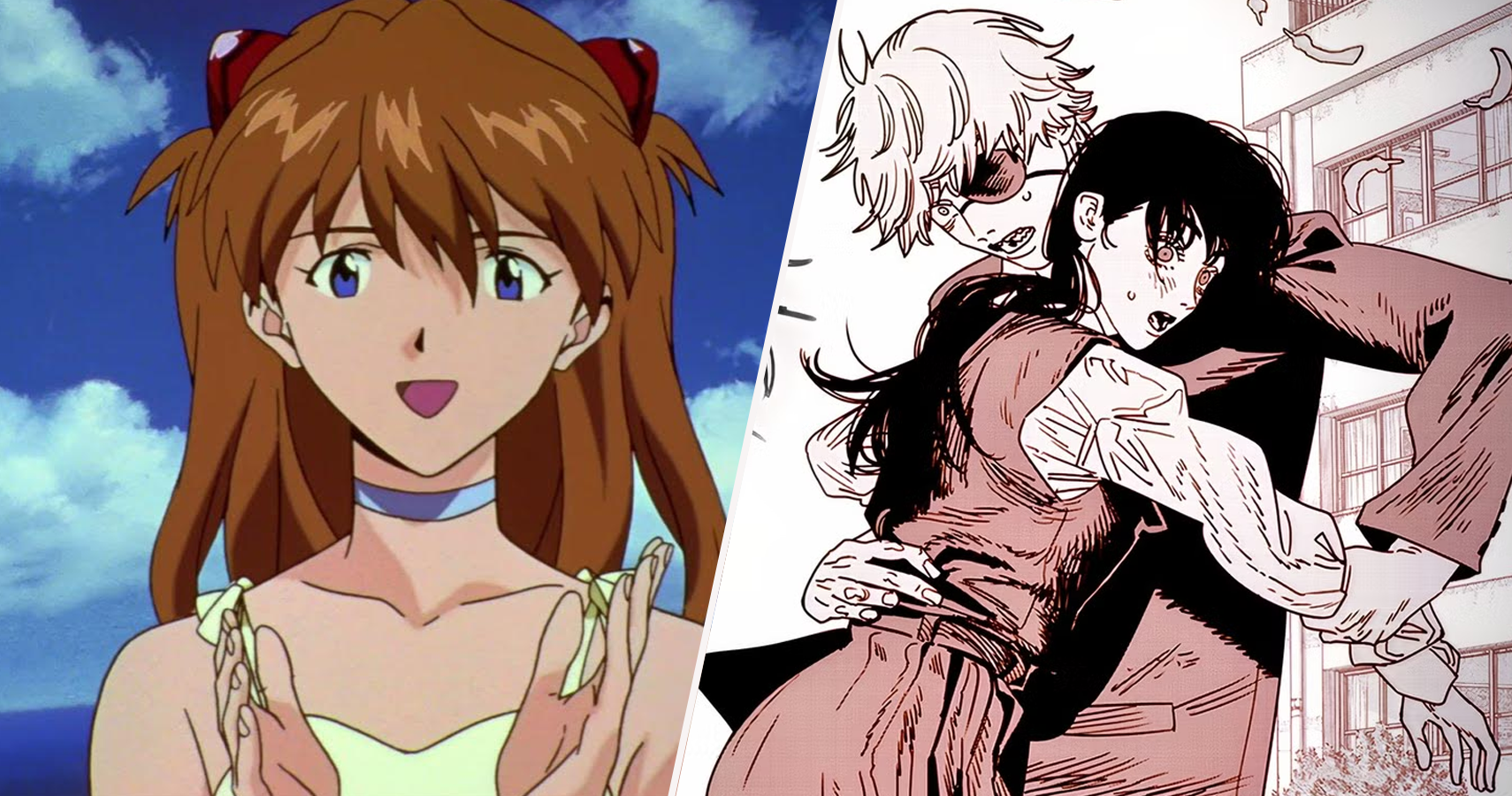
The original ending of Neon Genesis Evangelion is widely considered a brilliant achievement. Episodes 25 and 26 take a surprising turn, moving away from the plot the series had been developing. The pivotal Human Instrumentality Project happens off-screen, and the characters are forced to confront their inner selves and grapple with the meaning of life. While the ending is often confusing, unsettling, and even a bit disappointing, it’s also deeply relatable and emotionally resonant – similar to the recent conclusion of the Chainsaw Man manga.
Similar to the ending of Neon Genesis Evangelion, Chainsaw Man shifts focus away from the plot to deeply examine Denji’s character and the manga’s core ideas, revealing the author, Tatsuki Fujimoto’s, thoughts about his work. Both endings go beyond the story itself, feeling like a direct conversation between the author and the reader. While not everyone will enjoy Chainsaw Man’s conclusion, those who do will recognize how it captures a similar experience to watching the final episodes of Neon Genesis Evangelion – Episodes 25 and 26 – for a modern audience.
Chainsaw Man & Neon Genesis Evangelion Both Cut Off the Main Story to Focus on Themes
The initial ending for Neon Genesis Evangelion doesn’t have any battles or exciting events. It concentrates entirely on the psychological consequences of the Human Instrumentality Project. There isn’t a last Angel to defeat, nor a climactic confrontation between NERV and SEELE. Although End of Evangelion includes a lot of action and feels like a more conventional ending (especially in the first half), the original final two episodes of Neon Genesis Evangelion are deeply thoughtful and focus on the characters’ internal states.
Instead of continuing directly after the end of Neon Genesis Evangelion (where Shinji kills Kaworu), the story takes a surprising turn into a complex, gloomy, and unsettling conclusion. Chainsaw Man Part 2 also avoids wrapping up Denji and Yoru’s final fight or resolving the chaos of Hell opening and devils roaming a world where no one can die. Instead, Denji dies off-screen, and the penultimate chapter consists of a conversation between him and Pochita. During this conversation, Pochita explains the series’ core ideas, directly critiques Denji’s development as a character, and offers him an unusual path to finding happiness.
The ending of Chainsaw Man shares similarities with the original ending of Evangelion, though presented in a different way. Both conclusions focus on how the main characters, Denji and Shinji, have grown throughout the series, even after experiencing terrible hardships – like Denji losing Pochita and Shinji facing the end of the world. These endings are daring and make you think, leaving room for interpretation while still honoring the core themes and character development of each story, regardless of what fans might expect.
Chainsaw Man’s Ending is Metatextually About Tatsuki Fujimoto Feeling Unhappy With the Series’ Success
Just as Neon Genesis Evangelion reflected Hideaki Anno’s struggles with depression, the ending of Chainsaw Man Part 2 seems to be Tatsuki Fujimoto processing his experiences with becoming famous. In Chainsaw Man Chapter 231, Pochita directly tells Denji, “You probably realized this too. You were actually happier when you were struggling and in pain—fighting Devils… and even eating stale bread in that old shack.”
A major theme of Denji’s story in the second part of Chainsaw Man is his pursuit of recognition as Chainsaw Man, which ultimately leaves him feeling empty and wanting more. His decision to prioritize being Chainsaw Man over protecting Nayuta directly leads to her death and marks a turning point where things begin to go downhill for him. Tatsuki Fujimoto often incorporates personal experiences into his work, as seen in one-shots like Look Back and Goodbye, Eri. This suggests that his portrayal of Pochita might be a way for him to explore his own thoughts and feelings.
Although creating Chainsaw Man initially brought him joy, the series didn’t ultimately satisfy Tatsuki Fujimoto. He actually found more fulfillment and creative freedom working on his shorter stories and experimental series like Fire Punch – these projects helped him grow as an artist before Chainsaw Man became a huge success. Eventually, the demands of fame and the constant desire for more became overwhelming, leading to the story’s seemingly sudden conclusion. Ending Chainsaw Man at that point was the best decision for both the character of Denji and for Fujimoto himself.
It’s also worth considering how much pressure creating Chainsaw Man put on the author, and how that might have affected the artwork in the second part. It’s reasonable to think that working on Part 2 was draining Fujimoto, similar to how being Chainsaw Man exhausted the character Denji.
Time Will Be Kind to Chainsaw Man’s Ending & Part 2’s Storytelling
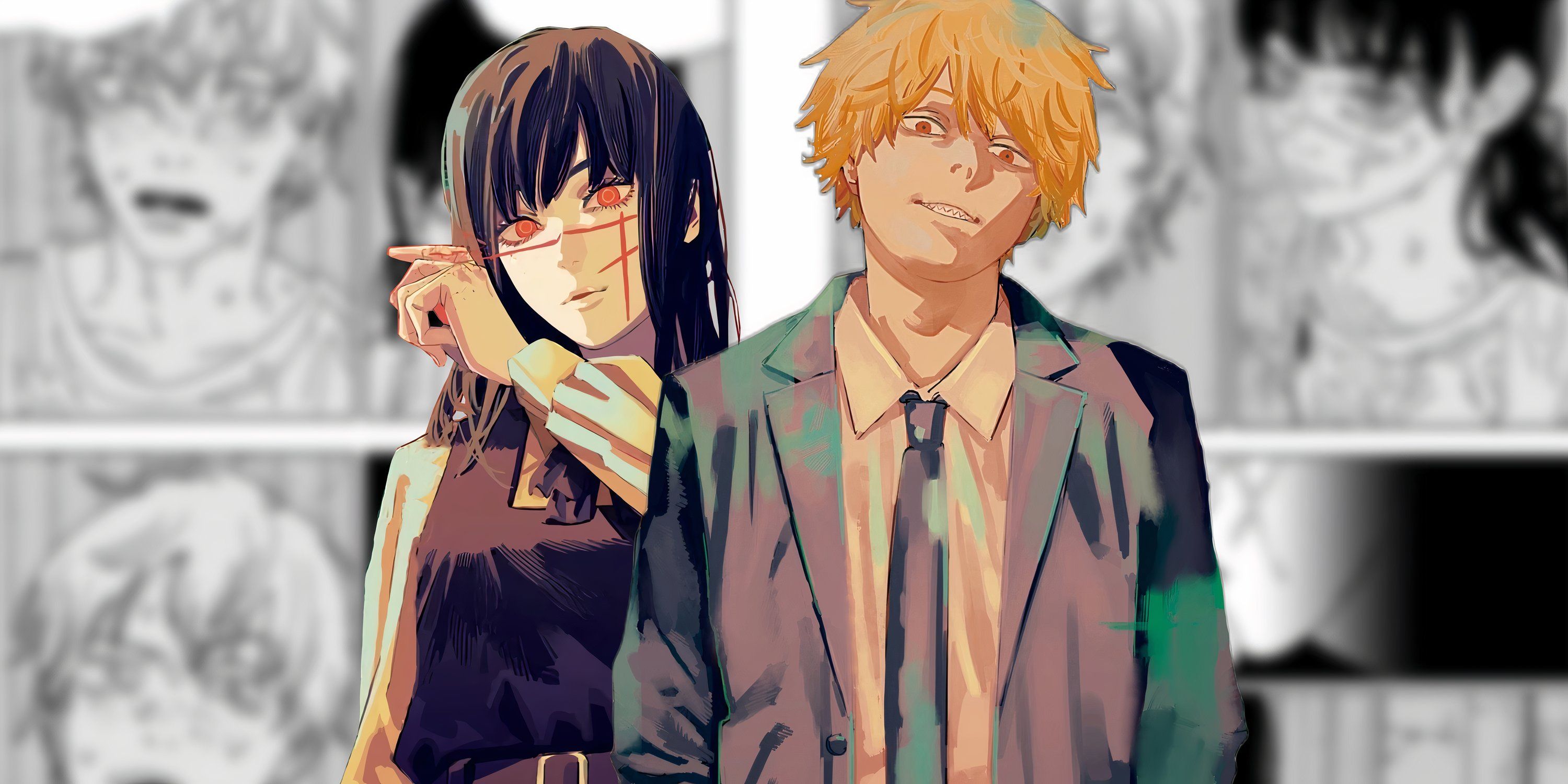
It’s inevitable that Chainsaw Man Part 2 will be measured against Part 1, often considered one of the best action manga ever made. However, Part 2 takes a drastically different approach. It initially focuses on the character Asa instead of Denji, and then dismantles everything Denji had achieved, exploring the true meaning of being Chainsaw Man as his life and the world around him crumble into complete disorder, leaving nothing worth protecting.
Despite some decline in the artwork towards the end, Chainsaw Man Part 2 is full of brilliant storytelling. It takes a very different approach from the first part, and the contrast between the characters Asa and Denji is particularly strong. Denji often acts like someone struggling with addiction, giving up positive things in his life just to transform into Chainsaw Man. Unlike Part 1, this section doesn’t shy away from showing Denji the consequences of his choices and actively challenges his desire to continue as Chainsaw Man.
Despite the dark events, Denji does develop as a character. After Nayuta’s death, he refuses to transform into Chainsaw Man again, and his resulting depression feels genuinely human, similar to the struggles of Shinji in Evangelion. With a complete re-reading, it becomes clearer what Fujimoto is accomplishing in Part 2: a story about the potential end of the world and a young man slowly succumbing to his flaws, learning only through small steps.
Watching the end of Chainsaw Man Part 2, it really struck me that Denji is capable of growth. He essentially gives up being Chainsaw Man to save Asa, and it’s not motivated by any expectation of reward – not a kiss, not even anything further. It seems to be a completely instinctive act. For a brief moment, he genuinely acts like a hero, something we hadn’t really seen before in the series. I think, similar to what happened with Evangelion, people will need time to fully appreciate Part 2. As the initial surprise fades and fans dig deeper into the themes, I believe the ending will ultimately make sense and resonate with a wider audience.
Many fans find the ending of Chainsaw Man Part 2 disappointing, but it’s definitely not badly written. Similar to Neon Genesis Evangelion, the ending is actually brilliant and designed to stay with viewers long after they finish it.
Read More
- Netflix’s Little House On The Prairie Reboot: Release Date, Cast & Everything We Know
- Off Campus Season 1 Soundtrack Guide
- YouTuber arrested after viral AI bodycam videos spark real police complaints
- Silver Rate Forecast
- Prime Video’s New R-Rated Spy Thriller Is Officially No.1 On Streaming Despite Poor Reviews
- Brent Oil Forecast
- Gold Rate Forecast
- Bulgakov’s Take: Koreans Bet the Farm on Chips, Crypto, and Chaos
- EUR ZAR PREDICTION
- Peaky Blinders: The Immortal Man’s Tommy Shelby Is a Better Father Than Michael Corleone
2026-03-25 22:08