
Do you remember the simple pleasure of exploring huge game worlds just to see what you could find? Lately, that feeling of excitement is often overshadowed by the urge to play ‘efficiently.’ Instead of truly exploring, many of us end up just following the map, turning exciting adventures into tasks to complete. This can ruin the fun, making discovering new things feel like work instead of a reward. Let’s discuss how games changed and, more importantly, how we can rediscover the joy of playing for the adventure itself.
Key Takeaways
- Recognize when play becomes a chore: If you feel anxious about playing “correctly” or guilty for not being efficient, your hobby has started to feel like a job. This pressure often comes from trying to meet community expectations or your own internal performance standards.
- Make personal enjoyment your main goal: Redefine what a successful gaming session looks like for you. Instead of chasing the meta or a perfect run, focus on what you actually find fun, whether it’s exploring, enjoying the story, or just messing around with friends.
- Take practical steps to find the fun again: You can break the optimization cycle with small, intentional actions. Check in with your mood before you play, celebrate unexpected moments instead of just flawless victories, and set boundaries with online guides or forums to protect your personal experience.
Is Your Favorite Game Starting to Feel Like a Second Job?
Have you ever felt stressed while playing a game you usually enjoy? It’s a surprisingly common experience. What starts as a fun way to relax can sometimes feel like work, with constant goals, a focus on how well you’re doing, and the worry that you’re falling behind. One Reddit user perfectly described this feeling, joking that it feels like you’ll get “fired” if you’re not treating the game like a second job. When the need to play perfectly ruins the fun, that’s a sign things have gone too far.
When you become overly focused on playing a game efficiently, it can really change your experience. The fun of exploring and discovering new things can be replaced by simply trying to complete tasks. This can make even gorgeous, expansive games feel like work, because anything that doesn’t directly help you progress feels like a waste of time. Instead of immersing yourself in the game’s world, you start treating it like a puzzle to be solved as quickly as possible.
Spending too much time trying to perfect everything in a game can actually ruin your enjoyment and lead to you getting tired of it quickly. It’s a challenge for game creators to appeal to both players who just want to have fun and those who are focused on mastering the game. However, we ultimately control how we play – whether for relaxation or to achieve the best results. If a game starts to feel like work instead of a hobby, it’s probably time to step back, rethink your strategy, and remember what made it enjoyable in the first place.
What Does It Mean to “Play Optimally,” Anyway?
Playing “optimally” simply means making the smartest choices to achieve a goal. For example, it’s like using the strongest character setup in Diablo 4, choosing the most popular weapons in Warzone, or following a guide to finish a game quest as quickly as possible. It seems logical – why wouldn’t you want to be effective? In competitive games, maximizing your performance is essential. A good strategy can mean the difference between winning and losing, and it’s really satisfying when a plan works perfectly.
Problems arise when focusing on optimization extends to all parts of gaming. It shifts from simply enjoying a game to obsessing over the fastest ways to gather resources in role-playing games or building the most effective systems in simulation games. The internet is full of guides claiming to show the “best” strategies, which can make players feel inadequate if they don’t follow them. This pressure is often slight, but it’s always present, suggesting that any time not spent maximizing progress is wasted time.
The enjoyment really begins to fade when a single-player exploration game starts to feel like a list of tasks. This happens when players become so focused on playing perfectly that they see anything else as a waste of time. Suddenly, exploring feels like an error instead of an adventure. This obsession with optimization can ruin the experience, turning a world designed for discovery into something you just need to finish. Instead of being curious about what’s around the corner, players start prioritizing the quickest way to get through each area. When efficiency becomes the main focus, we end up losing the joy that brought us to the game in the first place.
Why Do We Think Casual Gaming Is Wrong?
At some point, gaming started to become about finding the “best” way to play. Now, there’s a belief that you’re not playing correctly unless you’re using guides, understanding advanced strategies, and maximizing your efficiency. This makes simply relaxing and enjoying a game – or exploring its world – feel almost like something you shouldn’t be doing. This pressure doesn’t just come from other players; it often comes from ourselves, as we start to think our free time needs to be productive, turning fun into another chore.
Gaming is changing, and not necessarily for the better. It’s moving away from being a simple pastime and becoming something we feel pressured to excel at. Instead of just enjoying ourselves, we start measuring our fun by how much we achieve – like beating levels quickly or making perfect character choices. This can be draining and defeats the original purpose of gaming: to relax and have fun. It’s easy to fall into this mindset, and it can turn even enjoyable games into stressful tasks. Let’s explore why this pressure exists and how it makes us feel like playing casually is wrong.
The Guilt of “Wasting Time”
Do you ever feel a little guilty about simply exploring a game world instead of focusing on the main tasks? It’s a common feeling. Many of us have been taught that time spent not achieving something concrete is time wasted. This idea is so strong that some players even describe enjoying the world of a game like Breath of the Wild as feeling like a task they have to do. We’ve become used to thinking anything that isn’t the fastest way to progress is a waste of time, even when playing a game just for fun, where speed doesn’t matter. This can turn gaming – which is meant to be a relaxing escape – into just another set of obligations, taking away the freedom and enjoyment it should offer.
When Your Playstyle Is Labeled “Wrong”
The gaming community is fantastic, but it can also be surprisingly stressful. Players often feel pressured to use the best possible equipment or characters in games like Warzone, and those who choose different options might face criticism. This can lead to a situation where enjoying a game your own way feels less acceptable than simply following what everyone else considers the ‘right’ strategy. Game developers struggle to create balanced experiences for all players, but the community often establishes strict rules that discourage casual or creative approaches to gameplay.
The Myth That Fun and Efficiency Are the Same Thing
We’re often told that the fastest way to do something is always the most enjoyable, but that’s not necessarily true. Consider a game like Stardew Valley – you’re essentially doing repetitive tasks like farming and fishing, yet players find it incredibly fun. The enjoyment comes from how you play, not just from achieving the goal. When we become overly focused on being efficient, we can turn games we love into boring checklists. This obsession with optimization can actually ruin the fun, replacing genuine enjoyment with a cold, calculated drive for perfection. Ultimately, fun is personal, and some of the best gaming moments happen when you forget about the ‘best’ way to play and simply do what feels right.
How Did Games Become Performance Reviews?
Over time, the way we discuss games has changed. We now often use terms like “efficiency” and “optimal strategies,” making our hobby feel more like a job than a relaxing pastime. There’s a growing pressure to perform perfectly, even when playing alone, and we’ve started measuring our enjoyment with performance metrics. While it’s a small shift, it significantly impacts how we experience games, blurring the line between play and work.
We’re often told how to play games ‘correctly’ through guides, rankings, and detailed analysis, which can stop us from figuring things out on our own. Discussions tend to focus on winning strategies rather than pure enjoyment. This makes it feel risky to try something different, like it’s a mistake to not follow the popular trends. Let’s explore how this pressure affects our gaming, from the characters we pick to the parts of the game we decide to skip.
The Pressure to Make Every Move Count
Do you remember the simple pleasure of wandering around a huge game world, just exploring? These days, that feeling of freedom is often overshadowed by the worry that you should be doing something specific. We’ve become so focused on playing efficiently that anything that doesn’t feel productive can seem like a waste of time. Some players even describe exploring a game like Breath of the Wild as a “chore” because they feel they should be accomplishing more. When getting somewhere quickly matters more than enjoying the journey, a game stops feeling like an adventure and starts to feel like a to-do list. This is particularly true in competitive games, where having the best equipment in Warzone can sometimes feel more important than simply having fun with friends.
Choosing Your Character: Data vs. Heart
It’s a common struggle: do you choose a character you genuinely enjoy, or the one that’s statistically the best? We’ve all faced that dilemma. Sometimes we’re drawn to a character’s appearance, story, or how they play, but others consider them weak. This can make us question our own preferences. One player, discussing the card game Magic: The Gathering, wondered if others valued a card’s art and theme more than its effectiveness, even admitting they disliked the artwork on a powerful card. This highlights how important personal connection is. Choosing a less popular or supposedly ‘weaker’ character can feel like going against the grain, but it’s often where you find the most enjoyment. Ultimately, it’s about playing the game you want to play, not the one that’s dictated by data.
Skipping the Story to “Progress” Faster
Many players see a game’s story as something to get through quickly in order to reach the more engaging, long-term gameplay. They often skip conversations, cutscenes, and background information, prioritizing faster progression. As one Reddit user put it, if you’re not immediately skipping text to maximize efficiency, you’re playing it wrong. However, by treating the narrative as an inconvenience, we miss out on the detailed and immersive worlds that developers work so hard to build. The story, characters, and music are what truly make our actions feel meaningful, and rushing through them can leave the game feeling empty and unsatisfying.
What Happens When Efficiency Trumps Fun?
Gaming should be fun, but it can start to feel like work when winning becomes more important than actually enjoying the experience. This doesn’t happen all at once; it gradually happens as you start focusing on strategies, looking up information online, and comparing yourself to others. Eventually, you might realize you’re just going through the motions instead of having fun.
As a gamer, it really bothers me when people get too focused on being efficient in a game. It just sucks the fun out of everything! Instead of getting completely absorbed in the story and world, you’re constantly thinking about the quickest way to finish things. I used to love trying out weird and wonderful character builds, but now it feels like you have to use the ‘best’ one, even if it’s boring, because everyone says it’s the most effective. Suddenly, every time you play feels like a test, and that carefree, joyful feeling is gone, replaced by just going through the motions. Let’s talk about what happens when winning becomes more important than actually enjoying the game.
You Miss Out on Exploration and Discovery
Do you remember the joy of discovering a hidden cave or a secret story while exploring a game? That feeling of wonder often disappears when games focus too much on efficiency. If you’re always trying to level up or finish quests as quickly as possible, exploring anything off the beaten path can feel like a waste of time. This can lead to players describing even amazing games, like Breath of the Wild, as being full of tedious tasks – simply because they’ve been trained to think anything that isn’t the fastest route is a waste.
Thinking this way causes you to overlook the careful work developers put into games. You could miss funny conversations with characters, beautiful scenery, or interesting side stories that make the game more engaging. Instead of feeling like a vast, open world, the game starts to feel limited and straightforward.
The Burnout from Constant Performance Pressure
It’s draining to approach every gaming session as if you’re being evaluated. Constantly striving for perfect performance – whether it’s a high kill-to-death ratio or a smooth strategy in a game – can quickly lead to burnout. When every error feels like a setback and losing spoils your whole night, it takes the fun out of playing. This is particularly true when you feel hurried, as rushing to make the best moves often results in more mistakes and frustration.
Constantly aiming high and then feeling let down can make you avoid gaming altogether. What used to be relaxing now feels stressful. It’s important to have a positive attitude while playing, but don’t push yourself too hard. If you feel relieved rather than happy when you finish playing, it could mean the pressure to do well is ruining the enjoyment.
When Spreadsheets Replace Spontaneity
It’s easy to get carried away with planning and strategizing in a game, sometimes to the point where it overshadows the actual playing. You might end up spending more time researching online – comparing numbers and watching guides – than actually experiencing the game. While getting prepared can be enjoyable, it becomes an issue when it removes all the fun of figuring things out for yourself. Instead of creatively solving challenges, you’re just following a set of instructions.
I’ve noticed a lot of games these days are designed to really hook you in by constantly giving you rewards and making you feel like you’re always moving forward, and it’s surprisingly easy to get caught up in that. It’s almost scary how effective it is – I recently read that some players will actually defend the way a game is trying to get them to keep playing! I realized I was doing it myself when I started looking up stats and refusing to try something new just because a guide said it was slightly worse. It’s like I was letting numbers tell me what to enjoy, and trading actually playing the game for just chasing the best possible outcome. It’s a weird feeling!
How the Community Shapes the Way You Play
Even if you’re playing by yourself, you’re still part of a larger gaming world. Players are always connecting online – sharing thoughts on Reddit, making guides on YouTube, and discussing strategies on Discord. This creates a shared understanding and culture around each game, influencing how people think it’s best played. Often, this is a great thing! You can easily find helpful information, like the best weapons setup for a game like Warzone or advice on defeating a difficult enemy.
Constantly seeing how others play can create a quiet pressure to play a game in a specific way. What was once about having fun can shift to worrying about whether you’re playing ‘correctly’ or efficiently, based on what the community expects. This can turn a relaxing hobby into something you feel you need to perfect, and it happens subtly. The gaming community has a strong influence, and you might not even realize how much it’s changing the way you play.
The Unspoken Rules of “Proper” Gaming
If you visit any online gaming community, you’ll quickly discover a set of unwritten expectations. These are the standards players set for each other, defining how the game should be played. As one Reddit user put it, some players treat gaming like a full-time job, believing anything less is a failure. This shows how many gamers feel every second must be used perfectly. There’s a pressure to play with precise, calculated steps, almost like a robot following a program. While these rules usually come from the most hardcore players, they can make more casual gamers feel inadequate or like they’re not measuring up.
Dealing with Judgment for Your Playstyle
Breaking unwritten rules in games can lead to criticism from other players. This can create pressure, making you doubt your decisions and feel bad for playing the way you enjoy. For instance, some players of games like Breath of the Wild have found that exploring, which should be fun, started to feel like work. This happened because the community prioritized playing efficiently, leading them to view any action that wasn’t the fastest or most effective as a waste of time. It’s a common problem where the enjoyment of a game is ruined by an obsession with being productive. Your own experience gets labeled as slow or wasteful, and ultimately, the fun disappears.
The Meta vs. Your Personal Favorites
There’s a constant push and pull between playing to win and playing for fun. You often face choices like picking a character based on their strength versus their appearance, or choosing a powerful weapon over one you simply enjoy using. This is a common issue in many games, as players debate whether to prioritize effectiveness or personal preference – a recent discussion among Magic: The Gathering players highlighted this very struggle. Ultimately, you have to decide if you want to win at all costs, or if you value having a more enjoyable and personal experience.
The Breaking Point: When Optimization Is Just Self-Sabotage
It’s easy to slip from enjoying a hobby to feeling stressed about being perfect at it. We often don’t even notice when we start obsessing over finding the best strategies or maximizing efficiency. When this happens, it starts to ruin the fun – the whole reason we play in the first place. This is when trying to master a game actually makes it less enjoyable. You might find yourself so focused on numbers and optimization that you forget why you started playing. It’s not about being good or bad at the game; it’s about prioritizing results over your own enjoyment. Seeing top players and guides that focus on ‘the best’ way to play can create pressure to always be improving. We start to feel like any time not spent optimizing is wasted. This can turn a relaxing hobby into another source of anxiety, where the fear of making mistakes overshadows the simple pleasure of playing. The game stops being an escape and starts feeling like a challenge to overcome, a test to pass. And when that happens, we’ve completely missed the point – we’ve turned something we love into just another task to perform.
You Spend More Time Planning Than Playing
Do you ever find yourself spending more time preparing to play a game – like endlessly researching the best settings for Warzone or carefully planning a Diablo 4 dungeon – than actually playing it? When the time spent getting ready feels like more than the fun you have, it’s a sign you’ve become too focused on optimizing everything. Game developers already have a tough job balancing games for all types of players. But when we approach every game as if it’s a test, we create unnecessary pressure and competition, even when we just want to relax. It stops being about enjoying the game and becomes about mastering the idea of the game.
The Irony of Optimizing the Fun Out of Gaming
It’s ironic that when we try to enjoy games to the fullest, we often end up ruining what makes them special. We start seeing amazing game worlds not as places for adventure, but as lists of tasks to complete as quickly as possible. One writer noted how absurd it is when players call exploring in Breath of the Wild a “chore” just because it doesn’t help them progress fastest. This way of thinking turns exciting discoveries into simple tasks and adventures into checklists. We’ve begun to make games less fun by treating them like puzzles to solve instead of experiences to enjoy. If you’re more concerned with having the perfect farm layout in Stardew Valley than enjoying the town festival, you’ve fallen into the trap of optimizing the joy out of the game.
Games That Nail the Balance: Strategy Without the Stress
It’s common for games to feel demanding, but the best ones strike a great balance. They offer complex and interesting gameplay without overwhelming you with rules or requiring perfect strategy. These games let you enjoy yourself in your own way – whether you prefer carefully planning everything or simply exploring and relaxing. They show that a game can be truly satisfying even if you don’t always play perfectly.
What really makes these games special is how they handle player choice. They give you the tools to plan and strategize, but they don’t penalize you for being creative or for exploring the world instead of just trying to be efficient. Here are a few games that get this balance just right.
For the Explorers at Heart
Some games prioritize the experience of exploring and discovering things, making the journey more important than reaching a specific goal. Games like The Legend of Zelda: Tears of the Kingdom and Elden Ring are good examples. While it’s possible to find guides that show you the fastest way to get powerful items, these games are designed to encourage you to wander and get lost. Finding a secret cave or running into an unexpected enemy is often the best part. This is different from how many players think, where they feel like any time spent not playing perfectly is wasted, even when playing alone. These games offer a world to play with, and reward you for being curious and exploring just as much as for being skilled in combat.
Cozy Strategy That Respects Your Pace
Games like Stardew Valley and Animal Crossing: New Horizons have mastered the cozy strategy genre. They offer plenty of strategic choices – deciding what to grow, how to organize your space, or who to befriend – but without any real pressure. You can’t really fail, which makes the strategy feel relaxing and enjoyable, rather than stressful. You’re free to focus on things like decorating at your own pace, and the game won’t penalize you for it.
Games That Let You Choose Your Challenge
Many newer games let players customize their experience to fit their skill level and preferences. Games like Baldur’s Gate 3 and Diablo 4 are good examples of this. You can create incredibly detailed characters and tackle tough challenges, or focus on the story and enjoy a more relaxed playthrough. These games offer adjustable difficulty and interesting gameplay, making them fun for both dedicated players who love to optimize everything and those who just want a casual adventure. Ultimately, you control how challenging and engaging the game is.
Why a “Good Enough” Mindset Is Actually Better
It feels strange to stop striving for perfection, especially in games filled with scores and stats. But aiming for ‘good enough’ isn’t about lowering your standards; it’s about enjoying the game again and remembering why you started playing. It’s finding a balance between being challenged and avoiding frustration, allowing you to play well without losing the fun. When you’re overly focused on perfect scores or stats, gaming stops feeling like a hobby and starts feeling like a job.
Letting go of the need to be perfect or have the best equipment can actually make gaming more fun and rewarding. It allows you to be creative, bounce back from setbacks, and enjoy the spontaneous moments that make games so special. Those funny mishaps and unexpected wins are often the most memorable parts – the stories you’ll share with friends. Focusing less on achieving perfection helps you avoid burnout and keeps gaming a relaxing hobby instead of a stressful obligation. It’s like switching from a serious competition to simply playing for the joy of it.
Embrace a More Flexible Approach
If you find yourself stuck repeating the same actions to try and improve, you’re likely just following a rigid plan. You stick to what you think is the ‘best’ way to do things, based on calculations or data, instead of exploring other options. A better approach is to be more open to experimentation. Try unusual strategies, choose options that seem interesting even if they aren’t ‘optimal,’ and see what happens when you break away from the usual routine.
Having this approach lets you play the game however you want. Game developers frequently create systems that try to guide you down a certain path. When you resist that and forge your own way, you can uncover unique strategies and feel genuinely rewarded by your decisions – not just by perfectly following someone else’s instructions.
Make Personal Enjoyment Your Main Goal
What truly feels like “winning” when you play a game? If you immediately think of dealing the most damage or finishing as quickly as possible, it’s worth considering a different approach. When you prioritize being efficient above all else, you can lose sight of what makes gaming enjoyable. For example, some players have described exploring the vast and stunning world of Breath of the Wild as a tedious task simply because it’s not the quickest way to achieve goals. This shows that the emphasis has moved from enjoying the experience to simply completing it.
Focus on having fun while you play. Don’t feel pressured to skip parts of the game you enjoy, like story scenes. Play as characters you like, even if they aren’t considered the strongest. If competitive gaming is getting you down, switch to games that are more relaxed and story-driven, such as Stray or Portal. Ultimately, play games in a way that makes you happy.
How to Shift from Optimization to Enjoyment
It might take a little effort to stop focusing on being perfect, but it’s definitely possible. The key is to remember why you started doing something in the first place – for enjoyment! If a game you love has begun to feel like work instead of fun, here are some simple ways to rediscover the joy.
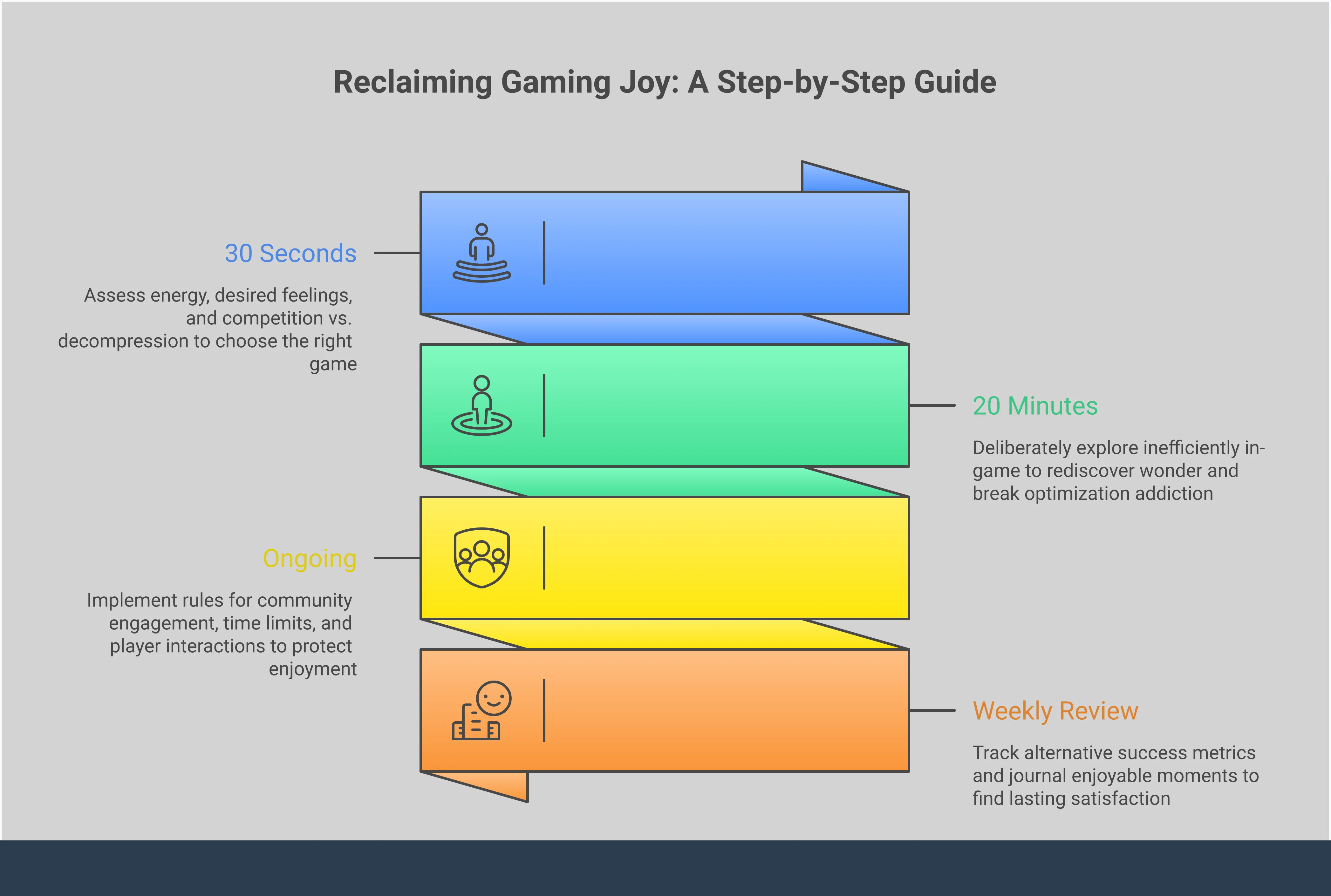
Check In with Yourself Before You Play
Before starting a game, quickly think about what you hope to get out of it. Do you want to relax, or are you ready to compete seriously? If you’re tired or in a hurry, playing a challenging match will likely just be frustrating. Trying to play your best when you’re not feeling up to it usually leads to errors and can ruin your mood. Paying attention to how you feel helps you pick the right game or activity, so you end up feeling good after playing, not discouraged. Being a good player means knowing when to focus and when to just have fun.
Celebrate Small Wins, Not Perfect Runs
Do you remember when getting lost in a game felt exciting? Lately, some players focus so much on being efficient that exploring feels like a task. We’ve seen people online complain that discovering things in games like Breath of the Wild feels like “work” if they aren’t following the fastest route. This shows how we’re sometimes losing the fun in games. Try to stop worrying about playing perfectly. Instead, enjoy the little surprises and unexpected moments. Take time to admire a beautiful view, chuckle at a funny character, or feel good about solving a puzzle, even if it took you a while. These are the things that make games truly special, not just finishing quickly.
Set Boundaries with the Gaming Community
The gaming community is fantastic, but it can sometimes feel stressful. If you’re constantly concerned about what others think of your choices – like your character or how you play – it’s hard to enjoy yourself. It’s perfectly fine to take a break! You don’t need to follow every guide or watch every streamer to be a true fan. Feel free to block players who are negative, leave groups that make you feel judged, or just play the way you want to, even if it’s not what’s popular. Using a unique or unconventional setup in games like Warzone can be much more fun than forcing yourself to use something you dislike. Remember, your gaming experience is personal, so prioritize having fun and protect it from negativity.
Find What “Fun” Means to You
It really boils down to remembering what you find fun. Game designers are skilled at keeping you playing for hours, often with rewards that don’t actually feel satisfying. Take some time to consider what genuinely makes you happy when you play. Do you enjoy the story, connecting with friends, being creative, or the excitement of competition? There’s no right or wrong answer – just be honest with yourself. This will help you focus on what you love, instead of getting caught up in the game’s attempts to make you chase meaningless goals. Take back control of your gaming and make it truly enjoyable for you.
Related Articles
- Deus Ex LFG: Connect with Other Augs in LFG Feature on Z League App
Frequently Asked Questions
Honestly, I don’t think it’s wrong to want to get good at a game. There’s a huge difference between trying to improve and feeling like I have to be perfect. I love learning new strategies or getting really good with a character I like. But it’s no fun when the pressure to be flawless ruins the experience, and I end up stressing about how I’m doing instead of actually having fun. It’s supposed to be a game, you know?
It all sounds good, but how do I get back to enjoying games? A good way to start is to pick a game and deliberately do something that isn’t about winning or being the best. Maybe choose a character you like even if they aren’t considered powerful, or just spend a session exploring an area you’ve never bothered with before. The idea is to stop focusing on how well you’re doing and remember what it’s like to play just for fun, without any specific goals.
That’s a good point – that advice works well for games focused on story, but what about competitive games where understanding the best strategies is key? You’re right, the pressure is different in competitive games. However, you still have control over how you approach them. You can choose to have fun by playing with positive friends, emphasizing teamwork instead of personal performance, or experimenting with unusual strategies in relaxed matches. Ultimately, it’s about deciding what ‘winning’ means to you. Sometimes, winning simply means having a good time with your teammates, no matter the outcome.
It’s frustrating when your friends are focused on competitive strategies and you just want to have fun. To avoid feeling like you’re letting the team down, be honest with them. You could say you’re looking for a relaxed gaming session and want to try a playful build. Or, suggest switching to a different, more casual game sometimes. Remember, gaming with friends should be enjoyable, not stressful!
It’s fair to ask if game designers are responsible for creating games that feel like endless tasks. There’s definitely something to that – many games are designed to keep us striving for more. But ultimately, we control how we play. If you realize a game is just a series of things to check off, you can choose to ignore that and simply enjoy the aspects you find fun, like the story, the game world, or playing with friends.
Read More
- Off Campus Season 1 Soundtrack Guide
- Euphoria Season 3’s New R-Rated Sydney Sweeney Scene Proves The Show Is Trolling Us
- Gold Rate Forecast
- All Golden Ball Locations in Yakuza Kiwami 3 & Dark Ties
- DoorDash responds after customer uses AI to make food look bad and get a refund
- Jon Bernthal Explains Why Marvel Let Him Make The Darkest Punisher Story Ever
- Dutton Ranch Review: Paramount+’s New Western Takes All The Best Parts Of Yellowstone & Makes Them Better
- The 2026 Cannes Film Festival Standing-O-Meter
- Bitcoin Risk Appetite Collapses: Altcoin Season Over as Institutions Flock to BTC
- Uncovering Financial Fraud with the Power of Networks
2026-03-19 16:53