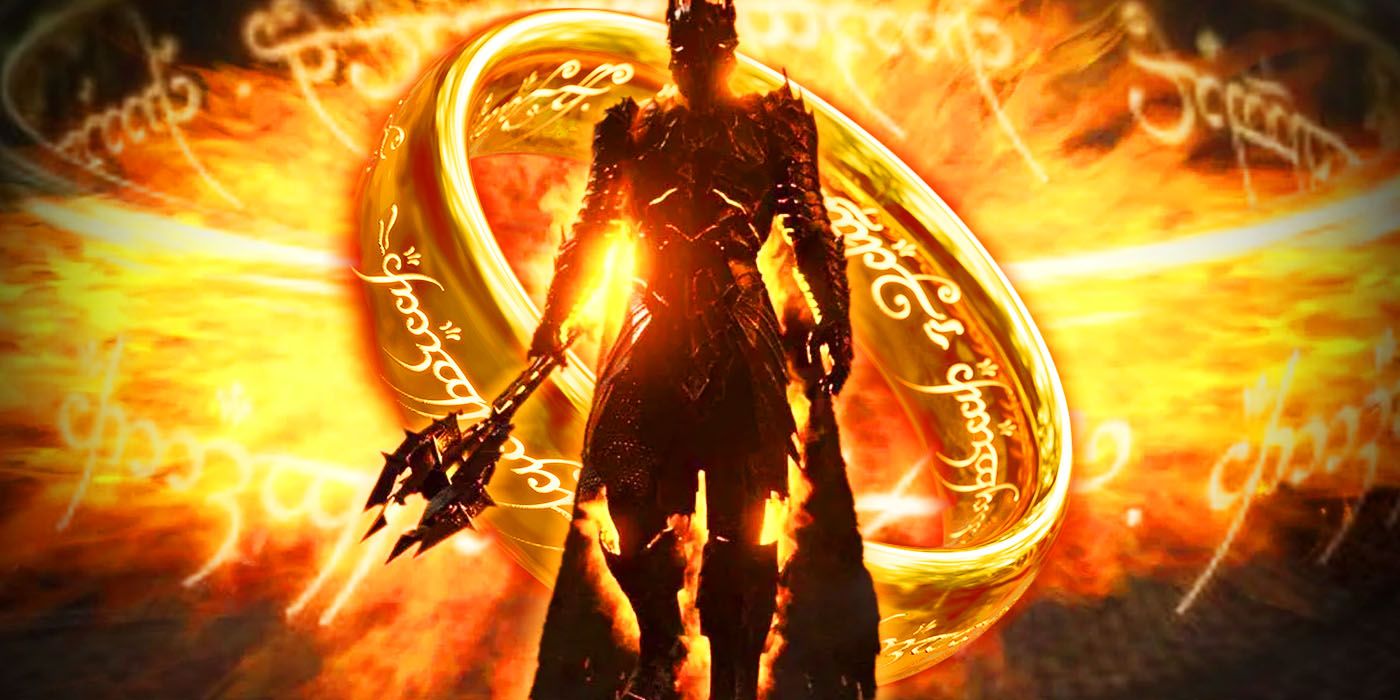
The One Ring was a supremely powerful object created by the Dark Lord Sauron. It allowed him to control those who wore the other Rings of Power and also made its wearer invisible – figures like Isildur, Bilbo Baggins, and Frodo Baggins all used it this way. However, the Ring was incredibly corrupting, subtly influencing people by exploiting their desires and leading them towards evil. Crucially, the Ring was directly tied to Sauron’s life force; he poured a part of his immortal spirit into it. This meant Sauron could never be truly defeated as long as the Ring existed. Though his physical form was destroyed multiple times – famously when Isildur cut the Ring from his hand – he could always rebuild and continue his quest to conquer Middle-earth. In The Lord of the Rings, the Council of Elrond decided the only way to end Sauron’s rule was to destroy the One Ring. Through the efforts of the Fellowship, the Free Peoples of Middle-earth, and even Gollum’s accidental intervention, the Ring was finally cast into the fires of Mount Doom, stripping Sauron of his power for good.
The One Ring has become a pop-cultural icon, especially in its depiction in Peter Jackson’s film adaptations of The Lord of the Rings and The Hobbit. But deep within Tolkien’s lore was another, more powerful “ring.” It belonged not to Sauron but to his master: Morgoth, the original Dark Lord. Throughout the 1980s and 1990s, Tolkien’s son, Christopher, collected much of his father’s unpublished Middle-earth lore in a series of twelve volumes called The History of Middle-earth, and the tenth volume was titled Morgoth’s Ring. This book covered several topics, but the one for which it was named was a dark truth about The Lord of the Rings‘ setting. Morgoth did not literally possess a magical ring; the Rings of Power were strictly Sauron’s inventions, and he did not create them until long after his master’s defeat in the War of Wrath. Rather, Christopher drew the title from a metaphor that his father had used in one of his essays, “Notes on Motives in The Silmarillion.” In this essay, Tolkien wrote that “the whole of Middle-earth was Morgoth’s Ring.”
Morgoth Permanently Corrupted The Lord of the Rings’ World
The idea of Middle-earth being shaped by the evil spirit Morgoth comes from the earliest stories of Tolkien’s world, found in The Silmarillion. Tolkien’s universe was created by a supreme being named Eru Ilúvatar, who enlisted the help of powerful spirits called the Ainur. Morgoth, originally known as Melkor, was one of these spirits, but instead of working with Ilúvatar, he craved power and tried to create a universe reflecting his own dark desires. He essentially poured a part of himself into the world, corrupting it with his malice – much like Sauron did with the One Ring. This was Tolkien’s way of exploring the classic question of why evil exists if the creator is good. In Tolkien’s stories, Morgoth represents the source of that evil, twisting what was once a perfect world.
Morgoth, a powerful evil being, created many terrible things to plague Middle-earth, including monsters, devastating weather, and, most importantly, the fear of death for humans. While death was originally intended as a special ability for humans – a ‘Gift’ from Ilúvatar, allowing them to leave the world when their time came, unlike the immortal Elves – Morgoth twisted it into something to be feared. This fear drove many tragic events in Tolkien’s stories, most notably the destruction of Númenor, as people desperately sought to avoid death. Because of this corruption, the Elves called the world ‘Arda Marred.’ Even after Morgoth was defeated, a lingering evil remained, existing alongside the world’s beauty.
Morgoth Was Still Alive During The Lord of the Rings
Similar to how Sauron couldn’t be truly defeated as long as the One Ring existed, Morgoth couldn’t be destroyed while the world remained. Even though he was badly wounded and defeated in the War of Wrath, he wasn’t killed. Instead, the Valar bound him with powerful chains and imprisoned him in a realm far beyond the world of Arda.
In The Silmarillion, Tolkien describes how Morgoth was banished beyond the limits of the world and eternally guarded. However, the deceit and malice Morgoth—also known as Melkor—spread among Elves and Men remain. This wickedness isn’t truly destroyed, but instead lies dormant, occasionally resurfacing to cause trouble even in the far future.
For countless ages, Morgoth was trapped in the Void, consumed by anger and a desperate desire to return to Middle-earth. Prophecies within Tolkien’s stories, particularly in The Silmarillion, hinted at a final, massive battle called the Dagor Dagorath, or Battle of All Battles. This battle would see Morgoth escape his prison, with heroes and warriors rising from the dead to fight with and against him. Ultimately, Morgoth would be defeated, and this time, Ilúvatar, the supreme being, would ensure his destruction was complete by shattering the source of his power, a symbolic ring.
The Destruction of The Lord of the Rings’ World Was Foretold
According to prophecy, after the final, great battle (Dagor Dagorath), the creator Ilúvatar would lead all beings – including humans – in a new song. This music would create a perfect, new universe, free from the evil of Morgoth. The old universe would be destroyed in the process, effectively ending Morgoth’s existence. Elves envisioned this future world as a healed Arda, a contrast to the damaged world they knew. While it wasn’t certain to happen within the story of The Lord of the Rings, the idea of the Dagor Dagorath and the remaking of the world was a common belief. In The Hobbit, Gandalf hints at this future, telling Bilbo he will join those who wait for the world to be renewed. Tolkien drew inspiration for this end of the world from both Christian beliefs like the Rapture and Norse mythology, particularly Ragnarök.
Although not directly stated in The Lord of the Rings, the idea that the world itself (Arda) was shaped by the evil of Morgoth was essential to the story. Morgoth’s corruption had already tainted the world, making it easier for Sauron to wage war. Difficulties the heroes faced, like the blizzard on Caradhras, can be seen as echoes of Morgoth’s lingering influence. Sauron also inherited creatures like the Orcs from his master, forming the core of his army. While Aragorn’s reign brought a time of peace and recovery for Middle-earth, this peace was never guaranteed. Because the world carried a part of Morgoth’s darkness, Tolkien’s world was always destined to face future conflict and hardship.
Found an error? Send it so it can be corrected.
Read More
- Off Campus Season 1 Soundtrack Guide
- Euphoria Season 3’s New R-Rated Sydney Sweeney Scene Proves The Show Is Trolling Us
- Gold Rate Forecast
- DoorDash responds after customer uses AI to make food look bad and get a refund
- Jon Bernthal Explains Why Marvel Let Him Make The Darkest Punisher Story Ever
- Olympian Says Heated Rivalry Tugged At His Heartstrings
- Dutton Ranch Review: Paramount+’s New Western Takes All The Best Parts Of Yellowstone & Makes Them Better
- Prime Video Has Officially Found The Next Game Of Thrones
- MNT PREDICTION. MNT cryptocurrency
- Breaking: Inflation Stands Firm at 2.9%-Will Crypto Survive the Chaos? 🤔
2026-03-19 00:42