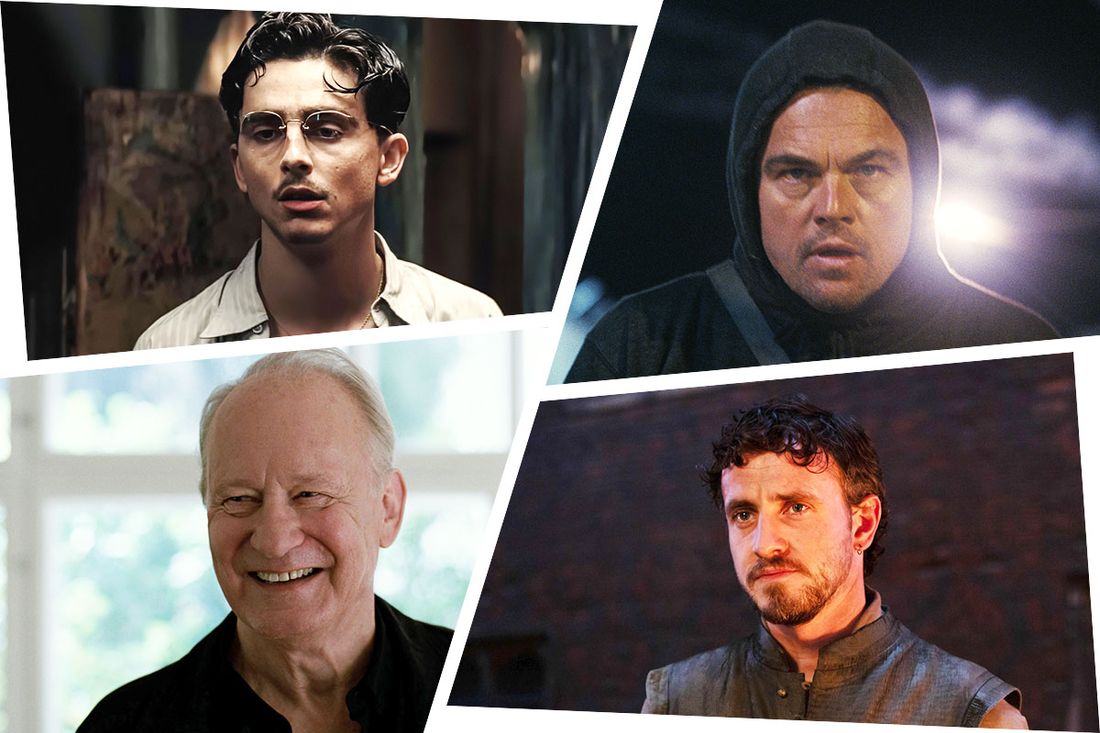
The ending of Marty Supreme has sparked more debate than any other potential Best Picture winner this year. If you’ve seen the film, you won’t be surprised – and if you haven’t, be warned that I’ll be discussing all the nominees as the Oscars are just around the corner! – the movie doesn’t conclude with the exciting table tennis match in Tokyo. Instead, it ends with Marty Mauser (Timothée Chalamet) standing in a New York hospital, deeply moved by the sight of his newborn child, despite repeatedly saying he didn’t want one. Chalamet is a skilled actor when it comes to emotional scenes – remember his tearful moment by the fireplace in Call Me By Your Name? – but these tears, filled with gasps and sobs and set to the 80s song “Everybody Wants to Rule the World,” have really split audiences.
People have reacted to those emotional scenes in many ways. Some dismiss them as fake or a sign the movie was giving in to unnecessary emotion. Online, I’ve even seen theories suggesting Marty realizes the baby isn’t his – that it looks more like another actor! A friend of mine argued the tears showed Marty had fundamentally changed, becoming a selfless person who could finally be there for others. Personally, I believe Marty’s emotions were genuine, and that the ending works because he’s capable of both dramatic action and embracing a quieter, family-oriented life. But I get why everyone interprets the scene differently. The idea that becoming a father truly changes someone – not just their role, but who they are at their core – is a powerful and often debated topic.
This year’s Oscars season has been marked by a surprising number of films exploring difficult father-son relationships, and it’s easy to miss this theme amidst larger concerns about the future of cinema. This year’s Best Picture nominees are particularly focused on fatherhood, often dealing with the anxieties of being a bad or absent father, or the lasting impact of growing up with a flawed one. This concern is powerfully illustrated in several films: the director in one movie treats his pregnant partner with a disturbing possessiveness, fearing she’ll ruin his ambitions, while another features multiple negative father figures – including an abusive man and a pastor who demands strict obedience from a young man. Even a seemingly unrelated film reveals itself to be the story of a father who never left home, desperately trying to reconnect with his son and escape his past.
Several recent films explore the complexities of fatherhood and grief, particularly the difficulty fathers have expressing their emotions. Both Train Dreams and Hamnet center on fathers coping with the loss of a child, and how they struggle to show their pain within the constraints of traditional masculinity. This theme appears in Sentimental Value, where a filmmaker expresses his love for his daughter through a film role, mirroring how Shakespeare in Hamnet channels his grief into a play that his wife understands. Frankenstein offers a modern take, portraying the monster as the resentful son of a controlling father, angered by his child’s perceived flaws. Other films highlight absent or flawed fathers – Marty and Bugonia feature fathers who are largely unimportant, while characters in other films share the experience of losing their fathers at a young age, which impacts their present-day struggles. Finally, One Battle After Another is a poignant portrayal of a father’s feelings of inadequacy, focusing on a man who spent much of his daughter’s childhood distracted by substance use and hoping for his wife’s return.
As a movie fan, I’ve been thinking about the themes in this year’s Best Picture nominees, and it’s struck me how much they seem to tap into what’s going on in the world, even if it’s hard to say movies cause those feelings. There’s a definite undercurrent of anxiety running through a lot of them, particularly around masculinity, the lack of good role models, and the way influencers and politicians are pushing outdated – and sometimes openly harmful – ideas about gender. It’s hard not to think about things like Trump’s “Daddy’s home” video from the NATO summit, or the battle to buy Warner Bros., which felt like someone trying to prove themselves to their father using a lot of money. It seems like fatherhood – and men in general – are really on everyone’s minds. Looking at all ten nominees, you see a lot of different takes on this, like whether being a traditionally “strong” man and being a loving, open parent are even compatible. It’s a really interesting, and sometimes unsettling, trend.
Worrying about people is often worrying about a flawed world. But this year’s films haven’t been sounding the alarm, even when dealing with complex characters. Take Teddy, for example – he might be a conspiracy theorist and possibly a serial killer, but he’s right about aliens being here. Despite a traumatic childhood – abuse and a mother struggling with addiction – Teddy evokes sympathy, and provides the only genuine warmth in his film through his bond with his autistic cousin. Similarly, Bob, despite his flaws and anxieties, has raised a remarkably capable and compassionate daughter, making a key scene emotionally resonant. And in another film, Smoke and Stack, despite their own troubled backgrounds, step up as surrogate fathers to their cousin, offering support, guidance, and even a creative outlet – providing the nurturing that his biological father doesn’t.
In The Secret Agent, Armando’s father has a surprising past: he was born into wealth but fathered a child with a maid, and then raised the child as his own. Despite this difficult beginning, he becomes a devoted, though imperfect, husband and father. The scenes of him and his son, Fernando, driving in their little yellow car and chatting about Jaws, are incredibly heartwarming, which makes Fernando’s later confession – that he doesn’t really remember his father – even more tragic. Even so, Fernando seems to have grown into a well-adjusted adult, raised by his grandfather, and doesn’t feel deeply affected by his father’s absence. This offers a strange sort of comfort – the idea that a child can thrive even without a loving father. It suggests that Marty, the protagonist, might not be ruined if his ambitions don’t fulfill him, even if he struggles to balance his work and family. I hope Marty ultimately chooses to settle down, not because of a sudden emotional connection to his child, but through a conscious, daily commitment. That kind of consistent effort is more meaningful than any dramatic moment, though it’s harder to show in a movie.
Read More
- Off Campus Season 1 Soundtrack Guide
- Chainsaw Man Volume 24’s Cover Art Reveals a Brand-New Denji
- HSR Banner Schedule (Honkai Star Rail)
- DoorDash responds after customer uses AI to make food look bad and get a refund
- Dragon Quest II HD-2D Remake: Where to get the Magic Key
- How to Get to the Undercoast in Esoteric Ebb
- Hideo Kojima says Metal Gear Solid 2 became the future he hoped would not happen
- Gold Rate Forecast
- Euphoria Season 3’s New R-Rated Sydney Sweeney Scene Proves The Show Is Trolling Us
- Katanire’s Yae Miko Cosplay: Genshin Impact Masterpiece
2026-03-14 16:55