Spoilers follow for Pillion, which is now in theaters.
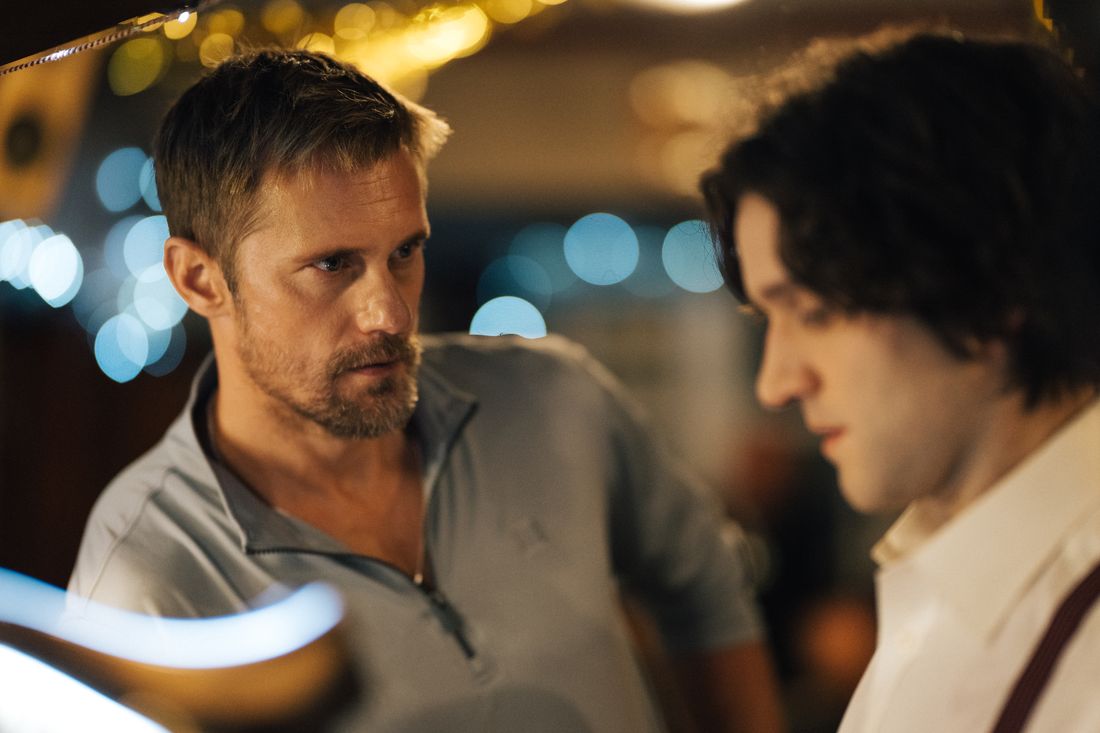
In Harry Lighton’s film adaptation of Adam Mars-Jones’s novel Box Hill: A Story of Low Self-Esteem, Harry Melling plays Colin, a shy parking attendant who lives with his parents and enjoys singing in a quartet. Colin is unlucky in dating until he meets Ray (Alexander Skarsgård), a striking and confident man, at a local pub. Their connection quickly becomes physical, leading to a BDSM relationship where Colin finds both fulfillment and pleasure. He cooks for Ray, sleeps on the floor of his room, and rides on the back of his motorcycle. However, Colin eventually wants a deeper connection than Ray is willing to offer.
This film is a humorous and touching story about growing up, with an optimistic outlook. It’s set within the world of a free-spirited gay biker gang who live life on their own terms, embracing open sexuality and rejecting societal norms – often with wild parties at one member’s house and in the countryside. The filmmakers intentionally avoided aiming for conventional respectability, choosing instead to portray the leather-kink community authentically and honestly, including their rebellious nature. Director Lighton explains he never considered a more traditional approach, as the source novel was deliberately unconventional and ethically complex – a quality he wanted to preserve. He received the book from producer Evie Yates and felt it was important to maintain that raw, unfiltered energy.
To deeply understand the biker subculture, Melling joined the U.K. Gay Bikers Motorcycle Club. He also made a key change to the source novel, shifting the story’s focus more onto the character of Colin. He even advocated for the necessary funding to create a realistic prosthetic for Skarsgård’s character. Despite the film receiving an unrated release in the U.S., Lighton maintains he never had to censor any content, explaining his choices regarding explicit material were always driven by the artistic effect he wanted to achieve.
We’ve had a lot of discussion about who this film is for. I really wanted to make sure the kinky leather community felt accurately and respectfully represented, and that the film felt authentic to their experiences. However, I also didn’t want to only reach people already familiar with this lifestyle. I’m interested in introducing this subject matter to a wider audience and challenging their assumptions about relationships and sexuality. To do that, I intentionally contrasted very specific and authentic scenes between Ray and Colin with everyday moments – like family lunches or Christmas celebrations – that most viewers can relate to. This combination makes it harder for people unfamiliar with kink to dismiss the film as something completely ‘other’ and encourages them to reflect on their own lives.
As a fan, I was really struck by the attention to detail in the show, and I remember being fascinated by a specific conversation about the intimate scenes. The creator really wanted to show Ray with a realistic, pierced prosthetic – it wasn’t just about nudity, but about making him feel authentically part of the community and moving away from generic portrayals. Apparently, getting that detail right was a surprisingly big financial hurdle, with the prosthetic costing anywhere from $5,000 to $20,000! But thankfully, the core idea wasn’t questioned. More broadly, what I really appreciated was the willingness to depict the messy reality of sex, not just the polished, instant expertise you often see on screen. It felt so important to show both successes and failures, especially considering how little proper sex education exists, particularly for gay people. The creator wanted to acknowledge that everyone’s first experiences are often awkward and imperfect, and that’s incredibly relatable and honest. It wasn’t about perfection; it was about learning and growth, and that felt really powerful.
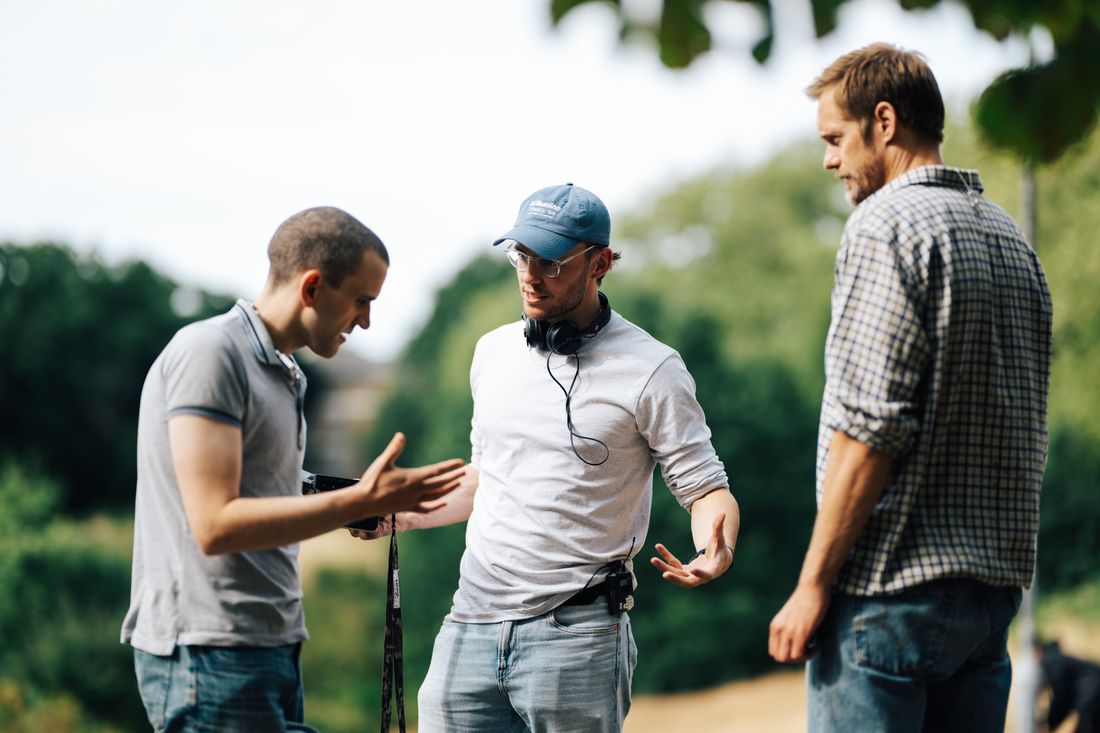
Some people believe movies are made from either a straight or a queer perspective. I see it like this: queer people often navigate a world where they’re figuring out what parts of their lives are genuinely them versus what they’ve simply absorbed from straight culture. In the film, the character Colin is discovering his queerness, but he’s also feeling pressure from his family and society to conform, and he sometimes wants things that are considered ‘normal.’ I often ask myself if I want something because it’s mainstream, or because I truly desire it. That’s why I explored how this unusual relationship clashes with typical romantic comedy formulas. Some rom-com tropes work for this story, but many don’t, and Colin learns to recognize which ones don’t fit throughout the movie.
We definitely played with some familiar romantic comedy ideas. For example, the ‘perfect day’ trope usually happens early on – like a first date that ends with a kiss. In our movie, that moment comes much later, and actually signals the end of their relationship. Meeting the parents is another classic rom-com scene, but it felt a bit off for Ray and Colin’s dynamic – though it might fit other dominant/submissive relationships. The problem is Ray keeps a lot of secrets, which immediately makes Colin’s mother suspicious. But honestly, a lot of mothers would probably struggle with seeing their son willingly take orders from someone else.
You collaborated with the U.K. Gay Bikers Motorcycle Club for research, and they gave me my first experience as a passenger on a motorcycle. It was a surprisingly sensual experience! I enjoyed the speed and the feeling of weaving through traffic. I was struck by how little skin was exposed on the rider – just a small patch of neck – and it made me realize the erotic potential of riding pillion, similar to the subtle allure of a geisha. I wanted to capture that feeling in the film when Colin rides with Ray, using close-ups and focusing on abstract details. The music during that scene is meant to evoke the sound of a motorcycle engine, but with cellos to give it a romantic quality. Though it was exciting, after about four hours I definitely felt it in my back and was ready to get off – so I also wanted to show how that feeling can quickly fade!
Watching the film, I often wondered if Ray was actually good at what he was doing. I understood that the tension came from him never clearly defining the relationship for Colin, but I was really curious if the filmmakers ever considered making Ray someone capable of even articulating what he wanted. They definitely wrestled with the idea of having Ray be more upfront about his desires, giving Colin a clearer understanding of what he was getting into. But ultimately, they felt it would undermine both the drama and Ray’s character. He’s fantastic at the image of dominance, the eroticism of it all, and honestly, his looks give him a certain privilege – he doesn’t have to explain himself, because people are still drawn to him. However, he’s pretty awful when it comes to responsible dynamics. For me, the film was really about Colin learning to understand and express his own needs, and I hope that in future relationships, he’ll be able to have those crucial conversations before diving in.
In the book, the relationship ends only because of Ray’s accidental death, which felt like Colin had no say in it. I wanted to explore what happens when someone who usually takes a backseat starts wanting more from a relationship. I decided to have Colin start asserting himself, asking for a day where they treat each other as equals, and generally asking for more of what he wants. This shift happens around Colin’s birthday, after his parents question who Ray is. A lot of what he asks for is actually pretty normal, which causes friction with Ray. Colin starts out very passive and unsure of himself, and I wanted to show how, after experiencing love for the first time and being grateful for it, he naturally starts to want to grow and explore other things. It’s this growth and desire for more that ultimately creates conflict in the relationship.
That scene with Ray and Colin really struck me. It made me think about how they see their connection so differently. Colin clearly believes it’s a love story, and he’s so sure of it. But Ray… he’s always tried to separate love from things like physical intimacy and doing things for someone, because those are the things he values most in a relationship. I think the filmmaker really wanted that conversation to not feel like a typical romantic confession, like something you’d see in a rom-com. What Colin says is sweet, but almost cliché – it feels like one of those inspirational quotes you find online, like “Isn’t love the point of everything?” – apparently it’s a Rumi quote! It’s easy to dismiss it as unoriginal, but I think it’s meant to highlight why Ray is so hesitant about love. It’s one of the few times we see Ray be truly vulnerable, instead of defensive. It made me realize that living outside of societal norms has its wins, but also big losses – it can be really painful to feel like you don’t fit in. That moment felt like a chance to show some empathy for that struggle.
Does the use of Tiffany’s “I Think We’re Alone Now” during Ray and Colin’s wrestling match reveal a softer side to Ray’s character? I wouldn’t call it vulnerability, but it’s a deliberate choice to show more of who he is. Ray projects a very strong, masculine image, but I wanted to make it clear he’s still openly gay. We expect someone like him – a large, intimidating biker – to listen to hard rock, so the fact that he chooses this classic gay club song gives the audience a glimpse into his true identity and shows he’s connected to queer culture. He isn’t separate from that part of himself.
Yes, the movie does contain explicit sexual content. Early on, a scene initially felt overly aggressive, and we were concerned about blurring the line between passion and unwanted force. We quickly realized, along with the actors and a producer, that the way we were portraying the scene didn’t allow for the actor’s character to experience any pleasure. Specifically, a slap before a sex act felt too harsh and left the actor visibly affected, creating a sense of discomfort rather than desire. To fix this, we removed the slap and asked the other actor to portray more eagerness. He even improvised a line referencing a playful, schoolyard game common in the U.K., turning the initial discomfort into a pantomime and ending with a grin. Throughout, we focused on showing the scene from the actor’s point of view – his initial excitement, and then his nervousness about performing well, rather than feeling threatened.
I’m still thinking about making a film about hair transplants, and I’m interested in what that process says about modern ideas of masculinity. It’s ironic because I’m wearing a hat right now – I haven’t had one myself yet! [Laughs] I initially suggested the idea partly as a way to get funding for the research, hoping someone would pay for the procedure. I’m not opposed to it, but I think society is becoming increasingly focused on appearance. We see so many pictures of ourselves now, and that’s influencing how men think about masculinity. Twenty years ago, a traditionally masculine man getting teeth whitened or a hair transplant would have seemed contradictory. Now, it’s much more common and accepted. Vanity is often seen as a negative trait, but I think it can actually be a positive thing, allowing men to openly care about their appearance and embrace a bit of vanity.
Read More
- Netflix’s Little House On The Prairie Reboot: Release Date, Cast & Everything We Know
- Off Campus Season 1 Soundtrack Guide
- Infinity Nikki Candlelight Reverie Challenge and Rewards Guide
- Gold Rate Forecast
- Silver Rate Forecast
- Brent Oil Forecast
- Prime Video’s New R-Rated Spy Thriller Is Officially No.1 On Streaming Despite Poor Reviews
- KPop Demon Hunters Meets Avatar: The Last Airbender In Netflix’s 3-Part Fantasy Series
- EUR ZAR PREDICTION
- The Hunting Wives Star Teases “Wild” Major Character Death in Season 2
2026-02-27 19:56