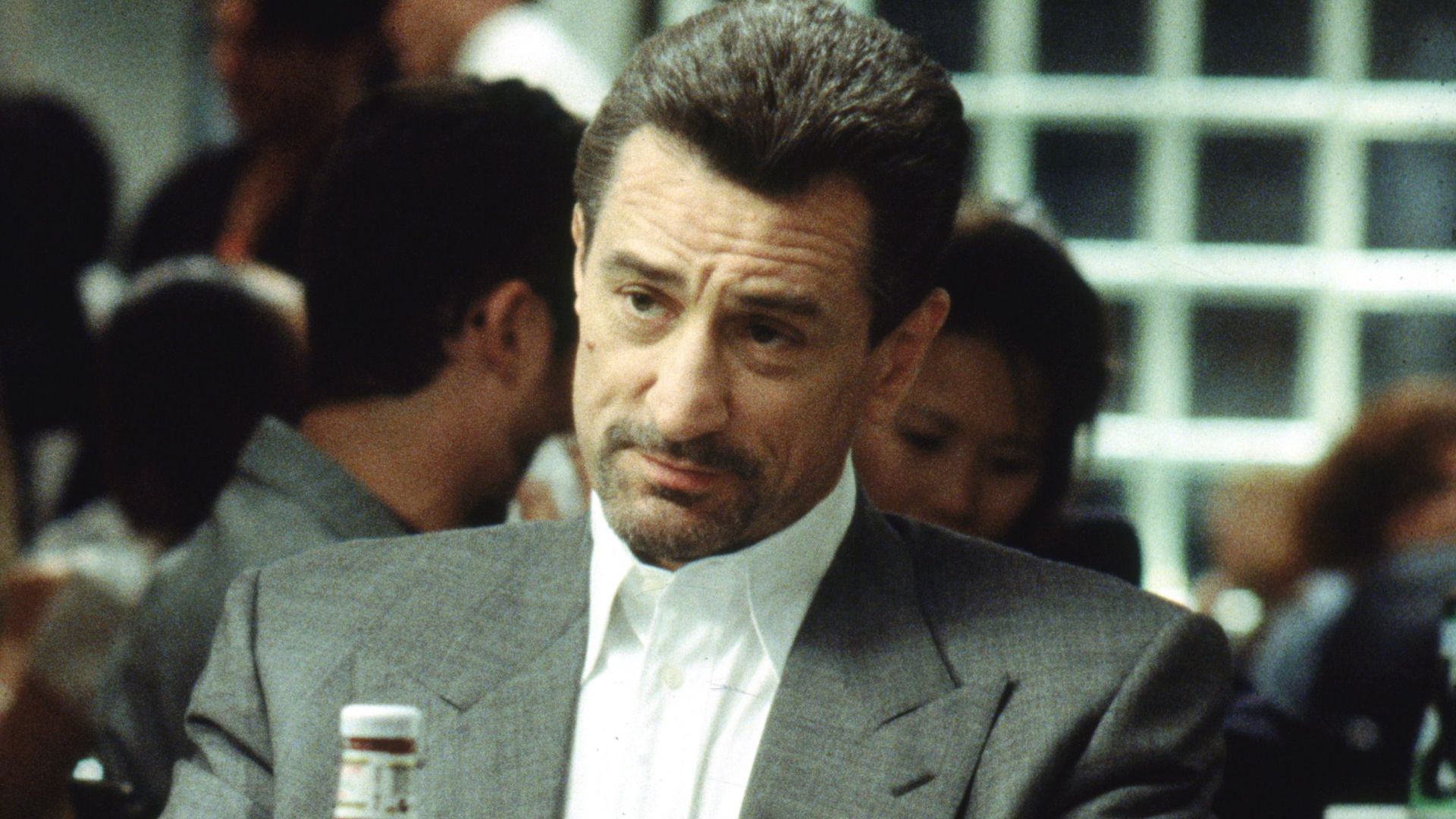
Al Pacino and Robert De Niro have both had incredibly successful acting careers, spanning almost six decades, yet they’ve only appeared in four movies together. Despite being widely considered the greatest actors of their generation – Pacino launching to fame in The Godfather and De Niro in Mean Streets – it took a long time to find projects that brought them together. Those films, in order from most recent to oldest, are Martin Scorsese’s 2019 epic The Irishman, the 2008 thriller Righteous Kill, and the 1972 classic The Godfather Part II.
Film fans know that while Francis Ford Coppola’s sequel to The Godfather features both Al Pacino and Robert De Niro, they never share a scene together. De Niro portrays a young Vito Corleone in flashbacks, alongside Pacino’s Michael Corleone as he takes control of the family. That’s why audiences were thrilled when the two acting legends teamed up with director Michael Mann in 1995, promising a direct on-screen showdown. The result was a landmark heist film – a grand, intense crime epic – which perfectly showcases the incredible talents of both actors.
Heat Isn’t Just a Heist Movie; It’s a Work of Art
Al Pacino and Robert De Niro were excited to star in Heat, a project director Michael Mann had been developing for over ten years. Both actors felt the script finally showcased their abilities. Mann originally wrote the story in 1979, intending it as a television series. When the pilot wasn’t picked up, he shelved the project. However, after completing The Last of the Mohicans in 1993, he decided to turn it into a movie.
I remember when I first read the script for Heat, it just grabbed me! The story of this determined LA detective and the equally driven thief he’s up against was incredible, and it’s no surprise Pacino and De Niro signed on right away. What I really appreciated was that Michael Mann never intended it to be a quick TV show or just another flashy heist movie. He originally wrote a massive, 180-page screenplay way back in ’79, but had to cut a lot of the complex storylines and interesting character details when he adapted it for television. It’s amazing how much depth was there to begin with!
Let me tell you, when Michael Mann finally got the budget and freedom to make Heat with Al Pacino and Robert De Niro, it truly delivered. What we got was a nearly three-hour masterpiece – a real, immersive experience. It’s packed with compelling characters, stunning visuals, and a story that’s surprisingly deep. And the sound design? Forget about it. The way Mann uses the city noises of Los Angeles creates an unbelievably powerful atmosphere – honestly, I don’t think anyone’s topped it in the last three decades.
Pacino and De Niro’s Obsessive Characters Are Two Sides of the Same Coin
What makes Heat so compelling isn’t its exciting action, thrilling robberies, or cool dialogue. Instead, director Michael Mann uses the film to explore the nature of obsession, presenting it like a modern Greek tragedy. Ultimately, Heat is about two characters driven by intense focus, which allows them to succeed but also leads to their downfall.
Detective Vincent Hanna and thief Neil McAuley are both incredibly skilled at their jobs, but the film shows how that dedication takes a heavy toll on their lives. Hanna uniquely understands McAuley’s criminal mind and respects his professionalism. However, constantly focusing on the dark side of humanity has ruined Hanna’s personal life. He’s in his third failed marriage, and his wife feels emotionally disconnected from him. He also finds it difficult to connect with people in everyday situations.
At the film’s conclusion, a weary Hanna confesses to his wife, “I am nothing more than what I pursue,” revealing his understanding of his own all-consuming obsession, yet his inability to change it. His wife, tearfully, acknowledges the painful truth. They part ways, and Hanna’s relentless drive ultimately leads him to finally defeat McAuley.
On the other hand, McAuley is uniquely skilled at pulling off these complex robberies. He’s the only criminal in the city who can do it without attracting the LAPD’s attention or harming anyone. However, this level of precision has come at a cost – he’s completely isolated himself from any personal relationships.
He lives in a very bare, impersonal home, is unmarried and doesn’t have children, and has become so accustomed to solitude that he doesn’t even notice when Amy Brenneman’s character flirts with him in a restaurant. In fact, McAuley follows a rigid personal philosophy: he refuses to become attached to anything he isn’t prepared to abandon immediately if he senses trouble.
Heat is a Thematic Examination of Cause and Effect, Rather Than an Exploration of Fate
For me, the most striking scene in Heat – besides that incredible shootout, of course – is when Hanna and McAuley sit down for coffee. It’s the only time these two ever really connect before everything goes down, and it’s fascinating to watch them size each other up, trying to understand what drives the other person. It’s a really insightful moment, and it makes the ending all the more powerful.
Pacino and De Niro deliver a masterful performance in this scene, making even the smallest details of their interaction – a glance, a gesture – incredibly meaningful. Initially, their conversation feels like a cautious dance, each man sizing up the other. But director Mann brilliantly shifts the dynamic, and within minutes, Hanna and McAuley recognize a shared understanding. Despite being on opposing sides of the law, they develop a surprising level of respect and even affection for each other.
Despite their deep connection – they could have been friends in another life – Hanna and McAuley are prepared to kill each other if necessary. Their acceptance of this possibility is unsettling, yet neither seems bothered by it. They both operate by a personal code, and if their goals clash, they see it as an unavoidable outcome. The conversation between them, which includes a surprisingly personal look at each other’s dreams, is a standout moment in the film, and it’s crucial to understanding the movie’s central themes.
Ultimately, both Hanna and McAuley are deeply aware of their own motivations and understand that their choices will shape their destinies. While many existential films explore fate and predetermination, Michael Mann’s Heat takes a different approach. It’s a thoughtful, existential movie, but Mann emphasizes that McAuley’s fate isn’t predetermined. Instead, McAuley brings about his own demise by breaking his personal code and falling in love with Eady.
Adding to the difficulty, he’s driven by an all-consuming need for revenge against Waingro, the dangerous criminal who originally led Hanna to target McAuley’s team. These complex ideas might seem too serious for a typical heist movie, but director Mann, along with actors Pacino and De Niro, handle them brilliantly, making the film truly exceptional.
Found an error? Send it so it can be corrected.
Read More
- Netflix’s Little House On The Prairie Reboot: Release Date, Cast & Everything We Know
- Off Campus Season 1 Soundtrack Guide
- Silver Rate Forecast
- Gold Rate Forecast
- Prime Video’s New R-Rated Spy Thriller Is Officially No.1 On Streaming Despite Poor Reviews
- Brent Oil Forecast
- EUR ZAR PREDICTION
- Infinity Nikki Candlelight Reverie Challenge and Rewards Guide
- Amazon Primes new GenAI cartoon looks like K-Pop Demon Hunters with aliens
- KPop Demon Hunters Meets Avatar: The Last Airbender In Netflix’s 3-Part Fantasy Series
2026-02-26 08:10