
Have you ever felt truly connected to a character in a game, like losing a friend when it ends? That feeling doesn’t happen by accident. It’s carefully created. A good story provides the foundation, but voice acting is what truly brings characters to life, making you care about what happens to them. Exceptional voice performances immerse you in the game world, making you forget you’re even playing. It’s the little details – a slight waver in a hero’s voice, or a villain’s menacing tone – that make the story feel genuine and the challenges feel meaningful.
Key Takeaways
- Voice acting builds the emotional bridge: A powerful performance is what makes you truly care about a character’s fate, transforming a simple game objective into a personal mission.
- A great performance is a deliberate craft: Creating a believable character requires more than just a good voice; it involves intense preparation, technical precision, and close collaboration with the creative team.
- Voice work actively drives the story: It serves as a crucial narrative guide, delivering key plot points and emotional context that make the story feel like a natural part of the world you’re playing in.
More Than Just Lines: The Power of Voice Acting in Games
Have you ever found yourself still thinking about something a character said in a video game, even after you’ve stopped playing? That’s not just good writing at work—it’s the power of voice acting. Voice actors are the hidden ingredient that brings digital characters to life, making you care about them, hate them, or remember them fondly. It’s the emotion in a hero’s tired breath, a villain’s menacing laugh, or a teammate’s urgent cry that truly makes a game world feel believable. While a script provides the basic structure, the voice actor breathes life and personality into it.
Great voice acting is what truly makes a game feel real. When it’s done well, it draws you into the story so completely that you lose yourself in the game world. It helps you understand what’s happening, moves the story forward, and adds emotional impact that graphics alone can’t achieve. Consider your favorite games – the characters you remember most likely have strong voices that give them unique personalities and make them feel believable.
Even a stunning game can feel empty without genuine human connection. A weak performance can break the immersive experience, reminding you it’s just a game. But a strong performance does the opposite – it creates a bond, making you invested in the characters and their journey. It transforms experiencing a story into actually feeling like you’re a part of it.
How Voice Acting Pulls You into the Game
Think about the games you still remember fondly. It’s likely not just how they played or looked, but the characters you met along the way. Voice acting is what truly brings those characters – and the entire game world – to life, transforming code and graphics into something immersive. When it’s good, you don’t just play a game, you experience a story. Poor voice acting can instantly break that feeling, reminding you it’s all just a game. But a great performance pulls you in, making you feel fully engaged. It’s the difference between simply being told what to do and feeling the weight of the situation. Exceptional voice acting doesn’t just narrate the story, it evokes emotion. It’s what elevates a good game to an unforgettable one by creating a connection to the characters, giving them depth, and making moments that stay with you long after you’ve finished playing.
Forging an Emotional Connection
As a huge fan, I’ve always believed that amazing voice acting is what really brings a story to life. It’s not just about hearing the words, it’s about feeling what the character feels – their sadness, their happiness, even their anger. When an actor perfectly captures a shaky voice during a sad moment, or really lets loose with a powerful shout, it just hits you right here. It makes you genuinely care about what’s happening, and suddenly, completing a task isn’t the point. You’re helping someone you feel connected to, righting a wrong, or trying to save a world that feels real, and it’s all thanks to the power of a great voice performance.
Giving Characters a Soul
A character is nothing without a voice – it’s what gives them personality and makes them feel real. Voice acting turns simple characters into complex individuals with unique traits. An actor’s tone and delivery can instantly reveal a character’s personality – whether they’re cynical, innocent, or brave. Exceptional voice work is crucial for creating characters we connect with, enjoy, and remember. It’s what makes us care about their stories and feel invested in their journeys.
Creating Unforgettable Moments
Gaming is full of memorable moments, and often, a single line of dialogue is all it takes to make them iconic. These aren’t just about what is said, but how it’s delivered. A skilled voice actor can transform even simple words into something truly impactful – a scary threat, a moving request, or a funny joke. This is what turns a game’s story into something special, creating powerful, cinematic experiences that players remember long after they’ve finished playing. The perfect delivery at just the right moment can create a lasting memory, becoming a key part of a player’s gaming experience.
What Separates Good Voice Acting from Great?
We’ve all experienced it – a voice performance that feels slightly off, breaking your immersion. But the truly memorable performances are what stay with you long after you stop playing. That’s what separates good voice acting from truly great voice acting. It’s more than just clear delivery; it’s a powerful blend of emotion, technical skill, and the ability to completely embody a character. When it’s done right, you don’t feel like you’re playing a game – you feel like you are in the story.
Delivering Lines with Real Emotion
For me, the difference between a good voice actor and a truly great one is huge. A good actor can say a sad line and make it sound sad, but a great one? They make you feel it, deep down. It’s about more than just reading words – it’s about bringing real emotion to every single one, making the performance feel genuine and like something you can connect with. That’s when a story really comes alive! When an actor gets it right, it’s like they build a connection between you and the character. Suddenly, you’re not just watching a story unfold; you’re with that character, feeling everything they feel – their wins, their losses, everything. It’s amazing!
Mastering the Technical Side
While feeling is crucial for voice acting, it’s built on a strong technical base. Top voice actors have mastered things like timing, clear speech, and breath control – even during intense moments like shouting or whispering. This precision makes sure dialogue is easy to hear amidst the game’s action and helps move the story forward. After all, if you can’t understand a character, their emotions won’t matter. That control is what lets actors deliver lines that are both powerful and clear, seamlessly guiding you through the narrative.
Becoming a Vocal Chameleon
The best voice actors are incredibly adaptable, completely transforming themselves to fit each role. They can convincingly play multiple characters, even within the same game, without the audience noticing. It’s more than just doing different accents; it’s about crafting a unique voice and personality for each character, including how they speak, their tone, and the emotions they convey. This skill is what brings a game world to life, making it feel full of real people. Exceptional voice acting gives characters memorable personalities and makes them believable, ultimately creating a more immersive and unforgettable gaming experience.
Behind the Mic: How Actors Prepare for a Role
Have you ever thought about what makes a voice actor bring a character to life? It’s more than just a great voice – it’s a skill that requires a lot of preparation. Getting ready for a video game role is a demanding process, involving a deep understanding of the character, close teamwork, and specific abilities for telling stories that players interact with. The actor’s goal is to turn written words into a believable personality, making you feel connected to the character – whether you’re cheering them on, disliking them, or simply enjoying their company.
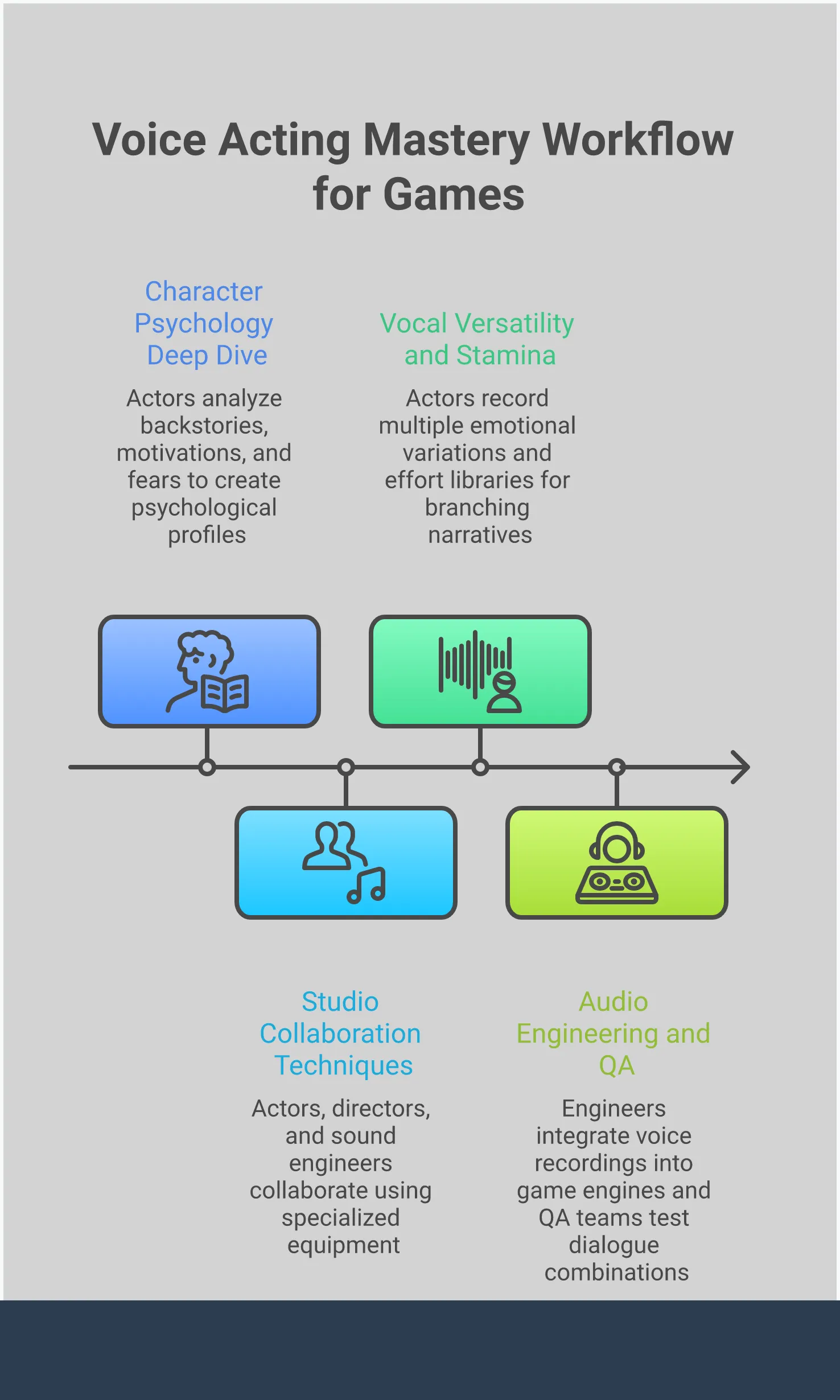
Voice actors don’t simply read lines; they deeply analyze a character’s history, reasons for acting, and anxieties to truly understand them. During recording sessions, they collaborate closely with the director to perfect each line of dialogue, making sure it feels natural within the game’s story and setting. Unlike in movies or TV shows, they must deliver lines that can play in any order, all while sounding genuine. This requires a special combination of creative skill and technical ability to transform code and graphics into a character you’ll remember even after you finish playing.
Getting Inside a Character’s Head
Actors always prepare thoroughly before recording. They start by fully understanding the character they’ll be playing, studying the script, background information, and any visual designs to create a complete picture of who that person is. They think about key questions like what the character’s biggest desires and fears are, and what events from their past have made them who they are. This deep preparation helps actors deliver lines that sound real and believable, adding emotional depth to the game and allowing players to truly connect with the character’s journey – feeling both their successes and their failures.
Collaborating in the Studio
Voice acting isn’t a solo effort – it’s a team process. Actors work closely with a voice director in the studio, who helps them understand the story and deliver the right performance. The director provides guidance, feedback, and ensures everything fits the game’s overall style. This partnership is especially important because dialogue isn’t always recorded in order. The actor depends on the director to provide context and help them imagine the game world. With support from sound engineers and writers, this collaborative environment transforms a good performance into something truly memorable, bringing beloved characters to life.
Nailing Interactive Dialogue
As a fan, I’ve always been amazed by the voice actors in games. What they do is so different from movies! It’s not just reading lines; they have to record the same conversation over and over, changing how they say things each time, because you, the player, get to choose how things go. They don’t even know which version will actually be heard! And it’s not just dialogue, it’s all the little sounds – the grunts, the yells, even the breathing – that make the action feel so intense. It takes a ton of skill to make each line sound perfect on its own, but also fit seamlessly into the overall story. Seriously, it’s a really impressive performance!
How Voice Acting Drives the Story Forward
Excellent voice acting isn’t just about making characters sound unique—it’s vital for driving the story forward. It’s like the engine that keeps the narrative running smoothly. A great line delivery can explain important details, hint at surprises, or inspire you to continue playing. Without strong voice work, you often end up with awkward text or confusing instructions that break your immersion. Voice acting turns simple information into something engaging and makes the story feel like a natural part of the gameplay. It’s what separates simply hearing a story from truly experiencing it.
Guiding the Narrative
Voice acting is a powerful tool for immersing players in a game’s world. Through characters speaking to you – whether it’s warnings, quest details, or background information – the game constantly provides crucial details. This helps move the story forward and clarifies your motivations without interrupting gameplay. Instead of stopping to read lengthy texts, you learn important things while you’re already exploring and playing, making the story feel more connected to the game world and keeping the action flowing.
Making Big Moments Hit Harder
Gaming often creates lasting memories through impactful lines of dialogue. A character’s voice, filled with genuine emotion, can make winning feel truly rewarding and losing deeply heartbreaking. When done well, these lines build connection and empathy, drawing you into the character’s journey. A perfect delivery can transform even a simple scene into a powerful, unforgettable moment that stays with you long after you finish playing – it’s what gets people talking, like the strong reaction to the performance in the Vessel of Hatred trailer.
How Players React to Great Performances
How good the voice acting is really affects how engaged we become with a game. When actors deliver believable and captivating performances, the game world feels more alive and the story feels more meaningful. If you connect with the characters, you’ll naturally care more about what happens to them. Great voice acting is essential for making a game truly immersive. However, poor or unconvincing performances can break that feeling, reminding you that it’s just a game. Often, it’s the combination of strong voice acting and things like a fantastic soundtrack that really makes a game world special.
Why We Care So Much About Good Voice Acting
Have you ever finished a game and felt a real sense of loss, like saying goodbye to a friend? Or been genuinely scared by a villain’s words? That strong emotional connection isn’t just about impressive visuals or a good plot. It’s the voice acting that truly brings characters to life, making us care about them – whether we love them, hate them, or cheer them on. Exceptional voice work is what elevates a game from simple entertainment to something we remember long after we’ve finished playing. It’s what turns us from observers into active participants in the story.
As a huge fan, I’ve always felt that voice acting can truly make or break a game. When it’s good, it adds so much emotion – things you just can’t get from the graphics or the writing alone. It’s how you feel the sarcasm, the sadness, the happiness… it makes the story connect with you on a personal level. I mean, think about your favorite characters – often, their voice is the very first thing you remember, right? A really talented voice actor doesn’t just say the lines, they become the character, giving them a real personality and making you care about what happens to them. That’s why it’s so frustrating when a game has amazing everything else, but the voice acting falls flat – it can totally ruin the experience!
Keeping Us Hooked and Immersed
Exceptional voice acting seamlessly draws you into a game’s world and holds your attention. When it’s done well, you forget you’re listening to an actor and truly believe in the character. This is how games become truly immersive. Things like a trembling voice in a dangerous situation, a happy laugh with a friend, or a heartbreaking cry after a loss all combine to create a powerful emotional experience. These performances make the story feel real and keep you invested in what happens next.
Shaping the Community’s View
Great voice acting doesn’t just make your own game experience better—it affects how everyone feels about the game. Memorable lines often become shared jokes and popular memes, bringing players together. Characters with strong voices become beloved by fans, leading to tons of fan art, discussions, and costumes. Sometimes, even the actors themselves become famous within the gaming community. This shared love for a character, especially because of their voice, helps fans connect with each other and feel like they’re part of something special. It transforms playing a game by yourself into a community event celebrating a good story.
The Ultimate Make-or-Break Factor
Poor voice acting can really break a game, even if it looks and plays beautifully. A bad performance can instantly pull you out of the experience, turning serious moments into something silly and making it hard to connect with characters. Conversely, great voice acting can elevate a game, making its story truly memorable. Voice acting is a crucial part of gaming, and it often determines whether a game resonates with players or fails to make an impact.
The Many Voices of a Video Game
Think about a game you love. What stands out? Is it the story, the visuals, or how fun it is to play? While those things matter, the voices are also crucial. Every voice, from your main character to minor characters, helps create the game’s world. These voice performances transform a game from just graphics and code into something immersive, making us connect with the characters, believe in the world, and remember the experience for years to come. Let’s explore how these voices make games so special.
The Voice of the Hero (and Villain)
The main characters – both the hero and the villain – are essential to any good story. Their voices connect us to the game’s deepest emotions. A strong performance lets us truly feel what the character is going through, turning gameplay into a fully immersive experience. When an actor delivers lines with real emotion, it adds depth to the story and makes us care about the characters – whether we’re cheering for the hero or hating the villain. Memorable performances, like a hero’s unwavering resolve or a villain’s menacing speech, stay with us long after we finish playing.
Breathing Life into the Supporting Cast
Though the main characters move the story forward, the supporting characters are what truly bring the game’s world to life. From the memorable shopkeeper with a past to the loyal friend who always helps, these characters add depth and personality. A game world with bland, uninteresting characters feels empty, but a strong supporting cast makes it feel real and vibrant. These performances are essential because they make the characters believable and the world feel populated and lively, rather than just a simple setting. They offer moments of humor, emotional connection, and important details, ultimately making the game more immersive and enjoyable.
The Unseen Guides and Announcers
Often, the most memorable voices in games belong to characters we never actually see. This includes narrators who introduce the story, voices that give us instructions, and announcers who build excitement in multiplayer matches. These unseen characters are crucial for storytelling, helping to move the plot forward and explain what’s happening. In fast-action games like Warzone, a strong and clear announcer can make each victory and achievement feel more significant. Ultimately, these voice-overs create a more immersive and realistic game world.
The Tech Behind the Talent
A fantastic vocal performance is only the first step. Turning that raw emotion from the actor into something you hear clearly through your speakers is a complicated process. It takes a team of skilled audio professionals – engineers, designers, and programmers – working behind the scenes to make sure every line of dialogue sounds just right. This technical work is what truly brings game characters to life and makes the story feel immersive. Without it, even the best acting can be lost amidst the gameplay.
From the Booth to Your Speakers
So, after the voice actors do their thing, the audio files get passed to the sound designers – that’s where the real magic happens. They basically take those raw recordings and polish them up to fit the game’s world. They’ll clean out any unwanted noise, make sure the volume is just right, and then add all sorts of cool effects. Like, if a character is talking over a radio, they’ll throw in static and make it sound tinny. If it’s a huge, scary demon, they’ll make the voice deep and growly. Honestly, good voice acting really brings a game to life, and the sound team works hard to make sure all that emotion comes through loud and clear – they want every line to really hit you!
Making Voices Work in the Game
Adding voice acting to a game isn’t as simple as just playing an audio clip. Developers create intricate systems to make characters speak at the right moments – when a player does something, as the story unfolds, or even depending on the time of day. This helps make the game world feel realistic and interactive. The technical team also focuses on lip-syncing, which can be as basic as moving a character’s mouth or as complex as creating detailed facial animations that match the actor’s performance. Great voice work strengthens the story and helps players connect with the characters emotionally. When it’s done well, it feels natural – like the characters are actually talking to you.
Taking a Game Global
As a gamer, I really think voice acting is super important for a game to become a hit all over the world. Getting it right in other languages – that’s called localization – is a huge job! It’s way more than just translating words. They need to find actors who can really become the character and deliver the same feelings and personality, even in a different language. Honestly, a bad dub can totally ruin the immersion and pull you out of the game, but when it’s done well, it feels like the game was made specifically for you. Great voice acting just makes everything so much more believable, and it’s especially awesome when a game can connect with players from all different cultures and backgrounds.
The Evolution of Voice Acting in Games
Wow, thinking back to the old arcade days, the voice acting in games has seriously changed! It used to be just a fun little extra, but now it’s a huge part of what makes a game great. It’s amazing how we went from characters who didn’t speak at all to ones who feel so real and emotionally complex. This change isn’t just about hearing voices, it’s about adding a whole new level of artistry that can completely pull you into the game world – it’s the difference between a good experience and one you’ll never forget!
From Silent Pixels to Cinematic Sound
Older games used to rely on text to tell their stories, leaving a lot to the player’s imagination. As technology advanced, developers started adding voice acting, which transformed the gaming experience. This made games feel more like interactive movies and allowed for richer, more complex characters. A well-delivered line or a dramatic villain speech could express emotions far more effectively than text alone. This change has made games a powerful way to tell stories, creating experiences that are both visually stunning and emotionally impactful.
What We Expect from Voice Acting Today
These days, we expect a lot from voice acting in games. It’s not enough to just hear lines delivered – we want actors to truly perform and evoke emotion. A talented voice actor brings a character to life, creating a real connection that draws us into their story. When it’s done well, it makes the game world feel immersive and believable, transforming the experience from simply playing a game to actually feeling like you’re in it. We’ve seen firsthand how amazing voice performances can spark huge reactions from players, proving that a character’s voice is just as crucial as their appearance or skills.
What’s Next for Voice Acting in Games?
As a gamer, I’ve definitely noticed how much better voice acting has gotten over the years! But honestly, it feels like we’re just scratching the surface of what’s possible. The tech is always improving, and that means stories can be told in totally new ways, and we can really connect with the characters. It’s not just about making things sound better or getting famous actors, though. The real goal, as I see it, is to make the whole experience way more immersive, personal, and reactive to what I do in the game.
Exciting changes are happening in the world of video game voices! With advancements in AI that can create realistic conversations and technology that perfectly syncs an actor’s movements and voice, the role of a voice actor is evolving. As virtual and augmented reality become more popular, these changes will impact how games are made and how we experience them. Let’s explore what the future holds for the talented voices that bring game characters to life.
The Rise of AI and Synthetic Voices
Artificial intelligence is rapidly changing gaming, especially how characters talk. New AI voices are so advanced that game developers can now create characters who don’t just repeat lines, but actually respond to what you do and say. Think of characters who remember your choices and react accordingly – creating more personalized and immersive game worlds. While there are important ethical considerations, the potential for AI to make game dialogue more dynamic and realistic is clear.
Merging Voice with Full-Body Performance
Modern video game performances are no longer limited to recording voices in a booth. New motion capture technology lets actors deliver complete performances – capturing their voice, face, and body movements simultaneously. This means when you see a character react emotionally or perform an action like swinging a sword, it’s often a real actor physically performing it. This detailed approach results in more realistic and engaging characters, making video game animation feel closer to live-action movies.
New Tech, New Creative Frontiers
I’m so excited about how VR and AR are changing things for voice actors! It’s creating amazing new opportunities. These technologies are all about making you feel like you’re really in the game, and voice acting is a huge part of that. I mean, imagine an actor having to perform like they’re standing right beside you in VR, reacting to everything you do! It’s pushing storytelling in incredible directions, letting actors connect with players on a totally new level. It really feels like a whole new world for performance and gaming!
Related Articles
- Deus Ex LFG: Connect with Other Augs in LFG Feature on Z League App
Frequently Asked Questions
Is strong writing more crucial than voice acting? Consider this: a great script provides the foundation for a story, while the voice performance brings it to life. They work together. Even a well-written script can fail if the delivery is dull, and a talented actor can’t fix a poorly written one. But when both writing and performance are excellent, the result is truly powerful, with the performance perfectly conveying the story’s emotions.
Voice directors play a crucial role in recording studios, acting as a guide and close partner to actors. Because actors often record lines separately from visuals and not in sequential order, the director provides essential context. This includes explaining the scene’s emotional core, giving feedback on how a line is delivered, and making sure the performance fits the character’s development and the game’s overall style. Essentially, they bridge the gap between an actor’s performance and the world the game developers are creating.
Can a fantastic voice acting performance make up for a game’s problems? While it can’t fix things like glitches or a confusing storyline, truly great voice work can definitely make a flawed game more enjoyable and memorable. A compelling character you connect with can create an emotional connection, motivating you to overcome frustrating parts of the game. It can even turn a basic story into something you remember long after you’ve finished playing, proving that a strong emotional connection can often outweigh other weaknesses.
Ever notice hearing the same actor in different video games? It’s common! Voice actors are skilled professionals who work on many projects, similar to how it works in movies and TV. When you do recognize a voice, it usually means the actor has a really unique and memorable sound. But even more impressive is when you don’t recognize them – the best voice actors can completely change their voice to create different characters, accents, and moods, sometimes even within a single game.
As artificial intelligence improves, many wonder if voice actors will lose their jobs. It’s unlikely AI will fully replace human actors, particularly for leading roles. While AI can create interesting dialogue for minor characters, it can’t match the real emotions, personal experiences, and artistic skill that actors bring to their performances. The most likely future involves actors and AI collaborating – AI could handle simpler, repetitive tasks, while actors continue to provide the heart and personality of beloved characters.
Read More
- Netflix’s Little House On The Prairie Reboot: Release Date, Cast & Everything We Know
- Off Campus Season 1 Soundtrack Guide
- Silver Rate Forecast
- Prime Video’s New R-Rated Spy Thriller Is Officially No.1 On Streaming Despite Poor Reviews
- Brent Oil Forecast
- Gold Rate Forecast
- EUR ZAR PREDICTION
- YouTuber arrested after viral AI bodycam videos spark real police complaints
- 币安人生 PREDICTION. 币安人生 cryptocurrency
- Bulgakov’s Take: Koreans Bet the Farm on Chips, Crypto, and Chaos
2026-02-25 18:20