
Game creators invest a lot of effort into making characters as interesting and surprising as Doug. He’s a master of keeping you guessing – his reasons for doing things are unclear, his past is uncertain, and he often doesn’t do what he says he will. When Zlaner played with him, it wasn’t just a funny moment; it was a great example of how to build a story. It demonstrated how mystery, imperfect characters, and building suspense can create a memorable experience, even without any programming. We’ll explore exactly what makes the story of Doug so captivating and what we can learn from it about crafting engaging content.
Key Takeaways
- Embrace narrative chaos to create intrigue: Doug’s constantly changing story wasn’t a flaw; it was a hook. His unreliability turned the audience into active detectives, proving that a compelling mystery with unanswered questions can be far more engaging than a straightforward conflict.
- Defuse tension with unexpected creativity: When faced with a direct threat, Zlaner chose performance over aggression. By proposing dance battles and vocal challenges, he completely changed the dynamic of the encounter, showing that a creative response is often the most effective way to handle a volatile situation.
- Recognize that the best stories are often unscripted: The Doug saga wasn’t a planned event from a game developer; it was a spontaneous, chaotic interaction between two players. It’s a powerful reminder that the most legendary and shareable moments in gaming come from the unpredictable human element.
Who is Doug? The Character That Captivated Gamers
If you’ve seen the video of Zlaner interacting with Doug, you know he’s a truly unique player. He’s full of surprises and doesn’t follow predictable patterns. He can be friendly one minute and an opponent the next, and his personal story seems to constantly evolve. This unpredictability is what makes him so captivating. He’s a character you’ll keep thinking about long after watching, and he leaves you with more mysteries than solutions.
Doug is a special example in gaming of how a simple interaction with another player can create incredible suspense and a fascinating character. He wasn’t a pre-programmed character with a set goal; he was a real person whose unpredictable behavior led to a memorable story. His background is full of secrets and changing loyalties, and figuring it all out is a big part of what makes him so interesting. Let’s explore what makes this mysterious player a legend within the gaming community.
Unpacking the Mystery Man Who Sparked Endless Debate
What makes Doug so captivating is that his story simply doesn’t seem to fit together. As one person noted, something about it just feels wrong. Right from the start, his explanations are strange, immediately sparking curiosity and doubt. He’s more than just someone who tells a shaky story – he’s a puzzle that draws you in with its contradictions.
What truly captivates us about Doug is his enigmatic nature. He’s the kind of character who invites interpretation, prompting viewers to create their own explanations for his actions. Is he cunning and deceptive, simply lost, or something completely different? This very question is what matters most. He doesn’t just tell a story; he draws you into it, making you feel like a detective trying to solve a mystery with incomplete and contradictory evidence.
How Inconsistent Stories Make Unforgettable Moments
A story with unanswered questions might seem weak, but with the character Doug, it actually makes things more interesting. Often, the most captivating stories are the ones that leave some things unexplained. Doug’s mysterious actions keep you hooked and make the experience more compelling than a simple action sequence. These gaps in the story encourage you to really focus and pay attention to every detail.
Instead of ruining the experience, Doug’s mistakes actually become the most interesting part. You stop focusing on winning and start trying to understand him. This turns a normal game moment into a surprisingly deep and engaging story. It perfectly shows how unpredictable characters can make gaming truly captivating, sparking conversations, theories, and countless re-watches within the community.
Where Doug’s Story Falls Apart
Initially, Doug’s energetic and unpredictable behavior is amusing. He adds a fun, chaotic element, and his stories are entertaining. However, as you spend more time with him, you begin to feel uneasy. Small details don’t quite add up, and his overall story starts to fall apart. It’s not one big lie that reveals the problem, but a series of small inconsistencies that shift the atmosphere from lighthearted to unsettling.
This is when Zlaner stops just playing the game and starts acting like a detective, carefully questioning Doug about his story. As he asks more questions, Doug’s tale begins to fall apart, and that’s when things get really interesting for viewers. It’s no longer just about enjoying Doug’s wild claims; everyone starts trying to figure out who he really is and what his motives are. The focus shifts from Doug’s adventures to the psychological battle between him and Zlaner. It’s a great example of how a simple game interaction can turn into a complex story full of suspicion and curiosity. The chat explodes with viewers sharing their own ideas and pointing out details Zlaner might have overlooked.
Spotting the Timeline Contradictions
A major warning sign in Doug’s story is the messed-up timeline. He describes events happening too close together, in places that are impossible to get to so quickly within the game. This suggests he’s not telling the truth, but rather performing a story. When someone tells a story solely from their point of view, the events can become distorted to fit their desired narrative – a phenomenon some call ‘reflector-mode.’ Essentially, he’s changing the timeline to make his story more convincing, which is a key characteristic of an unreliable narrator.
Questioning His Shifting Motivations
Doug is an unpredictable character, and his reasons for acting change constantly. He goes from being a hero to a lost soul to someone simply caught up in events, making it hard to figure out what drives him. He probably doesn’t have a clear goal; instead, he seems to be trying to find meaning in a confusing situation and present it as something important. This shows how storytelling can shape what we believe to be true. Doug is essentially creating his own version of reality as he goes, and his motivations are just tools he uses to make that story convincing.
How Environmental Clues Expose the Lies
This is where the story completely falls apart. Doug starts saying things that simply don’t match up with what’s shown in the game. He might claim to have been somewhere or seen something specific, but Zlaner can clearly see it’s not true. These aren’t just minor plot issues; they’re direct contradictions of the game’s environment, which are hard to overlook. It’s the point where both the audience and Zlaner realize Doug is lying. The game world itself acts as undeniable proof, showing a clear disconnect between what Doug says and what is actually real.
How Zlaner Uncovered the Deception
Zlaner is famous for his precise aim, but his interaction with Doug revealed another talent: a knack for reading people. He didn’t just notice Doug on the map; he sensed something was off, even when Doug tried to explain things. Zlaner approached the situation like a detective, carefully analyzing everything Doug said. He didn’t simply react to what happened – he actively figured out what was really going on, uncovering the truth behind a very strange moment in Warzone.
Reading Between the Lines
From the beginning, Zlaner felt something wasn’t right with Doug’s story, even before any big contradictions surfaced. It was the slight pause in Doug’s voice and the overly neat explanation about the dead player that first raised Zlaner’s suspicions. Later, Zlaner realized Doug suggesting they “settle this another way” just as he was about to shoot was a clear attempt to stall. This kind of intuition is common among gamers – that feeling that tells you when an opponent isn’t being truthful or is acting suspiciously.
Recognizing Behavioral Inconsistencies
Okay, so the biggest giveaway with Doug was right there in front of us – a dead player! He kept saying he was friendly, but that just didn’t add up. Zlaner immediately jumped on that, and honestly, it was brilliant. He basically called Doug out, asking how someone friendly could have a fresh kill at their feet. It totally put Doug on the spot. That whole moment really showed me that in this game, what you do matters way more than what you say. Doug’s story just fell apart because his actions didn’t match the nice guy act he was trying to pull off.
The Art of Questioning an Unreliable Character
Zlaner didn’t simply accuse Doug of lying; he skillfully picked apart his story using well-timed questions. He let Doug talk, subtly prompting him with questions like, “Are you really asking me to show you everything I have to prove I’m trustworthy?” This cleverly shifted the responsibility onto Doug, highlighting how unreasonable his request was. By challenging Doug’s reasoning and exposing flaws in his explanation, Zlaner took complete control of the conversation. It was a brilliant example of how to deal with someone untrustworthy, and it made for incredibly engaging content.
The Gun: When Everything Changes
The already strange situation with Doug takes a dangerous turn when a weapon is introduced. This instantly changes everything from a confusing conversation into a life-threatening confrontation. The gun removes any humor and reveals just how unpredictable and dangerous things have become. While it’s a common plot device, it feels incredibly real in a live game. Zlaner’s response and the decisions he makes in those crucial moments are what elevate this from a simple funny clip to a demonstration of how to perform under pressure.
How the Confrontation Builds Tension
The moment a gun is pulled, everything changes and even strange occurrences feel genuinely dangerous. Zlaner explained how close the situation came to turning violent, stating he was ready to fire until the other player suggested a different solution. That sentence really highlights how precarious things were. It wasn’t just about winning the game anymore—it was about staying alive. The real tension comes from those split-second decisions, where even the best equipment doesn’t matter if you panic.
Why Visual Storytelling Speaks Louder Than Words
During their conversation, Zlaner felt something wasn’t right with Doug. He later said that Doug’s story didn’t quite make sense. This highlights how important visuals are in gaming. It’s not just about what characters say, but also how they act and the surrounding environment. Doug’s nervous movements and inconsistent story were clear warning signs. These visual clues help players and viewers feel more involved and suspicious, allowing them to figure out the truth alongside Zlaner and realize that Doug was hiding something.
Breaking Down Zlaner’s Surprisingly Calm Reaction
Rather than reacting with anger, Zlaner handles the situation calmly and assertively – a textbook example of de-escalation. He states, “I had to address his behavior. This didn’t need to escalate, Doug.” This response is effective because it’s surprising; he clearly states his boundaries without becoming aggressive, demonstrating impressive maturity and quick thinking. By remaining calm under pressure, he shifts the power dynamic, preventing a potentially dangerous confrontation and achieving a safe outcome.
What Emotions Drive the Encounter?
Interacting with Doug is a rollercoaster of emotions. It’s not just about what’s happening in the game, but how Zlaner genuinely feels as he tries to understand a strange and escalating situation. What begins as a normal encounter quickly becomes a mental challenge, taking Zlaner from confusion to frustration and even a feeling of being let down. This emotional arc is what makes the story so captivating and easy to connect with. We’ve all experienced that unsettling feeling when something doesn’t quite add up, and watching Zlaner navigate it is what keeps us engaged.
From Confusion to Growing Skepticism
Initially, Zlaner was focused on the game, gearing up for a typical fight. He was ready to engage, with his preferred weapons selected. But then, his opponent, Doug, unexpectedly suggested they find another way to resolve things. This simple line instantly shifted the situation from a clear battle to something confusing. Why would an enemy offer a truce? That initial surprise quickly turned into suspicion. The offer seemed so strange and unusual, sparking doubt that only grew as Doug started explaining what was happening.
The Frustration of a Constantly Changing Story
At first, Zlaner was doubtful of Doug’s story, but that quickly turned to annoyance. The details didn’t make sense, and the story felt weak and dishonest. As Zlaner put it, “Something about Doug’s story just didn’t add up.” Zlaner’s patience began to fade as Doug kept contradicting himself and changing his reasons for doing things. What started as a simple conversation became a frustrating effort to find the truth. It was this inconsistency that made Zlaner realize Doug wasn’t just a competitor, but someone intentionally trying to cause trouble.
A Complex Mix of Betrayal and Understanding
The standoff ends when Doug’s behavior becomes genuinely threatening. Zlaner responds with a complicated mix of feelings. He explains, “I had to stop Doug from shooting at me; I needed to assert control.” This shows Zlaner feels betrayed – the previously odd, harmless player has become a real danger. However, it’s clear Zlaner isn’t just acting on impulse. He’s carefully deciding how to regain control of a situation that’s escalated, highlighting the complex emotions that can surface during intense gaming.
De-escalating with Creativity
Most players, when faced with a sudden, threatening situation like the one with Doug – especially when a gun was involved – would have reacted with anger, fear, or by stopping the game altogether. But Zlaner did something surprising. Instead of escalating the conflict, he defused it with a clever and unexpected move. It wasn’t just about staying calm; he actively chose to change how the situation was unfolding. He transformed a potentially hostile moment into something playful, a fitting reaction for a community known for finding humor in the most unlikely places.
What makes the story of ‘Doug’ so captivating is this clever strategy. It beautifully demonstrates how humor and creativity can be incredibly powerful, especially when things get intense. Zlaner showed us that sometimes the best response to conflict isn’t to fight back, but to avoid the fight altogether. His quick thinking is a perfect example of how to navigate unpredictable online situations. He didn’t simply stop a problem; he completely changed the mood. By choosing to be playful instead of reactive, he turned a potentially harmful situation into something strange, memorable, and ultimately, a testament to the surprising ways people can connect – even with someone as unexpected as ‘Doug’.
Choosing Dance Battles Over Violence
When someone pointed a gun at him, Zlaner didn’t try to fight. Instead, he surprisingly suggested a dance battle – the winner would decide the outcome. It was a brilliant move because it was so unexpected and silly. He instantly defused the tense situation by offering a playful, non-violent solution. Rather than a dangerous confrontation, he proposed a friendly competition. This completely changed the atmosphere, turning aggression into lighthearted fun. It’s a perfect illustration of how a creative and unexpected response can be more effective at calming a tense moment than any physical force.
Using Vocal Challenges to Defuse a Tense Situation
Okay, so Zlaner didn’t just challenge Doug to a dance-off, he took it a step further with a singing challenge! He basically told Doug he’d ‘let him live’ if he could impress him with his vocals. I thought it was brilliant! He turned what could have been a really tense situation into this funny, mock talent show, with him as the judge and Doug as the contestant. It totally diffused the hostility and gave Doug something to do instead of fight, you know? It turned a potentially aggressive moment into a chance for them to actually connect. It really showed me that sometimes, the smartest thing to do when you’re in a conflict is to invite the other person to create something with you instead of against you.
Why Zlaner Chose Artistry Over Aggression
Watching Zlaner, I realized his whole approach wasn’t just about putting on a show – it felt really genuine. After that wild talent show, he actually told Doug, ‘I love you, bro,’ and meant it! That moment really explained everything to me. He didn’t see Doug’s weird behavior as something to attack; he saw the person behind it and responded with creativity and, honestly, a lot of empathy. It completely shifted the whole situation from scary to… well, strangely respectful. It just showed me how powerful art and humor can be – how they can connect you with someone even when everything inside you is telling you to push them away. It’s a reminder that finding common ground and choosing connection is always possible, even with the most unexpected people.
Exploring What Could Have Happened
It’s amazing to consider how easily the encounter with Doug could have gone differently. A single different decision by Zlaner could have turned what became a funny and memorable event into just another ordinary gunfight. But his unexpected choice led to incredible improvisation and a story fans are still discussing today.
It’s easy to wonder ‘what could have been,’ but considering alternative outcomes actually helps us value how things did happen and recognize the impact of tough choices. By examining the most important moments, we can see how Zlaner’s decisions completely changed the course of events, transforming a risky situation into something truly memorable. Let’s explore those key choices and how they built this incredible story.
Reflecting on Different Choices in the Moment
Honestly, watching Zlaner play was amazing. When Doug started rambling, anyone else would’ve just eliminated him and moved on, but Zlaner did something different. He actually asked questions, played along with Doug’s story, and tried to figure out what was going on. It totally changed the whole vibe of the match! It stopped being just a Warzone game and became this weird, fascinating mystery. Because he chose to be curious instead of aggressive, we saw everything through Zlaner’s eyes, and it was way more compelling. He turned what could have been a simple kill into a really complex look at a person – it was so much more than just a highlight reel moment.
How “What Ifs” Deepen the Narrative
Thinking about ‘what could have happened’ is what turns a regular game moment into something more like a story. For example, if Zlaner had immediately confronted Doug about his dishonesty, the situation would have ended quickly. If he’d panicked when Doug pulled out a gun, it likely would have escalated into a violent confrontation. By considering these different possibilities, we can better understand why things unfolded the way they did. This type of storytelling helps us make sense of what happened and find a deeper meaning. It’s the community’s shared speculation that has kept the ‘Doug saga’ going for so long, transforming a strange interaction into a memorable part of gaming history.
The Weight of Decisions in High-Stakes Encounters
The situation instantly became serious when Doug brandished a gun, putting Zlaner in a difficult spot with someone unpredictable. Most people might have reacted with immediate force, but Zlaner surprisingly remained calm. His decision to respond with a dance-off wasn’t just for laughs – it was a deliberate attempt to ease the tension. This shows how complex our thought processes can be when we’re under pressure. By choosing a creative solution over a fight, Zlaner completely shifted the tone of the encounter, turning it into a battle of wits instead of violence.
Why Doug is a Master of Narrative Chaos
Doug isn’t just a skilled player – he completely disrupts the game, turning ordinary matches into mind games. He’s memorable because he constantly changes the situation, making Zlaner and viewers unsure of what’s actually happening. He creates a confusing but captivating experience. This talent for unpredictable gameplay is what transforms a simple fight into an unforgettable gaming highlight. Let’s explore what makes his chaotic style so effective.
Social Awkwardness as a Deceptive Mask
Doug initially comes across as harmless, even a bit confused. He actually uses this awkwardness to his advantage, making people underestimate him and doubt their gut feelings. Zlaner experienced this firsthand, realizing something wasn’t right with Doug’s story. He was ready to act, but Doug offered an alternative solution, causing Zlaner to hesitate. Doug relies on this hesitation, using a facade of vulnerability to hide his true intentions. This makes him a deceptive and elusive character, and a very unreliable storyteller when recounting his own experiences.
Unpredictable, Self-Serving Motivations
It’s impossible to know what Doug is truly after, as his desires change constantly. His main priority is simply staying alive, and he’ll do or say whatever it takes to achieve that. He’s incredibly unpredictable – one minute he’s begging for help, the next he’s acting aggressively. Zlaner described it well, recalling a moment when Doug pointed a gun at him, and Zlaner tried to de-escalate the situation by calling him ‘brother.’ This erratic behavior makes Doug a complete unknown. He doesn’t follow any normal rules of cooperation or teamwork; he’s operating solely on his own terms.
The Dangerous Gap Between His Words and Actions
Doug’s biggest problem is that his words and actions don’t match up. He claims to want peace, but prepares for war, which creates a lot of tension and makes people uneasy. This contradiction eventually leads to conflict, because no one can rely on what he says. As Zlaner explained, he felt forced to respond to Doug’s aggressive actions: “I couldn’t let Doug shoot at me like that. I had to put the guy in his place. It didn’t have to be this way, Doug.” When someone’s behavior directly opposes their claims, it breaks the trust within the game, and others are left to deal with the immediate threat, even if it doesn’t make sense given what’s being said.
What Doug Teaches Us About Storytelling in Games
Meeting Doug felt exactly like playing through a well-written video game story – and it unintentionally showed why interactive narratives are so captivating. Game designers work for years to create characters and scenarios that feel this surprising and immersive. Even though Doug wasn’t a character in a planned game, his unpredictable behavior highlighted what makes a story truly gripping and hard to forget.
What truly stands out about this interaction isn’t just that it’s funny—it’s how skillfully it builds suspense, creates a sense of mystery, and develops the characters as it unfolds. Doug’s constantly changing story makes Zlaner, and all of us watching, feel like we’re part of the story itself. We’re not just watching; we’re actively trying to figure things out, asking questions, and guessing what will happen next. That’s what makes gameplay truly captivating. By examining what’s happening here, we can see how developers use similar techniques to create unforgettable gaming moments, like the surprising twists in BioShock or the darkly humorous death system in Palworld.
The Power of an Unreliable Character
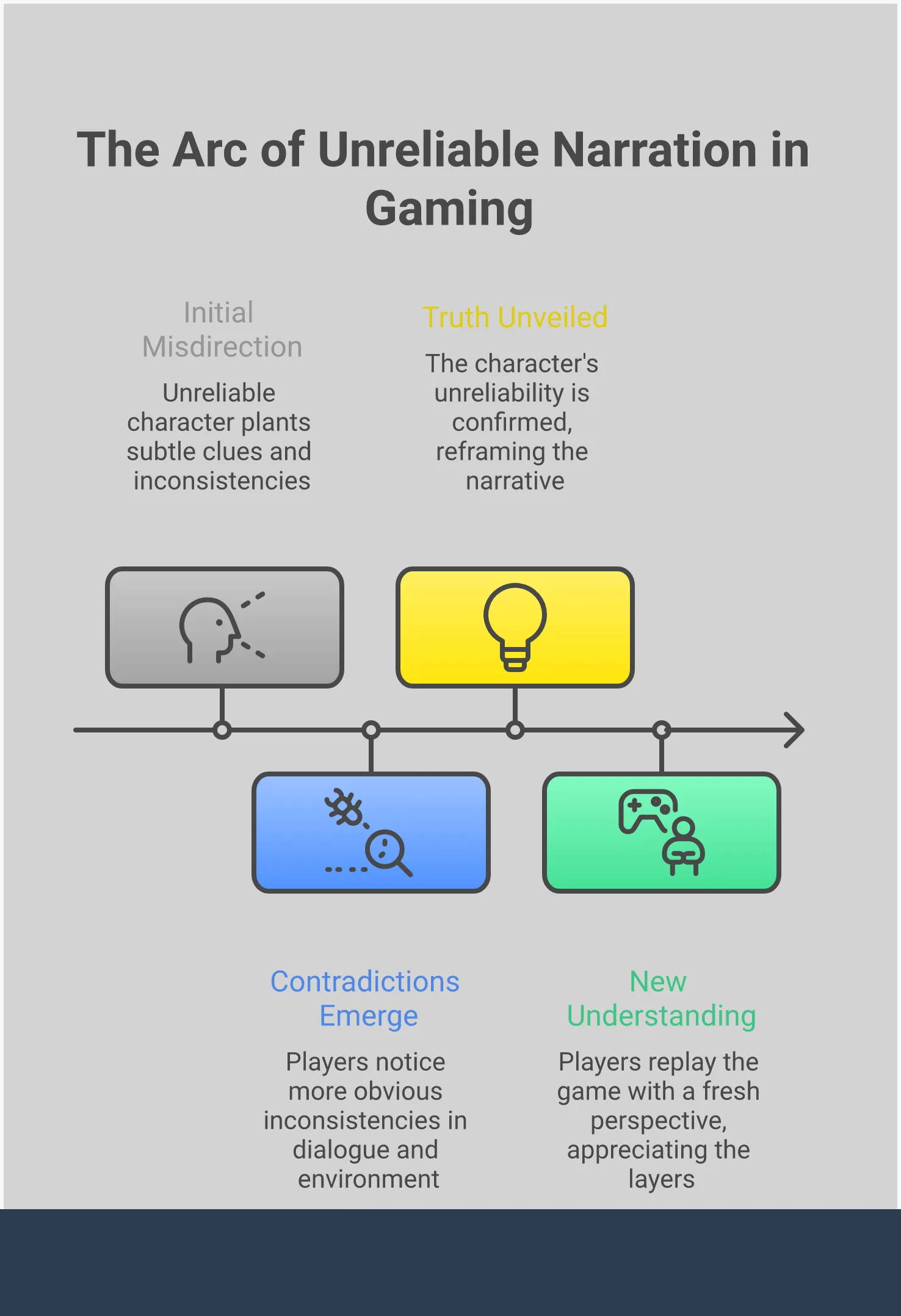
An untrustworthy narrator is someone who can’t be believed, and Doug is a prime example. He claims to be telling his own life story, but every detail feels shaky and unreliable. This makes the audience work to understand what’s really happening. Instead of simply hearing a story, we’re trying to figure out the truth, as if looking at a distorted reflection. This technique keeps us engaged, constantly analyzing clues and questioning everything, turning even a normal conversation into a compelling mystery.
Using Mystery and Doubt to Hook Players
Humans naturally try to find explanations and meaning in everything around them, and storytelling is how we make sense of our experiences. When a story is intentionally confusing, like Doug’s, it creates a compelling puzzle. The inconsistencies in what he says make us question his motives and keep us watching. Is he just a harmless troublemaker, a compulsive liar, or something truly threatening? This uncertainty is incredibly captivating. It’s similar to the drive we feel when playing a video game – the urge to explore every detail and complete every task, all in pursuit of answers and the truth.
Building Suspense with Flaws and Inconsistency
Usually, plot holes indicate poor storytelling. However, when a character isn’t trustworthy, those inconsistencies actually create suspense. Every time Doug’s story doesn’t add up, it increases the tension. His changing timeline and unclear reasons make him impossible to predict. Because we can’t understand his thinking, we have no idea what he might do. This is much scarier than a typical villain with obvious plans. The problems with his story aren’t errors—they’re what make him so frightening and unpredictable, leaving us constantly guessing his next move.
Related Articles
- Deus Ex LFG: Connect with Other Augs in LFG Feature on Z League App
Frequently Asked Questions
Who exactly is Doug? The truth is, nobody knows for certain, and that’s a big part of what makes his story so compelling. He wasn’t a well-known gamer or streamer – just a regular player who became a fascinating enigma through his strange and unpredictable way of telling stories. The appeal of Doug isn’t about figuring out who he is, but about how his unique and chaotic approach transformed a simple game into something truly memorable and psychologically engaging.
What made this particular player interaction so popular? It became a viral hit because it felt like a complete story on its own. It had everything: a puzzling character named Doug, a resourceful player named Zlaner trying to figure things out, building tension, a dramatic showdown, and a surprising ending. It wasn’t just a cool play or a funny mistake – it was a story that unfolded in real-time, with all the elements of a great thriller, and it left people wanting to discuss what happened.
It’s hard to say if Doug was intentionally trying to mislead everyone, or if things genuinely became risky. The situation was a mix of both, which is what makes it so interesting to watch. Doug’s stories started as jokes and didn’t make much sense, but the mood changed immediately when he pulled out his weapon. You can clearly see Zlaner realize the situation was now a real threat. The danger wasn’t simply about losing the game; it was about facing an opponent who was acting completely unpredictably and not playing by the rules.
Zlaner reacted to a threat in a surprisingly creative way. While most players would have immediately opened fire, he chose to de-escalate the situation with a dance battle and a singing contest. Instead of using force, he cleverly changed the terms of the conflict, taking control by thinking outside the box. It was a brilliant display of quick thinking and improvisation.
What can gamers take away from the ‘Doug’ situation? It’s a great example of how the most unforgettable gaming moments often happen because of spontaneous interactions between players. It highlights that a captivating story can be more interesting than just action, and that being creative is a valuable skill – whether you’re making content or dealing with challenging moments. Ultimately, it shows that the stories we create are the ones we remember best.
Read More
- Netflix’s Little House On The Prairie Reboot: Release Date, Cast & Everything We Know
- Off Campus Season 1 Soundtrack Guide
- Silver Rate Forecast
- Prime Video’s New R-Rated Spy Thriller Is Officially No.1 On Streaming Despite Poor Reviews
- Gold Rate Forecast
- Brent Oil Forecast
- EUR ZAR PREDICTION
- Bulgakov’s Take: Koreans Bet the Farm on Chips, Crypto, and Chaos
- Amazon Primes new GenAI cartoon looks like K-Pop Demon Hunters with aliens
- Inkford Hermitage Chest Locations In HSR (Honkai: Star Rail)
2026-02-25 14:29