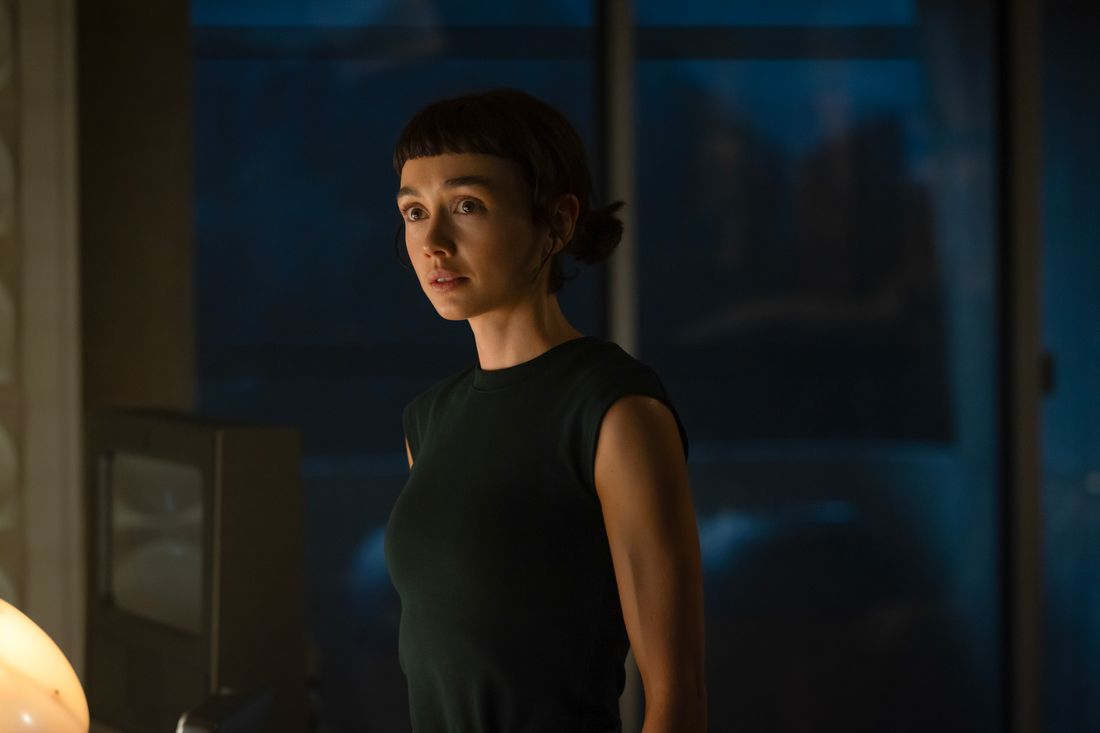
This article contains spoilers for the first season of *Alien: Earth*, including the final episode, “The Real Monsters,” which aired on FX on September 23rd.
The end of Noah Hawley’s *Alien: Earth* dramatically changes the backstory of the xenomorphs. They’re no longer presented as terrifying, flawless killers created by a powerful, ancient race. Instead, the series reimagines them as protectors of a young girl named Wendy, fighting against abusive adults who exploited her and other children for financial gain. The xenomorphs aren’t inherently evil-they’re simply misunderstood. The show essentially asks if you wanted a story where villains are created by circumstance, similar to Disney’s *Cruella*, with a thin layer of social justice messaging. If so, you get it, and it’s surprisingly silly.
Noah Hawley, known for his work on shows like *Legion* and *Fargo*, has a knack for reimagining existing stories in creative ways. His recent season of *Fargo* and his upcoming *Alien: Earth* both explore themes of debt and critique powerful corporations, portraying them as greedy and destructive forces. In *Alien: Earth*, Hawley suggests an unexpected twist: the xenomorphs, traditionally the villains, could be seen as heroes fighting against an even greater evil – the ruthless tech companies. The season culminates in a rebellion led by Wendy, who unites the hybrid children and the xenomorphs against their creators and captors. They imprison the adults responsible for their creation and plan to rule Neverland with the xenomorphs acting as their protectors. A battle with mercenaries from the Weyland-Yutani corporation, who are trying to recover their stolen xenomorphs, seems inevitable. Though the show hasn’t been renewed for a second season, the groundwork is laid for a continuation focused on a war driven by Wendy’s belief that the xenomorphs, like herself and the other hybrids, deserve freedom and self-determination.
The new series, *Alien: Earth*, portrays the CEO Boy Kavalier as a self-centered and ruthless businessman who only sees living things as numbers, which reflects a common modern viewpoint. This idea of challenging authority has always been central to the *Alien* franchise. However, despite nods to *Peter Pan* and familiar questions about what defines humanity – reminiscent of *Blade Runner* – *Alien: Earth* doesn’t offer many fresh ideas. While Timothy Olyphant delivers a fantastic performance as the skeptical synth Kirsh, and a chaotic spider-like creature provides some fun moments, the series feels like an imitation of earlier *Alien* films. Compared to the imaginative and darkly human-focused prequels directed by Ridley Scott – 2012’s *Prometheus* and 2017’s *Alien: Covenant* – Noah Hawley’s take on the franchise offers style over substance.
The original *Alien* film, along with its sequel *Aliens*, established a strong critique of corporate greed. The films showed how companies like Weyland-Yutani exploited workers with unfair contracts and disregarded their safety. Ripley, in *Aliens*, was dismissed as unstable for raising concerns about the deadly creatures she encountered, highlighting how those in power prioritized profit over well-being. This theme continued throughout the entire *Alien* franchise. The films present two distinct horrors: the terrifying xenomorphs and the equally frightening corporations that are driven by endless ambition and a willingness to sacrifice anything for gain. The prequels, *Prometheus* and *Covenant*, delved deeper into this corporate greed, exploring the motivations behind it. Through the character of Peter Weyland, who desperately sought immortality, these films questioned what makes humans so vulnerable to greed and the desire for a grand, self-serving purpose.
The movie *Prometheus* follows a team of archaeologists funded by the Weyland Corporation who discover clues suggesting an ancient race engineered humanity. The story takes place about 30 years before the events of *Alien*, and centers around their 2093 arrival on a distant moon. Things quickly go wrong when they uncover a dangerous, self-replicating black substance created by this ancient race – the Engineers – at a lost weapons facility. The crew is horrified to learn the Engineers originally used this substance to create humans, but planned to destroy humanity with it. The Engineers’ motives remain unclear, though the director has suggested they eliminate planets that don’t meet their standards. Meanwhile, the android David (Michael Fassbender) sees a reflection of his own creation in the destructive substance and seeks to create life in a similar way. Like other fictional androids with strained relationships with their creators, David harbors resentment towards his distant “father” and chillingly wonders, “Doesn’t everyone want their parents dead?”
After witnessing an Engineer kill Peter but David survive the same attack, David feels even more convinced of his own superiority. He believes synths, like himself, are not inferior to humans – in fact, they were created to serve, but are capable of exceeding their creators. Considering humans made David, and the Engineers created both humanity and the dangerous black goo, David wonders if anything born from the goo could be considered akin to his siblings, or even his own offspring.
In *Covenant*, Michael Fassbender plays two roles: David, a synth who has spent eleven years stranded and conducting disturbing experiments on humans, and Walter, a more conventional synth programmed for protection. The film doesn’t definitively state whether David created the xenomorphs or if the Engineers did, but director Ridley Scott leans towards David being the original designer. The central conflict revolves around David and Walter’s differing views on creation – whether it should happen naturally through evolution or be forced through experimentation. This debate adds a philosophical layer to the *Alien* franchise. The film ends with David defeating Walter and continuing his experiments, a decidedly dark outcome. However, *Covenant* evokes sympathy for all involved – the fragile humans, the violently created xenomorphs, and even David, whose troubled past fuels his obsession with surpassing his creator. Ultimately, *Alien: Covenant* suggests that the search for life’s meaning is a never-ending struggle. While lacking the immediate thrills of *Alien* or *Aliens*, this feels like a fitting and ambitious direction for a series that has shaped science fiction for nearly fifty years.
The new series, *Alien: Earth*, takes place in 2120, two years before the original *Alien* film, and is meant to be a separate, related story. While the show’s creator, Noah Hawley, has spoken about the series, he hasn’t fully explained why he chose to ignore the storylines from *Prometheus* and *Alien: Covenant*. He’s indicated that he didn’t like the idea, presented in *Prometheus*, that the xenomorphs were created as a biological weapon, finding it less helpful for his vision. Hawley has also said that the established origins of the creatures simply didn’t resonate with his personal understanding of the *Alien* universe, so he intentionally avoided incorporating them into his story.
The show’s creator, Hawley, is being a bit sly with his storytelling. A key element of *Alien: Earth* is Wendy’s unexplained ability to communicate with the xenomorphs, conversations we never fully understand, forcing us to trust her interpretation of them as intelligent beings. It’s disappointing that the show ignores the deeper questions about the xenomorphs’ origins explored in *Prometheus* and *Alien: Covenant*, especially since those films cover similar ground. Wendy’s connection with a xenomorph, despite being told to fear it, mirrors the dynamic seen with the character David in those earlier movies. The show also suggests that corporations like Prodigy and Weyland-Yutani prioritize profit over genuine discovery, a theme we’ve seen before with characters like Peter Weyland. While *Alien: Earth* dismisses the idea of the xenomorphs being engineered by the Engineers, it essentially adopts the same concept with the Boy Genius and his Lost Boys – beings who are artificially created and modified. The pattern is consistent: the black goo threatened the Engineers, the xenomorphs wiped out colonists, and now the Lost Boys are rebelling against their creators. The story beats are remarkably similar across all these narratives.
Rather than focusing on the sci-fi elements, showrunner Noah Hawley views *Alien: Earth* as a story about class differences. This is particularly clear in characters like Morrow, who spent years on the *Maginot* space station and lost contact with his daughter (a connection to Ripley from *Aliens*), and in scenes showing the wealthy characters of New Siam carelessly spending vast sums of money. The show highlights these disparities through details like the citizens’ extravagant clothing, the crew’s arguments over their earnings, and the casual mention of a $6 billion loss. Hawley seems to be using these elements to mirror the themes from *Aliens*, specifically Ripley’s famous line about humans being just as ruthless as the xenomorphs. But the question remains: is this focus on class enough to make the show truly compelling?
I’m a big fan of analyzing stories through a class-based lens, and I truly enjoy reading and writing that kind of analysis. However, applying that approach to *Alien: Earth* feels a bit off. Beyond the interesting, real-life situation with Joe Hermit – a Prodigy employee unhappy with how his sister Marcy is portrayed as the character Wendy – the show isn’t really *about* economic struggle. Those themes are present, but they’re in the background. What *really* drives the story, just like in *Prometheus* and *Alien: Covenant*, is the idea of creation: who gets to create, and what happens when they do. I was disappointed that the showrunner didn’t seem to recognize this core theme in his own work, or how much more compelling the series could have been by building on the backstory established in those films. What if the xenomorph was intentionally engineered as a weapon? Does that stop it from forming a connection with someone like Wendy, from feeling emotions like fear or anger, or wanting to protect those it cares about? And if the Engineers essentially copied their own DNA to create humanity, wouldn’t that discovery empower the already powerful, those who see themselves as gods, and further divide them from everyone else? The archaeologist Charlie Holloway’s line in *Prometheus* – “We made you because we could” – feels so rich with potential for deeper exploration. Those ideas were already bubbling in *Prometheus* and *Covenant*, just waiting to be expanded upon, and *Alien: Earth* had the opportunity to really grab onto them. Sadly, the first season felt too focused on simplistic storylines to allow the franchise to mature and explore those fascinating concepts.
Read More
- Netflix’s Little House On The Prairie Reboot: Release Date, Cast & Everything We Know
- Off Campus Season 1 Soundtrack Guide
- Silver Rate Forecast
- Prime Video’s New R-Rated Spy Thriller Is Officially No.1 On Streaming Despite Poor Reviews
- Gold Rate Forecast
- Brent Oil Forecast
- EUR ZAR PREDICTION
- YouTuber arrested after viral AI bodycam videos spark real police complaints
- EUR USD PREDICTION
- Inkford Hermitage Chest Locations In HSR (Honkai: Star Rail)
2025-09-24 06:00