We’ve all probably tried silly things to make bosses appear quicker – like running in circles or ‘sacrificing’ weak monsters. While those fun little traditions are part of the game, they don’t actually change anything. Bosses spawn based on the game’s programming, not luck or rituals. This guide will debunk common myths and give you the real facts. We’ll explain what actually causes bosses to appear, why the number of players doesn’t always affect spawns, and how lockout timers work, so you can stop relying on guesswork.
Key Takeaways
- Understand the ‘Why’ Behind the Wait: Long respawn timers are a deliberate design choice to protect the game’s economy, prevent server lag, and make the fight feel like a major event. Shifting your mindset from frustrated waiting to strategic planning is the first step to mastering these encounters.
- Turn Downtime into Productive Prep Time: Use the window before a boss appears to get your team organized, stock up on consumables, and repair your gear. A well-prepared team that shows up ready for action has a much higher chance of success than one that just camps the spawn point.
- Use Community Knowledge to Get an Edge: You don’t have to figure everything out on your own. Tap into fan-made wikis, Discord trackers, and forums to learn spawn patterns and strategies. This collective intelligence helps you predict when a boss will appear so you can be there on time, every time.
What’s the Deal with Event Boss Respawns?
It’s a familiar frustration for online gamers: patiently waiting for a powerful boss to reappear, only to look away for a moment and miss your chance. These event boss respawns are a key feature in many games – think of the world bosses in Diablo 4 or special challenges in your favorite MMO. They control access to the best rewards and the most thrilling battles.
Respawning enemies can be confusing and annoying if you’re not sure how the system works. Understanding when and why bosses come back is key to changing that frustration into a successful approach. Let’s take a look at how these timers function and why they matter for your overall strategy.
What is a respawn timer?
A respawn timer is basically a game’s way of controlling when defeated enemies or events reappear. It prevents players from repeatedly defeating the same powerful boss without a pause. These timers can be set – a boss might always reappear every four hours, for example – or random, appearing anytime within a range like every 30 to 60 minutes, to add an element of surprise. Players often create tools and trackers to monitor these timers, allowing them to perfectly time their return and avoid uncertainty.
Why respawn times matter for your strategy
Understanding when and how a boss will reappear isn’t just about being there when it does—it’s about being ready. Knowing these patterns lets you schedule playtime, gather your team, and make sure everyone has the right skills and supplies. It means the difference between entering a fight unprepared and confidently taking the lead. Also, many games temporarily prevent you from getting rewards after defeating a boss, so you need to be smart about which battles you focus on, like in Diablo 4. This adds a layer of strategy to the gameplay.
How Do Event Boss Respawns Actually Work?
Have you ever felt like you’re just waiting for an enemy to appear? The process behind that isn’t as simple as it seems. Game developers use several different systems to decide when and where enemies show up, and learning how these systems work can really help you. It’s not just about luck or being in the right spot; it’s about understanding why an enemy appears when and where it does.
Fixed vs. random spawn patterns
Predictable boss appearances are like a train schedule – you always know when they’ll show up. This makes it easier to prepare, but can also lead to a lot of players waiting in the same spot. Random boss appearances, however, keep things exciting and make the game world feel more alive. Many games now combine these ideas. A boss might reappear within a certain timeframe, but players can sometimes do something specific to make it reappear sooner, encouraging them to play actively instead of just waiting.
Server-wide vs. personal spawns
Not all enemies appear in the same way. Some enemies, usually found in dungeons or during story quests, are exclusive to you and your group, so you don’t have to compete with other players to defeat them. Other enemies are available to everyone on the game server, creating a competitive environment. Some games encourage teamwork by adding features that let players work together – for example, a player might be able to use an item to reset all the bosses for everyone, turning a solo challenge into a server-wide event and uniting players towards a shared goal.
Spawns triggered by in-game activity
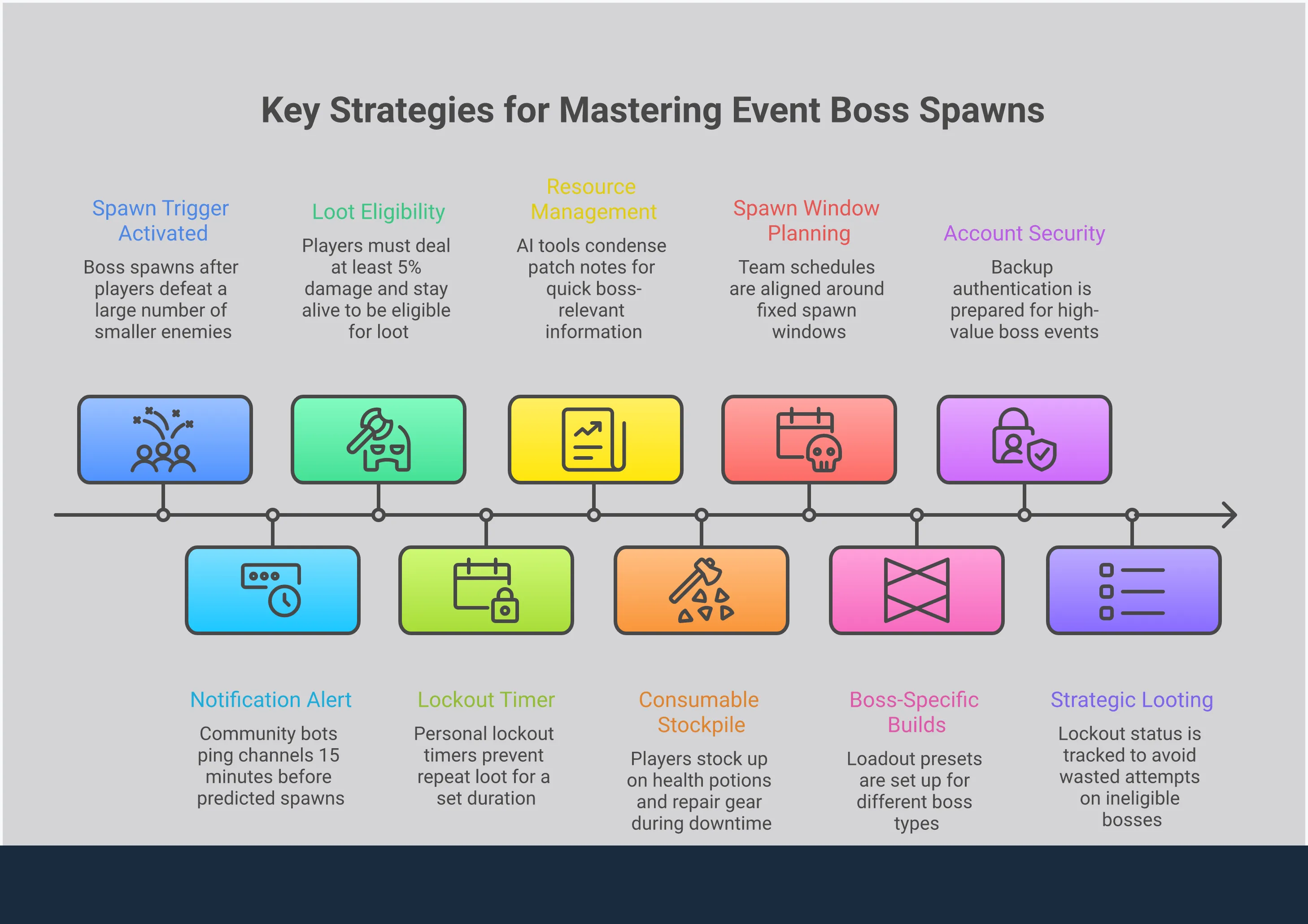
Many games now let your choices really change things, instead of just watching a story unfold. Some challenging bosses don’t appear on a set schedule; they show up only when players achieve specific goals or work together to reach a certain point. For instance, a boss might appear with a 40% chance after players in the area have defeated 2,000 smaller enemies. This makes the game world feel more alive and connected to your actions, and it encourages you to actively participate instead of simply waiting for something to happen.
What Changes a Boss’s Respawn Time?
Have you ever noticed that some boss battles seem to have unpredictable respawn times? That’s because many bosses don’t follow a fixed schedule. Game developers actually adjust these timers based on what’s happening in the game. This helps keep things fair and prevents issues. It’s like they’re subtly controlling the difficulty, making sure victories feel rewarding and the game remains stable, even during intense moments. It’s a complex system designed to improve the overall game experience, not just to make players wait.
Knowing how these timers work can save you time and prevent frustration. Instead of waiting aimlessly, you’ll be able to anticipate when the next major event will begin. These timers are mainly affected by how many players are nearby, the game’s need to maintain a fair economy, and the technical limitations of the game servers. Each of these factors significantly impacts wait times before you can participate again. Mastering these mechanics could mean the difference between getting valuable rewards and arriving too late to claim them.
How player count affects spawns
How many players are around a boss can really impact gameplay. In some open-world games, a larger group of players can even make bosses reappear faster, leading to more exciting and large-scale battles. Game developers understand that a difficult boss combined with other players can be more dangerous than the boss itself, creating a thrilling and unpredictable situation. However, some games will delay a boss’s appearance if there aren’t enough players around, to avoid a solo player accidentally running into a fight that’s too hard.
Game balance and loot distribution
Ever wonder why some boss fights have such long waits between respawns? It’s usually to make the powerful items they drop feel valuable. If a powerful boss could be fought constantly, everyone would quickly get the best gear, and it wouldn’t feel special. Game developers carefully adjust how often bosses reappear to control how quickly powerful items enter the game. That’s why you sometimes see players frustrated with long waits for bosses who don’t offer great rewards – it’s a tricky balance between a challenging fight and exclusive loot, and something fans often talk about, especially with new content like the Vessel of Hatred trailer.
Server performance and technical limits
Long waits to respawn a boss aren’t always a game design choice. They can be due to the technical demands on the game server. Spawning a large, complicated boss with lots of effects and attacks requires a lot of processing power. When many players fight it simultaneously, the server feels even more strain. To avoid lag, crashes, and other issues, developers intentionally add cooldowns. That’s why special events that speed up respawns usually don’t affect world bosses – their spawn times are fixed to keep the server stable and the fight running smoothly for all players.
Why the Long Wait? The Slow Respawn Explained
It’s frustrating when you’re waiting for a powerful enemy to reappear in a game, unsure if you’re doing something wrong or if the game is simply delaying it. While this wait can feel like a bad design choice, developers usually have good reasons for it. They aren’t trying to annoy players; they’re carefully controlling when these enemies appear to keep the game balanced, enjoyable, and rewarding for everyone.
Waiting can be frustrating, but understanding why it happens can actually help you succeed. Instead of simply being idle, you can use the downtime to get prepared, work with your teammates, and gear up for the challenge. These delays aren’t just random – they’re built into the game to keep the servers running smoothly, protect the items you’ve worked hard to get, and create a more thrilling experience. Let’s explore the reasons for the wait and how it ultimately improves your game.
Preventing server lag and overcrowding
As a gamer, one of my biggest frustrations is when a server just can’t handle a big event. Imagine hundreds of us all trying to take down a tough boss – that puts a huge strain on the game’s systems. Every hit, every spell, everything needs to be calculated for everyone involved. That’s why you often see long waits to respawn after dying in a big fight; it’s not just annoying, it actually helps prevent the whole server from crashing! I saw someone put it perfectly on the Ashes of Creation forums: when you’ve got a complex boss fight and then add PvP on top of it, the biggest danger isn’t the other players, it’s the sheer chaos potentially bringing everything to a standstill. Spacing out these big encounters is key for developers to make sure the fight is smooth and everyone has a fair shot.
Keeping rewards valuable and rare
If powerful items dropped constantly from bosses, they’d quickly become common and lose their excitement. Long waits between boss appearances are important for keeping the game’s economy healthy and making good loot feel truly rewarding. The harder something is to get, the more valuable it feels. This system ensures that getting top-level gear feels like a real achievement, not just another task completed. While some players dislike the wait, it’s a necessary part of what makes those rewards special. As one player pointed out, the long wait times are directly connected to how rewarding the items feel, making the final prize feel truly earned.
Building anticipation for the fight
Psychologically, the time spent waiting between boss fights actually adds to the enjoyment. This downtime isn’t wasted; it’s a chance to get ready and plan your strategy with friends. You can use it to collect items, fix your equipment, and talk about how to approach the fight. This calm period before the action builds excitement and makes the final battle feel more impactful, turning a regular fight into something special. Understanding the boss’s attack patterns is key, allowing players to be better prepared each time, as one guide explains. That anticipation makes winning – and getting your reward – feel even more satisfying.
The Biggest Headaches with Respawn Timers
We’ve all experienced the excitement of preparing to fight a powerful boss in a game, waiting for it to reappear. But sometimes, the game’s timing feels unfair. While it’s true that bosses need time to respawn, these timers can often be really frustrating. Confusing rules and the race to deal the last hit can ruin what should be an epic battle, leaving players annoyed and wanting to quit. Let’s look at the most common problems that cause this frustration.
Confusing mechanics and jargon
Reaching the final boss can be frustrating when the battle is overly complicated. You might find yourself spending more time looking up instructions than actually playing. Adding other players to the mix often makes things worse. As one player noted, difficult boss fights combined with competitive players can lead to a chaotic situation where other players become a bigger problem than the boss itself. This turns what should be a cooperative challenge into a stressful free-for-all, prioritizing survival over enjoyment.
Unpredictable timing and wasted effort
It’s incredibly frustrating to prepare for a challenging event, like a boss fight, and then have it not appear. Long or unpredictable wait times before these events can feel like a real waste of time, especially when the rewards don’t seem worth it. Players often have to coordinate with their friends, use up important items, and set aside time, only to find out the event won’t be available again for hours. This makes it hard to plan gaming sessions and can leave you feeling like you’ve wasted resources for no reason.
Competing with other players for the kill
When a difficult boss finally appears in a game, players often rush to defeat it as quickly as possible. This can turn a strategic fight into a chaotic competition to deal the most damage, rather than working together as a team. While lockout periods sometimes prevent players from repeatedly farming the boss, the initial encounter remains frantic. This competition, often sparked by debates over how bosses are spawned, can ruin the fun and turn a potentially rewarding experience into a stressful race.
How Summarization Tools Give You an Edge
Okay, seriously, keeping up with all the info for those tough event bosses feels like another job sometimes! I’m talking endless forum posts, super detailed guides, and huge patch notes… it’s easy to get totally swamped. I just want to play the game, not spend all my time reading about it. That’s where AI summaries are a lifesaver. They don’t help you cheat in the game, but they definitely help me prep smarter and get a leg up on other players.
As a gamer, I’m always looking for ways to improve, and these tools feel like having a super helpful assistant. Seriously, they cut through all the complicated stuff and just give me the info I need to win. Instead of spending ages reading long guides, I can get the important bits in minutes and jump straight into the game. That means I’m way more prepared, less stressed, and ready to beat any boss as soon as they show up! It’s about being efficient, you know? I can focus on actually playing and enjoying the game, instead of getting bogged down in research. They’re especially awesome when I’m juggling a bunch of different games, or when a big update comes out and I need to quickly learn the changes. It’s like having a constant advantage – I always have the latest info without all the tedious work.
Cut through complex game terms
New challenges in games, like bosses and events, always come with their own unique rules and strategies. If you don’t learn them beforehand, you could be quickly defeated by unexpected attacks or miss important opportunities. AI summarization tools can help you quickly understand complex information from guides and online discussions. Just paste a link to a detailed wiki or a lengthy forum thread, and the tool will give you a clear, simple explanation of the key things you need to know. This is especially useful when trying to learn the complicated stories and rules behind new bosses in games like Diablo 4.
Find key updates in patch notes
It’s frustrating to sift through lengthy patch notes just to find updates for your favorite game elements. Developers often hide crucial changes—like when enemies appear or what rewards they drop—within huge blocks of text. Luckily, AI summarizers can help! They quickly condense long patch notes, letting you understand how the game has changed and jump back in faster. Simply paste the notes into the tool and ask for information about a specific boss or event. This makes it easy to stay up-to-date on changes that impact your strategies and gear without the hassle.
Turn long guides into quick tips
Often, lengthy explanations aren’t helpful – you just need a quick, easy-to-follow checklist. A good tool can condense large guides into the essential information you need, right when you need it. Think of turning a complicated strategy into simple steps, like: “Step 1: Avoid the area attacks. Step 2: Defeat the smaller enemies. Step 3: Focus on the boss.” This is ideal for a quick reminder before a challenge, helping you remember the key points. It’s a fantastic way to simplify complex game strategies, such as learning the unique rules in a game like Palworld, into a clear and useful plan.
Busting Common Myths About Boss Spawns
Let’s talk about those popular, but often untrue, ideas surrounding how boss monsters appear in the game. Many players believe performing certain actions – like a specific dance or sacrificing a weak enemy – can make a boss spawn quicker. While these community traditions are enjoyable, they usually come from a misunderstanding of the game’s mechanics. The truth is, boss spawns are determined by the game’s programming, not by player rituals or luck.
It’s incredibly frustrating to wait for a boss that doesn’t appear, or to just miss them. This wasted time can feel unfair, like you’re battling an invisible system. But what if that system wasn’t so mysterious? Knowing how things actually work can transform your approach, turning a frustrating wait into a smart plan. Understanding the facts saves you time and ensures you’re in the right place when the boss arrives. Let’s uncover the truth behind boss appearances and debunk some common misconceptions.
False triggers and spawn patterns
You know, a lot of people think if a bunch of us hang out in one spot, a boss will automatically pop up. But honestly, that’s usually not how it works! I’ve learned it’s rarely about how many players are there. It’s more about what we’re actually doing. Most of the time, the game is tracking something like how many regular enemies we’ve defeated. So, instead of just standing around hoping for a boss, it’s way better to keep busy and clear out monsters. That seems to be the real trigger – hitting a certain number of defeated mobs before the boss shows up!
Confusion about lockout periods
It’s common to want to immediately retry a difficult boss after finally defeating it, but many players are surprised when they can’t. A lot of people assume they can keep fighting the same boss over and over, but most games have a system in place to prevent that. This is often discussed among players, but the reason is simple: to ensure fairness and stop one group from taking all the best rewards. Usually, after you help defeat a boss, you’ll need to wait a certain amount of time before you can earn rewards from it again.
How much players really influence timers
You might think a temporary boost like a “fast respawn” event or a special item would help bosses reappear quicker, but that’s usually not true. Bosses have their own separate timers that aren’t connected to how quickly regular monsters respawn. Game developers do this to control the game’s economy and make boss loot stay rare. So, even though a server-wide buff can help you gather materials or level up faster, it won’t speed up the boss’s return. It’s been proven repeatedly: these events don’t affect boss respawn times.
How to Track and Prep for the Next Spawn
Ever arrive at a challenging encounter only to find it’s already been completed? Waiting for enemies to reappear can be frustrating, but it doesn’t have to be a matter of chance. By learning to predict when enemies will respawn, you can gain a significant edge. Instead of relying on luck, you can prepare your team and be ready to fight. Let’s explore how to time your arrival perfectly and consistently claim the best rewards.
Use in-game and community tools
Okay, so if you’re like me and want to re-fight bosses, the first place I check is always the game itself – some games actually let you reset everything right in the settings! But honestly, the best help comes from other players. I spend a lot of time on fan wikis, Discord servers with those handy timer bots, and forums. Seriously, there are so many dedicated fans out there who’ve already figured out boss spawn times and locations. It’s a huge time-saver, and it makes it way easier to team up with others and actually beat those tough bosses!
Learn to predict spawn patterns
Imagine you’re a detective trying to figure out when and where bosses appear. Most bosses don’t just show up by chance – they usually follow a pattern, happen after certain events, or are linked to things happening around you in the game. Start observing closely! Does the boss appear after you defeat a specific number of enemies? Does the weather change beforehand? If you can recognize these patterns, you’ll be better prepared for the fight. Keep a simple record of when and where you see the boss appear. With practice, you’ll start to anticipate their arrival and be able to change your strategy accordingly.
Get quick updates with summarization tools
Game developers are always making changes, and updates can drastically alter how things work in a game, like when enemies reappear. But nobody wants to spend ages reading through detailed patch notes! That’s where AI summarization tools are helpful. They quickly condense long articles, patch notes, and guides into short, easy-to-understand summaries. When you need to know what’s new, a good tool lets you quickly get the important details without taking you away from the game for long. It’s a great way to stay informed and jump right back into the action.
Adapt Your Strategy to Respawn Mechanics
It’s one thing to know how long it takes for a boss to reappear after being defeated, but truly skilled players use that information to gain an edge. Instead of just waiting, smart teams use that downtime to prepare – gathering resources, planning tactics, and getting ready for the next encounter. This deliberate approach is what distinguishes experienced players from those who simply rely on chance. Here’s how to adjust your strategy and consistently win boss fights.
Plan your gaming sessions around spawns
It’s incredibly frustrating to miss a world boss by just a few minutes. Once you learn when bosses typically appear, you can schedule your playtime around those important events. Instead of having to constantly wait, you can log in, get ready, and be in the right place at the right time. This is particularly helpful when playing with a guild or friends, as it lets everyone coordinate and be online together when the boss spawns. Knowing these patterns turns waiting into a smart part of your strategy.
Manage your resources before the fight
It’s frustrating to discover you’re unprepared during a difficult boss fight – like running out of potions or having damaged armor. Before a boss appears, take the time to get ready: fix your gear, gather supplies, and free up space for new items. However, managing resources isn’t just about items. Information is even more important. Instead of struggling through long patch notes, use tools that quickly explain a boss’s new abilities or weaknesses. Being truly prepared means having both the right equipment and the right knowledge before the battle begins.
Adjust your approach for different games
Okay, so I’ve learned the hard way that what works for taking down a world boss in Diablo 4 just doesn’t fly in PvP zones. You really have to think about where you are and who’s around. When I’m just focusing on the boss’s attacks in a co-op game, it’s one thing. But when other players can jump in and attack me? Forget about it! Suddenly, those players are way more dangerous than the boss itself, like someone else pointed out. I’ve had to completely change my build and how I play. Now I always ask myself: am I in a safe, instanced area? Is PvP turned on? And who else is even nearby? It makes a huge difference.
Get the Most Out of Every Boss Fight
Beating a difficult boss in a game can be really challenging, but with the right strategy, you can turn that challenge into a chance to get great rewards. It’s about being efficient, not just powerful. Knowing how the boss fight works – things like when enemies appear and how rewards are given – gives you a big edge over players who just rush in. Instead of hoping for luck, you can go in with a plan to make the most of your time and effort, turning a frustrating experience into a satisfying win. It’s not just about having the best equipment or being at a high level; it’s about being smarter than the encounter. If you understand the fight’s rules – like when the next wave of enemies will appear or what makes the boss angrier – you can use that knowledge to your advantage. Think of it like solving a puzzle – every detail is a clue. By piecing those clues together, you can create a strategy that guarantees victory and makes the whole experience more enjoyable. Let’s explore how to approach every boss fight with confidence and consistently earn the best rewards.
Increase your chances of success
Each time you fight a boss, whether you win or lose, you learn something new. The most important thing is to carefully watch how the boss attacks and behaves. Look for repeating moves or signals – sounds or visual clues – that happen before powerful attacks. Understanding these patterns will help you predict what the boss will do next and respond effectively. Don’t be afraid to change your strategy after each try. Just like you’d switch up your gear in a game like Warzone depending on the situation, avoid using the same rigid plan for a boss that keeps changing. Think of each fight as a chance to gather information and improve your approach for the next attempt.
Prepare for the fight efficiently
Top players prepare thoroughly before a boss fight even starts. Most bosses don’t appear until you do something specific in the game, like completing an action or reaching a certain point. Figure out what triggers the boss and use that to your benefit. Before starting the fight, make sure you’re at full health and mana, and that your abilities are ready to use. Also, repair your gear and stock up on potions and scrolls. This prevents you from being caught off guard during the fight. Good preparation lets you focus entirely on playing well when the boss appears, leading to a smoother and more successful attempt.
Score the best rewards every time
Okay, so beating a tough boss is awesome, but getting the good stuff they drop is just as important! A lot of games have this thing called a lockout timer. Basically, after you beat a boss, you can’t just immediately farm them over and over for loot. The game puts a cooldown on it to keep those rewards special and stop people from endlessly grinding. Seriously, learn the lockout rules for whatever game you’re playing – you don’t want to waste your time fighting if you’re not even going to get a reward! Also, make sure you actually participate in the fight and stay alive until it’s over, or the game might not even count your kill for loot purposes.
Related Articles
- Deus Ex LFG: Connect with Other Augs in LFG Feature on Z League App
Frequently Asked Questions
Some boss battles have predictable timings, while others seem to happen at random. It’s similar to the difference between a train schedule and a surprise party. Developers sometimes set bosses to appear at a specific time each cycle, allowing players to plan accordingly. Other times, they create a window of time – say, between 30 and 60 minutes – to add an element of surprise and avoid players constantly waiting in one location. Many newer games use a combination of both, with boss spawns happening around a set time but also being affected by what players are doing in the game, encouraging active participation instead of just waiting.
That long wait for a world boss to appear can be frustrating, but it’s actually a clever design choice. It helps keep the game stable by preventing server crashes when many players join the fight at the same time. It also maintains the value of the boss’s rewards – if powerful items dropped constantly, they wouldn’t feel as rewarding. Plus, the wait time builds excitement and gives players a chance to get ready, making the fight feel like a big deal.
A common question is whether getting a group together in one spot can make a boss appear sooner. Actually, that’s a popular myth! While seeing a lot of players in one place might mean a boss is about to spawn, the number of people waiting doesn’t usually change the spawn timer. Bosses typically appear on a set schedule or when players complete certain tasks, like defeating enough smaller enemies. So, instead of waiting around, it’s usually more helpful to keep playing and try to trigger the spawn that way.
You probably didn’t get loot the second time because the game is working correctly. Many online games have a system where you can only get rewards from a powerful boss once per a certain amount of time. After you defeat the boss and claim your loot, there’s a cooldown period. You can still fight the boss during this time, but you won’t receive any more rewards until the timer resets. This prevents players from repeatedly getting the best items.
Want to stop being late for boss battles? Don’t rely on guesswork! The gaming community is a great resource. Check out fan websites, Discord servers with timing bots, or game wikis – players often share boss spawn times there. You can also track the boss yourself by keeping a record of when and where it appears. After a while, you’ll start to see patterns and be able to predict when it will show up next.
Read More
- All Itzaland Animal Locations in Infinity Nikki
- Paramount CinemaCon 2026 Live Blog – Movie Announcements Panel for Sonic 4, Street Fighter & More (In Progress)
- Cthulhu: The Cosmic Abyss Chapter 3 Ritual Puzzle Guide
- Persona PSP soundtrack will be available on streaming services from April 18
- Raptors vs. Cavaliers Game 2 Results According to NBA 2K26
- The Boys Season 5 Spoilers: Every Major Character Death If the Show Follows the Comics
- Rockets vs. Lakers Game 1 Results According to NBA 2K26
- Dungeons & Dragons Gets First Official Actual Play Series
- Spider-Man: Brand New Day LEGO Sets Officially Revealed
- Focker-In-Law Trailer Revives Meet the Parents Series After 16 Years
2026-02-16 14:36