Long-running series often fall into predictable patterns, and Pokémon Horizons is no exception. However, there are still some story ideas the franchise should steer clear of. Recently, Pokémon Horizons took a risk by jumping the story forward a full year.
I’ve noticed time-skips are a pretty divisive thing in anime – they jump the story forward in time to show how characters and the world have changed. But the recent time-skip in Pokémon Horizons feels like a really poor example of this technique, highlighting everything fans dislike about it.
Pokémon Horizons Ruins a Near-Perfect Reboot With an Unnecessary Time Skip
Pokémon Horizons deserves praise for its daring choice to advance the story by a full year. While a significant time jump is always noticeable, it’s particularly unusual given the timing within the Pokémon storyline. Instead of following a major event with a thoughtful time skip, the series uses it to abruptly pause an existing story.
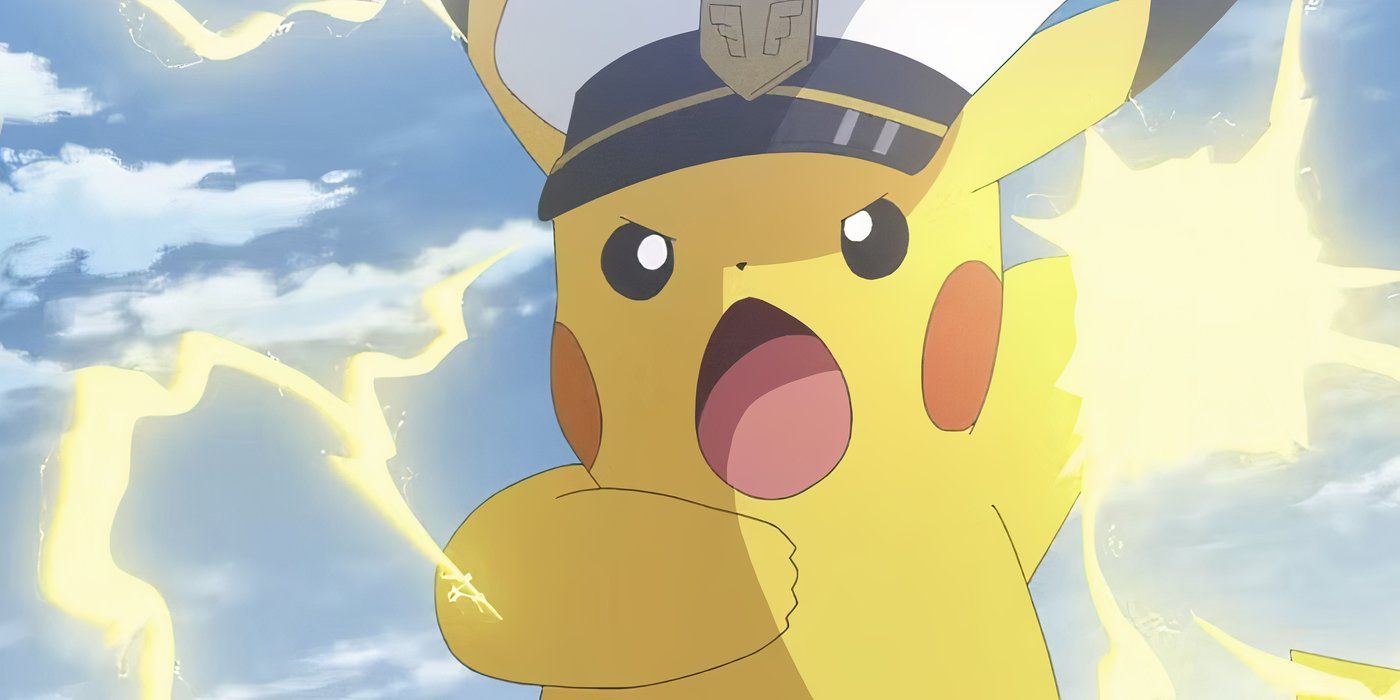
The latest episode of Pokémon Horizons, titled “Where the Adventure Leads,” ends with a dramatic cliffhanger. Friede and his Pokémon, Charizard and Captain Pikachu, are in serious danger as their airship changes form. Friede makes the difficult decision to sacrifice himself, entrusting Captain Pikachu to Liko before vanishing with Charizard. The show then unexpectedly jumps forward in time by a year, leaving viewers with many unanswered questions and the characters scattered and separated.
Liko is back at Indigo Academy, Spinel is now leading the Explorers as the new director of Exceed, and Roy has a Shiny Lucario, a Mega Ring, and is working with Captain Pikachu. These changes aren’t inherently bad for the anime, but they happen so suddenly that it feels like previous storylines weren’t fully resolved.
Watching Pokémon Horizons, I’ve noticed the writers took a big risk by splitting up the main characters. It felt like they did it to shake things up, and I figured the eventual reunion would be really impactful after a long separation. But honestly, the separation didn’t feel natural; it came across as a forced way to create drama. Some choices, like sending Roy back to the Indigo Academy, actually felt like a step backward. Time-skips can be a great way to explore how characters change and deal with the consequences of being apart, but Pokémon Horizons just doesn’t seem interested in that kind of deeper look.
The biggest problem with the recent episodes of Pokémon Horizons is that they often don’t feel connected to what came before. It’s as if the show has become a side story designed to promote Pokémon Legends: Z-A. The constant focus on creatures and gameplay elements from Legends: Z-A is distracting and takes away from the current story.
Pokémon Horizons Goes Downhill After the Time Skip
Anime series like Dragon Ball and One Piece have successfully used time-skips to show characters getting stronger. Gintama even playfully pokes fun at how often this trick is used. Usually, time-skips allow anime to quickly explain why characters have improved their abilities – showing years of training condensed into a short scene. When done well, it’s really exciting! However, Pokémon Horizons doesn’t use this technique effectively, acting as if simply jumping ahead in time is enough to engage viewers.
The characters in Pokémon Horizons seem inconsistent after the recent time jump. The show prioritizes predictable battle results over meaningful character growth. While it’s impactful to see characters win or lose, these moments don’t resonate because the storytelling doesn’t adequately explain or justify them. Wins and losses feel empty without proper context. Pokémon Horizons often disregards established character traits, seemingly hoping viewers will accept this fresh start and overlook past development.
While time-skips can sometimes revitalize a series by offering a fresh start, Pokémon Horizons doesn’t use the idea in a compelling way. The show also doesn’t bother explaining why things have changed, making the new direction feel unearned. Some characters, like Roy and Liko, seem to lose progress, and interesting additions, such as Meowscarada, aren’t used to their full potential. Instead of streamlining the story, the time-skip adds unnecessary complications.
In Pokémon Horizons, we learn Roy now has a Shiny Lucario. While a Shiny Lucario is a great addition, the way it happens feels rushed and doesn’t feel naturally earned. This feels similar to other recent developments, appearing more like a way to hint at features from Pokémon Legends: Z-A than a logical progression for the characters. While time-skips often introduce big changes, this feels particularly jarring within the Pokémon series.
Roy hasn’t really improved or learned any new skills in the past year, which is a concern. While his Shiny Mega Lucario is incredibly strong and should be a sign of exciting things to come, it doesn’t make sense that he would have been able to obtain such a powerful Pokémon.
With Pokémon Horizons, it seems the anime creators wanted Roy to have a powerful, evolved Lucario, but struggled to make that happen naturally. The show uses a time-skip to bypass storytelling problems, which unfortunately creates plot holes – a common reason fans dislike time-skips. Fans aren’t interested in time-skips just to see characters become stronger; Pokémon seems to be focusing on achieving a desired outcome without building a solid story to support it.
The Pokémon Horizons Time Skip Makes Older Episodes Better in Retrospect
After a somewhat rocky beginning, Pokémon Horizons has found its stride over the course of 100 episodes. It naturally drew comparisons to the original Pokémon anime and experienced some initial challenges as it got off the ground. However, more recent episodes have unfortunately been of lower quality, which makes the earlier parts of Pokémon Horizons seem stronger in comparison and feels inconsistent with the show’s overall direction.
Pokémon Horizons has struggled to regain momentum after the time skip. Interestingly, fans are now looking back fondly on earlier episodes that weren’t particularly memorable before. This creates a difficult cycle where enjoyment decreases and fans become frustrated with lower quality content. Episodes shouldn’t be celebrated simply because they seem better in comparison to recent ones.
This quick jump forward in the story feels like a bad habit that could be repeated often. It raises concerns that Pokémon Horizons might rely on time-skips whenever the story needs a fresh start, essentially erasing progress instead of finding creative solutions. Time-skips aren’t necessarily a bad idea, but this one makes Pokémon feel a little less original and puts the series in a tricky spot.
Read More
- All Itzaland Animal Locations in Infinity Nikki
- Cthulhu: The Cosmic Abyss Chapter 3 Ritual Puzzle Guide
- Persona PSP soundtrack will be available on streaming services from April 18
- Solo Leveling’s New Manhwa Chapter Revives a Forgotten LGBTQ Story After 2 Years
- Raptors vs. Cavaliers Game 2 Results According to NBA 2K26
- The Boys Season 5 Spoilers: Every Major Character Death If the Show Follows the Comics
- Gold Rate Forecast
- Focker-In-Law Trailer Revives Meet the Parents Series After 16 Years
- 100 un-octogentillion blocks deep. A crazy Minecraft experiment that reveals the scale of the Void
- Morgan Stanley’s Tokenized Tango: Wealth, AI, and the Onchain Waltz
2026-02-16 04:49