Author: Denis Avetisyan
Researchers have developed a computationally efficient framework using graph neural networks to predict post-liquefaction strength and simulate landslide runout.
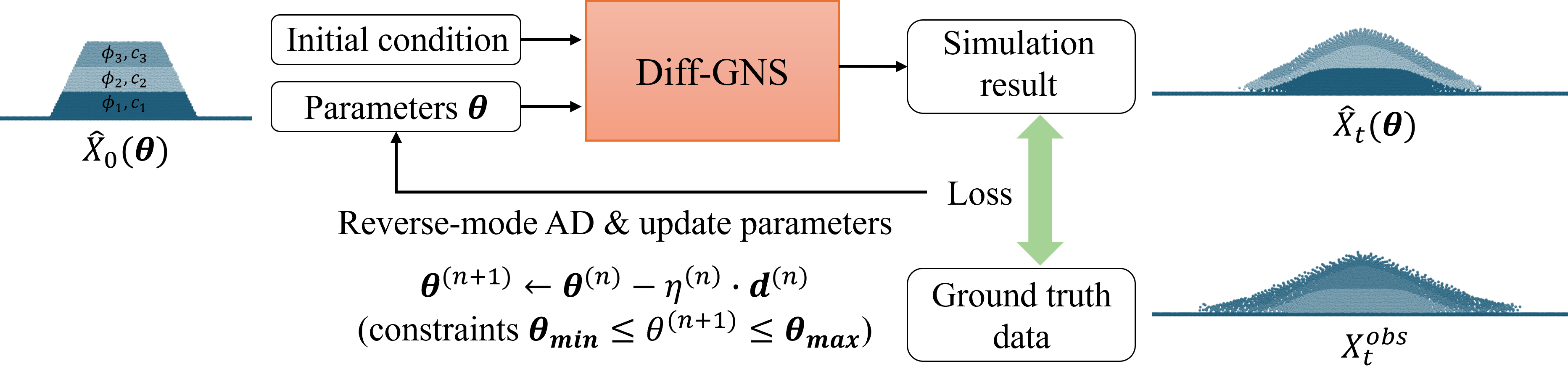
This work introduces Diff-GNS, a differentiable simulation technique for the inverse analysis of post-liquefaction residual strength in slope systems.
Estimating post-liquefaction residual strength from flow failure runouts remains challenging due to reliance on simplified physics, manual calibration, and computational expense. This study introduces a novel framework, ‘Differentiable Graph Neural Network Simulator for the Back-Analysis of Post-Liquefaction Residual Strength from Flow Failure Runout’, which integrates a physics-informed Graph Neural Network Simulator with gradient-based optimization to efficiently back-calculate residual strength parameters. By training on material point method simulations of relevant geometries, the framework rapidly predicts runout behavior and infers material properties, demonstrating strong agreement with documented case histories like the Lower San Fernando and La Marquesa dams. Could this approach facilitate more robust and automated geotechnical analyses of liquefaction-induced failures across diverse scales and complexities?
Whispers of Instability: Predicting Slope Failure in a Seismic World
Predicting when and where slopes will fail during seismic events is paramount to disaster risk reduction, yet current computational methods often fall short of providing practical, large-scale assessments. Traditional numerical modeling, while theoretically sound, demands extensive processing power and time due to the intricate nature of slope mechanics and the need to simulate numerous potential failure scenarios. This computational burden hinders proactive risk management, particularly for expansive regions prone to landslides where evaluating every vulnerable slope is simply infeasible. Consequently, emergency responders and urban planners often lack the timely, detailed information necessary to effectively prioritize mitigation efforts and safeguard communities against the devastating impacts of earthquake-induced slope failures.
Simulating slope failure presents a significant challenge due to the inherent complexity of granular materials like soil and rock. These materials aren’t uniform; they exhibit considerable heterogeneity in particle size, shape, and arrangement, creating unpredictable stress distributions under dynamic loading, such as during an earthquake. Traditional computational methods attempt to model each individual particle and its interactions, but this quickly becomes overwhelmingly demanding, even with powerful computers. The computational cost scales rapidly with the number of particles, making realistic, large-scale simulations impractical. Capturing the nuanced behavior-including particle rearrangement, pore water pressure changes, and the development of shear bands-requires extremely fine resolutions and lengthy computation times, hindering the ability to assess slope stability effectively across broad areas or during prolonged seismic events.
The Granular Network: A Surrogate for Reality
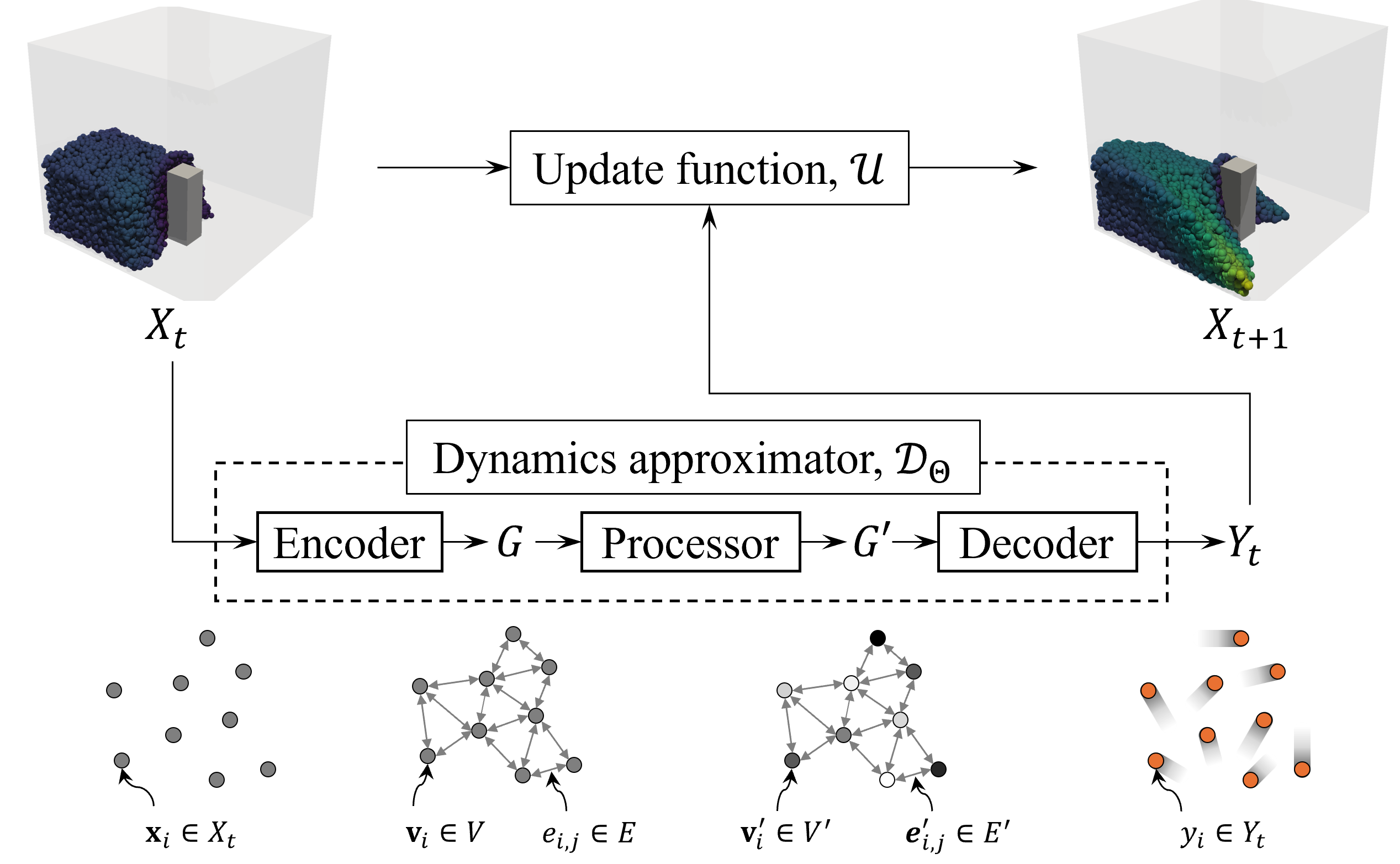
The Differentiable Graph Neural Network Simulator (Diff-GNS) is implemented as a surrogate model to address the computational demands of simulating granular flow. Traditional numerical solvers, such as the Material Point Method (MPM), require substantial processing time for complex simulations. Diff-GNS utilizes a graph-based representation of granular materials and a neural network architecture that allows for significantly faster prediction of system behavior. By learning from data generated through established methods like MPM, Diff-GNS achieves forward simulation speeds approximately 100 times faster than conventional MPM, offering a substantial reduction in computational cost while maintaining a comparable level of accuracy.
The Differentiable Graph Neural Network Simulator (Diff-GNS) models granular materials as a graph structure where individual particles are represented as nodes and their interactions as edges. This graph-based representation facilitates the simulation of complex flow dynamics by enabling efficient calculation of forces and displacements between particles. By abstracting the material as a network, Diff-GNS bypasses the computational demands of traditional mesh-based methods, specifically excelling in scenarios involving large deformations and complex contact interactions. This approach allows for rapid prediction of slope behavior and granular flow patterns, providing a computationally efficient alternative to traditional numerical solvers.
The presented model leverages a Graph Neural Network Simulator (Diff-GNS) trained exclusively on data generated by the Material Point Method (MPM). This training paradigm enables the Diff-GNS to emulate the behavior of granular materials with high fidelity while significantly reducing computational cost. Quantitative analysis demonstrates that the Diff-GNS achieves forward simulation speeds approximately 100 times faster than traditional MPM implementations. This acceleration is achieved by representing the granular material as a graph and utilizing the trained Graph Neural Network to predict material response, bypassing the iterative solving required by conventional MPM.
Unveiling Hidden Strength: Inverse Analysis and Residual Shear
Diff-GNS employs automatic differentiation to enable efficient inverse analysis, a process where material parameters are estimated by minimizing the discrepancy between model predictions and observed data. This technique calculates gradients – the rate of change of the model’s output with respect to its input parameters – automatically, bypassing the need for manual or finite difference approximations. By iteratively adjusting these parameters based on the computed gradients, Diff-GNS converges on a solution that best fits the observed data, effectively performing parameter estimation. The efficiency of automatic differentiation is crucial for complex geotechnical models, allowing for rapid and accurate estimation of material properties from field observations or experimental results.
Residual strength, denoted as S_{rS_r}, quantifies the shear strength of liquefied soil following the cessation of shaking. Estimation of this parameter is crucial for post-liquefaction slope stability analysis and hazard assessment. Diff-GNS enables direct estimation of S_{rS_r} by formulating the inverse problem where observed slope failure geometries are matched through iterative optimization of material parameters within the numerical model. This approach bypasses the need for empirical correlations or back-analysis techniques relying on simplified assumptions, providing a physics-based estimation of S_{rS_r} directly informed by field observations of slope instability.
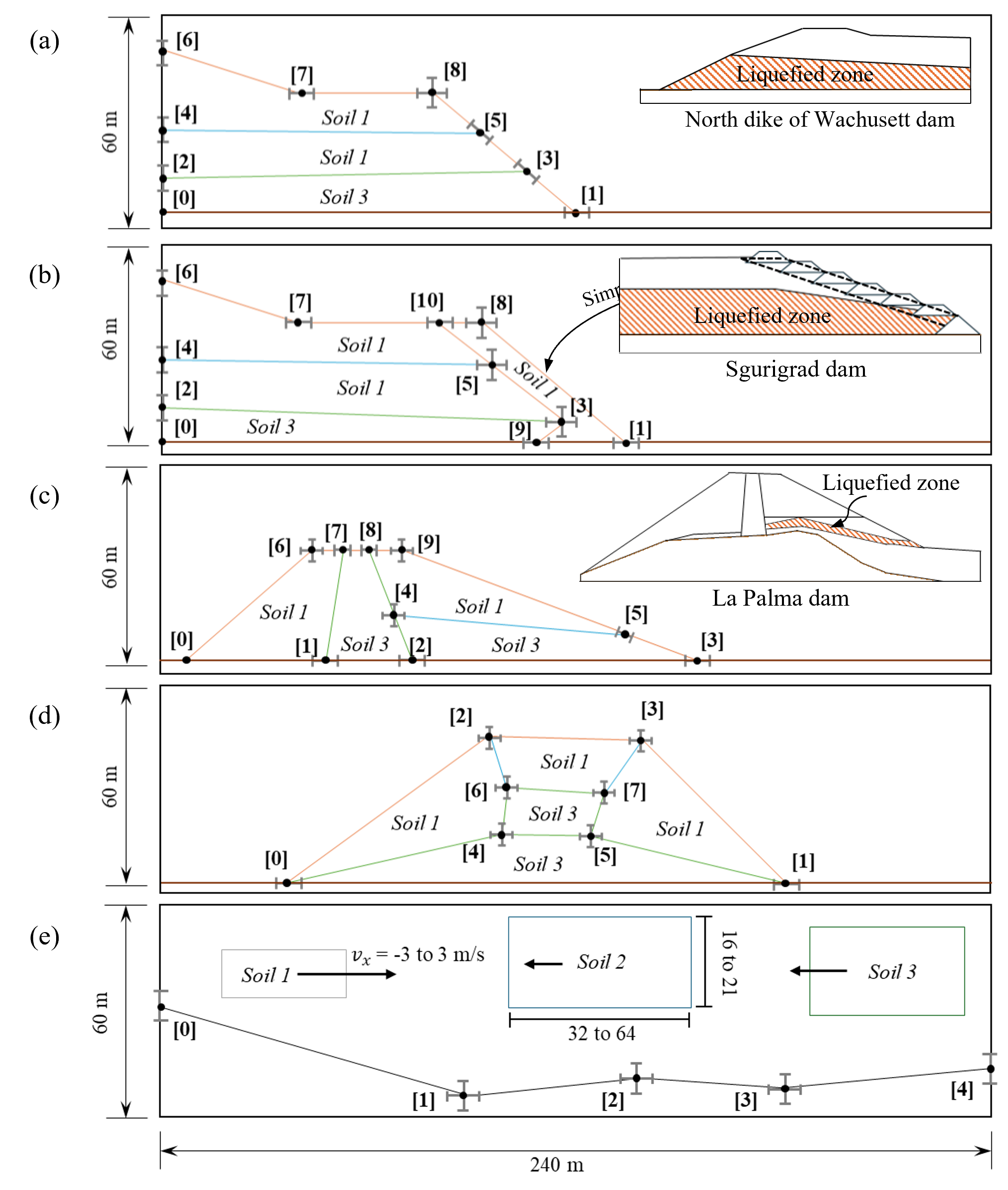
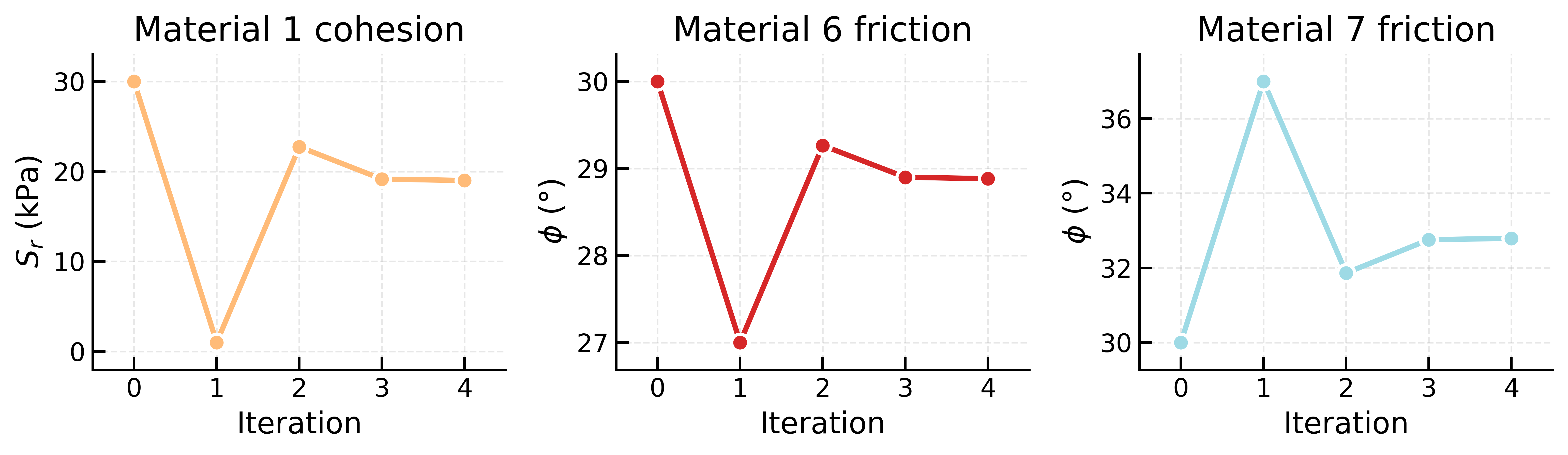
Validation of the inverse analysis framework was performed using two case studies: the Lower San Fernando Dam and the La Marquesa Dam. Utilizing a single GPU, optimization times of 4 minutes were achieved for the Lower San Fernando Dam case and 4.4 minutes for the La Marquesa Dam case. The inferred residual strength S_{rS_r} for the Lower San Fernando Dam was determined to be 18.9 kPa, demonstrating strong agreement with Olson (2001)’s published estimate of 18.7 kPa. For the La Marquesa Dam, the analysis yielded residual strength values ranging from 4.2 to 4.6 kPa, which are consistent with previously reported findings from other studies.
Beyond Simplification: A Comparative Lens for Slope Failure Analysis
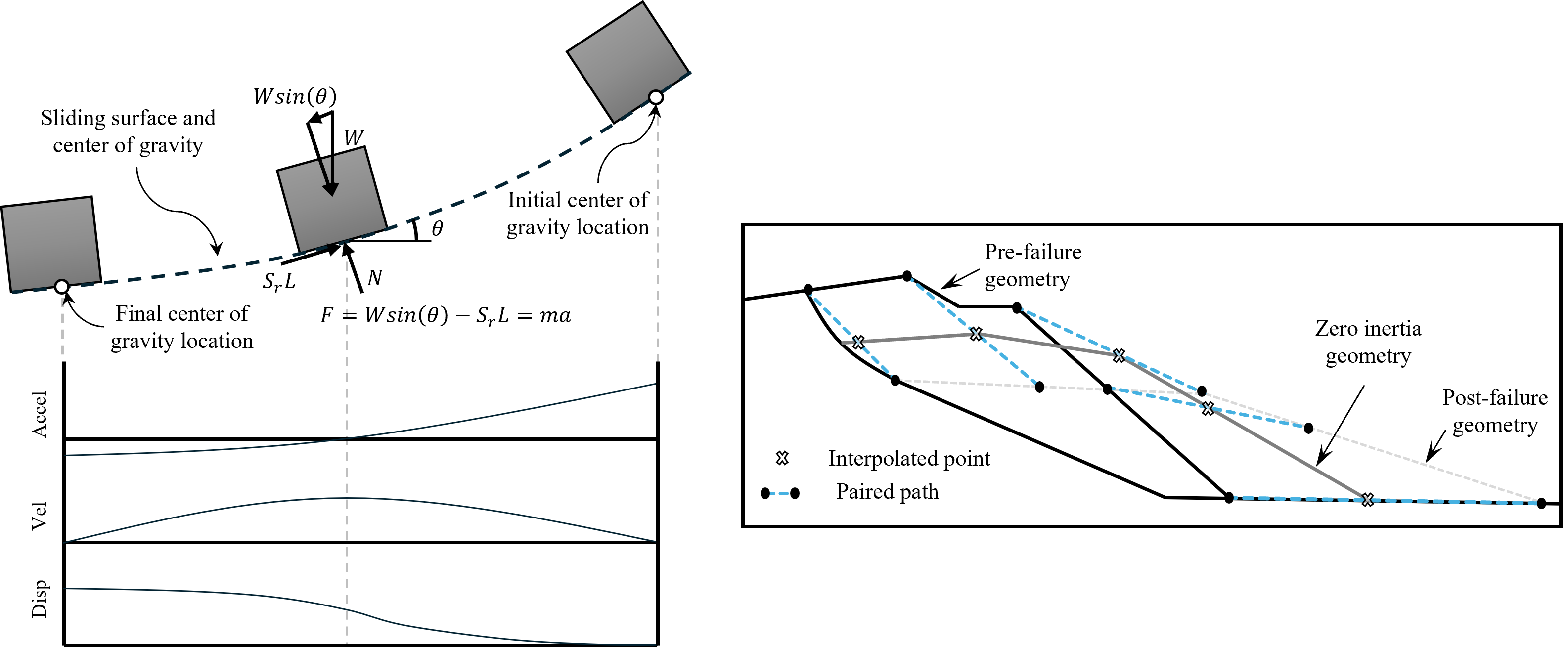
A comprehensive evaluation of slope failure back-analysis techniques was facilitated through the implementation of Diff-GNS, a modeling framework capable of accommodating diverse methodologies. Researchers leveraged Diff-GNS to compare the Zero Inertial Factor Method, the Kinetics Method, and the Incremental Momentum Method, assessing each approach’s ability to accurately reconstruct landslide dynamics. This comparative study showcased the model’s versatility by demonstrating its adaptability to different theoretical frameworks and computational demands. The successful integration of these methods within a single platform allows for a more nuanced understanding of the strengths and weaknesses of each technique, ultimately contributing to improved landslide hazard assessment and mitigation strategies.
Accurate modeling of slope failures necessitates careful consideration of momentum effects, as the dynamic forces at play significantly influence the overall stability and resulting material behavior. A comparative analysis reveals that different back-analysis methods, while aiming to determine material parameters from observed landslide data, make varying assumptions about how these forces are distributed and dissipated. These assumptions, even seemingly minor ones, can lead to substantial differences in estimated parameters like shear strength and stiffness, ultimately affecting the predictive capability of the model. The sensitivity to these assumptions underscores the importance of validating results against independent data and recognizing the inherent uncertainty in reconstructing past events, particularly when relying on simplified representations of complex physical processes.
The implementation of Diff-GNS as a platform for back-analysis significantly streamlines the process of evaluating slope failure methods, fostering accelerated research in geotechnical engineering. Traditionally, comparing techniques like the Zero Inertial Factor, Kinetics, and Incremental Momentum methods demands substantial computational resources and time. Diff-GNS, however, allows for the rapid iteration and assessment of each approach, revealing not only performance differences but also the inherent limitations stemming from underlying assumptions. This capability is crucial for understanding how variations in modeled parameters – such as shear strength or material damping – influence the accuracy of predicted failure scenarios. Consequently, researchers can more efficiently refine models, identify knowledge gaps, and ultimately improve the reliability of slope stability assessments with a tool that moves beyond single-method analysis.
The pursuit of quantifying slope stability, as detailed in this framework, feels less like engineering and more like attempting to divine order from inherent chaos. This Diff-GNS, with its back-analysis of residual strength, doesn’t reveal a true value; it persuades a model to align with observed runout. As Werner Heisenberg observed, “The more precisely the position is determined, the less precisely the momentum is known.” Similarly, the tighter the correlation between simulation and observed failure, the more one suspects a simplification-a necessary untruth-has been introduced. The model works until it meets production, and even then, it only whispers a plausible story, not a definitive truth.
What Whispers Remain?
The framework presented doesn’t solve the riddle of post-liquefaction strength, of course. It merely offers a more pliable spell for coaxing answers from the chaos. The digital golem, trained on runout patterns, learns to approximate the hidden parameters, but each successful prediction is balanced by a multitude of failures – sacred offerings to the unforgiving logic of the earth. The true limits of this approach won’t be revealed in controlled simulations, but in the discordant reality of field applications, where noise isn’t merely random, but a language of its own.
Future refinements will inevitably focus on weaving more intricate physics into the digital fabric. But the deeper question isn’t computational efficiency, it’s the illusion of completeness. Each layer of fidelity added to the simulation only highlights what remains fundamentally unknowable. The inverse problem, after all, isn’t about finding the strength, but charting the landscape of plausible strengths – a probabilistic shadow play where certainty is a phantom.
Perhaps the most fruitful path lies not in perfecting the golem’s gaze, but in acknowledging its blindness. To treat the simulation not as a predictive engine, but as a diagnostic tool, revealing the sensitivity of runout behavior to subtle variations in residual strength. Only by embracing the inherent ambiguity can the whispers of chaos be truly heard – and, for a fleeting moment, persuaded.
Original article: https://arxiv.org/pdf/2602.11621.pdf
Contact the author: https://www.linkedin.com/in/avetisyan/
See also:
- The Boys Season 5 Spoilers: Every Major Character Death If the Show Follows the Comics
- All Itzaland Animal Locations in Infinity Nikki
- Gold Rate Forecast
- Cthulhu: The Cosmic Abyss Chapter 3 Ritual Puzzle Guide
- Solo Leveling’s New Manhwa Chapter Revives a Forgotten LGBTQ Story After 2 Years
- Persona PSP soundtrack will be available on streaming services from April 18
- Focker-In-Law Trailer Revives Meet the Parents Series After 16 Years
- “67 challenge” goes viral as streamers try to beat record for most 67s in 20 seconds
- Rockets vs. Lakers Game 1 Results According to NBA 2K26
- Paramount CinemaCon 2026 Live Blog – Movie Announcements Panel for Sonic 4, Street Fighter & More (In Progress)
2026-02-16 02:28