This article contains spoilers from the fourth season of The Traitors, specifically up to and including the eighth episode, “A Queen Never Comes Off Her Throne,” which was released on Peacock on February 5th.
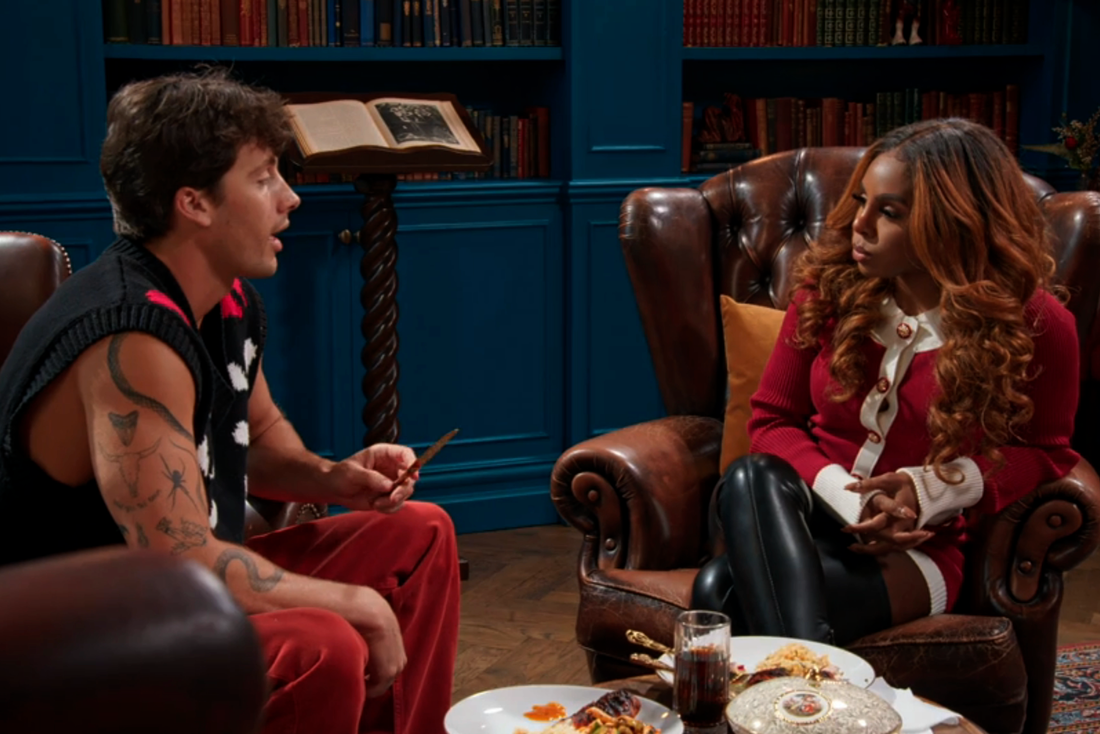
One of the most memorable moments from this season of The Traitors—aside from Michael Rapaport’s unique eating habits—was the intense conversation between Candiace Dillard Bassett and Rob Rausch before the final roundtable. After Candiace discovered Rob had kept quiet about Colton Underwood’s suspicions regarding her, she angrily accused him of being deceitful. She warned him that if she was voted out, she would reveal his involvement. The scene was incredibly dramatic, with close-up shots reminiscent of the show Succession. By the time the roundtable began, it couldn’t quite match the tension of that one-on-one confrontation, and it quickly became clear Candiace was at a significant disadvantage. She was ultimately voted out almost unanimously, while Rob remained safe and unconcerned.
Episode eight’s roundtable felt flat, and it wasn’t just the introduction. Anyone following the drama surrounding the show online likely expected Rob to eliminate Candiace. After Rob led the effort to banish fellow Traitor Lisa Rinna in the previous episode, social media personality Sarah Pop posted a video claiming Rob consistently prioritizes alliances with men over women. This sparked a public argument between Rob and Candiace, with Rob dismissing it as just a game and Candiace accusing him of manipulative behavior. Their heated exchange suggested a strained relationship, making Rob’s eventual betrayal of Candiace seem predictable. While The Traitors tries to maintain suspense, cast members’ public disagreements can spoil the surprise. It’s another example of how social media is impacting the show’s ability to keep secrets.
It would be simple to address spoilers in Instagram comments, but that’s not the only way social media is making it less fun to watch The Traitors. Lately, discussions about the show have become surprisingly hostile, even though the entire premise revolves around deception and betrayal. This raises a question: is it right to label a player like Rob a “gaslighter” simply for playing the game? Are people being unfair when they call players “bullies” for forming alliances and strategizing, since that’s what the show encourages? More and more, it seems like people forget that The Traitors is won through trickery and teamwork, and that contestants are cast for entertainment value, not because of who they are as people.
While some actions on the show, like Colton’s harsh words to Tiffany Mitchell and Michael Rapaport’s remark about Colton’s dishonesty, deserved criticism, it’s frustrating when discussions turn to judging contestants as people. Many viewers have also rightly pointed out how unconscious bias might be leading to Black players being eliminated early, a problem seen in the U.K. version of the show as well. But instead of analyzing the game strategy, online conversations are often filled with personal attacks. It’s not new for reality TV discussions to become heated, but the increasing negativity surrounding Traitors is making it less enjoyable to engage with the show online. It’s hard to have a productive conversation when people simply label contestants as ‘bad people’ instead of discussing their gameplay.
The show’s creators have acknowledged the increasingly negative online conversation. On January 24th, they posted a statement on Instagram condemning the “cyberbullying” and “harassment” of cast members, urging fans not to let negativity ruin their enjoyment of the show. However, this attempt to calm things down felt ineffective, especially since it seemed focused on protecting Colton, who is facing backlash not for his actions on the show, but for past accusations of stalking. Lisa Rinna’s simultaneous statements – both defending him and calling him a stalker – reinforced this perception. Regardless of who the network is trying to protect, the statement doesn’t really address the core problem. The negativity surrounding the show on social media has gone beyond simple disagreements in the comments sections of Colton or Michael Rapaport’s posts; it’s spiraled out of control. While it’s easy to dismiss online arguments, toxic discussions can drive viewers away, as seen with fans of shows like Real Housewives of New Jersey and Real Housewives of Potomac who stopped engaging when fan conflicts became too intense.
Like many online communities in 2026, fans of The Traitors are increasingly drawn to conspiracy theories. The latest involves the idea that Rob broke the show’s rules by secretly telling Colton who the other Traitors were, so they could team up against Lisa and Candiace. This doesn’t really make sense, though – cast members aren’t allowed private time, and Colton wouldn’t necessarily benefit from working with a Traitor. Even after Rob allowed Candiace to eliminate Colton, some fans still believe the theory, especially since Lisa and Candiace have hinted at a secret alliance. The real problem isn’t that upset fans are creating their own stories – they might just be angry about how the show played out – but that these theories are preventing meaningful discussions about the show. It’s hard to have a productive conversation when people can’t agree on what actually happened. It’s a smaller-scale version of the issues that have plagued political debates for years, but it’s still ruining the fun.
Rob isn’t the only one facing criticism online. Many fans of The Traitors have been vocal this season about how Real Housewives cast members are making the show difficult to watch. Some think Candiace is too sensitive, while others feel Dorinda Medley is going through the motions, similar to how Dolores Catania was criticized last season. Essentially, The Traitors fanbase is divided between those who want to see strategic gameplay like Survivor or Big Brother, and those who are there for the drama and personalities of the Real Housewives. It’s probably unrealistic to expect everyone to agree, and maybe that’s okay—we should be able to support who we want! However, when the online discussions become this heated, it’s tempting to just disengage from them altogether.
I’m totally hooked on The Traitors, and honestly, a big part of the fun is seeing everyone react online! It’s one of the few shows these days that everyone seems to be watching and talking about at the same time – if you check social media on Thursday nights, it really feels that way. But lately, I’ve noticed things getting a little too intense. All the arguing and quick judgments are making the online spaces less enjoyable, and I worry that will hurt the show in the long run. I think we all need to remember what made us love The Traitors to begin with – it should be fun, just like Kyle Cooke from season one would say! Let’s enjoy the game and not let it become something negative.
Read More
- Solo Leveling’s New Manhwa Chapter Revives a Forgotten LGBTQ Story After 2 Years
- The Boys Season 5 Spoilers: Every Major Character Death If the Show Follows the Comics
- Gold Rate Forecast
- All Itzaland Animal Locations in Infinity Nikki
- How to Get to the Undercoast in Esoteric Ebb
- Mewgenics vinyl limited editions now available to pre-order
- Smarter, Faster Networks: Optimizing Early-Exit Architectures for Edge AI
- Shiba Inu reappointed as “inspector” dog by Japanese police
- CBR’s Official Spring 2026 Anime Series Power Ranking (Week 1)
- TikToker’s viral search for soulmate “Mike” takes brutal turn after his wife responds
2026-02-12 19:55