This article was first published on February 14, 2024. We’re sharing it again now that Emerald Fennell’s new film adaptation of Wuthering Heights is coming out tomorrow.
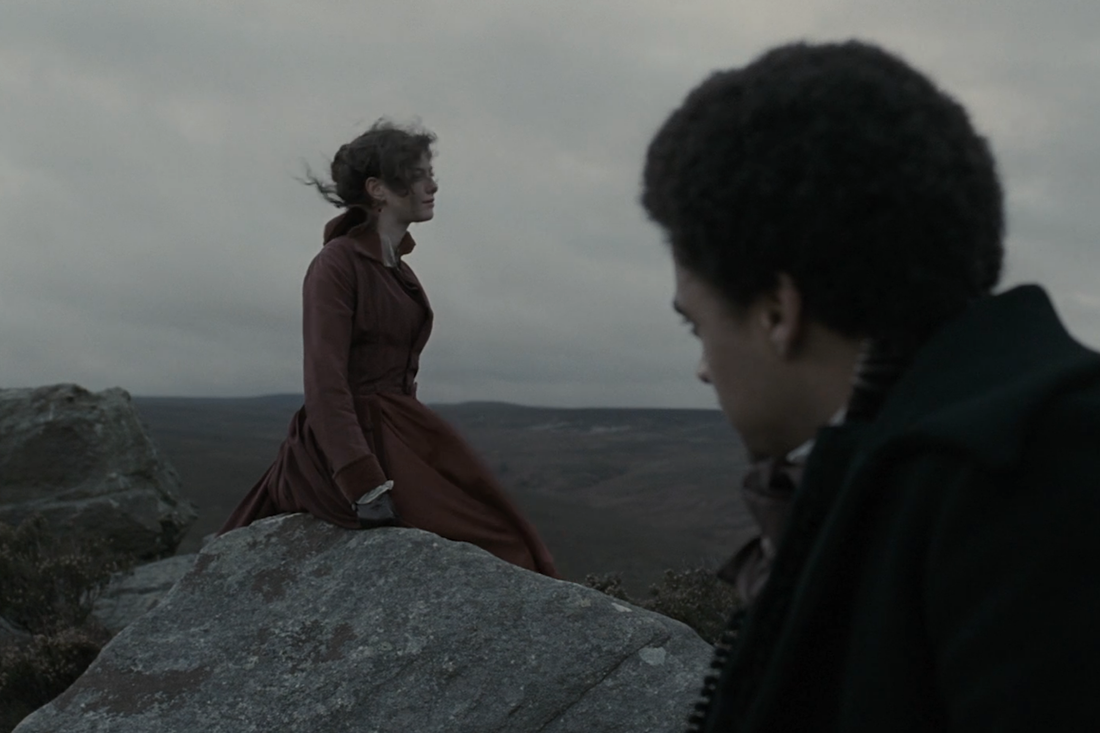
Andrea Arnold’s film adaptation of Wuthering Heights is intensely sensual and provocative – and that’s a good thing. The 2011 movie focuses on the raw, almost primal connection between its characters, depicting a doomed romance filled with longing, pain, and a desire for revenge. It prioritizes creating a visceral experience of love as something unsettling and consuming, rather than strictly following the plot of Emily Brontë’s novel. The film links the wildness of nature with our most basic, physical desires, building tension between restraint and giving in to impulse. In comparison, the explicit content in Saltburn feels tame by comparison.
Emily Brontë’s famous novel, Wuthering Heights, explores themes of passionate but impossible love, restricted freedom, and the denial of basic human connection. The story centers on the intense relationship between Heathcliff (played by Solomon Glave as a young man and James Howson as an adult) and Catherine Earnshaw (Shannon Beer and Kaya Scodelario), both troubled souls. The narrative unfolds through the eyes of Nelly, a servant in the Earnshaw household, as she recounts events spanning many years. The story begins when the father of the Earnshaw family brings home Heathcliff, a foundling, who quickly bonds with his daughter, Cathy. They spend their childhood exploring the wild Yorkshire Moors. However, their close relationship is threatened when Cathy becomes friends with the wealthy Linton family, who look down on Heathcliff. The connection is ultimately broken when Cathy chooses to marry Edgar Linton, prompting Heathcliff to leave. What follows is a multi-generational tale of heartbreak, revenge, and enduring bonds, ultimately suggesting a resolution and a sense of peace for both the Earnshaw and Linton families.
Arnold’s film adaptation of Wuthering Heights differs from the book in ways that highlight Heathcliff’s feelings of being an outsider and the mistreatment he endures from characters like Hindley, Joseph, and the Linton family. The film focuses more on these themes than the original novel. One key change is the perspective: the story is told from Heathcliff’s point of view, showing him as an observer peering in on the lives of those who question his place within the family. As Arnold explained, this shift emphasizes the novel’s underlying concern with difference and Emily Brontë’s own experiences with feeling like an outsider. Another significant change is the film’s focus on the early relationship between Heathcliff and Cathy; the latter half of the book, which details Heathcliff’s vengeful actions, is omitted, resulting in a shorter, 129-minute runtime.
Perhaps the most significant choice Arnold makes is to fully embrace the racial ambiguity Brontë builds into the character of Heathcliff. The novel uses terms like “dark-skinned gipsy,” “Lascar” (a sailor from India or South Asia), or suggests he might be of Spanish, American, Chinese, or Indian royal descent. By casting Black actors in the role—something previous adaptations with white actors like Laurence Olivier, Timothy Dalton, and Ralph Fiennes never did—Arnold adds a new level of tension and makes the story’s forbidden romance even more powerful and relevant to the period.
A love story between people of different races is one thing, but the intense and often damaging relationship between Heathcliff and Cathy in Emily Brontë’s Wuthering Heights is quite another. Their behavior – physically and emotionally hurting each other, intentionally provoking jealousy, and then seeking reconciliation – wouldn’t be considered healthy or admirable by today’s standards. When the film adaptation was first released, reviews were divided. Some critics found it overwhelmingly depressing (Eliza C. Thompson of Bust called it “too hard to watch”), while others were put off by its extreme emotional shifts (Ty Burr of the Boston Globe found the final scenes more silly than disturbing).
The discomfort viewers feel is central to director Andrea Arnold’s interpretation of Wuthering Heights. Arnold argues that the passionate, almost primal love between Heathcliff and Cathy flourished because it was forbidden and expressed itself in raw, physical ways – a reaction to the constraints of proper society. While the film omits the famous line, “Whatever our souls are made of, his and mine are the same,” it compensates by focusing on vivid, earthy details that heighten the story’s haunting atmosphere. Shot in a less common 4:3 aspect ratio—a choice Arnold made to emphasize the characters’ dignity—the film balances sweeping shots of the bleak Yorkshire landscape with intensely personal moments between Heathcliff and Cathy. It draws parallels between the rhythms of the natural world and the characters’ powerful, often conflicting desires, suggesting that their attraction and rejection of each other are as fundamental and instinctive as the drive for survival in animals and plants.
In the beginning of their relationship, Cathy and Heathcliff share a strange intimacy. She initially rejects him with a gesture of defiance, but quickly draws him into her world, showing him her collection of bones and feathers, which they examine together. That night, Cathy, playfully dressed in a large nightgown as if she were a ghost, invites Heathcliff to share her bed. The camera lingers on the details – the texture of the blanket, the curls of Heathcliff’s hair – capturing a growing connection. Later, Heathcliff escapes his forced labor to join Cathy on the moors. When they return, he tenderly unbuttons her dress and cares for her hair. The director then focuses on a vibrant yellow moth, its wings fluttering, visually suggesting the building excitement and anticipation between the two teenagers.
The initial, and first of several, intensely passionate moments between Heathcliff and Cathy powerfully highlights the earthy contrast Arnold establishes. They playfully wrestle in the mud, eventually culminating in Heathcliff gaining control and pinning Cathy down. Her struggles gradually subside, and they remain locked in a gaze, a clear display of power dynamics. Arnold then shifts the scene to a close-up of dewy branches, the glistening droplets hinting at the tension and suppressed desire.
The connection between Heathcliff and Cathy is surprisingly intense and often disturbing, marked by moments of raw physicality and emotional discomfort – like Cathy tending to Heathcliff’s wounds, or their painful embraces even while Cathy is married to another man. Desire is communicated through intense, almost violent contact, such as Cathy gripping Heathcliff’s hair and his hands moving across her body, culminating in a desperate exhaustion. The actors portraying this complex relationship deliver powerfully vulnerable performances, particularly Kaya Scodelario and James Howson, who imbue even the smallest gestures – a fleeting glance, a gentle touch – with profound meaning. The film reaches its most shocking moment with Heathcliff’s body contorting over Cathy’s corpse, a haunting scene of grief and obsession captured in blurred candlelight and the rustling of sheets, his face pressed against hers and her lifeless hand held against his neck.
The film includes other key scenes from the book, such as Heathcliff desperately exhuming Cathy’s grave during a storm and a possible ghostly apparition of Cathy tapping at a window. However, none of these moments have the same impact as the disturbing scene of their union in death, which powerfully illustrates that Heathcliff and Cathy’s love transcends even the limits of life and death.
Over time, this film version of Wuthering Heights has largely been overlooked. Unlike the popular 2005 Pride & Prejudice or the critically acclaimed 2011 Jane Eyre, it didn’t achieve widespread recognition. As Shakespeare wrote in Romeo and Juliet, intense passion often leads to destruction. Similarly, this Wuthering Heights is full of intense desire and heartbreak, pushing the boundaries of how much emotional pain we’ll accept in a love story. It’s a Valentine’s Day movie that’s as unsettling as it is captivating.
Read More
- Off Campus Season 1 Soundtrack Guide
- X-Men ’97 Finally Gave Gambit the Hero Moment He Deserved
- Chainsaw Man Volume 24’s Cover Art Reveals a Brand-New Denji
- 46 Years Later, The Mandalorian & Grogu Answers A Major Empire Strikes Back Question
- 10 Worst End-Game Couples In Sitcom History
- HoI4 fans harsh reactions to the announcement of another DLC pack
- DoorDash responds after customer uses AI to make food look bad and get a refund
- Gold Rate Forecast
- Emily Henry Says to ‘Trust the Vision’ For Beach Read Adaptation
- Euphoria Season 3’s New R-Rated Sydney Sweeney Scene Proves The Show Is Trolling Us
2026-02-12 16:55