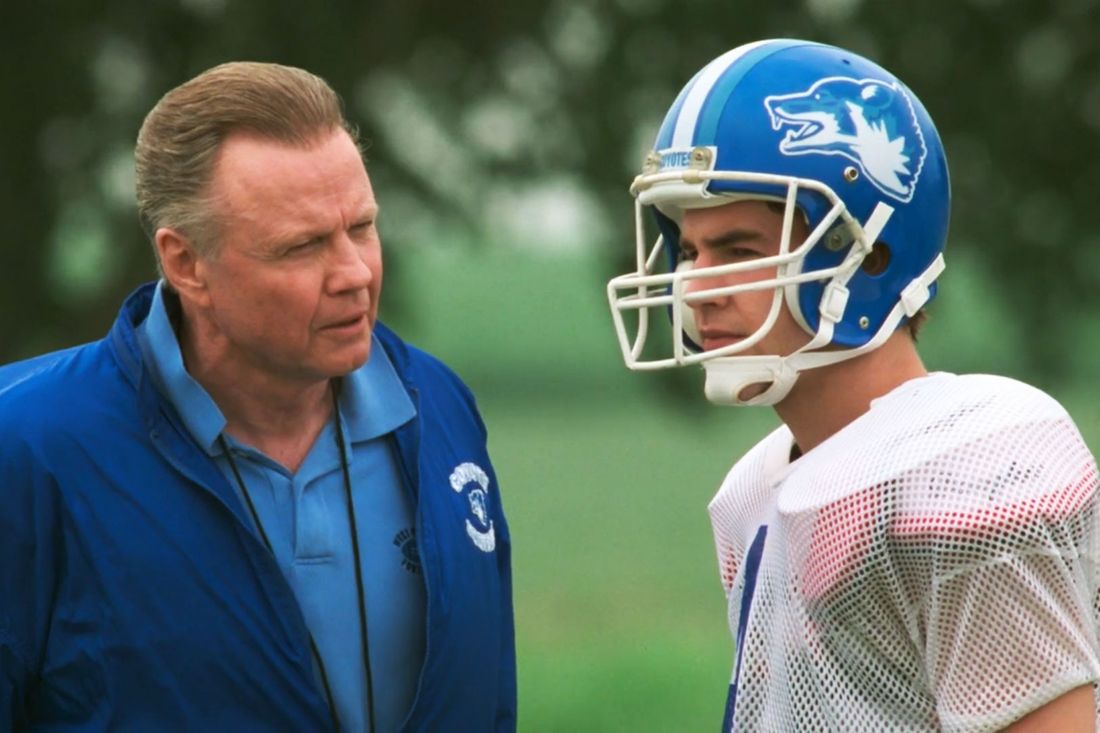
This article was first published on February 11, 2022. We are republishing it in memory of James Van Der Beek, who recently passed away at the age of 48.
There’s a short, memorable line in football movies that perfectly captures a cultural moment. It’s delivered with a slight accent that doesn’t quite sound Texan, but it doesn’t matter. The line is powerful because of its honesty, anger, and the universal feeling of wanting to forge your own path, rejecting the values of previous generations. I’m referring to James Van Der Beek’s iconic delivery of “I don’t want your life” in the 1990s film Varsity Blues, which still resonates with audiences today.
The 1990s were a fantastic decade for football movies, capturing everything from the bonds of teamwork to the harsh realities of the game. Feel-good stories like Rudy and Adam Sandler’s The Waterboy celebrated friendship and overcoming obstacles (and likely sold a lot of tissues!). School Ties offered a more critical look at the sport’s exclusive culture. For romance and loyalty, there was Jerry Maguire, and if you wanted a powerful, intense football film, Any Given Sunday, with Oliver Stone directing and Al Pacino starring, was the way to go. These films really showcased the many sides of America’s favorite sport.
Despite all the attention on high school football stories, the 1999 film Varsity Blues—about a Texas team fighting against their harsh coach and trying to win before graduation—didn’t get as much recognition. It was likely overshadowed by the success of Friday Night Lights. Bissinger’s book of the same name was first adapted into a well-received 2004 film directed by Peter Berg, and then into the hugely popular TV series known for its inspiring slogan, “Clear eyes, full hearts, can’t lose.” Compared to the sincerity, beautiful visuals, and strong female lead of Friday Night Lights, Varsity Blues doesn’t age well. Its humor relies on outdated and offensive stereotypes, and the story includes a problematic subplot about a teacher who is also a stripper and performs in front of her students. The female characters also feel underdeveloped.
While Varsity Blues wasn’t a perfect film, it successfully captured the rebellious spirit often found in teen movies, and James Van Der Beek’s performance was central to that. It’s hard to remember now, but Dawson’s Creek was a huge hit when it first aired, causing a stir with its depiction of teenagers exploring ideas and relationships. Van Der Beek played Dawson, a sincere and hopeful character frustrated by the negativity around him. His role as Jonathan “Mox” Moxon in Varsity Blues – the backup quarterback to the popular Lance Harbor – was a natural fit for his acting style.
https://youtube.com/watch?v=90s-paul-walker-varsity-blues-a75CVwoskktPi
Mox is a fan of Kurt Vonnegut. He’s considerate of his girlfriend, Jules (Amy Smart), and always respects her boundaries, and he supports his brother, Kyle (Joe Pichler), as Kyle explores different religions. (Some of the movie’s most unusual scenes – surprisingly thoughtful – show Kyle dressing as Malcolm X and even leading a cult.) Mox hopes to escape their small Texas town and go to Brown University, and he’s okay with giving up football to do it.
The movie Varsity Blues needed some drama before the main character, Mox, leaves town, so the writer, W. Peter Iliff (who also worked on Point Break), created several challenges. The team’s coach, Bud Kilmer (played by Jon Voight), is a harsh and prejudiced man who relentlessly pushes his players to win. This leads to a serious knee injury for Lance and an emotional breakdown for Mox’s friend, Billy Bob (Ron Lester), due to Kilmer’s abuse. Even Lance’s girlfriend, Darcy (Ali Larter), tries to move on after his injury, attempting to seduce Mox in a now-iconic, playful scene – which is often the first image you’ll see when searching for the movie online.
https://youtube.com/watch?v=movie-ali-landry-varsity-blues-fnpxXi3ycAbqnmyeBL
While the film has strong moments emphasizing teamwork and sportsmanship – like the players confronting their coach and winning the championship with a clever play – it’s the emotionally charged scene where Mox rejects his father’s life that truly defines it as a coming-of-age story. This scene perfectly captures the frustration and rebellion of the teenagers against their parents. And apparently, there’s a ten-minute loop of it on YouTube, which I may or may not have watched repeatedly – it’s just that captivating!
Director Brian Robbins wants us to feel for Mox, and honestly, I do! The movie constantly switches between Mox and his complaining father, Sam, who defined himself by his high school football days. Sam tries to control Mox’s behavior, but Mox just sulks and glares. The filmmaker gives Van Der Beek plenty of room to channel a bit of a “Rebel Without a Cause” vibe, recreating that famous emotional outburst. Thinking about this scene and Van Der Beek’s well-known crying scene from Dawson’s Creek, it’s amazing how well the film captures the intense feelings of being a young millennial who felt deeply and uniquely troubled.
The film Varsity Blues is now viewed with a sense of sadness due to the tragic deaths of actors Walker and Lester in 2013 and 2016, and the disappearance of another cast member, Pichler, in 2006. While actor Van Der Beek has become known for playfully acknowledging his earlier, sometimes questionable roles, the film still resonates because it captured something true about football’s place in American culture—the way it celebrates individual spirit and self-sacrifice. What could be more American than challenging tradition, going against the grain, and speaking your mind, even when it’s difficult? It takes just as much courage to stand up for what you believe in as it does to take a bold, solitary stand.
Read More
- Off Campus Season 1 Soundtrack Guide
- 46 Years Later, The Mandalorian & Grogu Answers A Major Empire Strikes Back Question
- X-Men ’97 Finally Gave Gambit the Hero Moment He Deserved
- HoI4 fans harsh reactions to the announcement of another DLC pack
- Chainsaw Man Volume 24’s Cover Art Reveals a Brand-New Denji
- 10 Worst End-Game Couples In Sitcom History
- Katanire’s Yae Miko Cosplay: Genshin Impact Masterpiece
- Hatsune Miku cosplayer goes viral selling $15 cups of “foot juice” to thirsty anime fans
- Emily Henry Says to ‘Trust the Vision’ For Beach Read Adaptation
- DoorDash responds after customer uses AI to make food look bad and get a refund
2026-02-11 23:55