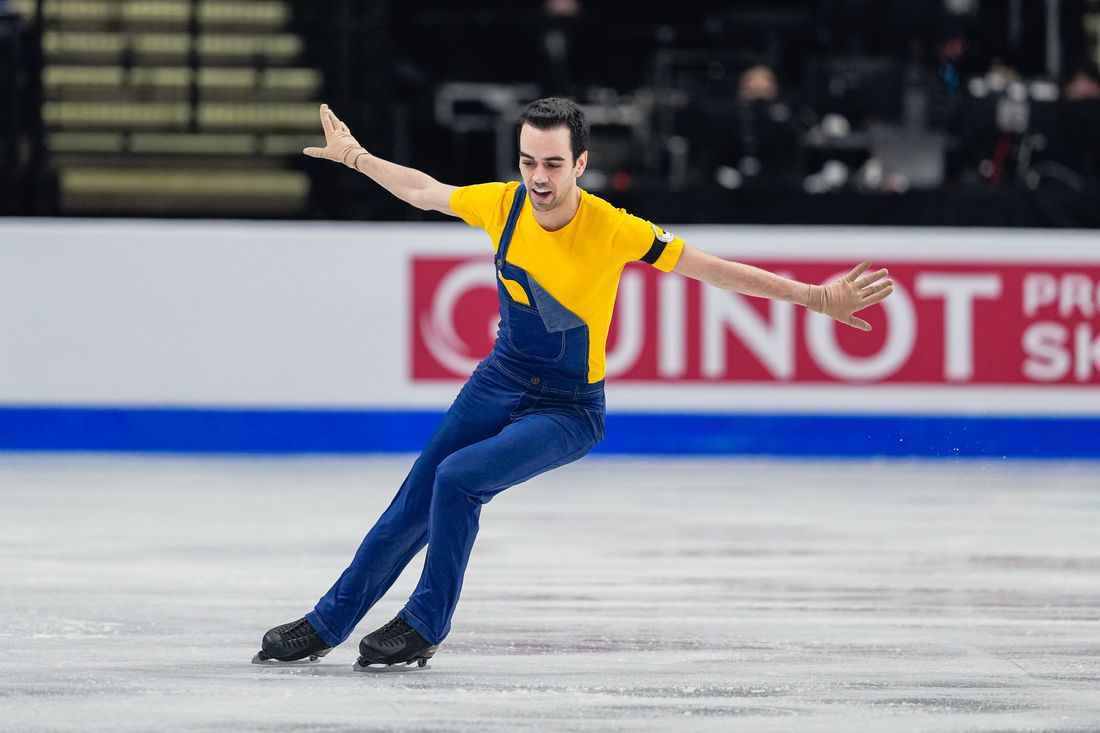
As a movie and skating fan, this whole situation has been wild! It reminded me of when someone connected with the Minions tried to distance themselves from the characters – crazy, right? So, this Spanish skater, Tomàs-Llorenç Guarino Sabaté, is heading to the 2026 Olympics, and he’s known for his fun routine set to Minion music. At first, they said he couldn’t use it, which seemed so unfair! He literally dresses like Kevin the Minion – blue overalls, yellow shirt – and it’s a really joyful performance. He says he wants to show that male figure skating can be playful and fun, and honestly, it totally works. There’s even a part where he skates to EDM while they yell ‘papaya’ in Minion language! Thankfully, after a ton of support online, Universal changed their mind and let him use the song. He’s still working on getting approval for a couple of other music pieces, but it’s a huge win for him and for anyone who loves a little fun on the ice.
Figure skating analyst Jackie Wong, reporting from Milan, says skaters didn’t usually have trouble getting permission to use songs until a legal issue in 2022. American pairs team Alexa Knierim and Brandon Frazier, who won an Olympic medal, often skated to a cover of “House of the Rising Sun” by the group Heavy Young Heathens. According to Wong, Heavy Young Heathens sued many parties, including NBC, which caused a major change in the skating world. Suddenly, skaters were required to get music cleared in advance – a process that didn’t exist before the lawsuit. This caused a lot of concern. The case was settled out of court, with the Guardian reporting that Heavy Young Heathens received $1.4 million.
Following a recent lawsuit, the International Skating Union partnered with a company called ClicknClear to simplify the process of skaters getting permission to use music in their routines. However, lawyer Brian Wong questions how well ClicknClear understands copyright law, and whether they can accurately approve skaters’ song choices. He points to the case of Guarino Sabaté, who skated without problems for a full season but was then unexpectedly blocked from competing at the Olympics. Sabaté had submitted his routine through ClicknClear last August and received no warnings about potential copyright issues, but was denied permission just before the Olympic trials. According to Wong, ClicknClear is positioning itself as the go-to source for music clearance for skaters, leading many to believe that using their service would resolve all copyright concerns. But Wong believes the situation remains unclear due to ClicknClear’s operating methods and the fact that music rights regulations vary from country to country, creating significant complications.
Figure skaters can also try getting permission directly from the artist, record label, or the artist’s estate – and that’s the most reliable approach, according to Wong. However, it’s a bit of a free-for-all. This method is riskier, particularly because many skaters like to create remixes and edit songs rather than use a single, unaltered track. For example, would an artist like Beyoncé be okay with a skating program using one of her songs if the skater also planned to mix it with another song, like Van Halen’s “Jump”? That adds another complication.
Often, artists wouldn’t have changed anything unless asked, according to Wong. However, if you do ask for a change, the answer is usually no. There’s no simple solution, which is why skaters, choreographers, and coaches have been facing this challenge for a while now.
Guarino Sabaté’s skating program featuring the ‘Minions’ – those little yellow characters famously kept out of WWII to avoid choosing a side – is the first time, according to music rights expert James Wong, that public pressure directly led to a change in music licensing decisions in the sport. He calls it ‘completely unprecedented,’ saying he’s never seen a performer change their program so publicly before. It’s also worth noting that Universal Pictures, which owns the rights to the Minions, is part of the same company as NBC, the U.S. broadcaster for the Winter Olympics. Wong believes Universal saw a chance to capitalize on the program’s popularity. ‘They realized it would likely go viral,’ he says. ‘It became a much bigger phenomenon than anyone expected, and the Minions really captured the attention of the entire figure skating world.’
Read More
- Netflix’s Little House On The Prairie Reboot: Release Date, Cast & Everything We Know
- Off Campus Season 1 Soundtrack Guide
- Silver Rate Forecast
- Prime Video’s New R-Rated Spy Thriller Is Officially No.1 On Streaming Despite Poor Reviews
- Gold Rate Forecast
- Brent Oil Forecast
- EUR ZAR PREDICTION
- Amazon Primes new GenAI cartoon looks like K-Pop Demon Hunters with aliens
- Inkford Hermitage Chest Locations In HSR (Honkai: Star Rail)
- KPop Demon Hunters Meets Avatar: The Last Airbender In Netflix’s 3-Part Fantasy Series
2026-02-03 22:54