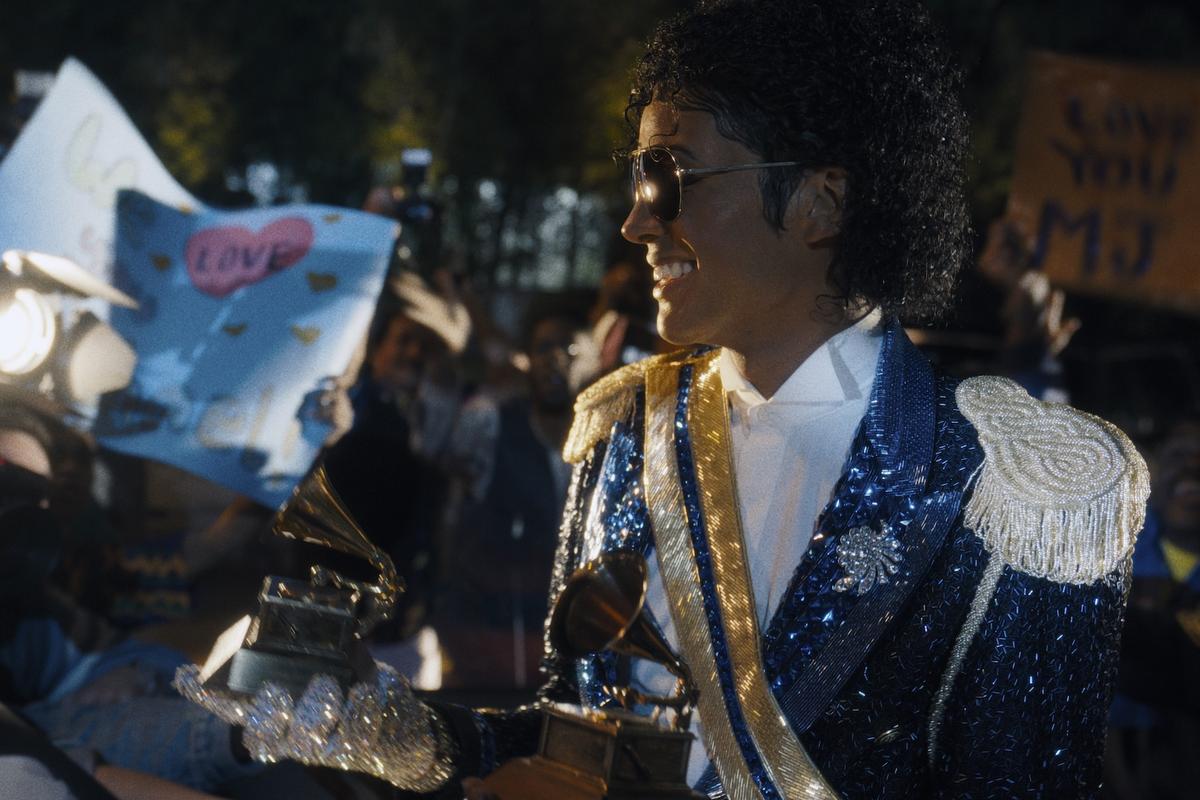
With the Super Bowl just around the corner, it’s officially trailer season for major movies! Studios now release their Super Bowl ads online before the game to start building excitement. Here’s the first trailer for Michael, the long-awaited Michael Jackson biopic.
The film features Jafar Jackson, Michael Jackson’s nephew, playing the iconic singer. Marketing for the movie heavily suggests this is just the start of Michael’s story. It’s unclear if this is to set up future films, or if they’re deliberately focusing on his early life and avoiding the controversies that surrounded him later on.
Here’s the trailer for Michael:
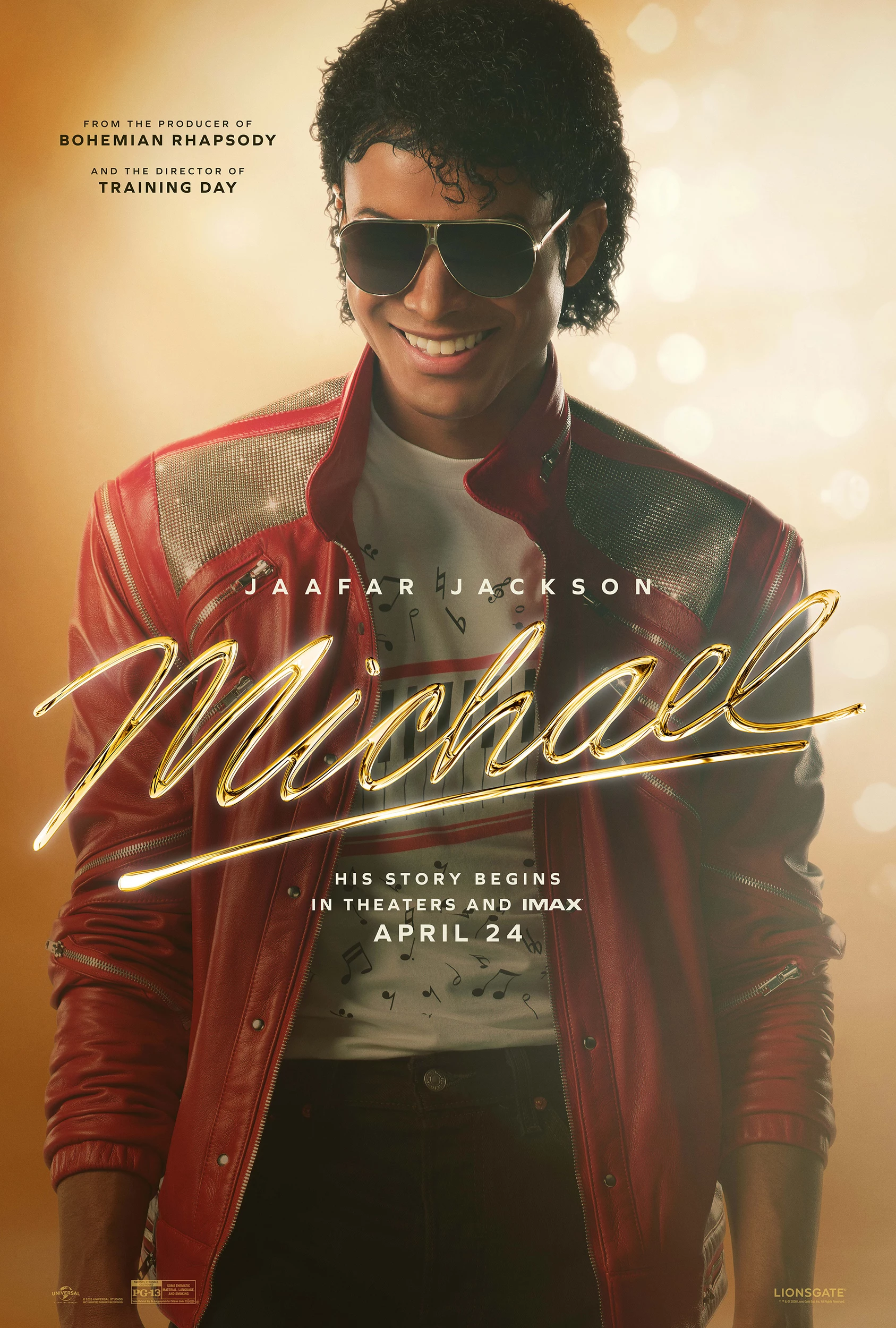
There’s a new poster for the film as well.
So, this Michael movie has had a really long journey to the big screen. It was supposed to come out a year ago, but got pushed back. Apparently, the first cut of the film had some scenes dealing with the sexual abuse allegations against Jackson, and they had to rework things because of a legal agreement he made years ago. Then, after they reshot a bunch of stuff, word got out that it was, like, four hours long, and people thought it might be split into two movies. Right now, it looks like we’re just getting one film, but honestly, if it’s a huge success, I wouldn’t be shocked if they start planning Michael 2 down the line.
Here’s the film’s official synopsis:
As a huge fan, I’m so excited about this movie! It’s not just about the music, but a real look into Michael Jackson’s life – from when he was a young star with the Jackson Five, to the incredible artist he became. It shows his drive to be the best, and gives you a glimpse into what his life was like offstage, alongside some of his most amazing early performances. It feels like we’re finally getting to truly know the man behind the legend, and this film is where that journey starts.
Michael is scheduled to open in theaters on April 24.
10 Famous Movies With Lost Footage You’ll Never See

Fantasia (1940)
Originally, Walt Disney envisioned Fantasia as a constantly evolving film. He planned to add new animated segments set to different classical music pieces, essentially creating updated versions and potentially making the original disappear over time. However, World War II put those plans on hold. The film has changed over the years, though. In the 1960s, some scenes of a centaurette named Sunflower were removed because they contained offensive racial stereotypes. More recently, the original voice of the narrator, Deems Taylor, was replaced by Corey Burton after the original recordings became too damaged to use.

The Magnificent Ambersons (1942)
It’s disappointing when a studio overrides an artist’s vision, especially when we lose the chance to see the original creation. This happened to Orson Welles’ film, The Magnificent Ambersons, a story about a prosperous family in the Midwest whose lives are disrupted by the rise of the automobile. The studio, RKO Radio Pictures, took final editing control from Welles and significantly changed the movie, replacing his somber ending with a happier one to appeal to audiences. Unfortunately, Welles’ original ending and most of the cut footage were destroyed, meaning we’ll never see his intended version of the film.

A Star Is Born (1954)
As a film buff, I’ve always been fascinated by the troubled making of George Cukor’s A Star Is Born. It wasn’t just a remake of the 1937 original, but a really difficult shoot, complicated by studio interference and Judy Garland’s personal struggles. The first cut was almost three and a half hours long! Cukor and his editor managed to get it down to just over three, but Warner Bros. kept cutting it without his okay, eventually releasing a version that was almost a half-hour shorter. Luckily, in 1981, a film preservationist named Ronald Haver discovered a treasure trove of lost footage – even two complete musical numbers and the original stereophonic soundtrack – in the Warner Bros. archives. For the bits that were missing, he cleverly used production stills to fill the gaps, and in 1983, we finally got a much more complete version of the film.

It’s a Mad, Mad, Mad, Mad World (1963)
Movie studios dread excessively long film cuts. When Stanley Kramer’s comedy It’s a Mad, Mad, Mad, Mad World premiered, it ran for over three hours (192 minutes), which distributor United Artists found unacceptable. They trimmed nearly half an hour, releasing a 163-minute version that remained the standard for decades. A slightly longer cut (183 minutes) appeared on home video in 1991 after lost footage was discovered. In 2014, the Criterion Collection released a restored 197-minute version, including footage from the original “road show” presentation that hadn’t been seen in 50 years.

The Good, the Bad, and the Ugly (1966)
It’s hard to say what the true version of Sergio Leone’s classic western, The Good, the Bad, and the Ugly, really is. When it was first released, many different cuts of the film were available. The Italian version ran 177 minutes, but international audiences saw shorter versions – the American cut was 161 minutes, and some were as short as 148 minutes. Over the years, restorations and new home video releases have created even more versions, though none are perfect. One DVD release in 1998 tried to include deleted scenes, but it required the actors to re-record all their dialogue in English. Another remastered version was criticized for being too yellow, and the 2017 50th Anniversary edition included both missing footage and shots that weren’t meant to be in the theatrical release. Ultimately, the best version of the movie is simply the one you enjoy the most.

Easy Rider (1969)
I’ve always been fascinated by the story of how Easy Rider came to be. Apparently, Dennis Hopper was really inspired by the long, immersive feel of 2001: A Space Odyssey, and his initial cuts of the film were incredibly lengthy – around three and a half hours! He loved using flash-forwards, though most of those didn’t make it into the final version. Eventually, the producers brought in Henry Jaglom to trim it down while Hopper was away, which Hopper reluctantly accepted. It’s heartbreaking to learn that a lot of footage was lost, and in fact, there was a legal battle over it years later. We’ve lost the original opening scene set at a stunt show, a biker brawl, a meeting with a Black biker gang, and even longer versions of those beautiful campfire conversations. It’s a shame so much of his original vision is gone.

Bedknobs and Broomsticks (1971)
When Bedknobs and Brooksticks first played at Radio City Music Hall, the movie had to be shortened from its original 141 minutes to under two hours to fit around the theater’s stage show. Further cuts, totaling 20 minutes, were made when the film was released to the public. These edits removed complete musical numbers, though some, like Angela Lansbury’s song “A Step in the Right Direction,” were still included on the soundtrack. In 1996, Disney restored the film for its 25th anniversary, adding back much of the lost footage and a couple of rediscovered songs. However, the film footage for “A Step in the Right Direction” couldn’t be located, so that sequence was recreated using production stills and included as an extra feature on the home video release.

The Last House on the Left (1972)
Wes Craven’s horror film, The Last House on the Left, was so controversial that many theater employees actually edited out disturbing scenes while showing the movie. Because of this, no single, complete version of the film exists today. Several scenes are missing or incomplete, including a scene depicting a forced lesbian assault, which only survives as a photograph, and footage from another assault scene filmed in the woods, which hasn’t been included even on releases marketed as ‘uncut’.

The Wicker Man (1973)
When Robin Hardy’s cult horror film, The Wicker Man, was first released, several different versions existed, most of which were shorter than Hardy’s original 99-minute cut. When Hardy tried to restore the film in the 1970s, he discovered that most of the original materials were lost. He was only able to find a copy he’d sent to Roger Corman, which he used to create a 96-minute restoration in 1979. Since then, several longer and director’s cuts have been released, each claiming to be more complete, but the original 99-minute version remains lost.

The Shining (1980)
As a film buff, I’ve always been captivated by Stanley Kubrick’s The Shining. It’s a really interesting movie – though it doesn’t follow Stephen King’s novel exactly, it’s this incredibly unsettling and visually stunning descent into madness. It’s open to so many interpretations, which is why it’s sparked countless fan theories over the years. What’s even more fascinating is that the film wasn’t always as we know it. Kubrick and the producers actually cut a bunch of scenes, and some of them are lost forever. Some cuts made sense – like a scene showing Wendy being told Jack’s body was never found – it was confusing audiences and made the ending even stranger, so it was removed. But there were other scenes gone too, like Danny seeing a doctor, more of Dick Hallorann trying to reach the Overlook, and even Wendy discovering skeletons in the hotel lobby. It really makes you wonder what the film could have been!
Read More
- Netflix’s Little House On The Prairie Reboot: Release Date, Cast & Everything We Know
- Off Campus Season 1 Soundtrack Guide
- YouTuber arrested after viral AI bodycam videos spark real police complaints
- Silver Rate Forecast
- Prime Video’s New R-Rated Spy Thriller Is Officially No.1 On Streaming Despite Poor Reviews
- Gold Rate Forecast
- Brent Oil Forecast
- Peaky Blinders: The Immortal Man’s Tommy Shelby Is a Better Father Than Michael Corleone
- EUR ZAR PREDICTION
- Bulgakov’s Take: Koreans Bet the Farm on Chips, Crypto, and Chaos
2026-02-02 17:57