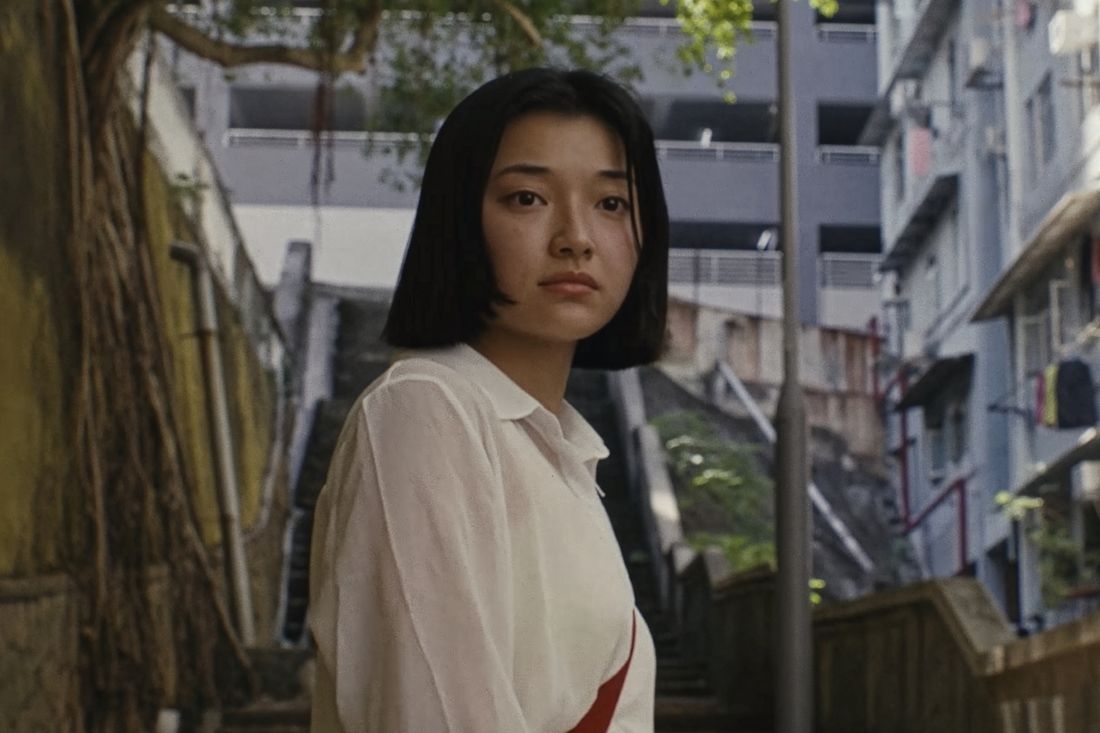
Last year, director Kogonada, known for his minimalist and emotionally restrained films, surprised audiences with the overly sweet romance A Big Bold Beautiful Journey. It was a major letdown, especially compared to his earlier work. Now, with his new film Zi, premiering at Sundance, Kogonada seems to have embraced a more expressive and visually dynamic style. The film feels like a creative breakthrough, as if he’s finally letting go of his previous constraints.
The film feels delicate and almost improvised – it’s surprising to learn it took three weeks to make. It’s best described as a love letter to Hong Kong, filled with quick, candid shots of the city’s streets, markets, parks, and trains. The slightly unsteady, fragmented visuals reflect the fleeting lives of the characters. The story centers on Zi (Michelle Mao), a violinist lost in Hong Kong, struggling with a mysterious neurological condition that causes her to have visions – glimpses of her past or perhaps her future. She confides in Elle (Haley Lu Richardson, known for her role in the film Columbus), an American woman with a noticeable wig who seems genuinely worried. Both women are observed by Min (Jin Ha), a man whose connection to them remains unclear.
Ultimately, the film remains surface-level. While we learn Min and Elle were engaged for years, these details don’t add much to their characters. The movie struggles when it tries traditional storytelling, and it doesn’t feel authentic to the director’s vision. For example, a kiss between Min and Elle feels forced and their subsequent conversation is awkward and lacks emotional understanding. (The actor, typically strong, doesn’t seem to have received much guidance.) Other potentially important moments are either glossed over or dismissed, suggesting the director didn’t believe they held any real significance.
Despite its quiet nature, Zi is a captivating and occasionally exhilarating film. In Columbus, the film powerfully conveys characters’ emotions not through their words, but through the striking modernist architecture of Columbus, Indiana – the angles, shapes, and spaces they inhabit. The film itself is defined by its rich textures: quick glimpses of city life, expansive shots of buildings, and the play of light on faces. Kogonada has a remarkable eye, finding beauty even in everyday scenes like piles of garbage. Partially filmed on grainy 16mm at night, the visuals evoke a sense of nostalgia and memory.
The film Zi features a beautiful score by the late Ryuichi Sakamoto, to whom the movie is dedicated, and his work offers a key to understanding it. Sakamoto, especially after his cancer diagnosis, explored vulnerability in his music, incorporating imperfections like breaths, pauses, and the subtle touch on piano keys. This sense of delicate impermanence seems intentional in Zi as well. The film’s protagonist, Zi, describes feeling detached and adrift, and there’s a reason for this feeling, though it’s not explicitly stated. One could argue this lack of clear explanation is a way to avoid a more impactful narrative, or simply a weakness. Yet, despite recognizing these flaws and its overall fragility, I find the film lingers in my memory as something uniquely delicate and disarming. Ultimately, Kogonada succeeds in creating a memorable experience.
Read More
- Netflix’s Little House On The Prairie Reboot: Release Date, Cast & Everything We Know
- Off Campus Season 1 Soundtrack Guide
- Gold Rate Forecast
- Infinity Nikki Candlelight Reverie Challenge and Rewards Guide
- Brent Oil Forecast
- Prime Video’s New R-Rated Spy Thriller Is Officially No.1 On Streaming Despite Poor Reviews
- Silver Rate Forecast
- 24 Jump Street in the works with Jonah Hill and Channing Tatum set to return
- KPop Demon Hunters Meets Avatar: The Last Airbender In Netflix’s 3-Part Fantasy Series
- EUR ZAR PREDICTION
2026-02-02 00:54