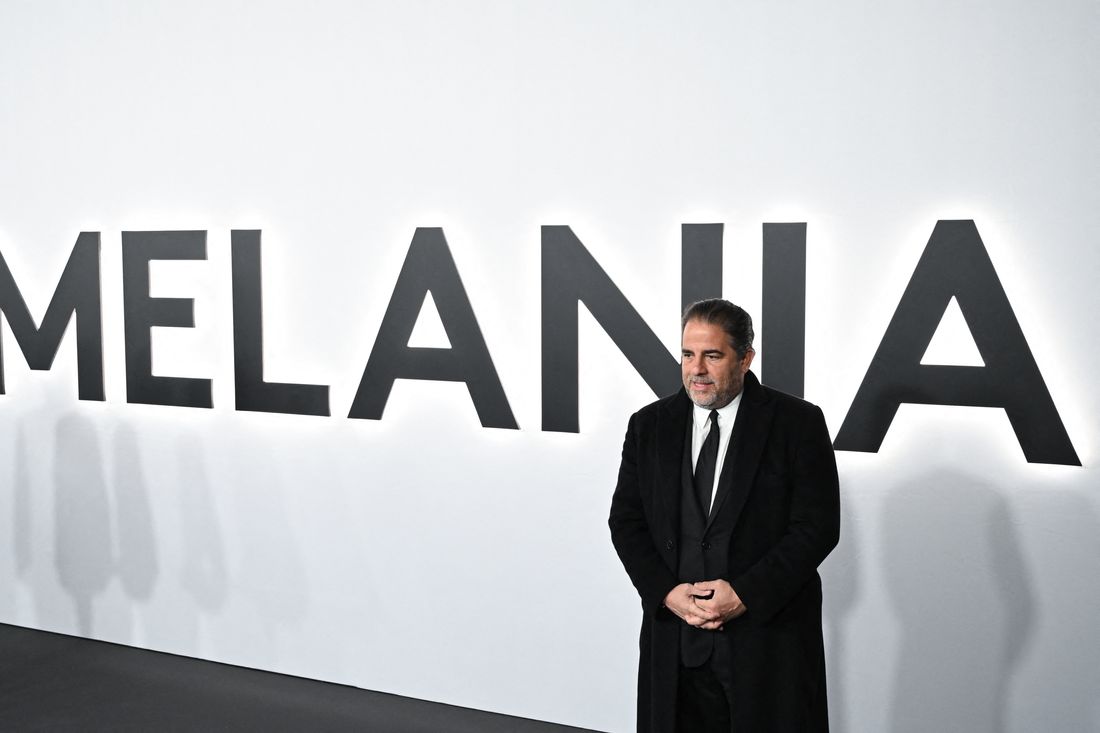
Let’s be real, Hollywood has seen its share of directors fall from grace – Singer, Whedon, Landis, and even Woody Allen still face controversy. You’d think, with the Trump administration being so… transactional, that someone would have jumped at the chance to direct a Melania Trump documentary as a way to get back in the game. I mean, this was a White House where favors – and even pardons – seemed to be openly traded, like with George Santos happily making videos from home instead of being in jail. But honestly, there was always one person who seemed destined to direct Amazon Prime’s documentary about Melania Trump.
Brett Ratner was once a prominent director and producer in Hollywood, but his career fell apart after the Los Angeles Times published a 2017 investigation detailing multiple accusations of sexual harassment and assault. The allegations were serious, including claims of forced sexual acts and, as alleged by actress Natasha Henstridge, coerced sexual activity when she was 19. However, unlike some other figures facing similar accusations, Ratner had existing connections to Donald Trump and built his career on big-budget, popular movies rather than critically acclaimed films. It’s therefore not surprising that Trump’s team chose Ratner to direct a project for Melania Trump, which began development after the 2024 election and attracted interest from major studios like Disney, Netflix, and Paramount. Trump reportedly told guests at a 2017 wedding hosted by Steven Mnuchin that he enjoyed Ratner’s work, specifically mentioning the Rush Hour films.
Brett Ratner was once a hugely influential figure in Hollywood. At his peak, he wasn’t just making money; he was a central part of the industry’s inner circle. He had close relationships with major players like Brian Grazer, co-founder of Imagine Entertainment, and was even chosen to produce the 84th Academy Awards with Eddie Murphy. However, he had to step down after making a homophobic remark during a promotional event for the movie Tower Heist. (Brian Grazer took over as producer, and Billy Crystal replaced Murphy as host.) Ratner quickly apologized, calling his comment a mistake, and the industry seemed to forgive him quickly. Less than two years later, he received an award from GLAAD for being an ally, after producing public service announcements for the organization. By May 2017, before allegations against him became public, he was giving a major speech at the Cannes Film Festival. When he received a star on the Hollywood Walk of Fame, he publicly named James Toback, Roman Polanski, Warren Beatty, and Bob Evans as his closest friends. Shortly after, both Toback and Polanski faced serious accusations – Toback regarding sexual misconduct, and Polanski, who had previously pleaded guilty to a crime involving a minor in 1977.
Brett Ratner’s influence came more from his ability to fund projects than to direct them, a skill he developed through strong connections with influential men. In 2012, he and James Packer, an Australian billionaire, created RatPac Entertainment, which partnered with Warner Bros. in a deal worth an estimated $450 million. Their first big success was the 2013 film Gravity, which Ratner said earned him a substantial personal profit. RatPac went on to co-finance over 80 films that grossed more than $17 billion worldwide, earning 59 Academy Award nominations and winning 25 Oscars. They even occupied Frank Sinatra’s former offices on the Warner Bros. studio lot. The films they backed were diverse, ranging from critically acclaimed dramas like American Sniper and Dunkirk to popular genre movies like It and Annabelle, and included many well-loved titles such as Mad Max: Fury Road, Magic Mike XXL, and Edge of Tomorrow.
However, focusing solely on Ratner’s impressive production record overlooks the types of films he actually creates. The Florida-born director first gained attention with his 1997 debut, Money Talks, a typical buddy comedy for the time. It starred Chris Tucker as a con artist and Charlie Sheen as a news reporter who gets caught up in increasingly serious criminal activity. While critics didn’t like it, the film did reasonably well in theaters – a pattern that pretty much sums up Ratner’s career. The following year, he paired Tucker with Jackie Chan in Rush Hour, which was a huge financial success, earning $245 million on a $35 million budget. It launched Chan’s Hollywood career and made Tucker, who had already appeared in The Fifth Element and Jackie Brown, a major star, eventually leading to a role in Michael Jackson’s “You Rock My World” music video.
The movie Rush Hour is the kind of film Donald Trump would likely enjoy – a loud, comedic action movie that relies on outdated and stereotypical portrayals of its Black and Chinese lead actors. While considered insensitive even for the late 1990s, some in the film industry fondly remember a time when such concerns weren’t as prominent. However, director Brett Ratner has deeper ties to Trump’s circle than just his work with Melania Trump. Notably, he’s connected to Steven Mnuchin, Trump’s former Treasury Secretary and a hedge fund investor. In 2004, Mnuchin started Dune Entertainment, which partnered with 20th Century Fox to finance the successful X-Men franchise – a series created by Bryan Singer and later directed by Ratner in 2006’s X-Men: The Last Stand. In 2013, Mnuchin combined Dune with RatPac, becoming a major financial partner for Warner Bros.
The 2011 comedy Tower Heist marked the first direct collaboration between Ben Ratner and Donald Trump. The film, starring Ben Stiller and Eddie Murphy and produced by Brian Grazer, feels particularly unusual now. Its plot, about workers robbing a Wall Street billionaire after he defrauds their pensions, was influenced by the Occupy Wall Street movement. It was one of several comedies from that time trying to capitalize on the political climate. However, the film’s origins are even more interesting. Eddie Murphy initially pitched the idea in 2005 as Trump Heist: a heist movie with an all-Black cast—Murphy, Chris Rock, Dave Chappelle, Chris Tucker, and Tracy Morgan—targeting Trump Tower, with Trump himself playing the villain, envisioned as a character similar to Alan Rickman in Die Hard. The script went through numerous revisions and writers, including Noah Baumbach, before eventually becoming Tower Heist with Alan Alda as the villain, a character inspired by Bernie Madoff. Trump actually cooperated with the production, allowing filming at both Trump International Hotel & Tower and Trump Tower. Ratner later expressed regret over changing the title, believing Trump Heist would have been more successful.
There’s another connection between Ratner and Trump: Ratner has always seen Alvin Malnik, a Florida lawyer and nightclub owner known to have links with organized crime, as a father figure. Ratner says he didn’t meet his biological father until he was a teenager, and that man later died while homeless – a story that motivated Ratner to start a charity helping people experiencing homelessness in Los Angeles. Trump, who often acts like a powerful and intimidating leader, also has a complicated history with his own father.
Following accusations of misconduct in 2017, film financier Brett Ratner quickly found himself ostracized. Warner Bros. ended its partnership with him, making Rampage the last movie to feature his company’s logo. He was removed from all promotional materials, and a planned biopic about Hugh Hefner was scrapped. Even a later attempt at a career comeback with a film about Milli Vanilli failed after the Time’s Up organization publicly stated he shouldn’t be given another chance. His company, RatPac, was absorbed by Access Entertainment, a British investment firm, and Warner Bros. acquired its film library. The entertainment industry largely acted as if Ratner had never existed – a common pattern until it changes. In September 2023, Ratner moved to Israel, publicly announcing his immigration on Instagram and adopting the Hebrew name Brett Shai Ratner. He befriended Prime Minister Benjamin Netanyahu and was reportedly a guest of Netanyahu’s during his speech to the U.N. General Assembly, along with pro-Israel figure Alan Dershowitz. This connection was notable because Ratner’s former business partner, James Packer, also has a close relationship with the Netanyahu family.
The new documentary Melania represents Donald Trump’s latest attempt at a public comeback. Despite Trump reportedly having final say over the film, it’s unlikely to be profitable. Initial estimates suggest it will earn between $1 million and $5 million during its opening weekend, and images of mostly empty theaters are already circulating online. While a $5 million opening would be a significant achievement for a documentary, it’s important to note that most documentaries debut in a limited number of theaters. Melania, however, is being released in 1,500 theaters nationwide. With traditional movie ticket sales already slow, and the film being labeled as “propaganda” by many, its success at the box office is questionable. However, financial performance isn’t the main goal; Trump’s supporters are accustomed to projects failing and are likely to continue supporting them regardless.
The real issue is whether Brett Ratner’s close ties to power will push Hollywood, already eager to please the president, to fully embrace his return. Amazon has already invested heavily in his projects, spending $40 million to distribute and $35 million to promote a film about Melania Trump. Despite protests erupting in Minneapolis, the White House hosted a screening of the film with Ratner in attendance, alongside prominent figures like Tim Cook, Andy Jassy, and Mike Tyson. Reports indicate Ratner is now living at Mar-a-Lago, traveling on Air Force One with the Trumps, and working on further Trump-related content (Amazon also acquired a docuseries connected to Melania). Furthermore, Rush Hour 4, a project long stalled, recently received the green light after a personal request from Trump – from Paramount, now owned by the son of a Trump ally who is competing with Netflix to acquire Warner Bros. Ratner has always recognized the importance of connections in Hollywood, but now, the most crucial relationship isn’t with a studio executive. Whether this will be enough to solidify his comeback remains to be seen, and may depend on the outcome of the upcoming midterm elections.
Read More
- Off Campus Season 1 Soundtrack Guide
- Chainsaw Man Volume 24’s Cover Art Reveals a Brand-New Denji
- X-Men ’97 Finally Gave Gambit the Hero Moment He Deserved
- 46 Years Later, The Mandalorian & Grogu Answers A Major Empire Strikes Back Question
- HoI4 fans harsh reactions to the announcement of another DLC pack
- 10 Worst End-Game Couples In Sitcom History
- Katanire’s Yae Miko Cosplay: Genshin Impact Masterpiece
- Emily Henry Says to ‘Trust the Vision’ For Beach Read Adaptation
- DoorDash responds after customer uses AI to make food look bad and get a refund
- Gold Rate Forecast
2026-01-31 02:01