Spoilers ahead for the plot and ending of Send Help.
Okay, so I just finished watching Send Help, and honestly, the whole thing felt really familiar. It’s clearly aiming for that late ’90s thriller vibe – think Danny Elfman-esque music, slightly cheesy special effects, and, let’s be real, pretty simple takes on gender roles. It definitely hit me with some warm nostalgia. But as the movie went on, I kept getting this feeling that it was echoing something more recent. By the time the big twist hit, I started wondering if the writers were intentionally nodding to Triangle of Sadness from 2022, or if it was just a weird coincidence that their ideas aligned so closely. It’s a fun movie, but the similarities are definitely noticeable!
Okay, so Send Help isn’t like that super serious, award-winning film you might expect. It stars Rachel McAdams as Linda, and honestly, she’s playing someone who’s a bit of a mess and definitely not popular at work. She’s constantly put down by her boss, Bradley – who basically got his job because of his dad. He promised Linda a promotion, but gives it to his unqualified buddy instead, claiming she’s not ‘people-y’ enough. It’s a little hard to believe they portray her as so unlikable, but you go with it. As a consolation prize, he invites her on a trip to Bangkok, but she’s instantly excluded and the guys on the plane make fun of her old Survivor audition! Honestly, it almost feels good when a storm sends the plane crashing into the ocean. In the end, Linda and Bradley are the only ones who survive, stranded on a deserted island in Thailand. It’s going to be interesting to see what happens next!
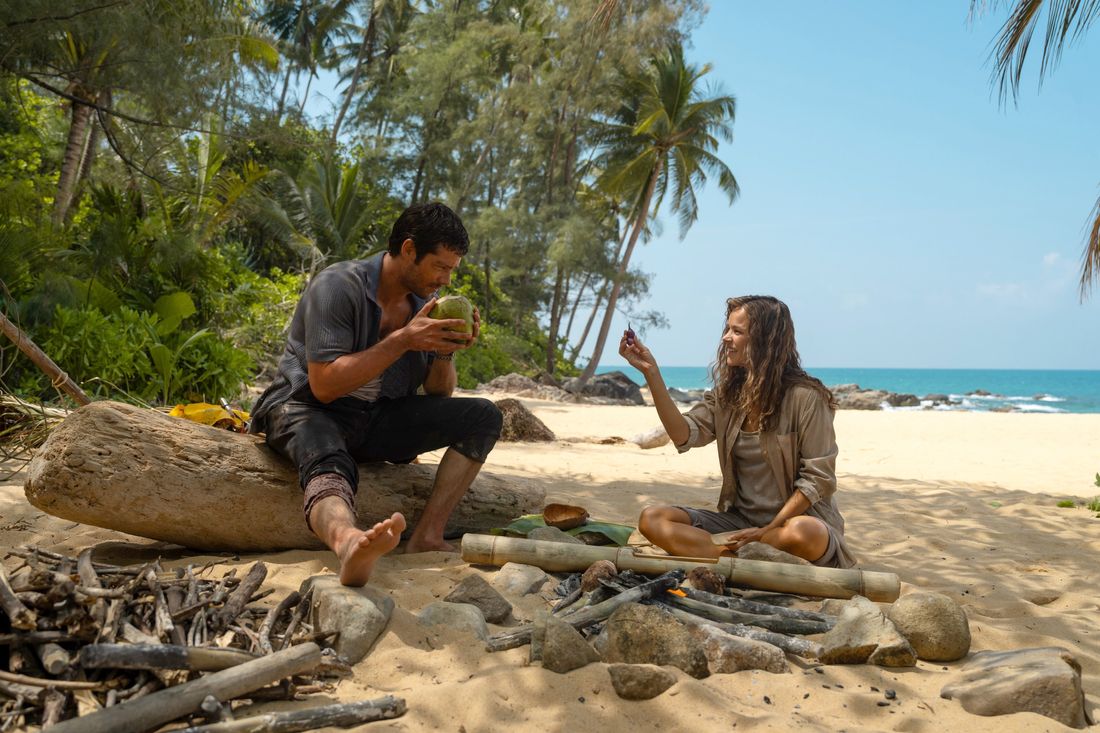
Stranded on the island, Linda quickly proves her resourcefulness, building a shelter, finding water, starting a fire, and even catching a fish. It’s a stark contrast to the impressions from her Survivor audition tape! The balance of power between her and Bradley shifts instantly. After she leaves him to manage on his own overnight, he realizes he needs her help, giving Linda the advantage. She pointedly tells him, “This isn’t the office anymore,” her voice hinting at a threat. The situation quickly brings to mind films like Cast Away and The Blue Lagoon, but also the dark comedy Triangle of Sadness, which also explores a reversal of social roles on a deserted island. There are echoes of Lord of the Flies too – Linda confidently claims leadership and even hunts a boar – but the story of an abused employee taking control of her boss is directly reminiscent of Östlund’s work. Like Abigail in Triangle of Sadness, who becomes the leader of the shipwreck survivors because of her survival skills, Linda’s abilities give her power. Östlund, however, is more focused on class dynamics than gender roles, though both films notably challenge traditional norms.
In Triangle of Sadness, Abigail starts a transactional relationship with model Carl, exchanging food and lodging for intimacy. Meanwhile, the connection between Bradley and Linda remains unfulfilled romantically, despite Linda’s attempts to initiate something more, such as when she watches him bathe. However, beyond any power dynamics or sexual encounters, both films explore how a woman’s determination to avoid a solitary, submissive life can drive them to drastic measures. We see early signs of Linda’s shift in Send Help when, after two weeks stranded, she spots a passing boat but chooses not to signal for help, saying, “Not yet.” This isn’t a simple lapse in judgment; Linda genuinely wants to remain where she is. When another boat appears, carrying Bradley’s fiancée, Zuri, and a Thai captain, Linda actively prevents their rescue, leading them onto dangerous terrain and then refusing assistance when Zuri falls off a cliff. Shortly after, Bradley discovers Zuri’s body and confronts Linda, leading to a violent fight involving stabbing, scalping, and shockingly graphic eye gouging. This extreme violence ultimately reveals a key truth about the situation.
After running to the far side of the island – a place Linda had specifically warned him to avoid – Bradley stumbles upon a lavish, empty mansion. It turns out Linda has been secretly taking food, water, and other supplies from the house, even the knife she said washed ashore. Through flashbacks, we learn she deliberately didn’t signal the supply boat that was meant for the mansion, disabling the security system to stay hidden and avoid being rescued. We also discover she wasn’t just a bystander when Zuri fell; she actively pushed Zuri and the local boat captain to their deaths with a large rock. This situation strongly echoes the ending of the film Triangle of Sadness, where Agnes and Yaya discover a luxury resort on the same island. Faced with returning to her old life, and possibly encouraged by Yaya’s careless offer of a job, Agnes picks up a rock and intends to kill the model. The shared use of a rock as a weapon is striking!
The film Triangle of Sadness concludes with an open ending, abruptly switching from Agnes’s pivotal moment to Carl’s escape. Send Help, however, provides a definitive resolution. The story culminates in Linda confronting Bradley at gunpoint inside their secluded house. He desperately tries to save himself, apologizing for his past actions and professing his love, claiming he’s a changed man and wants to build a life with her on the island. For a moment, Linda seems to consider his plea, but she quickly realizes he’s still untrustworthy when she notices a missing trophy. As Bradley attempts to attack, Linda overpowers him and, standing over the man who consistently dismissed her contributions in favor of golfing with friends, strikes him with a golf club.
Years later, we find Linda thriving after her rescue from the island. She’s become a celebrated golfer and a bestselling author, and her incredible story of survival has motivated people around the world. Her core message is stark: “Don’t wait for anyone to save you – you have to save yourself.” It’s a tough sentiment, but Linda is right. She’s finally living the life she always wanted, though achieving it required her to embrace a ruthless side.
It takes guts for Send Help to portray Linda as a villain and let her get away with it, especially since Bradley is so clearly a sexist. It’s easy to find yourself hoping someone will take him down a peg. However, the movie holds back by never showing Linda and Bradley actually becoming intimate. The writers likely feared going as far as Triangle of Sadness in exploring the disturbing psychological aspects of their connection, worrying audiences wouldn’t accept it. Linda even points out she wouldn’t exploit someone beneath her, unlike Bradley who seems to do so with the women he interviews. By the time Linda is a full-blown killer, the movie’s reluctance to explore that side of things feels a bit pointless. But it’s not shocking – this is a film that revels in violence and shallowness. While both Send Help and Triangle of Sadness are over-the-top and feature plenty of…well, vomit, Raimi’s movie doesn’t take itself nearly as seriously. That probably means it won’t get much Oscar attention, but it’s a much more enjoyable watch.
Read More
- Netflix’s Little House On The Prairie Reboot: Release Date, Cast & Everything We Know
- Off Campus Season 1 Soundtrack Guide
- YouTuber arrested after viral AI bodycam videos spark real police complaints
- Silver Rate Forecast
- Prime Video’s New R-Rated Spy Thriller Is Officially No.1 On Streaming Despite Poor Reviews
- Brent Oil Forecast
- Gold Rate Forecast
- Bulgakov’s Take: Koreans Bet the Farm on Chips, Crypto, and Chaos
- Peaky Blinders: The Immortal Man’s Tommy Shelby Is a Better Father Than Michael Corleone
- EUR ZAR PREDICTION
2026-01-31 01:55