Spoilers ahead for part one of Bridgerton season four.
The fourth season of Bridgerton starts in a surprising way – by focusing on the servants who keep the Bridgerton household running, rather than the family themselves. Previously, these characters were mostly in the background, but now they take center stage. We see them performing all the tasks necessary to maintain the Bridgertons’ comfortable lifestyle, from preparing meals and tending fires to answering every call for service. The show deliberately highlights the sheer amount of work and effort involved, creating a noticeable impact. This season shifts the focus from the show’s usual themes to explore issues of class, a topic Bridgerton hasn’t always handled well, and it rises to the challenge with grace and skill.
For the most part, the servants in Bridgerton have provided comic relief, offering humorous commentary on the often-ridiculous behavior of the high society characters. Brimsley, the Queen’s assistant, is a gossipy figure who responds to her outlandish requests with a blend of annoyance and loyalty, while Mrs. Varley, the Featheringtons’ housekeeper, is remarkably patient – especially when dealing with insect infestations. However, Bridgerton is fundamentally a romance, so its storylines outside of love affairs have generally been kept simple to maximize the drama of those relationships. This is where it differs from shows like Downton Abbey and The Gilded Age, which have incorporated broader political and social issues like Irish independence, spiritualism, and class conflict. Bridgerton has primarily focused on weddings and romantic entanglements, making the fourth season’s exploration of workers’ rights – and the introduction of activist Sophie Baek (Yerin Ha) – a genuinely welcome and surprisingly nuanced addition.
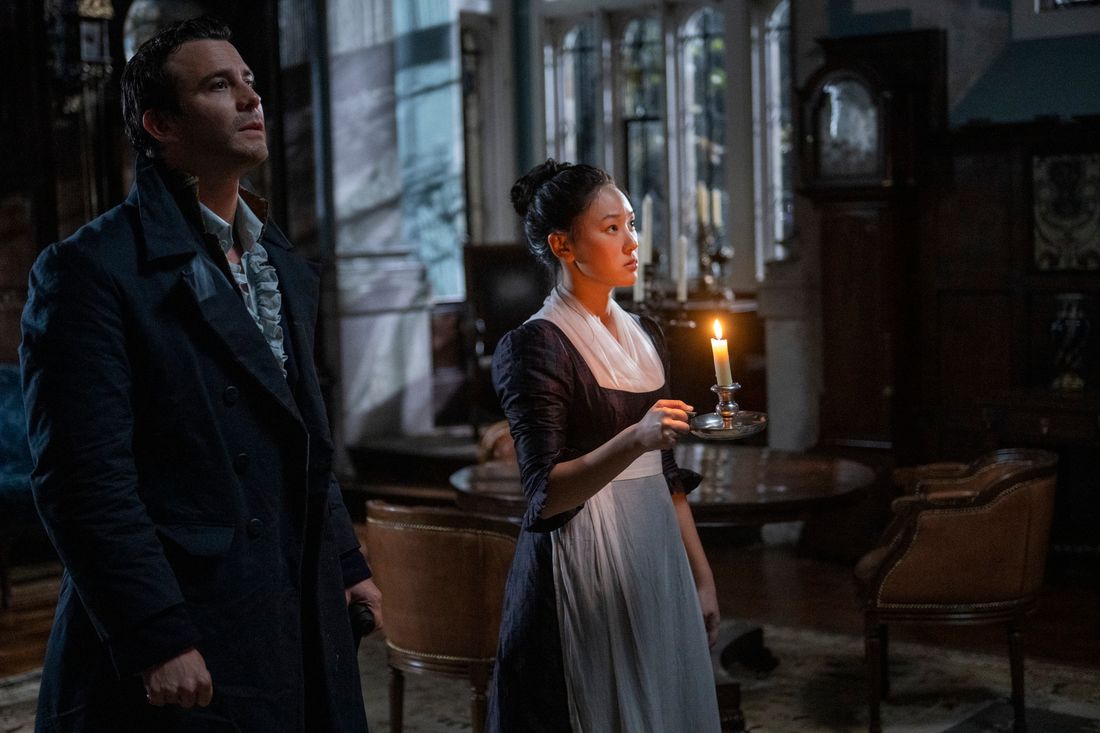
This season, Benedict Bridgerton (Luke Thompson) is the focus of the romantic storyline, but it’s Sophie who truly shines. As a young woman born out of wedlock and forced into servitude, she connects the high society world of the Bridgertons with the lives of those who serve them. Benedict mistakenly believes the enigmatic Lady in Silver, whom he meets at a masquerade ball, is from his social class – she’s actually Sophie, a maid who briefly pretended to be a debutante to escape her harsh life. This deception sets off a chain of events that expose the stark class differences within society. When Sophie is unfairly dismissed by Lady Gun, and replaced by multiple new maids, it sparks competition and higher wages, allowing the series to explore the lives of those working behind the scenes in Mayfair’s grand homes.
The show is now visually and narratively highlighting the lives of the domestic staff. Instead of focusing solely on the Bridgerton family, scenes linger on the servants and their work. For example, after a ball, the camera shows the maids cleaning up, placing them alongside the guests they serve. After playful moments by the Bridgerton brothers, we see a maid scrubbing the mess, revealing the labor behind their leisure. We’re constantly reminded of the unseen work that supports the family’s comfortable life – who bakes the pastries, dusts the furniture, and maintains their vast estate, even when the owners are absent. The show also shows the servants interacting with each other, discussing their jobs, which adds complexity to the show’s portrayal of this opulent world. It makes us question who this fantasy is really for.
Bridgerton subtly allows its servants to express their frustrations with their lives without portraying them as rude or unappreciative. For example, John, a Bridgerton footman, remarks that a ball is exciting for the guests but creates chaos for those who have to work it. Alfie, Lady Gun’s footman, breathes a sigh of relief when his demanding employer leaves for the night. After two decades of service, Mrs. Varley attempts to ask for a raise from Portia Featherington, only to be firmly rejected – a testament to Portia’s unpleasant character. When Mrs. Varley then accepts a position with Lady Gun, she joins a growing number of servants seeking better working conditions and pay. Even Lady Danbury, a close friend of the Queen, recognizes the imbalance in their relationship, realizing it resembles an employer-employee dynamic rather than a true companionship – a situation where one person constantly has to cater to the other isn’t equal.
The show Bridgerton makes a point of highlighting the lives of its workers, and cleverly explains why through the character of Lady Whistledown, who reports on labor issues and worker shortages. Even the Queen learns that gossip about how people treat their employees is surprisingly interesting and revealing. Essentially, how someone behaves at work—whether they’re fair and respectful to those they rely on—shows a lot about their character, and this is reflected in the storylines of Sophie and Benedict. While Benedict hasn’t discovered Sophie’s true identity as a lord’s daughter, he’s falling for the person she is: a smart, strong, and dedicated woman who is equally comfortable caring for others and challenging Benedict’s privileged worldview. Sophie consistently supports her fellow workers, and her unwavering commitment reinforces the show’s focus on their experiences and concerns.
This scene revisits the charming first encounter between Sophie and Benedict, this time at a country house party. Benedict is a guest, while Sophie is working there after her stepmother ruined her job prospects in London. Their reunion isn’t glamorous, however, as they stumble upon a horrifying situation: a group of men pressuring a maid. Sophie bravely intervenes, sending the maid to safety and confronting the men herself before Benedict can help. While Benedict forcefully threatens the group – who appear to have a history of abuse – the power dynamic remains starkly uneven. He retains his privilege and wealth, while Sophie loses her job, powerfully illustrating the vast class differences between them in a single, impactful moment.
Okay, so after the initial setup, Bridgerton really falls into its familiar patterns. You’ve got one of the Bridgerton brothers needing a lesson in life from the woman he’s falling for, and the family continues to be portrayed as unusually kind to their staff – like, one of the only noble houses who actually treat their servants decently. Those things are just part of the show now, and I don’t think it’ll change, but honestly, Sophie really steals the show. Her focus on the lives of the working class is so powerful. She calls out Benedict on how little he understands about the limited options available to the servants, she’s always thankful for their hard work – even just noticing a nice meal! – and she pitches in to help wherever she can so no one gets overworked. Even the way other servants, like Mrs. Crabtree, react to her – worrying she’ll forget her place or get used by Benedict – really highlights how deeply unfair things are and how messed up it is that people within that system accept it. That’s why it was SO satisfying when Sophie turned down Benedict’s offer to be his mistress. She knows she deserves more than to be kept as a secret, and she sees that his proposal was rooted in seeing her as someone below him. He might be falling for her, but he hasn’t fallen enough to actually go against his family and their expectations and marry her.
Okay, that ending left me reeling! It really highlighted the gap between Sophie and Benedict, and honestly, it felt like a step backward for them. Now Sophie’s caught in this tricky situation – a potential affair with her employer – which mirrors her mother’s past. I’m dying to know how she’ll respond to Benedict’s offer, and how it will change everything we thought we knew about love conquering all. It’s a brilliant way to tie all the season’s themes together, especially with Lady Gun and her daughters moving in next door. I’m secretly hoping this leads to some serious drama with the staff! Imagine Lady Gun treating everyone terribly and sparking a full-blown union! A work stoppage would really shake things up in Mayfair. I’d love to see Mrs. Varley leading a picket line! Honestly, this show is wild enough that I wouldn’t be surprised by anything. I haven’t read the book this season is based on, but I’m guessing Sophie’s parentage will somehow be revealed and used to justify her being with Benedict. But even before that happens, she’s already proving that even a seemingly ordinary maid can have a huge impact and really change things for the better.
Read More
- Netflix’s Little House On The Prairie Reboot: Release Date, Cast & Everything We Know
- Off Campus Season 1 Soundtrack Guide
- YouTuber arrested after viral AI bodycam videos spark real police complaints
- Silver Rate Forecast
- Prime Video’s New R-Rated Spy Thriller Is Officially No.1 On Streaming Despite Poor Reviews
- Brent Oil Forecast
- Gold Rate Forecast
- Bulgakov’s Take: Koreans Bet the Farm on Chips, Crypto, and Chaos
- Peaky Blinders: The Immortal Man’s Tommy Shelby Is a Better Father Than Michael Corleone
- EUR ZAR PREDICTION
2026-01-30 21:56