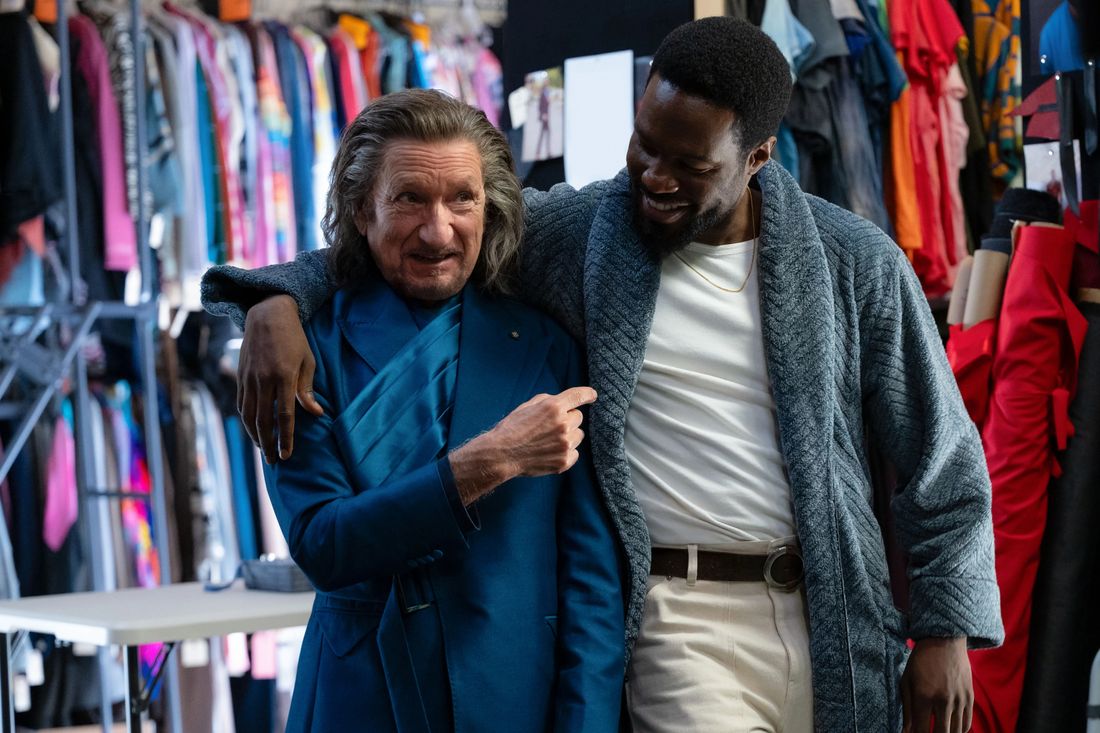
Simon Williams is an actor in Los Angeles who’s having a hard time catching a break – a common struggle for many aspiring performers. He faces the usual challenges of a competitive industry: lack of opportunities and the pressure to not mess up when he does get a role. But Simon has a unique problem: he’s a superhero in a world where studios are terrified of insuring anyone with powers. Following an accident on a previous set, Hollywood now avoids casting people like him due to the financial risk. He has to hide his abilities, especially when he auditions for a remake of his favorite childhood movie, Wonder Man. While there are the usual Marvel complications, Simon’s biggest issue is simply being uninsurable. In this world, just like our own, insurance companies hold a lot of power.
It’s surprisingly grounded that something as ordinary as insurance is central to the problems Simon faces. This shows that the story isn’t about a typical superhero battle between good and evil, but about the everyday realities of life. In Wonder Man, superheroes are affected by things like policies and bills just as much as their backstories, hinting that a Marvel story might actually reflect real-world concerns. Even fantastical characters have to deal with normal things – earning a living, paying rent, dealing with traffic, and navigating complicated relationships. The Marvel Cinematic Universe has touched on these relatable aspects before, like with Michael Keaton’s character, a working-class contractor, but those moments were usually just brief details lost in the action. In Wonder Man, these ordinary details are essential to the story, and that choice highlights the show’s goal: to tell a genuinely human story within the superhero world. After so many stories about saving the world, this is a refreshing change. However, Wonder Man is more interesting as an idea than it is when you actually watch it.
The new Disney+ series, created by Destin Daniel Cretton and Andrew Guest (who also runs the show), feels like a classic Hollywood buddy comedy. All eight half-hour episodes are available tonight at 9 p.m. ET. The story centers around Simon and an unexpected partner: Trevor Slattery (played brilliantly by Ben Kingsley), the actor you might remember portraying a villain in Iron Man III. The government’s Department of Damage Control, led by P. Cleary (Arian Moayed), forces Trevor to investigate Simon, believing he has superpowers. Their paths cross during auditions for Wonder Man, and what starts as a secret operation slowly blossoms into a genuine friendship. Trevor begins to care for Simon, and the series becomes a charming story about two men desperately chasing their Hollywood dreams.
Wonder Man isn‘t the first Marvel series to focus on a smaller scale. Shows like Daredevil, the early Netflix Defenders series, Hawkeye, and Echo all kept their conflicts grounded and personal. She-Hulk is the most similar in style, being lighthearted and exploring a legal drama within the Marvel Cinematic Universe. However, Wonder Man is unique because superhero action feels almost like a side note. The story isn’t about saving the world or even fighting crime; it’s about the challenges of everyday life when extraordinary events are constantly happening, and it approaches this with sincerity, unlike the more cynical tone of a show like The Boys.
I have to admit, when this series hits its stride, it’s really enjoyable and easy to watch. You can still see flashes of the director’s earlier brilliance – that same spark from Short Term 12 before he got caught up in the big Marvel world. The show has this cool way of portraying Los Angeles as a bit rundown, full of strip malls and forgotten apartments. There’s a particularly great sequence where Simon and Trevor wander around Koreatown, desperately trying to find a quiet spot to film an audition tape, and it’s where the show really feels its best. The humor often comes from the contrast between the everyday grind of Hollywood and the craziness of superheroes – it’s almost like The Studio got subtly blended into the Marvel Cinematic Universe, which makes sense considering the creator’s comedic background on shows like Community and Brooklyn Nine-Nine. One episode, a flashback explaining why Hollywood avoids casting unique people, really stood out. It focuses on a bouncer who becomes the superhero Doorman, and it’s perfectly balanced – both silly and smart. It gave me a real taste of just how good Wonder Man could have been.
The biggest issue with Wonder Man is that it feels unfinished. Yahya Abdul-Mateen II is a naturally commanding actor, and it’s no surprise this is his third superhero role after memorable performances in Watchmen and the Aquaman films. He’s clearly talented, but here he’s playing a somewhat unlikeable, self-important actor who overthinks a small role on American Horror Story. This initial disconnect between the character and Abdul-Mateen’s inherent presence sets the tone for the entire series. Wonder Man consistently feels like an early draft, never quite managing to fully utilize its strengths or find a cohesive direction. It’s as if the show doesn’t quite know what it wants to be.
The show largely feels like a lighthearted and enjoyable journey as Simon and Trevor’s friendship deepens, even though their relationship is built on a secret that will eventually lead to betrayal. Their increasingly strange adventures could have been even better with stronger writing and bolder choices. Unfortunately, the series loses its way in the end, opting for a predictable, large-scale superhero finale instead of fully embracing its more unique and character-driven potential. While it avoids the typical Marvel-style world-ending conflict, the resolution still feels forced, like a necessary reminder that this is, at its core, a superhero story.
Calling Wonder Man a disappointment doesn’t fully capture how much potential it wasted. Great superhero stories often reflect real-life struggles, and the show’s main character, Simon, faced a compelling one: keeping a secret that could ruin his life. This could have resonated with many experiences, like the challenges of being LGBTQ+ in Hollywood, hiding a core part of yourself in a career that demands openness, or the constant pressure of avoiding risk. The show had all the right ingredients to be something special, and could have breathed new life into a franchise that feels overstuffed. Unfortunately, Wonder Man suffers from a common problem with recent Marvel projects: a reluctance to take risks or try anything truly original, prioritizing safety and appealing to existing fans over bold storytelling.
The show hints at a different path – a more intimate, unusual approach that focuses on everyday life when the extraordinary becomes normal. This is exactly what A Knight of the Seven Kingdoms has done for Game of Thrones – it’s found new energy by scaling back and focusing on details, while still reminding us of what we enjoyed about the original series. Wonder Man occasionally seems to understand this potential too, but it doesn’t fully commit to the idea that ordinary things – like insurance or the way a studio operates – can be as compelling as superpowers.
Read More
- Off Campus Season 1 Soundtrack Guide
- Chainsaw Man Volume 24’s Cover Art Reveals a Brand-New Denji
- X-Men ’97 Finally Gave Gambit the Hero Moment He Deserved
- 46 Years Later, The Mandalorian & Grogu Answers A Major Empire Strikes Back Question
- HoI4 fans harsh reactions to the announcement of another DLC pack
- 10 Worst End-Game Couples In Sitcom History
- Katanire’s Yae Miko Cosplay: Genshin Impact Masterpiece
- DoorDash responds after customer uses AI to make food look bad and get a refund
- Gold Rate Forecast
- Emily Henry Says to ‘Trust the Vision’ For Beach Read Adaptation
2026-01-27 21:55