Author: Denis Avetisyan
A new system uses artificial intelligence to deliver real-time patent recommendations, keeping financial technology innovators ahead of the curve.
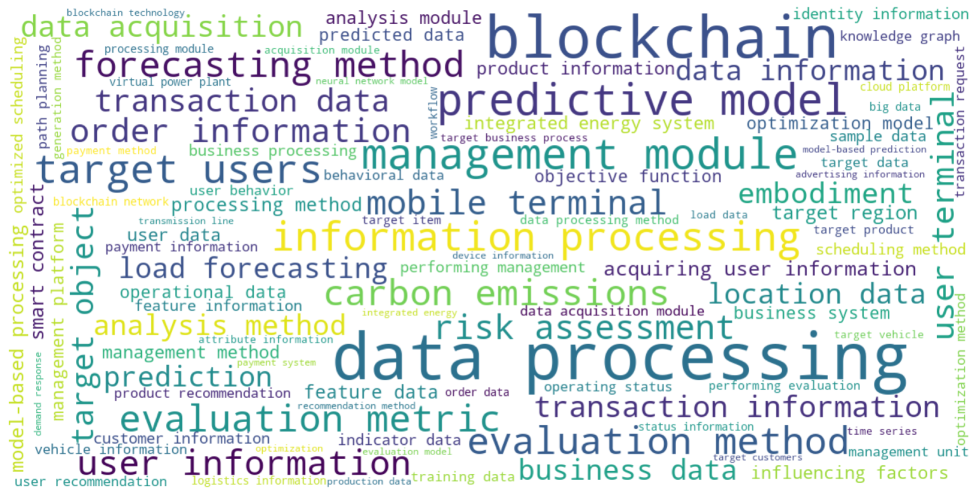
This paper details a real-time patent citation recommendation system leveraging large language models and Hierarchical Navigable Small World (HNSW) graphs for efficient search within rapidly evolving financial technology patent data.
The increasing velocity of innovation in financial technologies presents a significant challenge to effective prior-art discovery due to rapidly expanding patent collections. This paper, ‘LLM-powered Real-time Patent Citation Recommendation for Financial Technologies’, introduces a novel framework for recommending relevant patent citations in real-time, leveraging the semantic understanding of large language models. By employing LLM embeddings and efficient approximate nearest neighbor search with hierarchical navigable small-world (HNSW) graphs, the system facilitates dynamic index updates without costly full rebuilds. Does this approach represent a scalable solution for maintaining accurate and timely patent intelligence in fast-moving technological landscapes?
Decoding the Innovation Tide: Beyond Patent Counts
The accelerating pace of financial innovation necessitates a proactive approach to intellectual property assessment. Financial institutions and fintech companies are generating patents at an unprecedented rate, covering areas from algorithmic trading and blockchain technologies to novel insurance products and digital payment systems. Consequently, simply tracking patent filings is insufficient; sophisticated analysis is now crucial for identifying emerging technological trends, understanding competitive landscapes, and anticipating potential infringement risks. This demands moving beyond simple keyword searches to employ techniques like semantic analysis, network analysis, and machine learning to discern the true innovation within a vast and rapidly expanding patent portfolio. Ultimately, robust patent analysis isn’t merely a defensive strategy, but a vital tool for driving future innovation and maintaining a competitive edge in this dynamic sector.
The efficacy of conventional patent searching, historically dependent on keyword identification, is increasingly challenged by the complex landscape of financial innovation. These methods often fail to discern the underlying meaning of inventions, missing crucial connections between seemingly disparate technologies. A search for “blockchain applications,” for example, might retrieve numerous documents referencing the term, but overlook prior art detailing functionally equivalent systems described using alternative terminology, such as “distributed ledger technology” or “cryptographic consensus mechanisms.” This semantic gap poses a significant risk to both innovators – potentially leading to duplicated effort or invalid patents – and to legal professionals tasked with assessing the novelty and non-obviousness of financial technologies. Consequently, a shift towards more nuanced, meaning-based search strategies is vital for accurately mapping the frontiers of financial innovation and ensuring robust intellectual property protection.
Semantic Shadows: Uncovering Meaning in Patent Language
Large Language Models (LLMs), exemplified by the Text Embedding-3-Large model, generate semantic vector representations, also known as embeddings, of patent abstracts by converting textual data into numerical vectors in a high-dimensional space. Unlike keyword searches which rely on exact term matching, these embeddings capture the underlying meaning of the text, allowing for the identification of patents with similar concepts even if they employ different terminology. This is achieved through the LLM’s training on vast datasets, enabling it to understand contextual relationships and represent concepts as points in vector space, where proximity indicates semantic similarity. The resulting vectors enable computationally efficient comparisons of patent abstracts based on meaning, rather than simply lexical overlap.
Cosine Similarity serves as the metric for determining the degree of semantic relatedness between patents based on their embedding vectors. This calculation determines the cosine of the angle between two vectors; a value of 1 indicates perfect similarity, 0 indicates orthogonality (no similarity), and -1 indicates complete dissimilarity. Specifically, the similarity is computed as the dot product of the two embedding vectors divided by the product of their magnitudes: similarity = \frac{A \cdot B}{||A|| \cdot ||B||}. Higher cosine similarity scores denote patents addressing similar concepts, even if they do not share common keywords, facilitating more precise patent recommendations and improved prior art searches compared to methods reliant on lexical matching.
Traditional methods for determining patent similarity, such as Term Frequency-Inverse Document Frequency (TF-IDF), Bidirectional Encoder Representations from Transformers (BERT), and Distributed Memory Model of Paragraph Vectors (Doc2Vec), operate by analyzing word frequencies or contextual relationships within individual documents. While effective at identifying patents sharing common terminology or sequential word patterns, these approaches often struggle with understanding the underlying meaning of the text. TF-IDF relies heavily on exact keyword matches, while BERT and Doc2Vec, though capturing some context, are limited by their training data and model architecture. Consequently, these methods can fail to recognize semantic relationships – where patents discuss similar concepts using different language – leading to less accurate results compared to Large Language Models (LLMs) which are trained on significantly larger datasets and possess a greater capacity for generalized semantic understanding.
Navigating the Vector Space: Efficient Patent Retrieval
Approximate Nearest Neighbor (ANN) search algorithms, including Hierarchical Navigable Small World (HNSW) and Approximate Nearest Neighbors Oh Yeah (ANNOY), address the scalability challenges of exhaustive nearest neighbor searches in high-dimensional spaces. Traditional methods become computationally prohibitive as the dataset size increases; ANN algorithms offer a performance improvement by accepting a controlled level of inaccuracy. These algorithms construct data structures-graphs for HNSW and trees for ANNOY-that enable rapid candidate retrieval, significantly reducing the number of distance calculations required to identify potentially similar patents. While not guaranteeing the absolute nearest neighbors, ANN methods provide a practical trade-off between search speed and accuracy, making them suitable for large-scale patent retrieval systems where response time is critical.
Approximate Nearest Neighbor (ANN) search algorithms prioritize retrieval speed over absolute precision. While an exact nearest neighbor search guarantees identification of the true closest matches, it becomes computationally prohibitive for datasets containing millions or billions of vectors, such as large-scale patent databases. ANN algorithms intentionally introduce a controlled level of approximation, accepting a small potential reduction in result accuracy – often measured by recall – in exchange for orders-of-magnitude improvements in query latency. This trade-off enables practical search speeds, often in the milliseconds range, for datasets where exhaustive search would take seconds or minutes, making ANN methods essential for real-time patent retrieval applications.
The performance of Approximate Nearest Neighbor (ANN) search algorithms, specifically Hierarchical Navigable Small World (HNSW) and Approximate Nearest Neighbors Oh Yeah (ANNOY), is fundamentally constrained by the quality of the semantic embeddings used to represent the patent data. These algorithms operate by calculating distances between embedding vectors; therefore, embeddings that accurately capture the semantic meaning of patents – reflecting technical features, claims, and overall innovation – are critical for identifying truly similar patents. Poorly generated or irrelevant embeddings will result in inaccurate nearest neighbor identification, regardless of the efficiency of the ANN algorithm itself. This interdependence highlights the importance of employing robust embedding techniques, such as those based on transformer models, in conjunction with ANN search to achieve effective patent retrieval.
A Living System: Real-Time Patent Intelligence
A dynamic system for real-time patent recommendation leverages the power of semantic embeddings and approximate nearest neighbor (ANN) search to provide rapidly updating prior art assessments. By converting patent text into dense vector representations – semantic embeddings – the system captures the underlying meaning and relationships between documents. This allows for efficient similarity comparisons using ANN search, identifying relevant patents even with massive datasets. Critically, this approach isn’t static; as new patent filings emerge, the system adapts, incorporating the new information into its search index without requiring complete rebuilds, thereby ensuring recommendations remain current and responsive to the latest innovations in financial technology and beyond.
A critical component of this real-time patent recommendation system is its ability to incorporate new filings through incremental updates to the search index. Rather than requiring a complete and computationally expensive reconstruction of the index with each new patent submission, the system efficiently integrates these additions into the existing structure. This approach dramatically minimizes downtime, ensuring the system remains responsive and delivers current recommendations without significant interruption. By avoiding full reconstructions, the system sustains a high level of performance even with a continuously growing database, making it particularly well-suited for the dynamic landscape of financial innovation where timely access to prior art is paramount.
Application of this dynamic patent recommendation system to the substantial CNIPA Financial Patent Data demonstrates a marked improvement in the efficiency of prior art searches within the financial innovation landscape. Evaluations reveal a Recall@200 score of 44.44%, indicating the system successfully identifies relevant prior art within the top 200 recommended patents nearly half the time. This heightened recall translates directly into reduced research time for financial technology developers and patent examiners, facilitating faster innovation and more thorough assessments of novelty. The system’s ability to sift through a vast database and pinpoint pertinent references offers a substantial advantage over traditional, manual search methods, ultimately contributing to a more robust and efficient intellectual property ecosystem.
To ensure pinpoint accuracy in patent recommendations within the rapidly evolving field of financial technology, the system leverages a nuanced classification code system. This approach goes beyond simple keyword matching, allowing for a more refined search that prioritizes relevance to specific areas of innovation. Evaluations demonstrate best-in-class performance, with a Mean Reciprocal Rank (MRR) of 0.1782 and a normalized Discounted Cumulative Gain (nDCG) of 0.1831 achieved using the HNSW-Large algorithm. Critically, the system maintains responsiveness through rapid updates – a complete index refresh, incorporating new patent filings, is completed in just 288 seconds – making it a practical tool for staying ahead in the dynamic landscape of financial patents.
The pursuit of relevant patent citations within the swiftly changing landscape of financial technology demands a system capable of adapting to new information – a concept central to this work. It mirrors a fundamental tenet of knowledge acquisition: understanding isn’t merely about accepting pre-defined structures, but actively probing their limits. As Edsger W. Dijkstra observed, “It’s not enough to just do the right thing; you have to prove that it’s the right thing.” This paper embodies that spirit, not by passively accepting existing citation patterns, but by constructing a real-time recommendation system that actively challenges and refines those connections through large language models and the efficient graph search of HNSW. The system’s ability to dynamically update in response to new patent filings reflects a willingness to continually re-evaluate and validate its understanding – a commitment to rigorous verification.
What Lies Beyond?
The system presented here operates on the assumption that citation implies relevance. But what if the absence of citation is the more telling signal? Financial technologies, by their nature, often seek to circumvent existing patents, to operate in the grey areas of intellectual property. A truly insightful system might prioritize identifying those patents not cited, flagging potential areas of deliberate evasion or novel circumvention. The current architecture treats the patent landscape as a static map; future iterations must account for its deliberate obfuscation.
The reliance on semantic similarity, while effective, risks reinforcing existing biases within the patent corpus. Financial innovation doesn’t always build upon the explicitly stated; it frequently recombines concepts from disparate fields. One wonders if introducing controlled ‘noise’ – deliberately suggesting seemingly unrelated patents – could spark genuinely novel connections, or simply generate spurious recommendations. The challenge isn’t merely finding what is similar, but discerning what should be similar, given the underlying economic pressures.
The speed of real-time updating is admirable, yet it addresses a symptom, not the disease. The sheer volume of patent filings suggests an increasingly crowded innovation space. Perhaps the ultimate advancement lies not in faster searching, but in methods for filtering the signal from the noise – identifying, proactively, which innovations are truly worth citing, and which are merely variations on existing themes. The system functions as a mirror, reflecting the current state; the true test will be its ability to anticipate the next reflection.
Original article: https://arxiv.org/pdf/2601.16775.pdf
Contact the author: https://www.linkedin.com/in/avetisyan/
See also:
- Netflix’s Little House On The Prairie Reboot: Release Date, Cast & Everything We Know
- Off Campus Season 1 Soundtrack Guide
- Silver Rate Forecast
- Prime Video’s New R-Rated Spy Thriller Is Officially No.1 On Streaming Despite Poor Reviews
- Gold Rate Forecast
- Brent Oil Forecast
- EUR ZAR PREDICTION
- Bulgakov’s Take: Koreans Bet the Farm on Chips, Crypto, and Chaos
- Amazon Primes new GenAI cartoon looks like K-Pop Demon Hunters with aliens
- Inkford Hermitage Chest Locations In HSR (Honkai: Star Rail)
2026-01-26 13:19