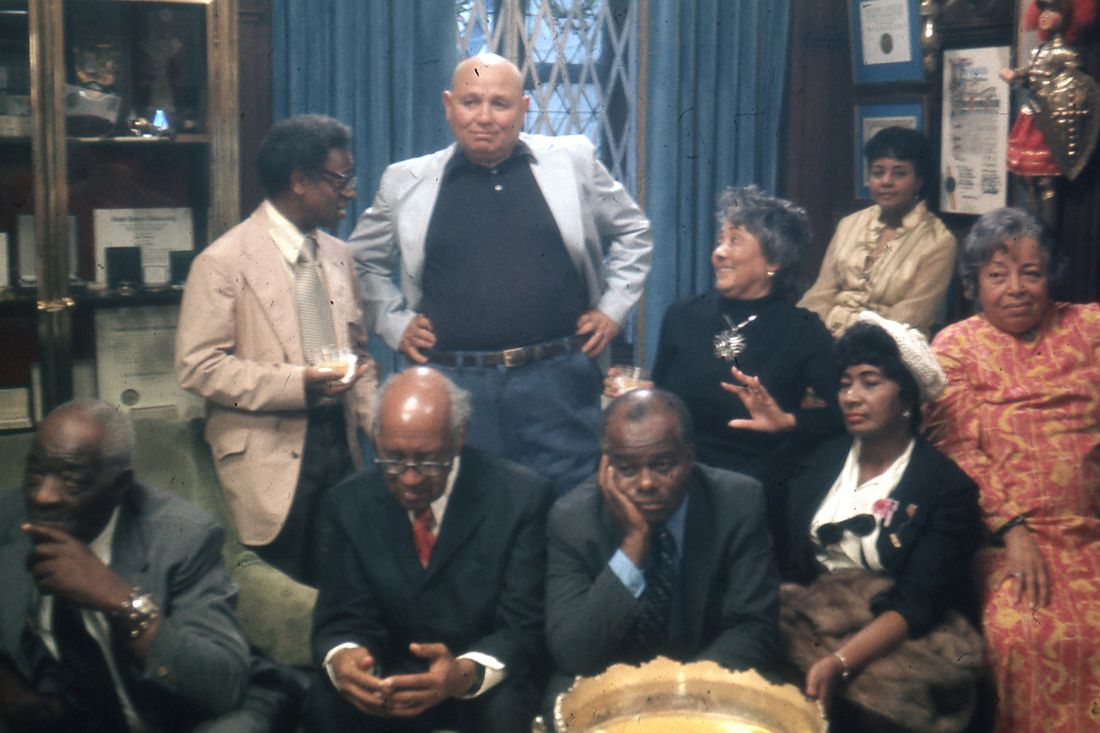
A remarkable film is debuting at this year’s Sundance Film Festival, marking the end of a fifty-year project. In 1972, filmmaker William Greaves gathered many prominent figures from the Harlem Renaissance for a discussion at Duke Ellington’s house. He filmed the entire event with three cameras, intending to create a documentary about the era, though he wasn’t sure what form it would take. He continued to work with the footage throughout his life, showing rough cuts at different events, and it became a sort of famous, unfinished dream. After Greaves passed away in 2014, his son, David Greaves – who had been a cameraman at the original event and a longtime collaborator – continued the work. Now, the film is finally complete.
The event is truly special, not just because of the famous people attending, but because of how enthusiastic and engaged everyone is. Many haven’t seen each other for decades, and while they’re all older, they’re clearly energized by discussing the Harlem Renaissance, likely because its meaning is still debated today. Ida Mae Cullen, the wife of poet Countee Cullen, pointed out that people often mistakenly believed the Renaissance happened in the 1930s, when it actually began in the 1920s. There’s ongoing discussion about whether the Renaissance was a specific moment in time, or if its influence continued for much longer. Poet Arna Bontemps, who sadly passed away the following year, described the period as a way of understanding the entire Black experience, from the past to the present, and how it reshaped both history and the future.
Everyone had strong opinions, and disagreements were common. Writer George Schuyler, now a staunch conservative, enjoyed challenging the others, which was interesting to watch. What really stood out was how personally connected everyone felt to this era. People brought up personal experiences and concerns – Ida Mae Cullen was upset that Countee hadn’t been mentioned, and Gerri Major remembered being racially attacked even at the famous Cotton Club. They reminisced about artists who died young and debated the politics, literature, and publications of the time, as well as the librarians who supported these writers. Discussions covered the impact of African art and the significance of Marcus Garvey’s movement. Naturally, they also talked about the racism and violence that drove the Harlem Renaissance, and the social forces that fueled it.
The film is beautifully edited, flowing seamlessly from one scene to the next. It doesn’t overwhelm the audience with assumed knowledge, instead weaving in historical footage, poetry, and images of important artwork. A particularly touching moment features photographer James Van Der Zee, who reveals his passion for music and how photography became his livelihood, accompanied by a display of his work. Later, 79-year-old activist Richard B. Moore powerfully recites Claude McKay’s “If We Must Die” from memory. Shortly after, 95-year-old actor Leigh Whipper flawlessly recreates his performance as Haile Selassie from the 1943 film Mission to Moscow, complete with the original accent. The film makes it clear that for these men, the past feels remarkably present.
Watching this film today, we might find ourselves missing the simple pleasure of people connecting in person. It feels like a look back at a time when conversations – even lively debates – happened face-to-face. But the film captures that feeling because of how it was made. William Greaves was a master of filming parties. The camera moves naturally, focusing on different people, panning across the room, and wandering through the crowd. The conversations feel real and unfold organically. At first, people are polite and reserved, but as the evening progresses, they become more open, willing to challenge each other, and generally more cheerful. The director seems to relax too, appearing more frequently on screen and even gently guiding the discussion. We catch glimpses of the filmmaking process itself – someone accidentally bumping a microphone, a voice identifying the speaker – revealing the artifice and suggesting that Greaves is becoming more comfortable and playful with the material.
In 1974, William Greaves created a compelling short documentary called From These Roots about the Harlem Renaissance, using only archival footage, photos, and newsreels. (You can view it here.) He initially intended to include material from a 1972 event in that film, but became captivated by the Once Upon a Time in Harlem project instead. The footage from the party is exceptional, and he likely found it offered new insights with each viewing.
I’ve always been captivated by Greaves’ incredible work, and while he created so much, I think many people know him best for Symbiopsychotaxiplasm: Take One. It was this mind-bending film from 1968 where a simple audition scene in Central Park became layers upon layers of filming – a crew filming the actors, another filming them, and even another filming that crew. It felt like he was trying to unlock something truly profound, like William Blake’s idea of expanding our awareness. Seeing Once Upon a Time in Harlem feels similar – each conversation unveils a fresh perspective on the Harlem Renaissance. I picture Greaves revisiting this footage throughout the years, reflecting on these people looking back at their own past, the present moment always present but constantly fading. And now, to have this finished work, a true masterpiece, feels especially poignant because it’s also a loving portrait of and tribute to his father – adding yet another beautiful layer to an already complex and stunning film.
Read More
- Netflix’s Little House On The Prairie Reboot: Release Date, Cast & Everything We Know
- Off Campus Season 1 Soundtrack Guide
- YouTuber arrested after viral AI bodycam videos spark real police complaints
- Silver Rate Forecast
- Prime Video’s New R-Rated Spy Thriller Is Officially No.1 On Streaming Despite Poor Reviews
- Brent Oil Forecast
- Gold Rate Forecast
- Bulgakov’s Take: Koreans Bet the Farm on Chips, Crypto, and Chaos
- EUR ZAR PREDICTION
- Peaky Blinders: The Immortal Man’s Tommy Shelby Is a Better Father Than Michael Corleone
2026-01-26 06:59