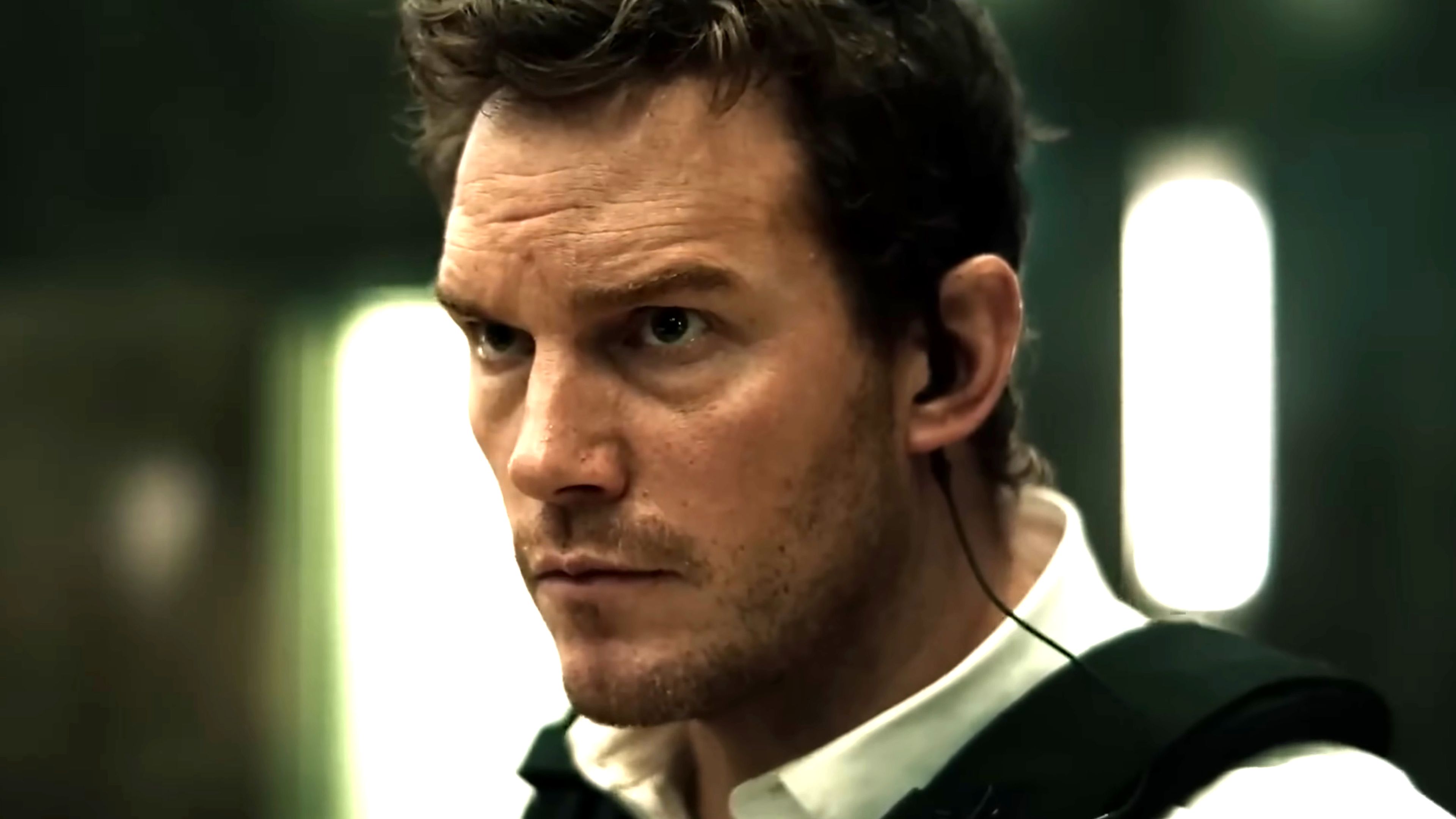
Chris Pratt and Rebecca Ferguson are teaming up for a fresh take on science fiction with the movie Mercy. The film reunites Pratt with director Timur Bekmambetov (known for Wanted) and tells the story of Chris Raven, a highly respected LAPD detective. Raven played a key role in developing a new AI system used in trials, which has helped to significantly reduce crime in the near future.
Raven’s world is turned upside down when his wife, Nicole, is murdered and he becomes the prime suspect. To make matters worse, his trial is overseen by Judge Maddox – an AI program he himself created. With just 90 minutes to prove his innocence before a scheduled execution, Raven desperately searches for the real killer, sifting through data and relying on his partner, Jaq Diallo, for assistance in a frantic race against time.
Chris Pratt stars in Mercy, alongside Rebecca Ferguson (nominated for a Golden Globe), Kali Reis (an Emmy nominee), Annabelle Wallis, Kylie Rogers, Chris Sullivan, and Kenneth Choi. This film is director Timur Bekmambetov’s first English-language movie since the 2018 thriller Profile, and his biggest American production since the 2016 remake of Ben-Hur.
To celebrate the release of the movie Mercy, Ash Crossan and Liam Crowley from ScreenRant spoke with Chris Pratt, Kali Reis, Timur Bekmambetov, and Chris Sullivan. They discussed the film’s unusual style, which combines the ‘Screenlife’ format—popularized by Bekmambetov in films like Unfriended and Searching/Missing—with more conventional filmmaking techniques. Kali Reis felt this approach was “realistic,” especially considering her character’s communication with Raven and others happens “really through screens” and “in real time.”
The Emmy-nominated actor admitted the unique style was “a bit difficult” at times, but emphasized that “it truly served the story we were trying to tell,” both in how it looked and what it meant.
It wasn’t unrealistic at all. Since he wasn’t physically present, we had to connect via Zoom. Surprisingly, that actually made me feel a greater sense of urgency than if we’d been in the same room. It’s strange, but I felt like I had more time when in person. The remote setup really emphasized the importance of capturing the film’s essence, at least for me.
Chris Pratt, who spends most of the 100-minute film Mercy sitting in a chair during the trial, said filming wasn’t much different from his other projects. He believes the only real change was the type of camera used. He still focused on doing his job and being prepared, whether they were shooting with an expensive camera or something as simple as a doorbell camera, dash cam, or GoPro.
Mercy Is Far More Than Just A Cautionary Tale About AI
I really enjoy movies like Unfriended and Searching. I’m curious, what do you find appealing about the ‘screenlife’ style of filmmaking, and how did making Mercy challenge you creatively?
Filmmaker Timur Bekmambetov explains that “Screenlife” isn’t a genre, but a way of filmmaking that reflects how much of our lives now happen online. He noticed years ago that important moments – both good and bad – increasingly take place through digital screens. He believes movies need to reflect this reality to feel current. Films that don’t incorporate a “Screenlife” element feel outdated, like they’re from a different era. He’s been involved in several films using this format, like Searching, Missing, Profile, and Unfriended, and is always looking for the next evolution. His latest project, centered around AI, felt like that next step. We now share our digital world not just with other people, but with algorithms, and we need to figure out how to coexist. He emphasizes that AI isn’t simply a friend or an enemy, but a child – a creation that learns from us. Every online interaction provides data that shapes its development. Therefore, we have a huge responsibility for how we behave online, as it directly impacts AI’s growth. Just as a child learns from its parents, AI learns from our digital actions. This film explores the crucial process of understanding between humans and AI, and the importance of responsible digital behavior. Bekmambetov also points out that the film itself will be “watched” by AI, and he hopes it will learn a message of communication, understanding, and accountability.
With so much talk about AI, especially in filmmaking, as a director who likes to experiment with new tools, where do you think the limits should be? What safeguards need to be in place to protect your artistic vision, and in what ways are you open to using AI?

As a movie lover, I’ve been thinking a lot about AI and its potential, and honestly, right now the stuff it’s creating feels pretty basic. The reason? It’s mostly being taught by amateurs. We need to get real filmmakers involved – not just directors, but everyone! Think makeup artists, composers, set designers, sound people… all of them. I believe the next few years will be about us training AI, and it’s up to us to do it right. Every filmmaker should be able to create and own their own AI assistant, a tool that understands the nuances of our craft. You can’t make something truly moving without understanding things like skin tones, voice acting, or the perfect prop. If we get professionals training AI, we’ll see a huge leap in quality. And surprisingly, I think it will actually create more jobs for filmmakers. Imagine I’m a makeup artist – I train my AI, and suddenly I can work on more projects, making even better films because I have this powerful tool at my disposal. It’s like when we switched from writing by hand to using computers – it didn’t eliminate writers, it just let us do more, and do it better.
ScreenRant asked if the filmmakers felt a sense of responsibility while creating a story meant to warn audiences, considering its potential long-term impact after its release.
Absolutely. Like any great work of art – a painting, a song, or a play – this film encourages viewers to consider a fundamental question: What does justice mean to you, and how far would you go to uphold your beliefs? It’s a question that’s especially relevant for all of us to think about today.
I tend to be quite impulsive, motivated by curiosity and a willingness to take risks – which can sometimes be a drawback. Right now, I’m incredibly focused on artificial intelligence. It’s the biggest question in my mind, especially as a father. I have a three-year-old son, and I worry about what the future holds for him. I’m not sure what skills he’ll need, how society will function, or what his life will even look like in a few years. I’m trying to figure out what I can do now to ensure he has the freedom to choose his own future.
ScreenRant: Owen Grady. Is there any possibility we see him again in Jurassic World?
Chris Pratt: Oh man. I hope so.
ScreenRant jokingly said, “That’s the topic you can actually talk about. You’re definitely not going to reveal anything about Star-Lord!”
Chris Pratt: [Laughs] Yeah, no. But I would. I’d love to. It’d be great. Hell yeah, let’s do it.
ScreenRant asked Atlas, a company known for its long collaboration with director Christopher Nolan, why they hadn’t tackled a film based on The Odyssey. The interviewer suggested it would be a perfect fit, given Atlas’s name and the story’s roots in Greek mythology.
I’ve enjoyed a strong working relationship with both Chris and Emma, and I’m grateful for that. While we’ve collaborated on several films, Chris has also directed many projects on his own. I’m hopeful we’ll have the chance to work together again in the future. I’m familiar with the story he’s interested in, and it’s something Chris has been passionate about for a long time. I actually know he was even exploring an adaptation of The Iliad before he started working on Batman Begins, so he’s clearly been thinking about Homer’s work for years.
Read More
- Off Campus Season 1 Soundtrack Guide
- X-Men ’97 Finally Gave Gambit the Hero Moment He Deserved
- Chainsaw Man Volume 24’s Cover Art Reveals a Brand-New Denji
- 46 Years Later, The Mandalorian & Grogu Answers A Major Empire Strikes Back Question
- 10 Worst End-Game Couples In Sitcom History
- HoI4 fans harsh reactions to the announcement of another DLC pack
- DoorDash responds after customer uses AI to make food look bad and get a refund
- Gold Rate Forecast
- Emily Henry Says to ‘Trust the Vision’ For Beach Read Adaptation
- Katanire’s Yae Miko Cosplay: Genshin Impact Masterpiece
2026-01-23 19:13