You often see streamers pictured as lone wolves, holed up in dark rooms, but honestly, the really successful ones know something I’ve learned: streaming is way more fun – and effective – when it’s a team effort. Growing your channel is great, but making real connections with other streamers is even better. People talk about ‘networking,’ but that sounds super corporate and weird. I think of it as just making friends who get what I’m doing. This guide is all about how to build those genuine relationships, find people you actually vibe with to collaborate with, and help each other grow without it feeling forced or awkward.
Key Takeaways
- Your Gear’s Job Is to Be Invisible: Prioritize a reliable setup with clear audio and a stable connection. When your tech works seamlessly, it allows your personality and gameplay to take center stage without any distractions.
- Turn Your Broadcast into a Conversation: The most successful streams feel like a hangout with friends. Actively engage your chat by asking questions, creating interactive challenges, and sharing personal stories to make viewers feel like valued participants.
- Embrace Imperfection as Your Best Content: Things will inevitably go wrong, from technical glitches to frustrating losses. Use these moments to connect with your audience by laughing it off and being transparent, turning potential setbacks into memorable, humanizing experiences.
What Makes a Gaming Stream Successful?
Have you ever noticed how some streamers with only a few viewers have lively, active chats, while others with tons of followers have almost no interaction? It’s not always about having the best graphics or being a highly skilled player. What really makes a stream successful is having a stable technical setup and creating content that feels personal and engaging – like viewers are just chilling with a friend. It’s about sharing an experience, not just showing gameplay.
The best streams build communities. People tune in not only to watch the game, but to share laughs, enjoy funny mishaps, and connect with others. Think about your favorite streams—you probably feel like you know the streamer and other frequent viewers. That feeling is what makes a stream special. While getting the technical aspects right is important, creating engaging content is what will keep people coming back. Let’s explore how to achieve both.
Build Your Essential Streaming Setup
If you want people to enjoy your gameplay and connect with you, it’s important they can see and hear you well. A laggy stream or poor audio quality will quickly turn viewers away. Luckily, you don’t need expensive equipment to begin! The basics are simple: a good computer or console, a reliable internet connection, a clear microphone, and a webcam. Just like choosing the right gear for a game, you need equipment you can depend on. Ideally, your setup should be so smooth that it doesn’t distract from your content – you want the focus to be on you.
Create Content That Captivates
Attracting viewers is just the first step – keeping them engaged is what really matters. Your personality is key here. Don’t just play the game; share the experience with your audience. Try sharing funny stories, personal experiences, or how you genuinely feel as you play. If something silly happens, like a glitch, laugh about it with your viewers. And when you finally achieve a goal, celebrate with them! Sharing these moments creates a connection that keeps people coming back.
Instead of just broadcasting, really connect with your viewers by responding to their comments, answering questions, and using live polls. This interaction is what builds a strong community – the kind where people share laughs, create inside jokes, and connect over things like the funny memes that become popular around games like Honkai: Star Rail. What you bring to the stream is what makes it unique, so don’t be afraid to show your personality!
How Does Caffeine Affect Your Gaming?
If you watch someone streaming online, you’ll probably see an energy drink or coffee nearby. Caffeine and gaming often go hand-in-hand. But does that pre-game boost actually improve performance, or does it just lead to feeling tired later? The answer is a little of both – it can help in the moment, but also cause a slump afterward.
Caffeine can be really helpful for staying focused and performing your best, which is why it’s popular among gamers and competitive players. It can improve concentration and speed up reactions. But it’s easy to overdo it, and too much caffeine can cause shakiness and disrupt your sleep. Getting enough sleep is crucial for consistent performance and avoiding burnout, especially for streamers. Learning how caffeine affects you – both the benefits and the drawbacks – will help you use it effectively without negative consequences.
The Science of Caffeine and Focus
Okay, so when I grab that coffee or energy drink before a gaming session, here’s what’s going on: caffeine basically blocks the stuff in your brain that makes you feel tired. It’s like, my brain gets the message ‘not sleepy!’ and I feel more awake and focused. And that actually helps me play better. I’ve read studies that show caffeine can seriously boost my reaction time and even how accurately I shoot, which is huge in fast-paced games like Warzone. Seriously, that split-second faster aim or being able to make a quick decision in a team fight can be the difference between a win and a loss. It’s not just me feeling more alert, there’s actual science behind why that caffeine helps me climb the ranks!
Find Your Perfect Dose
Don’t assume energy drinks will automatically improve your gaming. More caffeine isn’t always better, and can actually hurt your performance. Too much can cause jitters, anxiety, a racing heart, and trouble concentrating – all things that will make you play worse. Everyone reacts to caffeine differently, so what works for one person might not work for you. Find what amount gives you the best focus. While some studies suggest energy drinks can help, others show inconsistent results, especially with aiming. Start small – like with one cup of coffee or tea – and carefully monitor how it affects your focus and gameplay. Test any changes during relaxed gaming sessions, not right before important tournaments or streams, to find the right balance without negative side effects.
Manage Your Caffeine Habit
Caffeine can really mess with your sleep, which is a major problem, especially if you’re trying to stay up late for streams. While it’s tempting to grab another energy drink, it can throw off your body’s natural sleep rhythm. Many pro gamers actually struggle with this because of caffeine. Not getting enough sleep consistently will hurt your concentration, mood, and energy much more than caffeine could ever help. To avoid this, set a ‘caffeine curfew’ – try to stop drinking caffeine at least six to eight hours before bedtime, giving your body time to process it. Also, drinking plenty of water during your streams can give you a natural energy boost. Remember, caffeine should be used strategically, not as a way to fix a poor sleep routine.
Your Must-Have Streaming Gear
You don’t need to spend a fortune to start streaming, but it’s important to have reliable gear. Technical problems during a stream can quickly turn viewers away – things like a disconnecting controller, bad audio, or a frozen camera. Spending a little time and money on a dependable setup is a great investment in your channel. It’s not about having the fanciest equipment, but about having the right tools and knowing how to keep them working smoothly, so your viewers have a great experience.
Your streaming gear is like a toolbox – a good streamer knows exactly how to use everything in it. That means being able to quickly fix problems and having a plan B for when things don’t go as expected. This guide will help you build that toolkit, covering the essential equipment and knowledge to keep your stream running flawlessly. We’ll focus on things like fixing controller issues, ensuring great audio quality, and being prepared for anything unexpected, so you can concentrate on enjoying your games and connecting with your viewers. Being prepared lets you stay present and engaged with your audience.
Fix Controller Stick Drift for Good
Ugh, stick drift is the worst, right? You’re lining up that perfect shot, and your character just… wanders off! It’s so frustrating. But honestly, a lot of times it’s an easy fix. First thing I do is grab a cotton swab and some rubbing alcohol and really clean around the base of the thumbsticks – usually a ton of dust and grime builds up there. If that doesn’t do the trick, it might be a sensor issue inside. Luckily, there are tons of guides online showing you how to use a little bit of electrical contact cleaner to fix it permanently. Seriously, it can save you from having to buy a whole new controller!
Nail Your Audio and Video Basics
People can usually overlook a few visual hiccups, but poor audio is a deal-breaker. If viewers can’t clearly hear what you’re saying over the game, they’ll tune out. Your microphone is arguably your most important piece of equipment, so it’s worth investing in a good one. You don’t need the most expensive option, but a quality USB microphone can significantly improve your stream. The same principle applies to video: a clear, well-lit image helps viewers connect with you. Use a good webcam or camera and make sure you have adequate lighting. Even a simple ring light or a couple of softbox lights can make a big difference in your stream’s visual quality and give it a more professional look.
Plan Your Equipment Backups
Streamers know things will eventually go wrong, so being prepared is key. Technical issues are inevitable, but you can avoid them ruining your stream. Always have extra equipment handy – things like a spare controller, microphone, and HDMI or USB cables – so you can quickly fix problems and keep your audience engaged. If you’re comfortable doing so, learning to repair issues like controller stick drift yourself can also save the day.
Why Do Streams Always Crash at the Worst Moment?
It always seems to happen at the worst possible time: just when you’re about to win a big game or beat a tough boss, your stream crashes. Your screen freezes, you lose connection, and your chat explodes with questions. While you can’t avoid tech issues completely, how you handle those moments really shows how good you are as a streamer – not at the game itself, but at keeping your community engaged.
When something goes wrong during a stream, don’t worry – it’s an opportunity to connect with your audience! Instead of getting upset, see it as a chance to show your personality, share a lighthearted moment, and remind everyone that your stream is about more than just the game. Think of it as a brief, unexpected chat with your viewers. Turning these frustrating moments into fun interactions is what creates a strong, loyal community that will keep coming back, even when there are technical issues.
Common Reasons Your Stream Drops
Stream crashes usually happen for a few common reasons. Often, it’s a problem with your internet connection – specifically, your upload speed, which is how quickly data is sent from your computer. Streaming needs a steady upload speed, and if others are using a lot of bandwidth or your internet provider is having issues, your stream will suffer. Another frequent cause is your computer being overloaded. Playing a demanding game while simultaneously encoding and streaming video puts a lot of stress on your processor and graphics card. If your computer can’t handle it, you might experience dropped frames or a complete crash. Finally, simple things like software conflicts or outdated drivers can also cause problems. Buffering and crashes are common for streamers, so you’re definitely not alone if it happens to you.
Prevent Crashes and Recover Fast
Spending a little time preparing can save you a lot of trouble. Before you start broadcasting, check your internet speed and close any unnecessary applications. If you’re still experiencing problems, try reducing the bitrate or resolution of your stream – a clear 720p stream is better than a blurry 1080p one. Knowing the technical requirements of your content will help keep your audience engaged. To handle any issues, have a backup screen ready to go, like a “Be Right Back” or “Technical Difficulties” message, and be able to switch to it quickly. Keep your phone nearby so you can update your audience on Discord or Twitter while you fix things. A short, reassuring message can help keep everyone calm and patient.
Keep Your Audience Hooked During Downtime
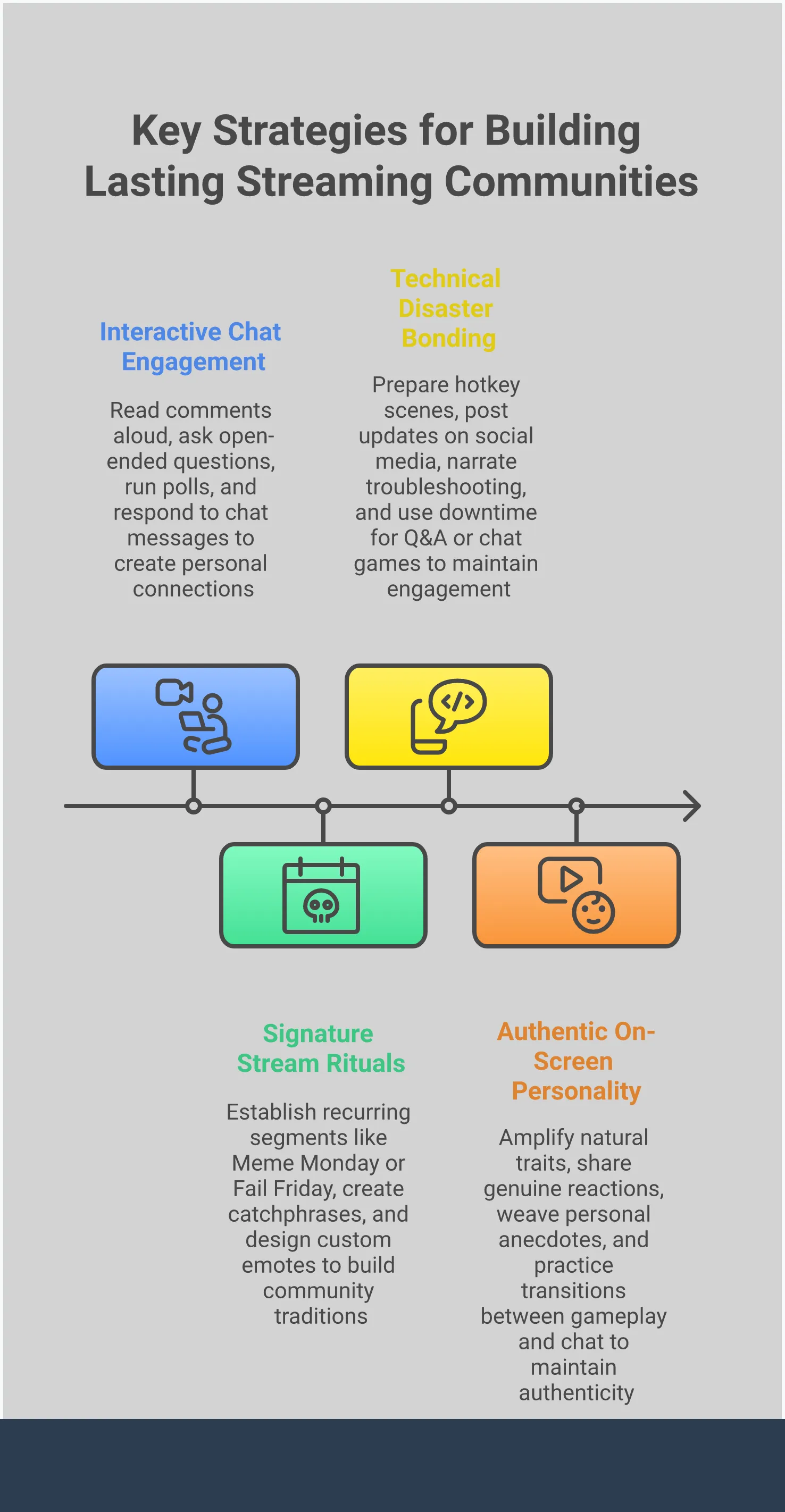
If your stream experiences technical difficulties, don’t just stop! This is a great time to really show your personality. Instead of getting frustrated in silence, explain what’s going on. Share the troubleshooting process with your viewers and even use the downtime to connect with them directly. Ask a question, run a poll, or tell a fun story – anything to keep them engaged. Turn a technical issue into a positive community experience by using storytelling. This changes awkward silences into opportunities to connect with your audience, making them feel like valued members of your community, not just passive observers.
Gameplay Strategies That Keep Viewers Watching
While winning is fun, it’s not the most important thing for a good stream. How you play the game is key – it can keep viewers engaged for a long time, or make them leave quickly. Think of your stream like a show, and your gameplay as the storyline. Is it exciting and easy to follow, or confusing? Viewers want to feel involved, not just watch from the sidelines.
Top streamers aren’t just good at games – they’re also entertaining. They intentionally focus on making the viewing experience better, like having clear communication with teammates, making smart decisions in the game, or choosing a fun moment over always playing perfectly. If you concentrate on a few key things, you can transform your gameplay from something you do alone into a shared experience that builds a loyal community. It’s about letting your audience see how you think, sharing both your successes and failures with your team, and making them feel like they’re part of the action.
Master On-Stream Team Communication
Good teamwork on stream relies on clear communication. Regularly talking with your teammates – making callouts, planning strategies, and reacting to the game together – creates an engaging experience for viewers. It helps them understand what you’re doing and feel the excitement of each moment. Don’t forget to talk to your viewers too! Asking for their opinions or responding to their comments makes them feel like part of the action. By connecting your team with your audience, you create a stream that’s both collaborative and immersive for everyone.
Define Roles and Positioning
It’s really rewarding to watch a team play with a clear strategy. Instead of everyone doing their own thing, define specific roles and positions – who’s leading the attack, who’s providing long-range support, and who’s defending key areas. Talking through these decisions while you stream shows your viewers you’re thinking strategically, not just reacting. This level of coordination is what distinguishes skilled players from casual ones, and it gives your audience a compelling reason to watch you. When you have a plan, every encounter feels more meaningful, and every win feels truly deserved.
Adapt Your Playstyle to Entertain
Getting a lot of kills can be cool, but sometimes the best moments happen when you focus on having fun instead of just winning. Don’t be afraid to experiment with your gameplay and make it entertaining! Try out unusual weapon combinations, challenge yourself with silly goals, or even create a story as you play. What makes your stream special is you, so let your personality show! Share funny stories or react to what’s happening in the game. Remember, when you’re genuinely enjoying yourself, that energy spreads to your viewers. Playing games you love and finding the humor in even tough situations – like getting eliminated – will always connect with your audience more than a quiet, focused victory.
How to Build a Community, Not Just an Audience
It’s easy to get people to watch a stream, but truly great streamers build communities. Viewers simply watch, while a community actively participates, contributes, and keeps coming back because they feel like they’re part of something special. It’s the difference between people watching you play a game and feeling like they’re playing with you. This change in focus is key. When you create a space where people share jokes, create memories, and genuinely connect, you’re not just gaining followers—you’re making friends. And those friends will be there for you, stream after stream.
Engage with Your Chat Like a Pro
Your chat is the most important part of your stream, so focus on creating a real conversation with your viewers, not just reading comments. Start by saying people’s names when you respond – it makes them feel appreciated! To take it further, ask questions about the game or what you’re up to. Instead of just playing, make your stream interactive with polls about things like what to play next or what to do in the game. Think of yourself as a party host: your goal is to get everyone talking and make sure everyone feels like they’re part of the fun.
Create Unforgettable Moments with Viewers
The streams people remember most aren’t necessarily about perfect gaming skills; they’re about the stories you tell and the feelings you share. Try sharing funny moments from past games or personal stories that connect to what you’re playing. Your honest reactions to surprises, difficult challenges, or funny mistakes are what make your content feel real and relatable. These shared experiences help build a strong community. When you show your personality, you give viewers something to connect with beyond the game, creating an engaging and memorable experience they’ll want to repeat.
Use Humor and Challenges to Connect
Sharing a laugh is a great way to connect with your audience. Don’t hesitate to be playful – try a funny voice for a character, or fully embrace those silly moments that happen in games. You can also involve your viewers directly by letting them create challenges for you, like choosing your gear in Warzone or daring you to beat a boss with limited abilities. This makes your stream more fun and gives viewers a reason to care about what happens. Building inside jokes and using popular memes can also create a strong sense of community, making people want to keep coming back to your channel.
How to Handle On-Stream Pressure and Anxiety
Okay, so going live is seriously nerve-wracking! It feels like everyone is watching your every move, which, well, they are! It’s totally normal to feel anxious when you click that ‘Go Live’ button. You feel this pressure to be entertaining and amazing all the time, but honestly, I’ve realized people aren’t expecting a perfect show. They just want to hang out and watch you be you. That’s the best part!
It’s not about getting rid of pressure, but learning to deal with it effectively. By changing how you think, you can use nervous energy to actually connect with your audience. Start by being realistic about what you can achieve, and then have a plan for when things don’t go as expected – whether it’s a technical issue or a string of losses. If you can accept that things will sometimes be chaotic, you can turn stressful situations into some of your best content.
Manage Expectations During Live Gameplay
Becoming a successful streamer isn’t about being an amazing esports player. What really matters is connecting with your audience through your personality, not just skillful gameplay. Think of yourself as an entertainer, sharing stories as you play. Talk about funny moments, your own life, or react honestly to what’s happening in the game – this makes the experience much more fun for everyone watching. This also takes some pressure off of playing perfectly. Don’t worry about mistakes – laugh them off! Let your genuine reactions show. Viewers value authenticity and a good time far more than a silent, flawless performance.
Stay Cool When Things Go Wrong
Let me tell you, every gamer who streams has been there – you’re in the middle of a big play, about to win, and BAM! Your internet cuts out or the game crashes. It will happen, trust me. But the best thing to do is not freak out! I try to see it as a chance to chat with my viewers. I just tell them what’s going on, like, “Ugh, looks like my stream just died. Anyone else having a rough day?” Being real about these things actually helps people connect with me and makes the stream feel more like a community. While I’m fixing things, I try to keep everyone entertained – maybe ask a question, run a quick poll, or even share a story about a time my tech completely failed. It’s all about turning a frustrating moment into something fun and showing I can handle anything!
Turn Frustration into Fun Content
Everyone gets frustrated when playing games, but when you’re streaming, that frustration can actually become entertaining content. Instead of letting losses ruin the mood, try to make them funny. You could create a running joke about a player who keeps beating you, or even act like a villain plotting revenge. Another idea is to involve your audience – maybe let them decide what you play next after a tough loss in a game like Warzone. Turning frustrating moments into entertainment gives people a reason to keep watching. They’ll start enjoying seeing how you deal with losing, not just whether you win. This is a great way to create inside jokes and memorable moments with your community, turning a bad experience into something positive that lasts.
Define Your Brand as a Streamer
Your streamer brand isn’t just about a logo or name—it’s the overall feeling you create. It’s what makes people choose your stream out of so many others. Think of it as your unique style, combining who you are, the content you make, and how you connect with your audience. A strong brand helps you get noticed and keeps viewers coming back for more.
What defines your unique style as a gamer? Are you highly competitive and focused on strategy? Do you prefer a relaxed approach, playing to have fun and connect with others? Or are you captivated by the game’s story and world? Understanding this is key to building a strong and recognizable presence. Your ‘brand’ is essentially the consistent experience you offer your audience – it’s what transforms viewers into loyal community members who enjoy not just the gameplay, but you.
Develop Your On-Screen Persona
What you show on stream shouldn’t be a false version of yourself, but rather the most interesting and captivating parts of who you are – think of it as turning up your natural charisma. To truly connect with viewers, build a personality for your stream by sharing stories during gameplay. Talk about funny moments in your life, your honest reactions to scary parts, or your own thoughts on the game’s story. This transforms your stream from simply playing a game into something people can enjoy with you.
Embrace your natural personality on stream! If you’re naturally sarcastic, be sarcastic. If you’re patient and thoughtful, let that shine through. It’s important to be yourself – a persona that feels comfortable and you can maintain long-term. Trying to be someone else will lead to burnout, and viewers will quickly realize it’s not genuine. Focus on the parts of your personality you enjoy and amplify them – authenticity is what truly connects with people.
Create Signature Stream Elements and Challenges
You know what really makes a stream special? It’s those little things that become our jokes, the stuff only we get as a community. It’s like building traditions – maybe it’s a phrase I always say, a goofy dance after a win, or even a regular thing like ‘Meme Mondays.’ Those consistent bits just make the stream feel comfortable and give people something to look forward to, like we’re all part of something bigger!
Keep your audience involved by letting them create fun challenges for you! Viewers can use channel points to request things like playing with a flipped controller or trying a speedrun with a funny disadvantage. These interactions are great for creating memorable, entertaining moments and show your community that you appreciate their support and engagement. It’s a fantastic way to make them feel like a part of the stream.
Balance Being Authentic with Being Entertaining
What makes a stream truly engaging is finding the sweet spot between being yourself and putting on a show. People tune in to connect with you, but they also want to be entertained. Sharing everyday experiences – like dealing with a difficult workday or getting hyped about new game content – helps viewers feel connected. They enjoy seeing the real person behind the screen, with all your imperfections and successes.
Being authentic doesn’t mean oversharing or complaining. It’s about sharing your real experiences in an entertaining way. For example, instead of getting frustrated with mistakes in a game, create a funny video showing them. When you laugh at yourself, your audience will connect with you and enjoy watching. Finding this balance between being real and being entertaining builds trust and encourages people to keep watching your content.
Frequently Asked Questions
You don’t need to be an amazing gamer to become a popular streamer! Viewers care much more about your personality than how well you play. People tune in for the fun and to connect with others – they want to see your honest reactions, share laughs, and celebrate your wins with you. Think of your stream as a show, and you’re the host. Focus on being entertaining and someone people can relate to, rather than just a highly skilled player who rarely makes mistakes.
It’s a common question: should you invest in better equipment or focus on developing your on-screen personality first? The truth is, both are important and work hand-in-hand. Think of your equipment as the base – if your audio is poor or your stream keeps freezing, viewers won’t stay to enjoy your personality. Start with a dependable, basic setup that delivers clear sound and a stable video. Once you have that covered, concentrate on creating great content. Your personality is what will attract viewers and make them choose your stream over all the others.
Okay, so I’m trying to focus on a super tough game, but I also want to keep my chat engaged. I’ve learned I don’t need to be chatting constantly. What works really well is just talking through what I’m thinking as I play. I’ll quickly explain my plan, point out what I’m seeing on screen, and just share how I’m feeling in the moment. It’s like letting my viewers ride shotgun! Then, when things calm down – like during loading screens or when I’m traveling somewhere in the game – I make sure to check the chat, respond to comments, and maybe ask them a question or two. It lets them know I haven’t forgotten they’re there, even when I’m really focused.
It feels unnatural trying to put on a show for viewers. How can I stay true to myself while still being entertaining? Remember, an on-screen persona isn’t about being fake—it’s about highlighting the most interesting parts of who you already are. Think about how you act around close friends—you’re likely more energetic, humorous, and expressive than you are in quiet settings. That’s essentially your persona. Figure out what makes you unique – maybe you’re naturally witty, or really passionate when you’re enjoying a game. Embrace those genuine qualities! The key is to be consistently and comfortably yourself, just with a bit more energy for the audience.
If your stream suddenly crashes or you have technical problems, the best thing to do is stay calm and let your viewers know what’s happening. Everyone experiences technical issues, and how you handle them can actually strengthen your connection with your audience. Prepare a simple screen that says ‘Be Right Back’ or ‘Technical Difficulties’ and assign it to a quick key. Then, immediately update your community on Discord or Twitter about the problem. If possible, explain what you’re doing to fix it live on stream. Turning a stressful situation into a shared experience can show your audience that you’re professional and can handle anything.
Read More
- Off Campus Season 1 Soundtrack Guide
- Chainsaw Man Volume 24’s Cover Art Reveals a Brand-New Denji
- X-Men ’97 Finally Gave Gambit the Hero Moment He Deserved
- 46 Years Later, The Mandalorian & Grogu Answers A Major Empire Strikes Back Question
- HoI4 fans harsh reactions to the announcement of another DLC pack
- 10 Worst End-Game Couples In Sitcom History
- Katanire’s Yae Miko Cosplay: Genshin Impact Masterpiece
- Emily Henry Says to ‘Trust the Vision’ For Beach Read Adaptation
- DoorDash responds after customer uses AI to make food look bad and get a refund
- Dragon Quest II HD-2D Remake: Where to get the Magic Key
2026-01-23 13:51