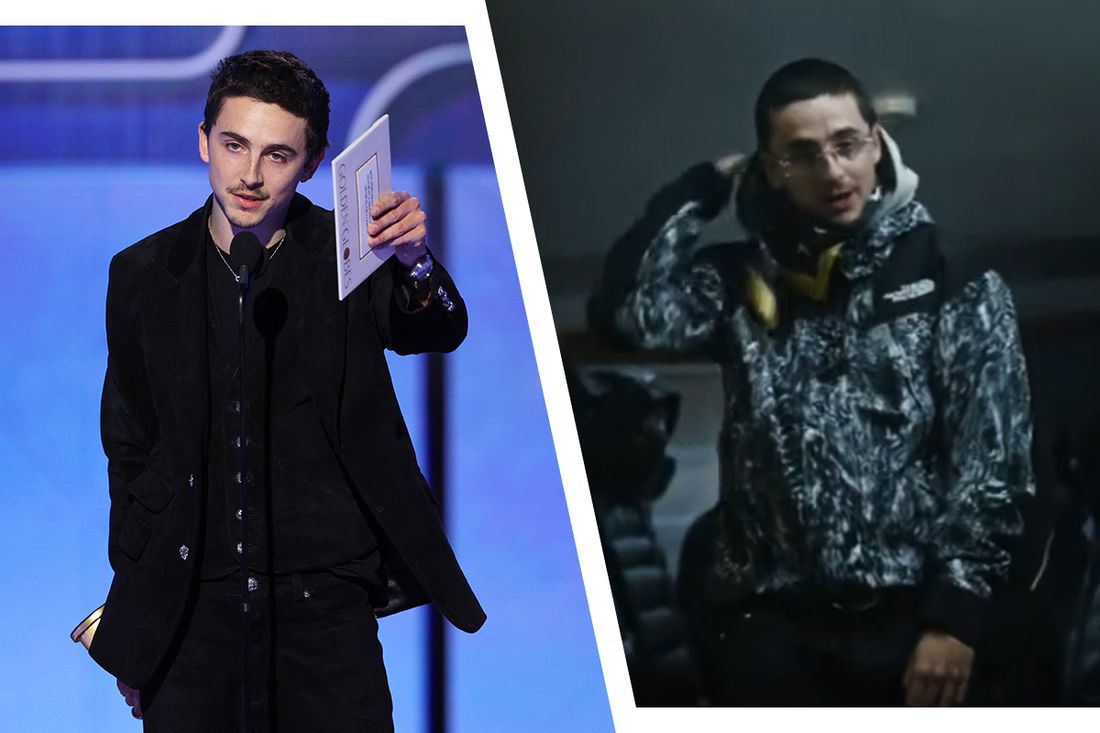
The Oscar nominations came out on January 22nd, and as many predicted, Timothée Chalamet was nominated for Best Actor for his role in Marty Supreme. This nomination is the result of a months-long effort to promote his performance to both general audiences and influential figures within the film industry.
Leading up to the release of his Christmas Day film, Timothée Chalamet heavily promoted himself and his dedication to acting, comparing his consistent high-quality work to that of a boxer. He teamed up with comedian Druski, contributed to a song by EsDeeKid, and playfully declared himself an “unc” (uncle) on his birthday – all gestures that showcased a millennial identity shaped by Black culture. This strategy seems to have worked: Chalamet aimed to appeal to both traditional sports and rap fans, as well as younger audiences familiar with slang originating from African American Vernacular English (AAVE). The film, Marty Supreme, has become A24’s most commercially successful movie ever.
Recently, Timothée Chalamet seems to be deliberately avoiding excessive showmanship as awards season progresses. At the Golden Globes, he notably wore Timberland boots – a brand associated with a tough, working-class New York image, often highlighted (and sometimes stereotyped) online. This choice signaled a more understated approach. His acceptance speech was also surprisingly humble, focusing on congratulating other nominees and thanking his girlfriend, Kylie Jenner, rather than promoting himself. He appears to be distancing himself from the playful, sometimes controversial, image that led to online jokes. This highlights a double standard: white actors often have more leeway to experiment with their public image without facing significant backlash, while maintaining their professional standing.
The idea of the “wigga” – a white person who adopts the style and mannerisms associated with hip-hop culture – is vividly portrayed in the 1999 film Whiteboyz. The film serves as a warning about white men who try to emulate the tough image of inner-city hustlers they see in gangsta rap, often with comical and self-destructive results. These individuals attempt to adopt symbols of Black culture in a superficial way. They might wear things like durags or, in the past, African medallions, trying to appear like the “cool” Black men they admire, but their attempts feel forced and imitative. This trend evolved over time, from Eminem look-alikes in the 2000s to more eccentric figures like Riff Raff in the 2010s, and can be seen in personalities like Michael Rapaport before his association with MAGA.
Timothée Chalamet seems to be deliberately appealing to young men who spend a lot of time online. This strategy dates back to his teenage years when rapper Lil B publicly acknowledged him. Chalamet recently released a remix featuring EsDeeKid, seemingly acknowledging rumors that he secretly raps while also suggesting he’s familiar with current hip-hop trends – he understands the music without being overly complex. His promotion of the Marty film’s jacket, a throwback to 90s NBA style, is a prime example of this. The jacket has become highly sought after, reselling for around $10,000. This focus on hip-hop is a shift for those who remember Chalamet’s earlier work, like his respectful cover album of Bob Dylan songs, though even that included a viral dance moment with Brittany Broski to a Soulja Boy track.
Druski recently brought Timothée Chalamet to East New York to help judge auditions for his record label, echoing a previous collaboration with a popular white celebrity. Druski is known for connecting with young Black audiences online, and he previously appeared in comedy sketches on Justin Bieber’s album, Swag. Those sketches didn’t land well, partly because Bieber misused slang and one of Druski’s lines – “Your skin white, but your soul Black” – felt awkward. The sketches unintentionally highlighted Bieber’s desire to be seen as more than just a mainstream pop star. Chalamet’s appearance, however, showed what it looks like when someone genuinely understands the humor and style of artists like Chet Hanks or a rebellious Bieber, and can playfully participate.
During an appearance on the Coulda Been Records podcast, Timothée Chalamet mentioned he has a small amount of Jamaican ancestry, successfully navigating a potentially awkward situation. Druski, known for his playful teasing of people from Brooklyn, playfully engaged with Chalamet, offering him a glimpse into life in the outer boroughs and the resourcefulness it requires. Afterward, Chalamet discussed his upbringing in Manhattan’s Hell’s Kitchen on Carmelo Anthony and Kid Mero’s podcast, acknowledging he hadn’t spent much time in predominantly Black neighborhoods like Brownsville. He explained he intentionally sought out the Druski interview to avoid standard promotional appearances and gained valuable insight into issues of community neglect. Chalamet also clarified his relationship with hip-hop, stating he’s simply a fan and admirer of Black culture. Ultimately, he sees himself as a New Yorker and someone who’s become more aware of the need for sensitivity due to his fame. He noted that growing up, he didn’t consider the appropriateness of his actions, but as a celebrity, he’s learned to be more cautious.
It’s possible Chalamet was simply capturing the energetic spirit of the man he portrayed – Marty Reisman, a table tennis champion from mid-20th century New York – and blending it with the unique character of modern New York City, as seen in online videos like Sidetalk and SubwayTakes. Interestingly, when accepting his Golden Globe, Chalamet didn’t engage in typical humblebragging or directly acknowledge Black culture. This suggests he carefully considers what kind of references will connect with different audiences.
Following the Golden Globes, Timothée Chalamet, in a conversation with Robert Downey Jr., discussed a deliberate change in his approach, focusing on gratitude and respect, suggesting he’s moving away from constant self-promotion. This demonstrates his ability to adapt to different audiences. For weeks, he’d been actively seeking attention by engaging with hip-hop culture – rapping with EsDeeKid, referencing gospel artist Kirk Franklin with Druski, and sharing basketball memories with Melo – seemingly trying to connect with a broader audience. However, he knows awards voters prefer a more reserved demeanor, so he shifted his messaging. With industry professionals, he emphasized his artistic background and hard work. His playful “white boy of the year” persona, a title he embraced at an awards show in October, now seems to be fading as awards season intensifies, making his previous efforts feel calculated. While Chalamet’s appreciation for hip-hop culture appears sincere, he has the privilege of stepping back from it, a luxury not afforded to those who created it.
Read More
- Gold Rate Forecast
- What is Omoggle? The AI face-rating platform taking over Twitch
- Man pulls car with his manhood while on fire to raise awareness for prostate cancer
- Bithumb’s Dance with Fate: Court Halts Ban, But BTC Blunder Looms
- Elden Ring Is Back With A New Free Game, Thanks To The Fans
- Wartales Curse of Rigel DLC Guide – Best Tips, POIs & More
- Beyond Traditional Risk Metrics: Forecasting Market Volatility with Bayesian Networks
- Audible opens first ‘bookless bookstore’ in New York
- How To Grow Money Trees In Animal Crossing: New Horizons
- Apple TV’s Imperfect Women Becomes No. 1 Most-Watched Show Globally
2026-01-22 17:55