Ryan Murphy’s shows aren’t specifically geared towards women, but he frequently features mature actresses playing dramatic, often catty roles, which has given his work a distinctly feminine feel. His new series, The Beauty, focuses on men – and while it’s sensational and explores timely themes, it’s also surprisingly insightful. The show is definitely over-the-top, imagining a world where a beauty serum becomes a dangerous, sexually transmitted virus. However, its bold take on a premise that combines the Ozempic trend with the HIV crisis is unforgettable and represents some of Murphy’s most engaging work in years, for both good and bad.
Prepare yourself for a visually intense and often disturbing experience. The new series is upfront about its fascination with sex, featuring explicit imagery. However, the true shock comes from the transformation people undergo after being infected with “The Beauty” – they emerge with dramatically altered bodies, becoming tan, muscular, or with exaggerated features, all from unsettling, pulsating sacs. The show heavily relies on body horror, with slimy and squelching effects clearly inspired by films like Alien, Suspiria, and The Substance, pushing the boundaries of gross-out visuals. It’s hard to tell if the series genuinely cares about its characters or simply enjoys subjecting them to extreme situations – a trademark characteristic of its creators’ work.
Ryan Murphy’s work has frequently explored unsettling body horror, going back to Nip/Tuck. However, his recent projects have really leaned into this theme: All’s Fair often showed the disturbing experience of being seen as a woman after being discarded, Monster: The Ed Gein Story graphically depicted Gein’s horrific treatment of bodies, and Doctor Odyssey was full of unpleasant medical conditions. The Beauty takes this to the extreme, combining the fast-paced thrills of an outbreak story with a somewhat awkward exploration of beauty as a form of power. It feels like someone read an essay about the pressures of social media beauty standards and then tried to explain it after a few drinks. The problem with the show is that while it’s genuinely disturbing, its explanation of why people seek out ‘the Beauty’ treatment is too simple. It assumes the audience is as insecure as the characters and will root for even the most monstrous individuals simply because they once felt unattractive. This undercuts the creativity of the show’s gore and its unique visual style, and it asks a lot of viewers to sympathize with serial killers based on their past insecurities.
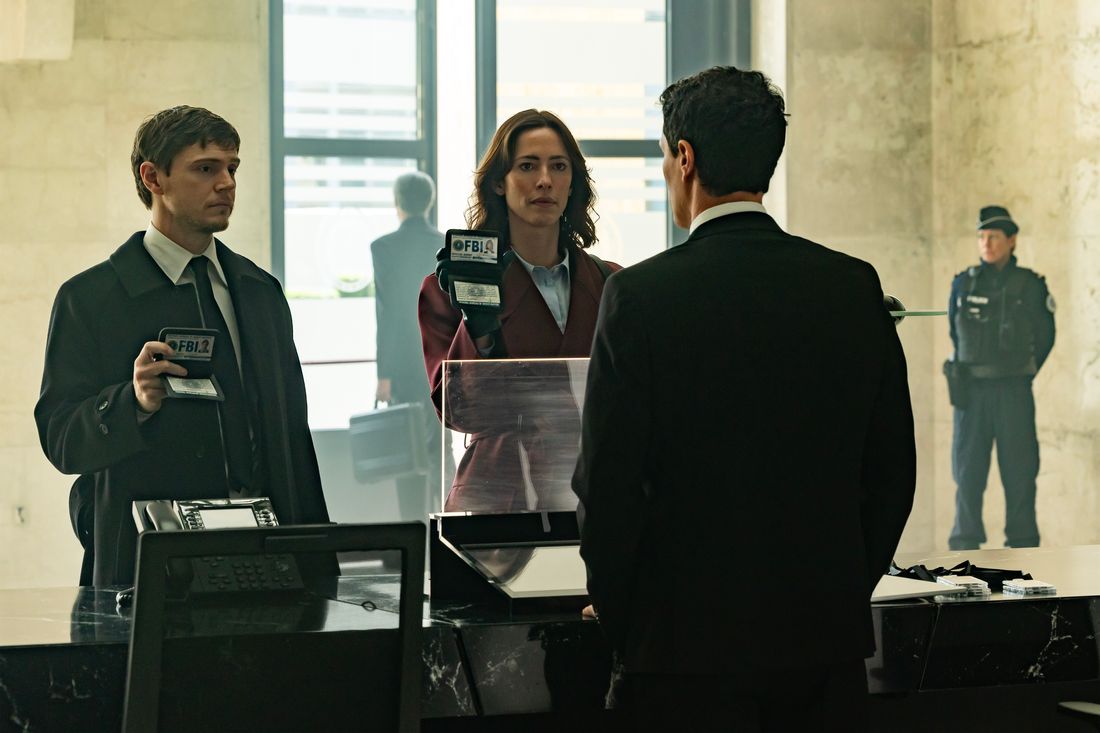
The new FX/Hulu series, The Beauty, starts with a shocking three-episode premiere. It explores a world similar to our own, grappling with the anxieties of modern life – including the influence of artificial intelligence and powerful pharmaceutical companies that profit from our insecurities. The story kicks off at a Paris fashion show where a model, played by Bella Hadid, suddenly snaps and goes on a violent rampage, fueled by the song “Firestarter.” She attacks people, demanding water, and ultimately explodes. FBI agents Cooper Madsen (Evan Peters, returning to his strong detective role) and Jordan Bennett (Rebecca Hall, who doesn’t have enough screen time) are skeptical of the official explanation. As they investigate, they discover a pattern: several supermodels have met similarly gruesome ends, and all of them looked drastically different – much less glamorous – just two years prior. This leads them to question what could have caused such a complete transformation, and ultimately, their deaths.
The film follows an assassin, played by Anthony Ramos, who carries out orders from a wealthy, enigmatic figure known only as “the Corporation” (Ashton Kutcher). His mission: to track down and eliminate a group of attractive individuals. One of them stole a revolutionary beauty serum, believing that attractive people are above the law, according to the Corporation. This theft fuels the desire of Jeremy (played by Jaquel Spivey and later Jeremy Pope), an overweight virgin, to become beautiful himself. He spends his limited funds on online webcam performers, lashes out at his mother, and travels across the country seeking a plastic surgeon (Jon Jon Briones) who can transform his appearance. Jeremy seems like the perfect subject for the Corporation’s formula, and the film argues that despite his selfish motives and aggressive behavior, he represents a disturbingly common desire: to fix perceived flaws, no matter the cost. The film emphasizes how widespread self-resentment is, and how far people will go to change themselves.
“The Beauty” builds its world on the idea that everyone wants to be conventionally attractive, and as the story unfolds, it borrows elements from many familiar thrillers and sci-fi shows like “The X-Files” and “The Matrix.” While the series is visually striking, it struggles with a central question: is it making fun of our obsession with beauty standards, or taking it seriously? The show asks us to believe characters are deeply insecure about things most people wouldn’t worry about, and it’s unclear if the exaggerated transformations are meant to be inspiring or cautionary. The series seems both fascinated by and critical of the idea that being attractive leads to a better life. What’s most compelling about “The Beauty” isn’t the shock value, but the conflicting storylines – like its support for adults using the procedure for gender transition, contrasted with its warnings against teenagers trying to fast-forward their lives. Ultimately, the show is more interesting for what it leaves open to interpretation than for what it explicitly states.
Let’s talk about the show’s focus on men and masculinity. The Beauty consistently returns to themes of male bodies and anxieties, suggesting it’s exploring the complex forces – social, historical, and psychological – that shape modern men. While the show acknowledges pressures on women to conform to beauty standards, it’s far more interested in how the pursuit of wellness has affected men, particularly those with negative views towards women. It portrays a disturbing picture of male loneliness, fueled by things like performance-enhancing drugs and obsessive self-improvement, as men desperately try to achieve an unrealistic ideal. The show often sides with men who see themselves as victims, blaming women for their problems. Sometimes, it feels like The Beauty is seriously exploring the idea that misogyny is a deeply damaging force, and other times, it feels like it’s deliberately provoking the audience with scenes of men obsessively admiring their own physiques. The show even seems to be attempting its own take on American Psycho, complete with a monologue reminiscent of Patrick Bateman’s famous rant.
It’s unclear whether the show is a tribute, an imitation, or simply a sign of what’s to come from director Murphy, who is planning an adaptation of Bret Easton Ellis’s The Shards – a combination that feels both inevitable and bleak. Regardless, The Beauty is certainly striking, flashy, and unsettling in a way that’s strangely captivating, and the shorter episodes might actually help. Much like frustrating podcasts, the show raises questions about beauty standards and wellness culture without offering many answers – or even a clear perspective. And, similar to those podcasts, it throws out so many ideas that even cynical viewers might find themselves surprisingly agreeing with some of them.
Read More
- Gold Rate Forecast
- What is Omoggle? The AI face-rating platform taking over Twitch
- Man pulls car with his manhood while on fire to raise awareness for prostate cancer
- Wartales Curse of Rigel DLC Guide – Best Tips, POIs & More
- Apple TV’s Imperfect Women Becomes No. 1 Most-Watched Show Globally
- Audible opens first ‘bookless bookstore’ in New York
- 10 Adorable Quotes from Diana in Pragmata
- Netflix’s Remake Of R-Rated Denzel Washington Classic Carries On A Rotten Tomatoes Trend
- Outer Range: The Underrated Western Sci-Fi Series That’s Aging Well
- Steam Drops 24 Free Downloads In Limited-Time Giveaway
2026-01-22 01:55