Everyone gets stuck sometimes when playing games. You might feel like you’ve hit a wall and can’t improve, no matter how much you play. It’s tempting to think you just need more practice, but often the key is to play better, not just longer. If you watch a top player like Aydan, you’ll notice it’s not just about skill – they have a clear, organized approach to everything they do, from preparing for a match to making choices during gameplay. This guide will show you how to create your own effective routine, breaking down Aydan’s system into simple steps so you can overcome your challenges and reach the next level.
Key Takeaways
- Your Mindset is Your Most Important Weapon: Consistent performance starts before you even drop in. Focus on developing mental resilience to stay calm under pressure and adopt a winning mentality that prepares you to compete, even when you’re not feeling your best.
- Practice with Purpose, Not Just for Hours: Avoid burnout by making your training sessions count. Instead of mindlessly grinding, set specific goals, focus on improving one skill at a time, and review your gameplay to turn your mistakes into valuable lessons.
- Win with Strategy, Not Just Skill: In competitive lobbies, smart plays beat raw aim. Prioritize mastering map positioning, delivering clear and effective communication, and learning to adapt your strategy on the fly to out-think your opponents.
What Aydan Teaches Us About Pre-Game Prep
Watching a professional player like Aydan prepare for an important practice match is incredibly insightful. It’s easy to think the best players just jump in and win, but they actually follow a specific process to stay consistent. What’s interesting about Aydan’s routine is that he doesn’t rely on always feeling energized or having perfect aim right away. Instead, he shows that mental strength and a good warm-up are the most important things for playing well. He demonstrates that getting your mind ready is just as crucial as choosing the right weapons and equipment.
Success in gaming isn’t just about being skilled – it’s about creating a consistent routine that helps you perform at your best. Aydan demonstrates that professional gaming is as much about mental strength as technical ability. He approaches every practice session with focus, even when he doesn’t feel motivated. This is a valuable lesson for any competitive player, whether you’re aiming for tournament wins or simply improving your rank with friends. Let’s explore what we can learn from his preparation and how to integrate it into your own game.
The Reality of Waking Up to Compete
Everyone has those days where they jump into a game feeling tired and not at their best. Aydan recently shared that he was still waking up when he started playing, admitting he felt pretty exhausted. The important thing isn’t to avoid playing when you’re tired, but to understand you won’t always feel fully energized. What’s impressive is his ability to quickly focus and get into the right mindset. He recognizes his fatigue but immediately shifts his attention to the game. This shows mental preparation is something you can improve – it’s about giving your best effort with what you have, instead of waiting for ideal circumstances.
Why Your Warm-Up Matters More Than You Think
Starting a competitive match without warming up is almost guaranteed to lead to a difficult beginning. Aydan emphasizes that a warm-up is essential, explaining he needs to prepare both physically and mentally before jumping into practice matches. It’s not just about getting used to the controls; it’s a vital routine to sharpen focus and switch from a relaxed state of mind to a competitive one. He also appreciates having a supportive team, specifically praising his moderator, Liv, for being a huge help. A positive environment allows players to fully concentrate on the game. Your warm-up should be used to refine your aim, feel comfortable, and get mentally ready for the challenges ahead.
How Caffeine Affects Your Gaming Performance
Caffeine is a popular choice for gamers, and it’s become more than just a way to wake up. Many professional gamers use it strategically to improve their performance. The right amount can help you concentrate, react faster, and stay alert during long and demanding gaming sessions. In competitive gaming, quick thinking and sustained focus are key, and caffeine can provide a significant advantage.
Caffeine isn’t a miracle solution. Having too much can make you feel nervous and shaky, while too little won’t give you the energy boost you’re looking for. The trick is to understand how it affects you and find the right amount. Aydan, for instance, carefully manages his caffeine intake – he treats it like a tool to help him perform his best during practice matches. He turns a simple energy drink into a deliberate part of getting ready, which shows how seriously professional gamers take even the smallest details.
Aydan’s 280mg Caffeine Strategy
Okay, so Aydan revealed his secret weapon for staying focused: a 280mg caffeine drink! He even jokes he might need to dump it out to keep going, which sounds crazy, but there’s actually some science behind it. Apparently, that amount of caffeine hits the perfect spot for boosting brainpower. Researchers have found that between 200-400mg can seriously improve performance when you need to be on your game for a long time and think fast – which, let’s be real, is exactly what we need when we’re gaming! It’s not just random; he’s intentionally maximizing his mental performance because every tiny bit of reaction time matters.
Find Your Perfect Caffeine Window
When it comes to energy drinks and gaming, timing is key. Downing one right when a game starts isn’t very helpful. Pro gamer Aydan carefully plans when he has caffeine to match his gameplay. This is because caffeine usually takes 30 to 60 minutes to really kick in. That window of time – when you’re most alert – is what you want to hit. To figure out your ideal timing, start experimenting. Try having caffeine about an hour before you start competing and see how it affects you. You want to be at your peak during important matches, not feeling tired halfway through. The first step to using caffeine effectively is understanding how it impacts you personally.
Are Double Scrims Worth the Grind?
In competitive gaming, many believe the key to success is simply practicing more and more. We often see professional players streaming for extremely long hours, leading us to think that dedication means endless practice. But is that really the answer? Aydan’s method suggests a more effective approach. It’s not enough to just spend time practicing – you need to make that time valuable. The best players aren’t just those who practice the hardest, but those who find the right balance between intense training and getting enough rest. Let’s explore how to know when to push yourself and when to take a break.
Weighing the Benefits vs. the Time Commitment
Aydan agrees that practice matches (scrims) are helpful, but he wonders if spending too much time on them is actually worth it. He points out that while your first set of scrims can really improve your skills and help you figure out the best weapons and equipment in Warzone, additional sessions can lead to burnout and mistakes. Instead of just playing for hours on end, it’s better to focus on whether your practice is still making you better. Are you actively learning and improving, or are you just going through the motions? One focused, high-quality scrim session is more valuable than two where you’re not fully engaged.
Know When to Push Through and When to Rest
Okay, let’s be honest – those long gaming sessions really take a toll on me, even if I don’t always notice it immediately. I’ve read that my brain is actually starting to wear down as I play, and I’m not even feeling it yet! I can definitely tell when it happens though – my reactions get slower, I make dumb choices, and I just get super frustrated. Trying to power through that fatigue doesn’t actually make me better, it just makes me practice playing badly. I’m learning that recognizing when I’m burning out is a skill in itself. If I notice my focus wandering or I’m feeling tired, that’s my sign to take a break. Even a quick pause to stretch, drink some water, or just look away from the screen can help me get back to playing my best.
Master Your Positioning in Competitive Play
Okay, so everyone knows good aim is important, but honestly, winning consistently isn’t just about clicking heads. It’s about where you are on the map. I’ve been really noticing how Aydan plays – it’s like he’s playing chess while we’re all just running and gunning. He doesn’t just rush in, he’s always thinking about where he needs to be before anything happens. When you control your positioning, you’re controlling the whole game, not just reacting to what’s happening. It’s about setting yourself up for success before the fight even starts. Knowing the map, predicting where enemies will be, and using everything around you to your advantage can totally turn the tables. That’s what really separates the good players from the amazing ones, and the best part is, it’s something you can definitely improve with practice.
Secure the High Ground and Control the Map
There’s a good reason why controlling higher ground is a classic combat tactic – it offers a significant advantage. Aydan consistently tries to get to elevated positions because it gives him a better view of the battlefield, letting him see enemies first and fight from a safer spot. When you have the high ground, you make opponents approach you in a way that puts them at a disadvantage, often leaving them vulnerable. This is key to controlling the map. Combining this strategy with the right weapons for long-distance fights makes it even more effective, letting you control the flow of the game and giving your team a clear advantage.
Choose Smart Landing Spots for a Better Start
The place you choose to land at the start of a match heavily influences how the rest of it will go. Landing in a popular, busy area might lead to quick action and lots of kills, but it’s also risky – you could be eliminated very quickly. Aydan advises a more thoughtful strategy: pick a landing spot with a good mix of loot and relative safety. This lets you gather gear effectively without immediately facing multiple enemy teams while only armed with a weak weapon. A good landing spot gives you the breathing room to find better weapons, get armored up, and decide how you want to play. It’s about building a strong position for the middle of the game, not just trying to survive the very beginning.
Use Cover and Movement to Stay Alive
When you’re in a gunfight, moving quickly and using cover effectively are your biggest assets. Aydan emphasizes that staying unpredictable is crucial for survival. By constantly changing where you are and using your surroundings, you can become a very hard target. Don’t just use cover to hide – use it to move, reload, and get back into the fight. Good movement lets you control how close or far you are from an enemy and surprise them with unexpected angles. If you can master these skills, you can outplay opponents, even if they get the first shot, and stay alive longer. It’s all about finding ways to use everything around you to your benefit.
What is True Mental Readiness in Gaming?
Becoming truly skilled at a game like Warzone goes beyond quick reactions and having the best weapons. What really sets top players apart is their mental strength. Being mentally prepared is key to playing consistently well. It’s about developing a mindset that keeps you focused, alert, and able to bounce back, even when things get stressful. The way Aydan prepares for practice matches demonstrates that mental preparation is just as important as mastering the game itself.
This isn’t simply about positive thinking; it’s about intentionally changing how you approach challenges. It’s learning to stay composed under pressure, like in the final moments of a competition, and realizing how your mindset impacts your team. Developing these mental strengths is what distinguishes skilled players from exceptional ones. It’s about training your mind to be your greatest advantage, allowing you to not just participate, but to lead with clarity and control.
Shift from “Just for Fun” to a Winning Mindset
There’s a big difference between playing a game casually with friends and competing seriously with the goal of winning. Aydan, a professional gamer, really understands this difference. When you’re focused on winning, every choice you make should have a purpose. It’s not just about getting kills; it’s about strategically positioning yourself, moving around the map effectively, and communicating well with your team to achieve victory.
This change in approach is really important because, as seen in Aydan’s gameplay, taking the game seriously boosts both individual performance and team spirit. When you’re dedicated to winning, it encourages your teammates to be as well, creating a focused and goal-oriented atmosphere. It’s not about losing the fun – winning is enjoyable! It’s simply about directing your energy towards actions that increase your chances of success.
Adopt the “Lifeguard Mentality” Under Pressure
Okay, so we’ve all been in those crazy end-game situations, right? Like, final circle, a bunch of squads still fighting, and everything just goes wild. It’s so easy to freak out, rush in without thinking, and lose. But I’ve been trying something that actually helps: I call it having a ‘lifeguard mentality.’ Think about a lifeguard – they can’t panic when someone’s drowning! They stay calm, quickly figure out what’s happening, and then act. That’s what I’m trying to do in those high-pressure moments in the game now – just stay cool and make smart decisions.
Instead of panicking, you learn to stay calm, think clearly, and make smart decisions. This composure under pressure isn’t something you’re born with—it’s a skill you can develop. By practicing it during stressful situations, you strengthen your ability to handle intensity. You move from emotional reactions to strategic responses, which gives your team a significant edge.
How Your Mindset Impacts the Whole Team
Your attitude affects your team. If you’re feeling frustrated or mentally exhausted, that negativity will come through in how you communicate and play, impacting your team’s performance. It’s easy to overlook how mentally draining gaming can be, especially during long sessions. As one coach pointed out, after extended periods of intense focus, your brain gets tired, even if you don’t realize it immediately. This fatigue leads to mistakes and makes it harder to communicate effectively.
Being aware of when you’re mentally tired is really important for being a good teammate. If you notice your concentration fading, taking a short break can help. A positive and determined attitude can boost your whole team, leading to clearer communication and better teamwork. However, a negative attitude from just one player can bring everyone down. Remember, your mental state isn’t just about you – it significantly impacts your team’s overall performance.
How to Manage Fatigue During Long Gaming Sessions
Everyone’s experienced it: being fully immersed in a game for hours, pushing for just one more victory. But as time goes on, it’s natural to start playing worse. Dealing with tiredness isn’t simply about having more caffeine; it’s a key ability that distinguishes skilled players from truly exceptional ones. Top players understand that stamina involves both your mind and body. They don’t just try to ignore fatigue—they actively work to manage it.
Honestly, getting good isn’t just about reflexes anymore. It’s about knowing yourself. I’ve started paying attention to when I’m starting to lose focus – way before I’m getting wrecked in a gunfight. Once I notice those early signs, I try to do something about it – maybe take a quick break, grab some water, or just refocus. I’m treating it like another skill to practice, like aiming or learning map layouts. It’s all about building stamina so I can stay sharp and play my best for longer.
Spot the Signs of a Performance Drop
You often start to struggle before you even realize you’re tired. You might feel okay, but your performance will show the truth. Usually, the first sign of fatigue is a lack of consistency – you’ll start missing easy shots, reacting a bit slower than usual, or making uncharacteristic errors. You might also find your communication isn’t as sharp, or that small mistakes start to frustrate you.
These aren’t just occasional lapses in focus; they’re warnings that you’re mentally exhausted. The key is to recognize these signs quickly and be truthful with yourself. Admitting you’re starting to feel drained is the first step to getting back on track before a minor setback becomes a major problem.
Develop Sustainable Energy Strategies
It’s better to prevent fatigue than to deal with it after it sets in. Focus on building long-term habits that keep your energy levels up. As Aydan demonstrates in competition, a positive attitude significantly improves both your own performance and the spirit of your team. This means developing mental toughness, rather than just looking for temporary solutions. Even small changes can have a big impact – try standing up and stretching between matches to improve circulation, and remember to drink water throughout the day.
If you lose a match, don’t rush into another one right away. Take a quick, five-minute break to clear your head. Look away from your screen at something far off and breathe deeply a few times. This helps prevent frustration and lets you start the next match feeling refreshed and focused, so you can play your best.
Sharpen Your Team Communication in Scrims
Scrims aren’t just about testing how well you aim; they really test how well your team communicates. It’s easy to chat casually with friends during a normal game, but when the pressure is on, that friendly talk needs to become quick and effective. This is where many teams struggle. It’s not about who talks the most, but who shares the most important information clearly. Aydan consistently proves that having great weapons and aim isn’t enough; strong communication is the foundation of good gameplay. He focuses on two key things: making your callouts very clear, especially when things get hectic, and adjusting how you communicate to work well with your teammates. Improving these skills will help your team more than any aim practice. It’s about creating a strong connection where everyone understands what’s happening and reacts together, turning individual players into a powerful unit. Think of it as the unseen link that connects all your actions, from moving around the map to the final moments of the game.
Make Clear Callouts Under Pressure
In a firefight, clear communication is crucial for your team’s success. Aydan emphasizes that precise callouts dramatically improve performance when the pressure is on. Avoid vague descriptions like “he’s over there!” and instead give specific details, such as “Enemy cracked, behind the red truck.” Use cardinal directions (north, south, east, west), recognizable landmarks, and standard game terms. The aim is to give teammates information they can immediately use without needing to ask questions. Staying calm while speaking is also key – a clear, steady voice builds confidence and helps everyone stay focused, even during intense battles.
Adapt to Different Teammate Styles
Players all have different styles. Some focus on getting kills and need to know when to attack, while others are more about strategy and want to know where everyone is positioned. Aydan points out that knowing what each player is good at – and not so good at – helps the team work better together. It’s not just about who’s the best shooter; it’s about understanding how they think and what kind of information they need. Listen to how your teammates talk – do they want quick updates, or detailed explanations? Adapting your communication to match theirs will make your team more unified and much harder to defeat.
How to Adapt to High-Level Competition
Playing against top-level opponents feels like a completely new experience. Everything happens much faster, the pressure is intense, and the tactics that worked before just aren’t effective. It’s not enough to simply react quicker; you need to fundamentally change how you play. Aydan demonstrates that the best players are always learning, constantly improving their strategies based on each game. This dedication to self-improvement is what truly distinguishes exceptional players. To succeed at this level, you have to critically analyze your own gameplay, pinpoint your weaknesses, and actively work to overcome them.
Adjust Your Strategy for Pro Lobbies
At the highest levels of competitive gaming, most players have excellent aim. What really sets the best apart is how well they move and strategize. Aydan often emphasizes the importance of perfecting your movement skills – using techniques like slide-canceling and bunny-hopping to outplay opponents. But it’s not just about mechanics; you also need to be adaptable. Aydan advises players to change their strategy based on how the game unfolds and how their opponents are playing. What worked well a moment ago might not work now, so being able to read the game and quickly adjust your plans is key to winning.
Learn from Your Gameplay Reviews
It’s hard to notice your own errors when you’re actively playing, which is why watching recordings of your gameplay is essential for getting better. Aydan regularly reviews his past matches to identify both his successes and failures. He’s really good at this – you can see it when he breaks down a high-scoring game, like a 37-kill win, to share advice with his viewers. This helps him break bad habits and get ready for competitive practice. But he doesn’t just focus on his own gameplay. Aydan also studies top players to learn new skills and strategies, constantly reviewing footage to stay competitive.
Build Your Ultimate Pre-Scrim Routine
When you watch a professional player like Aydan, their skill is obvious, but what’s less visible is the preparation they do before the game even begins. A good warm-up routine is what transforms natural talent into reliable performance. It’s about preparing your body and mind, and sharpening your skills, so you can perform at your best when it matters most. Creating your own routine doesn’t need to be complex, but it does require focus. It’s about developing small habits that help you succeed before you even start playing.
Prepare Your Body and Mind for the Game
Extended gaming can really take a toll on your mind and body. After concentrating hard for hours, your brain gets fatigued, and sitting still for so long can subtly hurt your performance. Before competitive matches, it’s helpful to get your blood flowing – try some quick stretches, a short walk, or simply standing up to refresh yourself. This simple physical break can significantly boost your focus. Mentally, Aydan demonstrates how believing in yourself and staying positive can improve not only your own gameplay, but also lift up your team. Spend a few minutes preparing mentally: listen to energizing music, imagine yourself succeeding, and let go of any daily stress.
Create a Consistent Practice Schedule
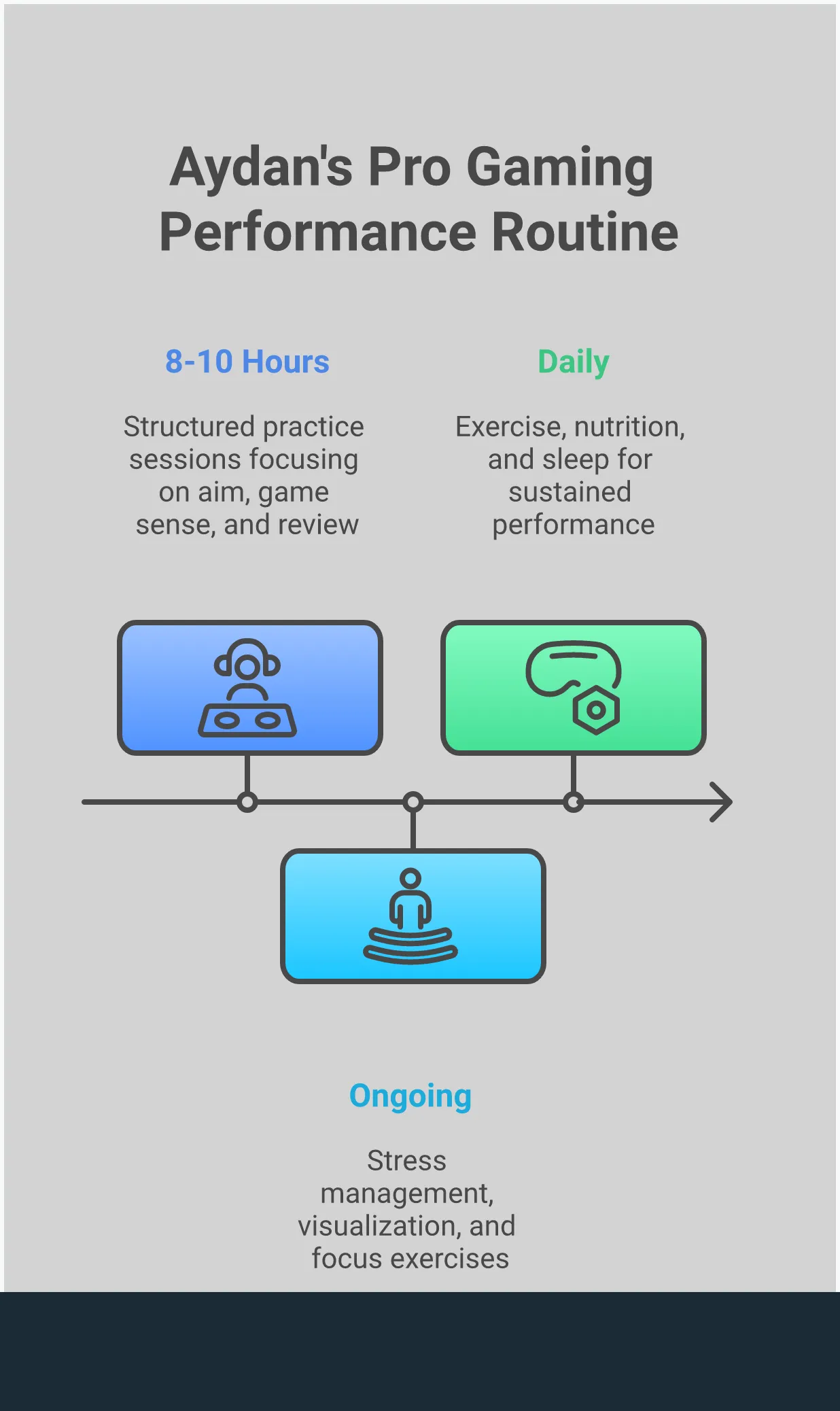
The difference between good and great players often comes down to consistency. While a long practice session followed by days off might seem appealing, it usually leads to burnout and uneven progress. Instead, build a practice routine you can maintain regularly. This helps you improve skills and build muscle memory without getting tired. Your routine could include short sessions focused on things like aim training, reviewing past gameplay, or practicing specific in-game maneuvers. A consistent, structured approach prevents burnout and makes sure every practice session is productive. It’s more about practicing effectively than simply practicing for a long time.
Get the Most Out of Your Practice
To perform at a professional level, you need to train like a professional. But effective practice isn’t just about endless, exhausting repetition – that leads to burnout, not success. What truly separates good players from great ones is how they focus during practice. It’s about making every practice session and every choice deliberate and purposeful.
Aydan’s success highlights that real progress in gaming isn’t about simply playing for long hours, but about training effectively. If you approach practice like a real competition – with focus and intention – you’ll develop the skills and automatic reactions needed to perform well under pressure. Essentially, it’s about making your practice time productive by concentrating on improving specific aspects of your gameplay, rather than just playing casually. Let’s explore how to maximize every practice session.
Focus on Quality Over Quantity
It’s frustrating when you practice for a long time but don’t see improvement. Simply playing for hours isn’t enough – what matters is how you practice. A short, focused session that targets a specific weakness is much more effective than a long, unfocused one. Professional gamers understand this – they prioritize quality practice to build the mindset that sets them apart.
Instead of jumping right back into games repeatedly, try focusing on improving one specific skill during a practice session. For example, spend an hour working solely on your character’s ability rotations, or concentrate on how you play the first few minutes of a match. Record yourself playing, then review the footage. Pay attention to whether you communicated clearly with your team and if your positioning was effective. By concentrating on one thing at a time, you’ll improve faster and see better results.
Set Realistic and Achievable Training Goals
Simply wanting to “get better” isn’t enough. Real improvement comes from setting clear, achievable goals you can track. When you have specific targets, your practice becomes more focused and you can clearly see how far you’ve come. This approach helps you avoid getting discouraged and stay motivated to perform your best.
Begin with achievable goals instead of trying to become an expert overnight. For example, aim to win a few individual fights in the gulag, or finish in the top ten in several matches. These small successes will boost your confidence and motivate you to improve. As you accomplish these smaller goals, you can start setting bigger, more challenging ones. This breaks down the overwhelming task of improving your skills into a series of easier steps.
Related Articles
- Deus Ex LFG: Connect with Other Augs in LFG Feature on Z League App
Frequently Asked Questions
If you usually play games just for fun and want to develop a more competitive mindset, the key is to become a more active player. Before you start, decide on one specific thing you want to achieve during that session. It doesn’t have to be about winning; it could be something like making clear communication with your team or prioritizing good positioning. Simply setting this intention transforms your playtime into focused practice and encourages you to think strategically, all while still enjoying yourself.
It’s frustrating to feel like you need to practice for a long time to improve. But practicing effectively is more important than practicing for hours and hours. A short, focused practice session – maybe two hours – will give you better results than eight hours of mindless repetition. Pay attention to when you start making mistakes or getting annoyed – that’s a sign you need a real break. Don’t just rest for a few seconds between games; get up and step away from the screen for 10-15 minutes. This will help you avoid practicing mistakes and make sure your practice time is actually useful.
The post talks about how Aydan uses caffeine to improve his gameplay. If you’re wondering if caffeine could help you and how much to take, remember it’s not a guaranteed solution and everyone reacts differently. Try it as a small test: start with a small amount, like one cup of coffee or tea, about 45-60 minutes before playing. Then, really pay attention to how you feel – does it make you more focused and alert, or do you feel shaky and anxious? You’re aiming for an amount that gives you a mental boost without negative side effects. For most people, the ideal amount might be less than what professional gamers use.
It’s frustrating when your teammates don’t communicate well. While you can’t make them talk, you can improve things by being a good example. Make your own callouts clear, calm, and to the point. Instead of vague statements like “enemy over there,” give specific details, like “one player is damaged, behind the blue car.” You can also encourage your team by asking direct questions, such as, “Does anyone need plates?” or “What’s our plan for the next safe zone?” Your consistent, helpful communication might inspire them to do the same.
If your team finds itself in a tough spot, the most important thing is to stay calm. A bad situation quickly turns into a loss when players start acting independently and making rushed decisions. Focus on regrouping, not trying to win while at a disadvantage. Use available cover to stop taking damage and work together to come up with a plan to safely pull back. Find the nearest secure location and move there as a team. It’s much better to retreat and fight again on your own terms than to risk being completely defeated trying to turn a losing fight around.
Read More
- Gold Rate Forecast
- What is Omoggle? The AI face-rating platform taking over Twitch
- Man pulls car with his manhood while on fire to raise awareness for prostate cancer
- Japanese Coast Guard rescue a “lone flamingo” that was lost at sea
- Scientology speedrun trend escalates as viewers map out Hollywood facility
- Apple TV’s Imperfect Women Becomes No. 1 Most-Watched Show Globally
- Audible opens first ‘bookless bookstore’ in New York
- Beyond Traditional Risk Metrics: Forecasting Market Volatility with Bayesian Networks
- 10 Adorable Quotes from Diana in Pragmata
- Netflix’s Remake Of R-Rated Denzel Washington Classic Carries On A Rotten Tomatoes Trend
2026-01-21 16:06