Author: Denis Avetisyan
New research demonstrates a pathway to autonomous marine vessel navigation that prioritizes both efficiency and safety through advanced reinforcement learning.

A novel curriculum learning framework combining realistic simulations and data-driven fuel consumption models enables safe, efficient, and sustainable autonomous navigation for marine vessels.
Despite growing demands for efficiency and safety, maritime navigation remains heavily reliant on human operators and often lacks comprehensive emission awareness. This paper introduces ‘Realistic Curriculum Reinforcement Learning for Autonomous and Sustainable Marine Vessel Navigation’, a novel framework leveraging data-driven simulation and machine learning to address these challenges. By integrating a curriculum reinforcement learning agent with a realistic marine environment and a fuel consumption prediction module, the approach demonstrates effective and stable learning for autonomous vessel control, optimizing for safety, emissions, and timeliness. Could this framework pave the way for a new generation of sustainable and intelligent maritime transport systems?
The Rising Tide of Maritime Emissions
Global maritime transport, while vital for world trade, contributes substantially to anthropogenic greenhouse gas emissions – accounting for approximately 3% of total global output, a figure exceeding that of many individual nations. This impact stems from the sheer scale of the industry, with tens of thousands of vessels burning heavy fuel oil, a particularly carbon-intensive resource. The consequences extend beyond carbon dioxide, encompassing significant releases of sulfur oxides, nitrogen oxides, and particulate matter, all of which contribute to both climate change and detrimental health effects. Considering projected increases in global trade, these emissions are poised to rise further unless decisive action is taken; therefore, addressing maritime emissions isn’t simply an environmental concern, but a critical imperative for achieving broader climate goals and safeguarding public well-being.
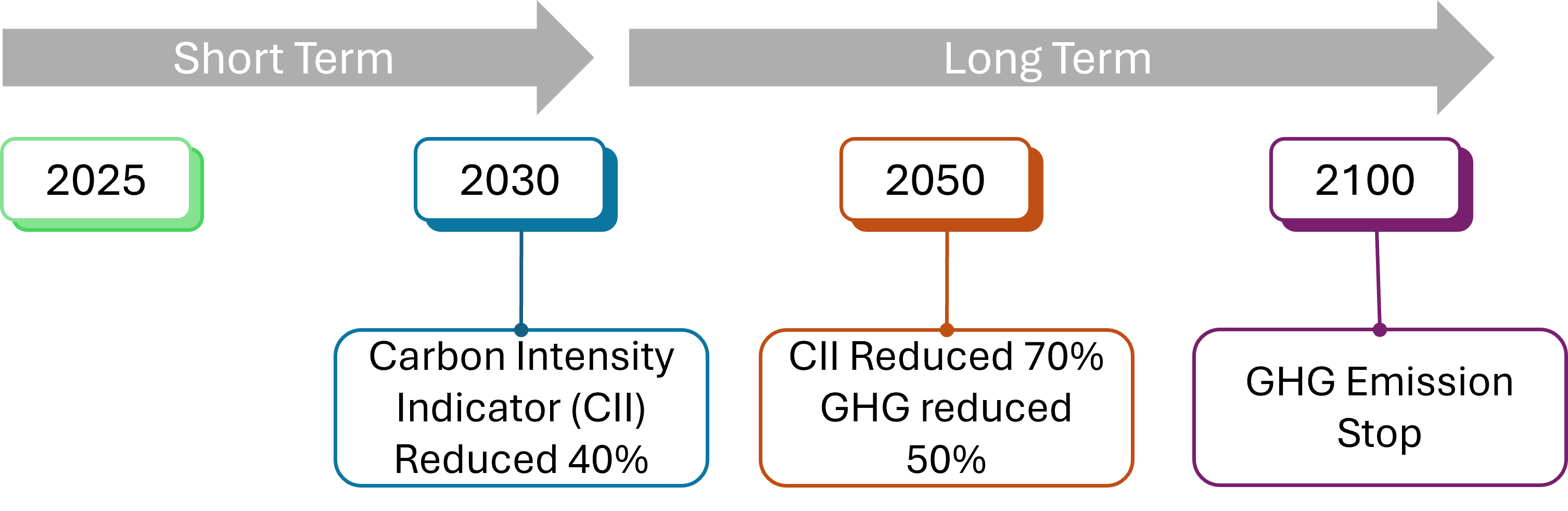
The International Maritime Organization (IMO) has established ambitious targets for reducing greenhouse gas emissions from global shipping, including a strategy aiming for at least 50% reduction by 2050. However, translating these international frameworks into effective action presents considerable hurdles. Implementation often lags due to the complexities of coordinating regulations across nearly 200 nations, varying national priorities, and the financial implications for shipping companies. Challenges also arise from the need for widespread adoption of new technologies – such as alternative fuels and energy-efficient vessel designs – and the difficulties in verifying compliance and enforcing regulations consistently across different flag states. Ultimately, the success of these vital emissions reductions depends not only on the strength of the regulations themselves, but also on robust international cooperation and a commitment to overcoming these practical implementation challenges.
Effective management of maritime emissions hinges on the development of robust monitoring and predictive systems. Current efforts to curtail pollution from shipping require more than just regulatory frameworks; they demand detailed, real-time data on vessel emissions, fuel consumption, and operational efficiency. Researchers are increasingly focused on integrating sensor technologies, satellite data, and machine learning algorithms to create accurate emission inventories and forecast future pollution levels. These predictive capabilities are not simply about tracking past performance; they enable proactive intervention, allowing port authorities and shipping companies to optimize routes, adjust speeds, and implement cleaner technologies before emissions occur. Such systems promise to move the maritime sector from reactive compliance to proactive environmental stewardship, ultimately ensuring that emission reduction targets are not merely aspirational but demonstrably achieved.
Predictive Intelligence: Charting a Course for Efficiency
A fuel consumption prediction model enables a shift from reactive to proactive emissions management in vessel operations. By forecasting fuel usage, operators can anticipate periods of high consumption and implement strategies to mitigate them, such as adjusting vessel speed, optimizing route planning, or scheduling maintenance. This predictive capability allows for pre-emptive adjustments to operational parameters, reducing overall fuel burn and associated greenhouse gas emissions. The model facilitates data-driven decision-making, moving beyond traditional, often less efficient, operational practices and promoting sustainable shipping practices through optimized resource allocation.
The fuel consumption prediction model utilizes several machine learning algorithms to forecast vessel fuel usage, with the XGBoost model demonstrating superior performance. Evaluated against historical and real-time operational data, XGBoost achieved an R2 score of 86.10%, indicating a high degree of variance explained in fuel consumption predictions. This score surpasses the performance of alternative models tested, including Support Vector Regression (SVR), Multi-Layer Perceptron (MLP), and Random Forest, establishing XGBoost as the most accurate algorithm for this specific application. The model’s inputs include parameters such as vessel speed, draft, sea state, and weather conditions to generate precise fuel usage forecasts.
Accurate fuel consumption prediction enables operators to implement interventions such as route optimization, speed adjustments, and proactive maintenance scheduling. These targeted actions minimize unnecessary fuel expenditure and reduce operational costs. Furthermore, predictive capabilities allow for informed decisions regarding bunkering – the process of refueling vessels – optimizing fuel purchasing and storage. Improved efficiency, stemming from these data-driven interventions, translates to a reduction in greenhouse gas emissions and enhances the sustainability of maritime operations, contributing to both economic and environmental benefits.
XGBoost: A Model of Predictive Power
The Fuel Consumption Prediction Model employs XGBoost, a gradient boosting algorithm distinguished by its computational efficiency and predictive accuracy. XGBoost constructs an ensemble of decision trees, sequentially adding trees to correct errors made by prior iterations; this process utilizes regularization techniques to prevent overfitting and enhance generalization capability. The algorithm’s scalability is achieved through parallel processing and cache optimization, allowing it to effectively handle large datasets common in fuel consumption analysis. Furthermore, XGBoost incorporates built-in cross-validation and handles missing values, contributing to a robust and reliable prediction model.
XGBoost, as a gradient boosting algorithm, effectively models fuel consumption by accommodating high-dimensional datasets and capturing non-linear interactions between predictor variables. Fuel consumption is not simply proportional to driving factors; rather, it’s influenced by complex relationships involving vehicle speed, acceleration, engine load, and environmental conditions. XGBoost’s tree-based approach allows it to partition the feature space and learn these localized, non-linear relationships without requiring explicit feature engineering. Furthermore, regularization techniques within XGBoost prevent overfitting to noisy data, enhancing its generalization performance on complex fuel consumption datasets and contributing to more accurate predictions.
Implementation of the XGBoost algorithm yielded substantial gains in fuel consumption prediction accuracy when contrasted with traditional modeling techniques. Specifically, XGBoost’s integration into the Curriculum Reinforcement Learning (CRL) framework resulted in consistent performance exceeding that of state-of-the-art Deep Reinforcement Learning (DRL) baselines. This improvement is attributed to XGBoost’s capacity for handling complex, high-dimensional datasets common in fuel consumption analysis, and its ability to model non-linear relationships affecting fuel efficiency. The CRL framework leverages these capabilities to iteratively improve prediction accuracy through a structured learning process, demonstrably outperforming existing DRL approaches in comparative testing.
Operational Intelligence: A Pathway to a Greener Horizon
Vessel operators are increasingly focused on readily implementable strategies to curtail carbon footprints without substantial capital investment, and operational measures present a viable solution. Techniques such as ‘slow steaming’ – reducing vessel speed – and optimized routing, which leverages weather patterns and currents, directly lessen fuel consumption and associated emissions. These approaches aren’t merely environmentally sound; they also offer significant economic benefits through reduced fuel costs, making them an attractive proposition for shipping companies navigating increasingly stringent environmental regulations and fluctuating fuel prices. The immediate applicability and cost-effectiveness of these operational adjustments position them as crucial components in the pursuit of a more sustainable maritime industry, bridging the gap between environmental responsibility and economic viability.
Combining operational efficiencies – such as reduced vessel speed and route optimization – with precise fuel consumption predictions proves powerfully effective in minimizing environmental impact. Analysis utilizing the CRL framework demonstrates a substantial reduction in Accumulated Fuel Consumption (AFC) across multiple Instance Cases – specifically Cases 1, 2, and 3 – highlighting the synergy between proactive operational measures and data-driven forecasting. This approach doesn’t simply react to conditions; it anticipates fuel needs, allowing for fine-tuned adjustments that maximize efficiency and demonstrably lower emissions, offering a practical pathway towards greener shipping practices and supporting broader sustainability initiatives within the maritime industry.
Analysis of Instance Cases reveals the CRL framework’s exceptional performance in simultaneously optimizing reward and safety metrics during maritime operations. Specifically, the framework achieved the highest Accumulated Reward in Instance Case 1, indicating superior efficiency and operational gains, while simultaneously registering the lowest Accumulated Safety Score in Instance Case 3, demonstrably minimizing navigational risk. This dual success signifies not only enhanced economic performance but also a commitment to responsible and secure seafaring practices, directly supporting the International Maritime Organization’s (IMO) increasingly stringent environmental and safety targets. The results suggest the CRL framework offers a practical pathway for shipping companies to meet ambitious sustainability goals without compromising vessel or crew safety.
The pursuit of autonomous vessel navigation, as detailed in this work, demands a rigorous simplification of complex environmental factors. This aligns with the sentiment expressed by David Hilbert: “We must be able to assure ourselves of a foundation for all further constructions.” The proposed Curriculum Reinforcement Learning framework, particularly its focus on realistic simulations and multi-objective reward functions, attempts precisely that – establishing a firm base upon which safe and sustainable navigation can be built. Excessive detail obscures the core principles; the method prioritizes essential dynamics, mirroring a preference for structural honesty over baroque embellishment. It is in stripping away the superfluous that true progress emerges.
The Horizon Remains
The pursuit of autonomous marine navigation, as exemplified by this work, inevitably encounters the limits of simulation. The fidelity of any virtual environment is, ultimately, a simplification. The true test lies not in demonstrating competence within a curated digital world, but in gracefully handling the inevitable discrepancies between prediction and reality. Future iterations must prioritize methods for robust adaptation – systems that learn from their errors, not simply avoid them through exhaustive pre-training.
A focus on fuel efficiency, while commendable, reveals a deeper tension. Optimization, by its nature, seeks local maxima. Yet, the most sustainable solution may not be the most efficient route in every instance, but rather a broader recalibration of logistical systems. The code should be as self-evident as gravity, but true progress demands questioning the very objectives being optimized. Intuition is the best compiler, and a systems-level perspective will be crucial.
The integration of diffusion models represents a promising avenue, but the tendency toward generative complexity must be tempered. Abstraction is a tumor until proven otherwise. The ultimate measure of success will not be the creation of increasingly elaborate algorithms, but the development of systems that are demonstrably, and verifiably, safe – even, and especially, when faced with the unexpected.
Original article: https://arxiv.org/pdf/2601.10911.pdf
Contact the author: https://www.linkedin.com/in/avetisyan/
See also:
- Gold Rate Forecast
- What is Omoggle? The AI face-rating platform taking over Twitch
- Man pulls car with his manhood while on fire to raise awareness for prostate cancer
- Audible opens first ‘bookless bookstore’ in New York
- 10 Adorable Quotes from Diana in Pragmata
- Netflix’s Remake Of R-Rated Denzel Washington Classic Carries On A Rotten Tomatoes Trend
- Wartales Curse of Rigel DLC Guide – Best Tips, POIs & More
- Elden Ring Is Back With A New Free Game, Thanks To The Fans
- How To Grow Money Trees In Animal Crossing: New Horizons
- XRP ETFs’ April Triumph: A Tale of Millions and Muted Prices
2026-01-21 00:22