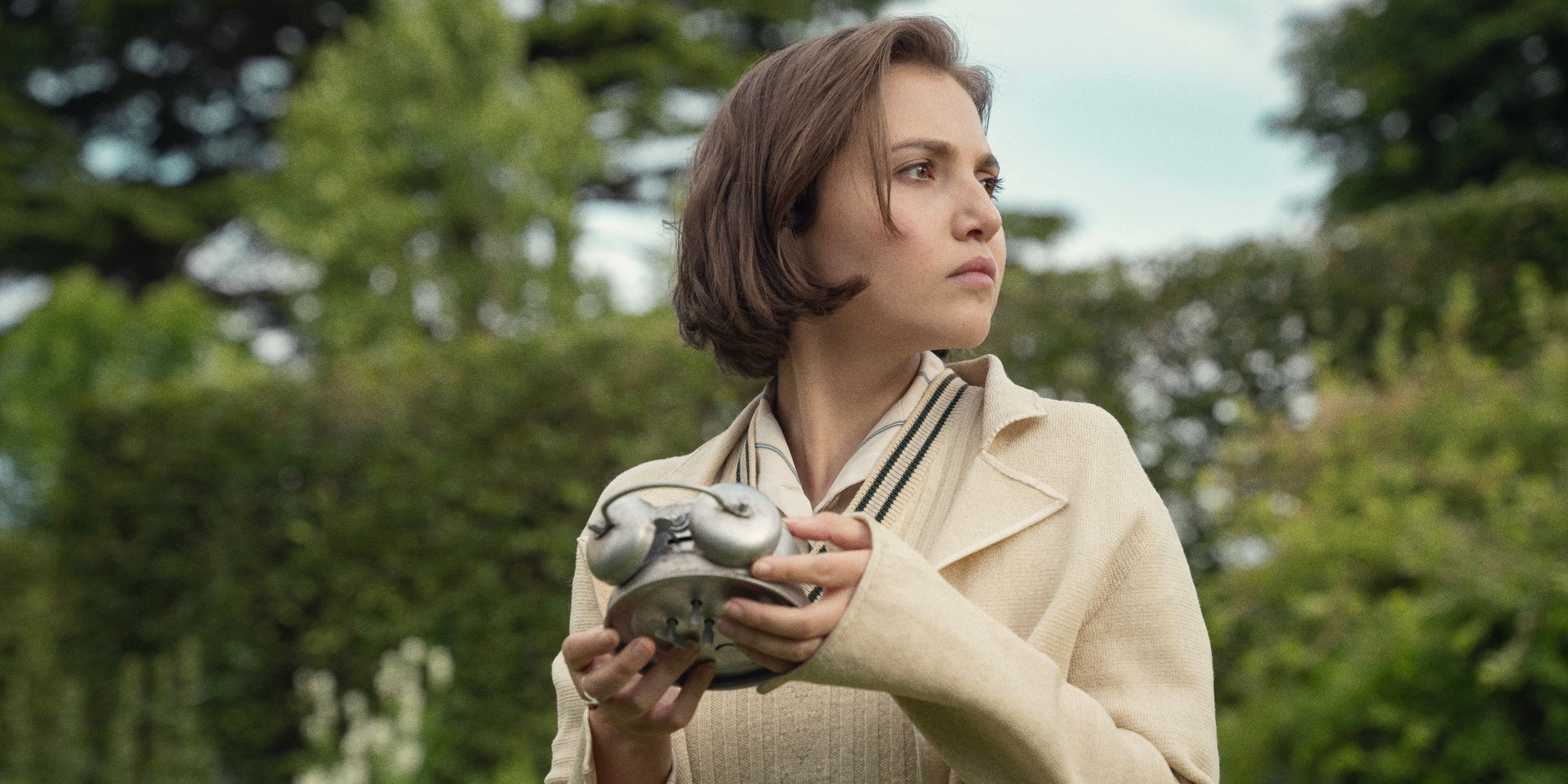
Rian Johnson’s Knives Out films have breathed new life into the mystery genre, but classic mysteries still hold a strong appeal. The new miniseries Agatha Christie’s Seven Dials is the latest adaptation of a famous mystery writer’s work, following numerous shows based on Harlan Coben’s novels. Like many of those Coben adaptations, Seven Dials could easily be overlooked, but it’s engaging enough to stand out from the crowd.
What’s clever about this adaptation of Seven Dials is that the creator, Chris Chibnall, seems to know what the story can handle and doesn’t try to do too much. Agatha Christie’s The Seven Dials Mystery was previously a 1981 TV movie, like many of her books. This three-part series strikes a nice balance, allowing for deeper character development and a compelling mystery without feeling drawn out. However, the shorter, film-like structure doesn’t always fully benefit the story.
Seven Dials Follows a Traditional Whodunit Narrative
In 1925 England, Lady Eileen “Bundle” Brent, a clever and spirited young woman, discovers a body after her party. Despite her mother’s warnings and the advice of the investigating detective, Superintendent Battle, Bundle decides to solve the murder herself. Her investigation leads her into a dangerous conspiracy connected to a secret group known as the Seven Dials.
As Bundle investigates the mystery, many characters offer help along the way. Edward Bluemel plays Jimmy Thesiger, a likable man who becomes Bundle’s primary partner, though his insights often seem a little too convenient. Hughie O’Donnell portrays Bill Eversleigh, a somewhat hapless sidekick unexpectedly caught up in the complex puzzle. Nabhaan Rizwan appears as Ronnie Devereux, and though his role is brief, his talent deserves more screen time.
As the story unfolds, more characters are introduced, including a group of older adults who become suspects when a vital national defense formula is revealed to be at the heart of the mystery. The show quickly explains why the creator, Chris Chibnall, changed Bundle’s father from the book into Lady Caterham – a female character played by Carter. Adding Bundle’s mother brings a stronger female presence to the story, addressing criticisms of the original novel’s weak female characters.
The interactions between Bundle, Lady Caterham, and Battle perfectly capture the tension and back-and-forth you’d expect in a good mystery. Set in the 1920s, despite Bundle’s intelligence, she still faces societal limitations as a woman. She couldn’t vote, and there was pressure on her to marry. This creates understandable hesitation from Lady Caterham and Battle when she tries to take charge, making the reader root for her even more.
Helena Bonham Carter and Martin Freeman Bring a Pop of Color to the Bland Characters
Honestly, whenever Lady Caterham and Battle shared a scene with Bundle, the show just sparkled, and a lot of that is down to Imelda Staunton and Stephen Freeman. They’re definitely the big names attached to the project, but surprisingly, they don’t really take center stage until the very end. Staunton is brilliant as Lady Caterham – she plays her with this wonderful, accidental humor, as someone who’s completely detached from everything and everyone. But in the finale, she gets a chance to really explore why she feels that way, and Staunton delivers a performance that’s both heartbreaking and strangely unsettling. It’s a really layered and captivating portrayal.
Freeman delivers a performance reminiscent of Daniel Craig’s Benoit Blanc. The show truly shines when he’s deeply focused on investigating, though he gets frustrated when interrupted or outwitted by Bundle. He had the potential to carry the entire series if the story had been structured differently, but that might have made it too similar to another well-known story.
The supporting characters don’t add much to the story, largely because they all feel very similar – a collection of wealthy, white individuals who aren’t distinct enough. While the story’s time period and focus on a specific social class might explain the lack of diversity, the few characters of color are poorly represented. They are either killed off, portrayed as villains, or depicted in a way that makes them problematic figures within their communities.
The story gains a new dimension of racial awareness with the introduction of Dr. Cyril Matip (Nyasha Hatendi), the creator of a key formula. A dinner party scene, where he’s the only Black attendee, explores his past, specifically his ties to Germany during World War I. Rather than simply mentioning these issues, Seven Dials uses this moment to powerfully portray the hardships faced by North Africans in the early 20th century.
Seven Dials Repeats the Mistakes of Agatha Christie’s Novel
As a huge mystery fan, I have to say that a lot of what doesn’t quite work in Seven Dials actually felt like issues the original Agatha Christie novel had way back in 1929. It’s odd because Bundle and her friends go through some really tough stuff – losing people close to them, even potential loves – but they just seem… cheerful. They bounce around, acting almost giddy as they chase clues and infiltrate suspects’ lives like they’re in a game. It feels like Bundle doesn’t really grieve; instead, she treats the whole situation as a thrilling opportunity to prove herself as a detective, almost romanticizing the deaths to be part of something bigger and more mysterious. Maybe the show, being only three episodes, just doesn’t give us enough time to see that emotional weight. It feels rushed.
The story feels rushed, and Bundle’s father, portrayed by Iain Glenn, is only briefly shown in memories. While he gains importance later, it doesn’t quite feel earned. It’s clear the writer was searching for the emotional heart of the story, and that’s understandable. However, instead of focusing on the already interesting dynamic between Bundle and her mother – two women supporting each other both financially and emotionally in 1920s England – the series adds an underdeveloped backstory that just makes things more confusing.
Despite feeling familiar with its mix of mystery elements, Seven Dials is driven by a captivating main character. It’s not packed with action, but when chases do happen, they’re surprisingly thrilling – proving that a 1925 car chase can be just as exciting as one today. The ending, while staying true to the original story, might feel abrupt after a major reveal, but it ultimately provides satisfying closure and reinforces the central themes. It also perfectly highlights Bundle’s character: a flawed but well-intentioned person, and those are the most compelling characters to watch.
Agatha Christie’s Seven Dials is available to stream on Netflix
Read More
- Off Campus Season 1 Soundtrack Guide
- Euphoria Season 3’s New R-Rated Sydney Sweeney Scene Proves The Show Is Trolling Us
- Gold Rate Forecast
- All Golden Ball Locations in Yakuza Kiwami 3 & Dark Ties
- DoorDash responds after customer uses AI to make food look bad and get a refund
- Jon Bernthal Explains Why Marvel Let Him Make The Darkest Punisher Story Ever
- Dutton Ranch Review: Paramount+’s New Western Takes All The Best Parts Of Yellowstone & Makes Them Better
- The 2026 Cannes Film Festival Standing-O-Meter
- Uncovering Financial Fraud with the Power of Networks
- ETH Holders Cash In: Is the Party Over, or Just Getting Started?
2026-01-15 11:07