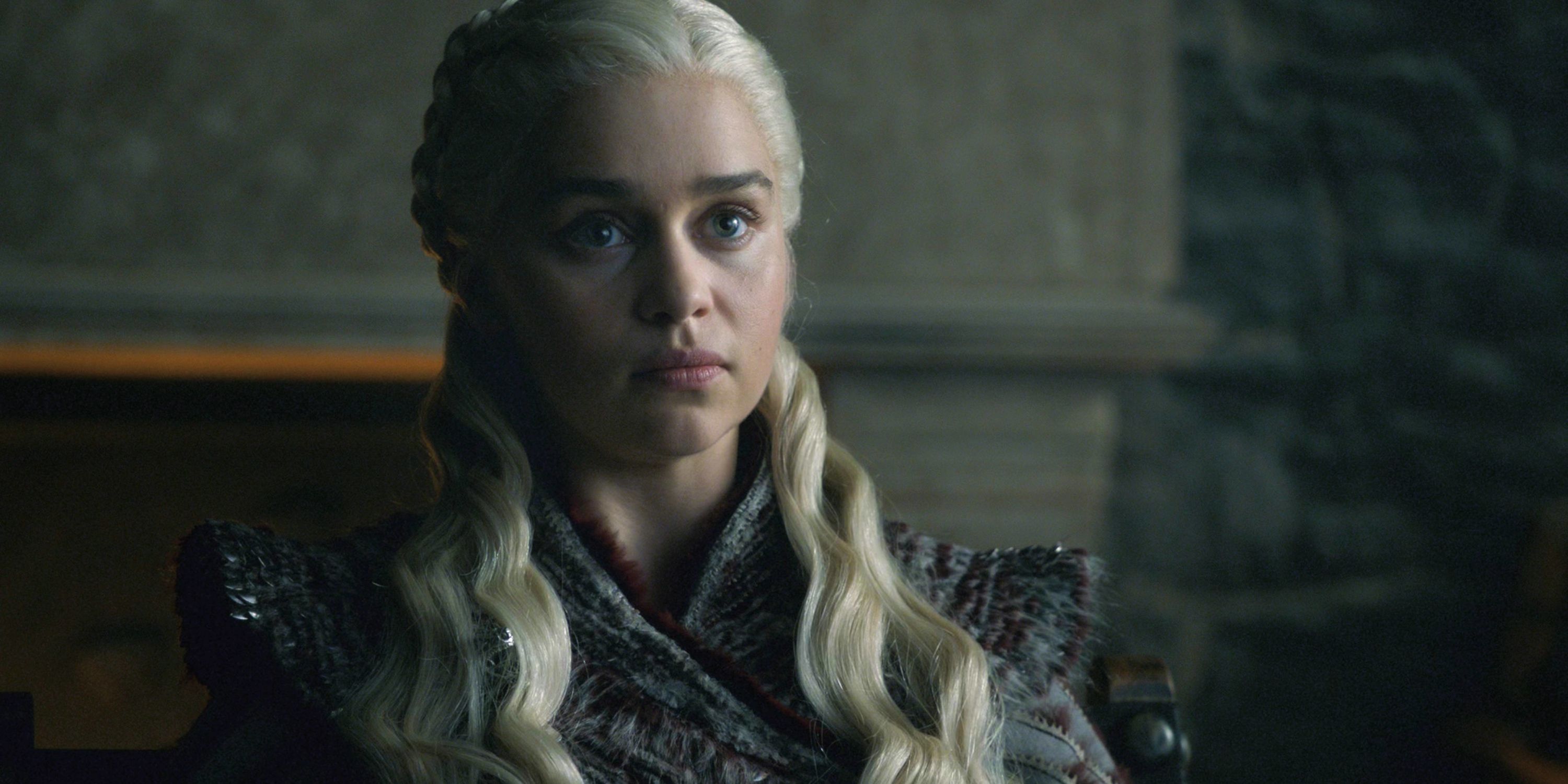
Since its conclusion in 2019, Game of Thrones has faced a lot of criticism, and whether that criticism was justified is still discussed. However, the show’s impact on the fantasy genre is undeniable. Based on George R.R. Martin’s A Song of Ice and Fire novels, Game of Thrones played a major role in popularizing fantasy for modern audiences. The show was known for its complex characters and compelling storyline, creating a realistic fantasy world that viewers connected with.
While stories like The Lord of the Rings focus on grand, overarching conflicts with powerful magical forces, Game of Thrones was more grounded in political struggles and civil wars. The show’s villains weren’t necessarily powerful entities themselves, but rather symbols of evil. Despite its differences, Game of Thrones actually stumbled in a similar way to Peter Jackson’s The Lord of the Rings adaptation.
The Lord of the Rings Scaled Back on Magical Elements
While The Lord of the Rings is known for its fantasy, Peter Jackson’s movies didn’t portray magic with the same impact as J.R.R. Tolkien’s books. This is especially true for Gandalf, who used magic far less often in the films. When he did, it was often shown in a subtle way that didn’t fully showcase his power.
Gandalf is best known for escaping Saruman and defeating the Balrog using his sword and staff. However, the movies didn’t fully showcase his magical abilities. While he occasionally used his staff to create light, he didn’t display the full extent of his power as described in the books.
In J.R.R. Tolkien’s The Lord of the Rings, Gandalf wasn’t simply a wizard who learned magic. He was a powerful, angelic being originally from Valinor, sent to Middle-earth to aid in the fight against Sauron. His true power is suggested when he returns from death in The Two Towers, though the details are never fully explained. While his main purpose was to guide and advise the people of Middle-earth rather than fight himself, he did possess some remarkable magical items.
The movie adaptation of The Lord of the Rings left out a key detail about Gandalf: he owned a ring of power called Narya, or the Ring of Fire. While not as powerful as Sauron’s One Ring, Narya still gave Gandalf significant abilities. In the original books, Gandalf was a much more powerful spellcaster than he appeared in the films, and his magical abilities were toned down for the screen.
Another character mysteriously disappeared from Jackson’s adaptation of the story. While some might say removing him streamlined the plot, this being possessed incredible power. Readers first meet him in the initial book when he rescues the Hobbits from Old Man Willow. It’s later revealed that this character, Tom Bombadil, was so powerful that even the One Ring couldn’t affect him.
Adding Tom Bombadil to the story would have raised questions, like why he couldn’t simply carry the Ring to Mordor himself. While the books offer explanations, it wouldn’t have been a compelling plot point for the film. Instead, the filmmakers kept magic subtle, choosing to emphasize the bravery and inner strength of the characters. This approach was similar to what Game of Thrones did, focusing on character-driven narratives rather than overt magical solutions.
Game of Thrones Was Only Ever a Political Drama
The title of the first book in the A Song of Ice and Fire series was perfectly fitting. From the beginning, the story was about a struggle for power, which is what set Game of Thrones apart. Both the books and the HBO series focused on this, but the show never moved beyond it.
Game of Thrones aimed to be a realistic political drama above all else, so it minimized or removed many of the more fantastical elements. While set in a fantasy world, the show avoided magic that didn’t feel believable or connected to its internal logic. A prime example of this was the unfortunate…
The third season of Game of Thrones is widely considered its best. This coincided with the events of A Storm of Swords in the books, where House Stark suffered devastating losses. The Lannisters betrayed the Northerners, attacking them even at a place they thought was safe. Key figures like Robb Stark and his mother, Catelyn, were both killed.
The decision upset many viewers, but those familiar with the books weren’t entirely surprised, as they anticipated Michelle Fairely’s return as the vengeful character, Lady Stoneheart. However, it was still shocking to discover this storyline wouldn’t be included in the show. Years later, the show’s writers, David Benioff and D.B. Weiss, explained their reasoning.
I remember being really moved by Catelyn’s death, and Michelle Williams is such a talented actress. But when they brought her back as a silent zombie, it just didn’t feel right to me – it felt like it lessened the impact. The writers even worried that bringing Catelyn back might make Jon’s resurrection later on feel less meaningful, and honestly, I can see their point.
The decision to include or exclude resurrections remains a hotly debated topic. Though both Catelyn and Jon are brought back to life in the books, their stories diverge significantly. Catelyn returns only as Lady Stoneheart, driven solely by vengeance and stripped of her former self. While Jon’s resurrection hasn’t happened yet in the books, it felt like a likely direction for the plot. Keeping both of these storylines could have actually improved the series, as Benioff and Weiss often introduced similar elements. Ultimately, their choice to downplay high fantasy aspects likely contributed to the issues with the show’s ending.
Game of Thrones Should Have Gotten Weird
Many Game of Thrones fans were disappointed with how the show ended. The final season didn’t fulfill many of the expectations built up over the series, and despite other controversial series finales, the show’s conclusion remains a significant point of discussion for viewers.
Despite lasting eight seasons, the show felt rushed and incomplete. This was partly due to a diminished focus on magic, which became increasingly important in the later books by George R.R. Martin. A major missed opportunity was the storyline surrounding the prophecy of Azor Ahai.
As a longtime fan of George R.R. Martin’s work, I have to say the whole ‘Prince Who Was Promised’ prophecy felt… unresolved. We kept expecting a definitive answer, but it remained frustratingly open to interpretation. While Arya Stark seemed to fulfill the requirements, it never quite clicked – it felt like Martin had something else in mind when he originally teased the prophecy. Honestly, though, that wasn’t even the biggest disappointment when it came to storylines that didn’t quite land.
When Euron Greyjoy first appeared in the show, he seemed like the natural successor to Balon Greyjoy after Balon’s death. While presented as a charming pirate, Euron was a more unusual and mysterious character, especially after he arrived in Westeros to compete for the throne.
Euron, driven by a thirst for power, earned the nickname ‘Crow’s Eye’ due to the hidden eye concealed beneath his patch – an eye rumored to possess a special ability. He also claimed to possess the Dragonbinder, a horn capable of controlling dragons, which would be a major advantage in the upcoming war. However, Euron dismissed the problems of other kingdoms as unimportant. A disturbing vision foreshadowed his ambition, showing him sitting on the Iron Throne with a face partially transformed into that of a kraken.
The series lacked crucial elements that could have enhanced its fantastical aspects. While Game of Thrones was intended to grow more epic, the world created by David Benioff and D.B. Weiss didn’t allow for much originality. The showrunners were limited by the unfinished book series by George R.R. Martin, and acknowledging this could have opened up opportunities for more creative freedom and a more thrilling conclusion.
Read More
- Off Campus Season 1 Soundtrack Guide
- Euphoria Season 3’s New R-Rated Sydney Sweeney Scene Proves The Show Is Trolling Us
- Gold Rate Forecast
- DoorDash responds after customer uses AI to make food look bad and get a refund
- Dutton Ranch Review: Paramount+’s New Western Takes All The Best Parts Of Yellowstone & Makes Them Better
- MNT PREDICTION. MNT cryptocurrency
- Breaking: Inflation Stands Firm at 2.9%-Will Crypto Survive the Chaos? 🤔
- Ethereum’s Wild Ride: Is Your Wallet Ready for the Supply Drama? 🚀💸
- 🇧🇷 Blockchain & AI: Brazil’s SUS Gets a Tech Makeover! 🚀
- Visa’s Stablecoin Farce: Trillions in Japes or Jackpots? 💸🤡
2026-01-15 01:39