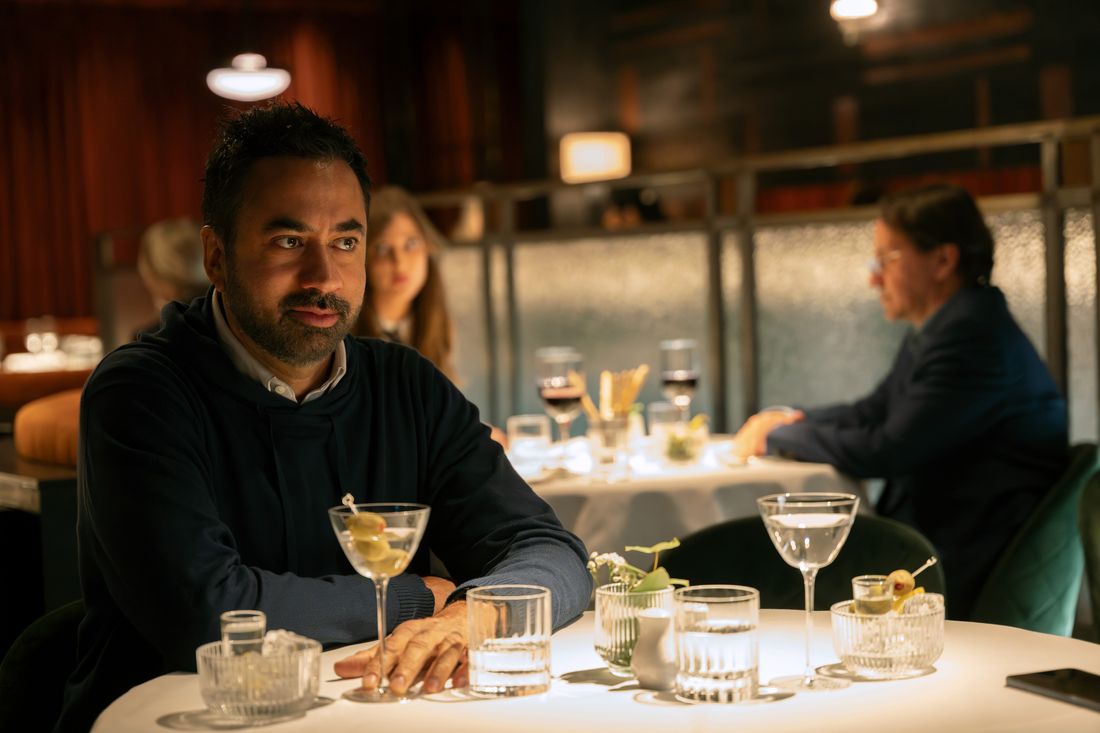
Be warned: the following contains spoilers for the season four premiere of Industry, titled “PayPal of Bukkake,” which aired on January 11th.
Kal Penn’s character, Jay Jonah Atterbury, in the fourth season of Industry, takes familiar traits from his previous role as Kumar and twists them. What used to be playful and laid-back now comes across as unpleasant, especially when laced with casual racism. His self-deprecating humor feels less like a charm and more like a shield. Penn skillfully portrays Jonah, a co-founder of the fintech firm Tender, as arrogant and self-important. However, the season premiere also sets him up as a surprisingly sympathetic figure when he’s betrayed by his close friend and business partner, Whitney. This betrayal suggests Jonah might be one of many characters who will buckle under the pressure of the competitive world depicted in the show throughout the season.
Whitney and Jonah are key new characters in the series, leading a payment-processing company facing a new British law that targets online pornography. They’ve built a very successful business – earning hundreds of millions – by working with adult entertainment websites, but they disagree on the company’s future. Jonah wants to stay true to their existing clients and maintain their current success, while Whitney wants to expand into more mainstream financial services and pursue greater growth. This fundamental conflict drives their interactions throughout the series, culminating in Whitney’s calculated move to take control of the company. By the end of the episode, Whitney is firmly in charge and Jonah has been ousted, a painful betrayal powerfully conveyed by the actor’s emotional performance in the boardroom. As the actor explains, Jonah’s deep trust in Whitney makes the resulting hurt even more devastating when he’s unexpectedly fired.
Since his breakout role in the 2004 film Harold and Kumar Go to White Castle, Kal Penn has become known for playing confident, mischievous characters who often say the wrong thing and then don’t seem to care. But beyond comedy, Penn has shown a more sensitive side in dramas like Mira Nair’s The Namesake, TV shows like House and Clarice, and his sitcom Sunnyside. This range allows him to play complex characters, like Jonah, who, despite being brash and outspoken, has a vulnerability similar to Fredo in The Godfather. Penn describes his work on the fourth season of Industry as one of his favorite projects in ten years, praising its fast pace, complex dialogue, and the challenge of portraying characters whose words don’t always reflect their true feelings.
I was a big fan of Mickey and Konrad’s work – they’d liked mine since Harold and Kumar Go to White Castle. I’m not sure exactly how it happened, but by the time I got the call about Jonah, my team had already been talking to them. My first thought was, ‘What’s the role?’ and then I immediately started worrying if it involved nudity! I wondered if I’d have to get in shape for it. Thankfully, it didn’t come to that. [Laughs] I even thought, ‘Why not? I could get into good enough shape in a few months!’
People describe Jonah Atterbury, one of the firm’s founders, as having a very different vision for the company than Whitney does. He’s known for being difficult and, frankly, a bit arrogant, which seems to stem from deep insecurity. He tends to cope with his issues by drinking. He still operates with a mindset from the early 2000s – believing that past success, like making a lot of money from a previous company sale, gives him license to act however he wants. From what I’ve heard, this portrayal is quite accurate of many people in similar positions. I’ve often been told I’m too nice, and I enjoy playing characters who are the opposite of that. Jonah is definitely not that – you’d never accuse him of being too kind.
The series begins with a long, dynamic shot of Jonah and Whitney walking and talking, covering a lot of ground – they discuss everything from masturbation to the Christian right and the goals of Tender. It’s a lot to take in at once, but it quickly establishes their contrasting personalities and how they view the company. I’m curious about how you filmed that scene.
I really enjoyed shooting it. We were on location in Canary Wharf, London, with the camera positioned quite far away across the street. We were walking up stairs while real people went about their day right at the bottom. We had a few false starts because people would call “action!” and then ask for photos with me or Max. But filming in a real environment is what any actor prefers, I think. It puts you right in the middle of reality. You barely notice the camera, and you don’t even think about ‘performing’ – you just live the scene as it happens.
Before filming, I do a lot of observation to get into character. For this scene, I don’t smoke, but my character, Jonah, does. I spent a few days observing people smoking around Canary Wharf, trying to understand their habits. It might sound strange, but I’ve done similar things before. When I filmed The Namesake, the book had specific details about a character’s college experience that weren’t in the movie. I actually found the dorm room where that event happened and, a bit awkwardly, asked the students if I could look around, pretending it was for research! It didn’t go well. So now, I’m always careful about how I approach these observations. I was at Canary Wharf, watching people, and trying to figure out why they were smoking so quickly – were they in a hurry, stressed, or just needing a nicotine fix? I pretended to be on the phone while I watched.
Jonah’s first reaction to the new Tender ad was simply, “A lot of Asians in that.” I wanted to explain the thinking behind that line and how we intended it to be perceived. The line was written by Mickey and Konrad, and it came from a personal experience I shared with them. During a college internship, I worked for a production company run by someone privileged who had a very problematic attitude. I remember showing him a headshot of Joseph Gordon-Levitt, and he immediately asked if the actor was Asian, explicitly stating he didn’t want to cast Asian actors. I asked Mickey and Konrad to write the line to evoke the feeling I had in that moment. The character wasn’t intentionally being bigoted, but his inherent biases were clear. Jonah, as a character, embodies a lot of outdated and problematic traits – misogyny, racism, and a kind of overconfident, false bravado that feels very specific to the late 90s.
I actually saw the scene differently. I thought Jonah was noticing some subtle, unintentional racism from the marketing team, who were using a lot of Asian people in the ad to sell the app. I might be giving Jonah the benefit of the doubt, though. Ultimately, there’s no single correct interpretation. I believe Jonah’s racism played a role, and that’s hinted at later when the conversation turns to the type of pornography he prefers – he clearly has a preoccupation with race.
The final scene of this episode involves your character being fired. Whitney calls you into his office, and it quickly becomes clear it’s a setup. You’re seated at opposite ends of a long table, and the scene unfolds with a painful attempt to get Whitney to acknowledge what’s happening.
The director used long takes and unconventional camera angles. The script indicated Max wouldn’t really look at you until the very end, which helped emphasize the emotional journey of your character, Jonah. You were actually hungover during filming and played Jonah as cocky and arrogant, initially thinking something had gone wrong at the company. Seeing the board and legal team, your first thought was something terrible had happened, like an accident. But it quickly became clear the meeting was about you, and it was deeply upsetting.
For Jonah, the firing wasn’t really about the business itself, but about the broken friendship with Whitney. It felt like a complete betrayal – Whitney utterly destroying Jonah’s character and rubbing salt in the wound. You were genuinely crying during one take, and you loved how the scene was shot, as it perfectly captured Jonah’s isolation and loneliness. You could also sense Max’s manipulation, and a hint of guilt, but he was willing to sacrifice you anyway.
One of the things we established about Jonah in the scene where he’s fired is that he has poor hygiene and smells. This was actually part of the character from the very beginning. We drew inspiration from figures like Sam Bankman-Fried, who sometimes appeared unkempt even while wearing expensive clothes. The idea was to portray someone so focused on their work – a groundbreaking entrepreneur – that basic self-care, like showering, falls by the wayside, perhaps even sleeping at the office. We eventually decided to have Jonah dress well, though, as it felt too obvious otherwise. The show, Industry, pays a lot of attention to luxury items, and during filming, the expensive watch used as a prop was actually worth more than my salary – it had its own handler!
In a recent episode, Harper stated, “If you don’t have a role in the economy, society essentially forgets you.” This got me thinking about what will happen to Jonah. Have you considered what his purpose will be going forward? That’s how you build a character – by figuring out their future. Jonah still has a lot of money, as he wasn’t removed from his ownership stake, and I believe he’ll likely pursue legal action. It’s almost like a painful breakup, and I expect he’ll be hurting for a long time. We already know he struggles with alcohol, uses relationships to show off his wealth and power, and feels insecure. He’s probably also experimented with drugs. While I don’t foresee a full-blown addiction, I anticipate he’ll go through a difficult period before eventually regaining control.
Read More
- Off Campus Season 1 Soundtrack Guide
- Euphoria Season 3’s New R-Rated Sydney Sweeney Scene Proves The Show Is Trolling Us
- Gold Rate Forecast
- All Golden Ball Locations in Yakuza Kiwami 3 & Dark Ties
- DoorDash responds after customer uses AI to make food look bad and get a refund
- Jon Bernthal Explains Why Marvel Let Him Make The Darkest Punisher Story Ever
- Dutton Ranch Review: Paramount+’s New Western Takes All The Best Parts Of Yellowstone & Makes Them Better
- The 2026 Cannes Film Festival Standing-O-Meter
- Uncovering Financial Fraud with the Power of Networks
- ETH Holders Cash In: Is the Party Over, or Just Getting Started?
2026-01-12 06:56