Have you ever noticed how professional gamers seem to operate on another level? Their precision, quick thinking, and ability to stay calm under pressure can feel unreal. But it’s not luck – it’s the result of dedicated, focused training. They treat improvement as a science, concentrating on small, consistent habits that build into exceptional skill over time. We’re going to reveal the secrets to their success, covering everything from building strong fundamental skills to the importance of challenging yourself with better opponents, and developing the mental toughness to stay focused and bounce back from setbacks.
Key Takeaways
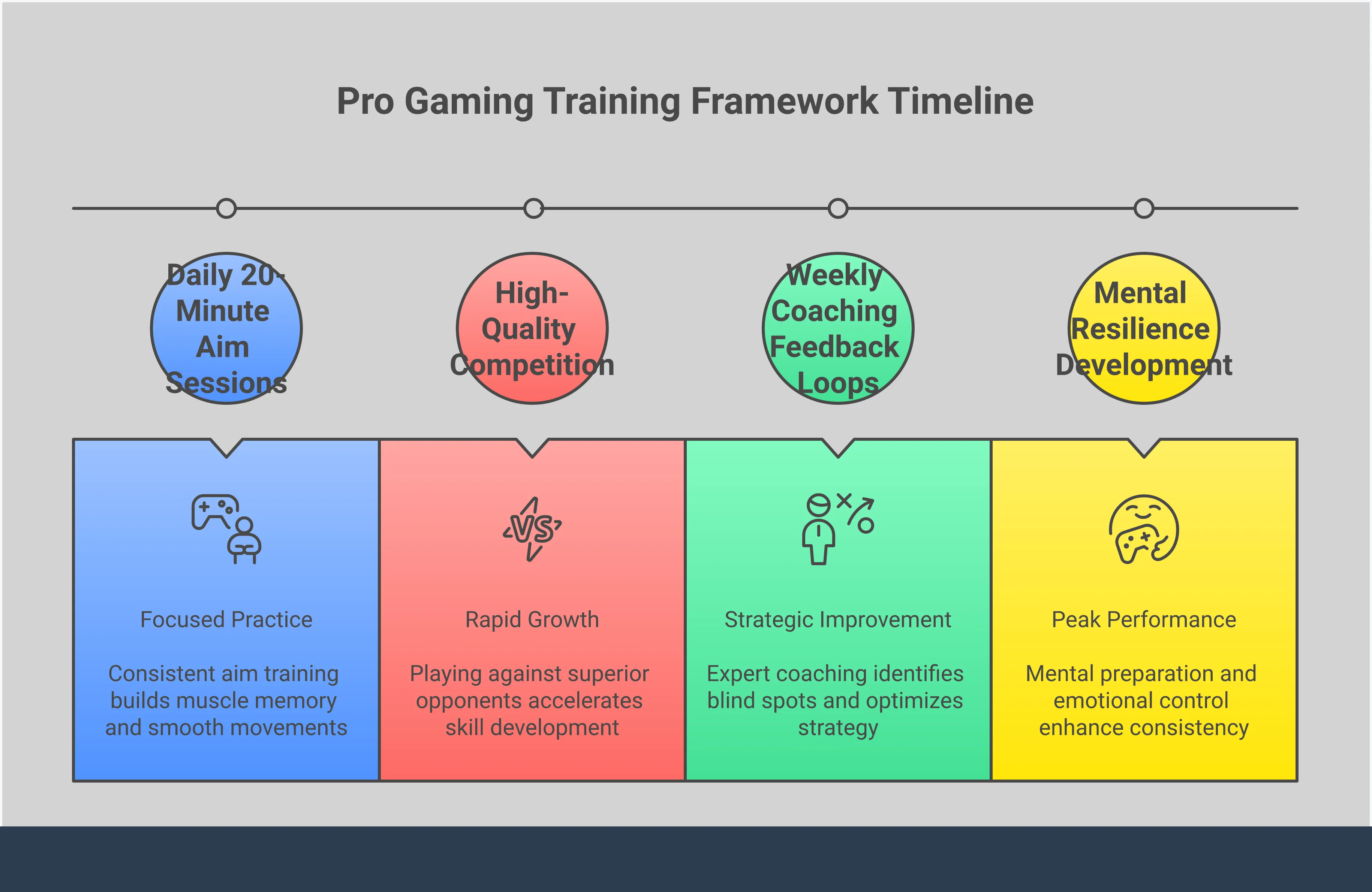
- Make Practice a Sustainable Habit: True skill is built through short, consistent daily sessions, not marathon grinds. Committing to just 20 focused minutes a day prevents burnout and creates a powerful compounding effect on your abilities over time.
- Focus on Transferable Skills, Not Empty Scores: The goal of aim training is to improve your in-game performance, not to top a leaderboard. Practice with your actual game sensitivity and concentrate on smooth movements to build muscle memory that holds up under pressure.
- Sharpen Your Strategy with Tougher Fights and Coaching: Great aim is only half the battle. Actively seek out better opponents to expose your weaknesses and get feedback from a coach to fix strategic blind spots in your rotations, positioning, and end-game decisions.
What Makes Peterbot’s Training Approach Different?
Peterbot doesn’t improve by simply practicing for long hours. He focuses on consistent, effective practice and really understanding how to compete. A key part of his method is using aim training to cut down on mistakes. Fewer errors build confidence in every match, creating a cycle where success builds on success, especially when the pressure is on. He’s moved beyond just trying to make more shots, and instead prioritizes making fewer mistakes.
He strongly believes in the power of consistent, daily practice. While you might only get a little bit better each day – perhaps by just 0.5% – those small improvements add up over time. If you practice regularly for months, even a tiny daily gain can lead to significant skill development. This approach focuses on patience and consistency, and it’s what truly sets committed players apart.
A crucial part of his success is his dedication to playing against strong opponents. To really improve, you need to challenge yourself against players who will expose your weaknesses. He feels that ranked matches are excellent for building good habits because they make you think more carefully about your strategy. Being prepared for tough competition also means having the right gear, such as well-designed loadouts for every possible scenario in Warzone.
Peterbot strongly believes in the power of mentorship and coaching. Having an experienced player guide you can significantly improve your gameplay. A good coach can identify areas for improvement that you might miss, helping you refine everything from your initial landing spot and how you gather loot, to your movements in the final stages of the game. This openness to learning and improving strategy is key to why his training is so successful.
Build Your Foundation: Master Consistent Aim Practice
To improve your gameplay and reach a level like Peterbot‘s, you need to build a strong foundation, and that starts with your aim. It’s not about long, mindless practice sessions or searching for the perfect settings. Instead, focus on consistent, deliberate practice every day. This dedication is what truly sets professional players apart, allowing them to develop the muscle memory needed to make accurate shots under pressure, almost automatically.
Don’t think of improving your aim as a quick burst of effort. Instead, picture it like building with bricks. Every practice session adds another piece to your skill base. One session might not seem like much, but gradually, you’ll build a solid and dependable foundation. This makes a big goal – like achieving professional-level accuracy – feel less overwhelming and more like a series of small, achievable steps. By prioritizing consistent practice over intense bursts, you create a habit you can maintain over time, and that’s where you’ll really see results.
Why 0.5% Daily Improvement Compounds Over Time
It’s common to feel frustrated if you don’t see big improvements right away, but those aren’t necessary. Even small gains – like getting just 0.5% better each day – add up over time. Think of it as building interest on your skills. While that 0.5% might not seem like much today, consistent effort over months will lead to significant progress, and you’ll be amazed at how much you’ve improved.
I’ve discovered what really makes a difference for lasting improvement! Forget trying to become an expert overnight. What works so much better is just focusing on getting a little bit better each day. Honestly, it’s a game-changer for staying motivated and avoiding that feeling of being totally overwhelmed. It’s not about instant perfection, it’s about building a strong habit that will really pay off in the long run.
The Power of 20-Minute Focused Sessions
You don’t have to spend hours in aim training to improve. Actually, shorter, more concentrated practice sessions often work best. Try setting a timer for 20 minutes in a program like KovaaK’s or Aim Lab, and when the timer goes off, stop practicing. Avoid trying to do ‘just one more run.’ Twenty minutes of focused practice is much better than nothing, and it’s a time commitment you can stick to consistently.
As a fan, I love this idea because it just takes away all the reasons I usually have for not practicing. Seriously, it’s so hard to come up with an excuse when it only takes 20 minutes a day! And when you add it up, those little 20-minute sessions become over 120 hours of practice in a year. That’s plenty of time to really get good without ever losing the fun of playing!
How to Make Aim Training Feel Effortless
The point of all this aiming practice isn’t just to get a high score—it’s to make aiming feel natural and automatic while you’re playing. With practice, aiming will become instinctive, allowing you to concentrate on more important things during a fight, like where you are, understanding the game, and planning your strategy.
Once aiming becomes automatic, you’ll be more focused on what’s happening around you, even during intense moments. Battles will start to feel simpler because hitting your targets – a key part of winning – will happen naturally. If aim training starts to feel comfortable and like second nature, that’s a sign you’re making real progress.
What Should Your Aim Training Goals Actually Be?
It’s easy to get caught up in trying to get the highest score when you use aim trainers. While it feels good to see your score go up, focusing too much on it can actually hinder your improvement. The real purpose of aim training isn’t about topping the charts in KovaaK’s or other trainers—it’s about developing skills that will help you win more battles in the games you actually play. This means you need to shift your focus from chasing high scores to building a strong and consistent skill base.
To truly improve your aim, focus on practicing regularly and intentionally to build strong muscle memory. It’s more about how you practice than how much. Concentrate on making small, steady improvements, as these add up over time. When you stop chasing high scores and start prioritizing smooth, precise movements and consistent accuracy, your aim will start to feel natural, even when the pressure is on. Let’s explore what effective training goals look like to help you achieve lasting results in your game.
Look Beyond Scores and Leaderboards
Let’s be real: your aim trainer scores aren’t directly improving your gameplay. Trying to get a high score often leads to using a very slow mouse sensitivity, which isn’t helpful in fast-moving games like Fortnite or Warzone. While it might look good on a leaderboard, it doesn’t really prepare you for a real match – you’re basically training for a different skill set.
Don’t worry so much about your final score. Instead, pay attention to how you’re playing. Are your movements fluid? Are you hitting your targets consistently? And are you making adjustments smoothly, without shaky movements? Thinking about these things will help you improve much more than just looking at the score. The biggest benefit isn’t getting a high score—it’s developing the skills to become a better player.
Focus on Building Muscle Memory
The best way to improve with an aim trainer is through consistent practice – getting in lots of good, focused repetitions. Each practice session might only make a small difference, perhaps a 0.5% improvement, which can feel minimal. However, those small gains add up quickly over weeks and months. With regular practice, you’ll gradually become a much better player, consistently hitting shots that used to be difficult without even consciously trying.
The goal is to make aiming feel natural and automatic, like a reflex. When an enemy appears, you want your hand to react instantly, without having to consciously think about how to move the mouse. This happens through regular, focused practice where you concentrate on the physical act of aiming, rather than worrying about your score.
Why Kovaak Scores Don’t Always Translate to In-Game Performance
Top players on aim trainer leaderboards are focused on high scores, but you should focus on building real skill. Their scores don’t always improve their gameplay because they often practice with different settings than they use in-game. By practicing with the same sensitivity you use with your favorite Warzone setup, you’ll make sure every minute of training directly improves your performance in actual matches.
Aim trainers focus on a single skill, but real games demand you aim while moving, strategizing your position, and keeping track of abilities. Practicing with the settings you actually use builds muscle memory that performs well when it counts. You’ll see improvement quicker than those just trying to get high scores, because your training is focused, practical, and prepares you for the unpredictable nature of a real game.
How High-Quality Competition Accelerates Your Growth
After you’ve practiced your aim, the key to getting better is playing against skilled opponents. Facing tough competition is crucial for improvement – it’s like the difference between practicing with a beginner and fighting an experienced player. Peterbot highlights that who you play against matters just as much as how much you practice. You need challenging matches that force you to think on your feet, develop strategies, and perform well under pressure. This is how basic skill turns into smart, winning gameplay.
Why Ranked Matches Develop Better Habits
As a player, I’ve found ranked mode to be the best way to really improve. The opponents are good enough to make you pay for messing up, but not so amazing that you feel hopeless. It really pushes you to focus on always knowing where your enemy is. When you’re tracking everything they do, you can take advantage of any little mistake. It’s not like playing in casual lobbies where you can get away with more – ranked forces you to stay sharp and think ahead. It’s helped me move from just reacting in fights to actually controlling what happens, which is a huge step up in my gameplay.
Find Opponents Who Truly Challenge You
To become a truly skilled player, you need to challenge yourself by playing against stronger opponents. Think of it like working out – you won’t get stronger lifting the same weight every time. You have to gradually increase the challenge. The same is true for improving in games. Playing against better players helps you find your weaknesses, learn new tactics, and ultimately improve your own gameplay. It can be difficult, but that’s how you build the strength and skills to reach the top.
Customs vs. Public Lobbies: Which Builds Skill Faster?
A lot of players hoping to go pro think practicing in custom lobbies is the key, but it’s not that simple. Custom lobbies only help you improve if you’re playing against better opponents. Many players actually slow down their progress by joining lobbies with players who are at their level or worse. If you want to consistently do well in tournaments and win money, you need to play with the best players around. That’s where you’ll learn the latest strategies, perfect your gameplay for the late stages of a match, and get a true sense of how fast competitive matches really are. Focus on playing against strong opponents, not just playing a lot – it’s about making sure your gear and strategies are ready for the hardest challenges.
Use Coaching and Feedback to Sharpen Your Strategy
Even if you’re a great shooter, poor choices during a game will still hold you back. Strategy is what really matters, and it’s often the most difficult skill to develop on your own. When you’re caught up in the heat of battle, it’s hard to recognize your own mistakes – like making predictable moves or consistently choosing unfavorable fights. That’s why getting feedback from someone else can be incredibly valuable.
Getting help is a great way to improve your game, as Peterbot suggests. A coach or skilled player can analyze your gameplay and identify mistakes you might not even realize you’re making. Because they’re not playing themselves, they can give you unbiased advice about where you should be positioned, when to act, and how to think strategically. It’s like having a GPS to guide your choices, helping you make smarter decisions and win more often. This focused feedback is what transforms basic skill into reliable, winning performance.
Optimize Your Drop Map and Rotations
Success in this game begins as soon as you leave the starting plane. It’s crucial to consistently choose the same landing spot and have a plan for what to do when you get there. A good coach can help you with this by creating a personalized map showing you the best places to land – whether you want to quickly gather supplies or start fighting right away. They can also review how you move around the map. Are you moving too soon or too late? Are you taking safe routes, or are you exposing yourself to danger? A skilled coach can spot these habits and teach you the best times and places to move, giving you an advantage as the game progresses.
Refine Your End-Game Strategy
The final moments of a match are often the most important – that’s where games are won or lost. With a shrinking play area and intense pressure, a single mistake can eliminate you. While this stage can be chaotic, it doesn’t have to be. A coach can help you approach the endgame with a clear strategy. They can analyze your gameplay to improve your resource management, positioning on high ground, and ability to anticipate the final circle’s location. Staying calm and making quick, smart decisions in these critical moments is what truly sets skilled players apart.
Develop Smarter Looting and Farming Paths
The first few moments of a match are crucial – they can make or break your game. Simply running around hoping to find good weapons is a surefire way to fail. A coach can help you plan a smart looting route that lets you quickly and safely collect the supplies you need. This includes knowing which buildings to visit, in what order, and how to gather materials without putting yourself in danger. By turning this initial chaos into a reliable process, you can quickly build a powerful Warzone loadout and be prepared for any fight as the game progresses.
Are These Common Training Mistakes Holding You Back?
Having a great training plan is only half the battle—you also need to put it into action well. Many skilled athletes struggle because they unknowingly fall into common pitfalls that hinder their improvement. It’s similar to having a perfect workout but using incorrect technique – you’ll work hard, but won’t see the benefits, and could even get injured. Before starting a new training program, let’s review some typical mistakes to avoid.
Effective training isn’t about simply putting in more hours; it’s about training effectively. It’s crucial to distinguish between practice that actually improves your skills and just going through the motions. Are you overtraining to the point of exhaustion? Are you overly focused on rankings that don’t reflect true improvement? Or is your training inconsistent, preventing you from gaining real progress? Let’s identify these common mistakes so you can make the most of your time and become a better player.
Avoid Overtraining and Burnout
It’s natural to think that practicing for hours each day is the best way to get better, and many people start new routines with that in mind – like committing to long aim training sessions. However, trying to do too much too quickly often leads to exhaustion. The real key isn’t short-term cramming, but creating a consistent habit you can maintain over the long term – months or even years.
Honestly, practice should feel good, like something I want to do each day. If I’m dreading it, I know I need to rethink things. I’ve learned it’s way better to start with short, easy sessions and just focus on doing them consistently. That way, I don’t burn myself out mentally or physically and end up quitting. Avoiding burnout is huge if I want to actually get better in the long run.
Stop Chasing Scores, Start Building Skill
It’s satisfying to see your name at the top of a KovaaK’s leaderboard, but focusing too much on high scores can actually hinder your progress. Scores don’t always reflect how well you’ll perform in a real game. Some players manipulate the system by using very low sensitivity settings, which boosts their score in practice but isn’t useful during actual gameplay.
Honestly, I’ve been trying to shift my focus away from just winning in Warzone and more on getting better at the basics. I’ve realized it’s all about how smoothly I move my mouse – am I tense, or relaxed? That’s where the real improvement comes from, building up that muscle memory that actually helps in a fight. Forget chasing high scores on those training maps; a perfect loadout won’t matter if your aim just isn’t solid. It’s all about raw mechanical skill, and that’s what makes the difference.
Fix Your Inconsistent Practice Schedule
It’s understandable that life gets hectic and finding time to practice can be a challenge. Many people get stuck in a cycle of intense training followed by long breaks. However, when you’re trying to improve and build lasting skills, practicing consistently is much more effective than occasional, long sessions. Even just 20 minutes of practice each day is far better than a single, three-hour session each week.
Just like compound interest helps your money grow, consistent practice can dramatically improve your skills. Dedicate just 20 minutes each day to focused practice and make it a priority – don’t let anything interrupt that time. Also, joining a gaming community can help you stay motivated and keep practicing consistently.
How to Build an Effective Feedback Loop
Improving at any game isn’t just about playing a lot; it’s about having a plan to get better. The key is to create a cycle where you play, figure out what you did well and what you need to work on, and then make adjustments for your next game. This process is what helps players consistently improve, rather than staying stuck. It’s about learning from every match – winning or losing – instead of just seeing it as one game completed.
Honestly, learning to really think about my gameplay has been a game-changer. I used to just react, but now I’m actively trying to improve with every match. I’m focusing on what I want to get better at, and then really looking at what I did – not to beat myself up, but to understand why things happened. It’s about staying calm under pressure and treating every match as a chance to learn. Instead of seeing mistakes as failures, I see them as information – clues about what to do differently next time. It’s how the pros get so good so quickly, and I’m starting to feel like I’m finally on the right path to improving, too. It’s made every session way more productive!
Use Error Reduction to Build Confidence
Aim training isn’t just about making flashy, difficult shots. It’s actually about becoming more accurate by reducing small mistakes. Practicing with aim trainers or custom maps isn’t about getting every shot perfect – it’s about consistently minimizing those tiny errors. The more you practice, the more natural and automatic your aiming will become.
Practicing consistently builds strong confidence. When you’re skilled and have practiced a lot, you’ll act more decisively and choose battles you’re likely to win. This success then boosts your confidence even further, creating a positive cycle: better skills lead to more confidence, which leads to even better results. This cycle helps you stay calm and focused when it matters most.
Analyze Your Gameplay Between Matches
It’s hard to notice your own errors when you’re actively playing. That’s why getting feedback from someone else is a quick way to get better. Having a coach or even a friend who’s skilled at the game watch your gameplay can really make a difference. They can point out mistakes you don’t even realize you’re making, such as taking a slow route to gather items, moving to a new position too late, or making bad choices when only a few players are left.
If you don’t have a coach, take on the role yourself. Record your games and review them, especially focusing on why you lost. Think about what you could have done better – were you out of position, or did you miss important sounds? This self-review is key to improving, helping you learn from past mistakes and play better in the future.
How to Stay Aware in High-Pressure Fights
During a tough fight, the most important thing is to always keep a close eye on your opponent. If you lose track of them, even briefly, they can quickly change position and gain an advantage. Staying fully aware lets you predict what they’ll do, capitalize on their errors, and finish the fight swiftly, minimizing any damage to yourself.
To succeed, you need to constantly monitor your opponents – watch where they are, listen for what they’re doing, and predict their next move. It’s about anticipating what will happen, not just responding to it. Having a clear understanding of the situation lets you make better choices, which is especially important in games like battle royales where unexpected attacks are common. Staying aware of your surroundings is just as crucial as having good equipment.
Create Your Own Structured Daily Routine
I’ve been trying to get better at things, and I’ve realized copying pros exactly doesn’t work for me. What does work is figuring out why they do what they do, and then adapting those ideas to fit my own life and goals. Basically, a solid routine is like a plan to help me improve steadily. It means I don’t have to wonder what to do each time I practice – every minute feels focused and worthwhile. Let’s talk about how to build a daily routine that helps me grow without getting completely exhausted.
Balance Aim Trainers with In-Game Practice
The key to better aim is consistent practice. Even small improvements each day add up significantly over time, like making a long-term investment in your skills. When you practice with aim trainers like KovaaK’s or Aim Lab, focus on quality over score. The goal isn’t a high number, but building muscle memory that directly improves your performance in the game. Use the same sensitivity you use in-game and concentrate on making smooth, controlled movements. A good score doesn’t matter if you can’t apply that skill when it counts.
How to Progressively Scale Your Practice Difficulty
To truly improve, you need to challenge yourself and step outside your comfort zone. Growth happens when you face opponents who are better than you. Just like lifting weights at the gym – you need to progressively increase the difficulty. In gaming, this means intentionally seeking out stronger players. Try playing ranked matches with a focus on learning, or practice one-on-one battles against skilled opponents. For example, Peterbot uses intense build fights against top players to sharpen his skills and learn from errors. This focused, challenging practice is much more effective than simply playing against easier opponents.
Manage Your Time for Sustainable Improvement
Burnout is a major obstacle to getting better, so it’s important to create a routine you can maintain. Start by making your practice feel manageable – even easy. I recommend setting a timer for just 20 minutes when using aim trainers. When the timer goes off, stop! Even a short, focused practice session is far more effective than none at all, and it helps prevent feeling overwhelmed. This idea also applies to playing the game itself. Don’t just play on autopilot. Instead, practice with a purpose, focusing on improving one or two specific skills, and you’ll see much faster progress.
Develop a Pro-Level Performance Mindset
Becoming truly skilled at a game like Fortnite requires more than just good aim. It also means developing the mental strength to match your technical abilities. A strong, positive mindset helps you bounce back from defeats, stay concentrated during lengthy competitions, and understand how to improve over time. It’s what separates players who get frustrated after a single loss from those who learn from their mistakes and come back even better.
Cultivating this way of thinking involves approaching your practice deliberately. Remember that improvement happens gradually, through consistent effort, not instant results. It also requires being open to feedback from others when you get stuck. By prioritizing your mental strength alongside your skills, you create a solid base for lasting success. This helps you handle setbacks, stay driven, and become a more adaptable and thoughtful player.
How to Stay Focused During Long Sessions
Want to stay focused and improve? Forget long, draining practice sessions. Instead, aim for short, regular training that feels easy. Try using an aim trainer like KovaaK’s or Aim Lab and setting a timer for just 20 minutes. When the timer rings, stop – no extra rounds! This helps prevent burnout and makes it easier to practice consistently. Twenty minutes of focused training is much more effective than two hours of unfocused effort. The key is to make practice a simple, daily habit you look forward to, not a chore you dread.
Manage Frustration and Stay Consistent
It’s understandable to feel discouraged if you don’t see results right away, but genuine progress comes from small, steady improvements. A tiny gain – like a 0.5% improvement in your aim – might not seem like much on any given day. However, these small gains add up over time and can dramatically change your skill level. It’s important to be patient and not demand instant success. Instead of worrying about daily rankings, concentrate on your overall goals. Whether you’re working on your aim or finding the best equipment, consistent effort is what helps you improve. Stay dedicated, and you’ll be surprised by how much you’ve grown in six months.
Why Seeking Help Accelerates Your Learning Curve
It’s easy to miss mistakes in your own gameplay. That’s where a coach or skilled player can really help. A fresh perspective can quickly identify issues that might take you months to solve yourself. They can offer advice on things like where to land on the map, how to find the best loot, and how to move strategically as the game narrows down. This isn’t about someone playing for you – it’s about getting expert feedback to improve your strategy and choices. Getting guidance is a great investment that will help you improve faster and more efficiently.
Related Articles
- Deus Ex LFG: Connect with Other Augs in LFG Feature on Z League App
Frequently Asked Questions
You don’t need to practice for hours every day to improve. Consistency is more important than length. Practicing with focus for just 20 minutes each day is much better than a long, infrequent practice session. This helps you build good habits and avoid burnout, and those small daily gains really add up over time.
Should you use an aim trainer, or just play the game more often? Playing the game is important, but an aim trainer provides focused, repetitive practice. It lets you practice thousands of times quickly, which is the best way to develop consistent muscle memory. It’s like using batting cages in baseball – it doesn’t replace playing a full game, but it helps you improve one key skill.
Ugh, I’m so frustrated! It feels like I’ve stopped getting better, like I’ve hit a wall. What do I do? Well, I’ve learned that this happens to everyone, and it usually means I need to shake things up with my practice. Honestly, the best thing is to find people who are actually better than me. If I’m winning all the time, I’m not really pushing myself to learn. I need to find tougher opponents and force myself to adapt. It’s also super helpful to get some advice from someone else – maybe a coach or a friend who’s been playing a long time. They can often see things I’m doing wrong that I just don’t notice myself.
It’s tough when you’re having a bad game, but here’s how to deal with frustration: try focusing on improving, rather than just winning. Instead of getting upset when you lose, ask yourself why it happened and how you can play better next time. If you see mistakes as opportunities to learn, it’s easier to stay calm and turn a frustrating experience into something positive.
Even if you don’t play Fortnite or Warzone, this advice still holds true for any game you’re trying to improve at. The ideas of practicing regularly, playing against strong opponents, and getting feedback apply to learning any skill, particularly in competitive gaming. No matter what game you play – whether it’s Valorant, Apex Legends, or something different – having a consistent practice schedule and focusing on small improvements is key to becoming a better player.
Read More
- Gold Rate Forecast
- What is Omoggle? The AI face-rating platform taking over Twitch
- Man pulls car with his manhood while on fire to raise awareness for prostate cancer
- Bithumb’s Dance with Fate: Court Halts Ban, But BTC Blunder Looms
- Elden Ring Is Back With A New Free Game, Thanks To The Fans
- How To Grow Money Trees In Animal Crossing: New Horizons
- INJ/USD
- Wartales Curse of Rigel DLC Guide – Best Tips, POIs & More
- Apple TV’s Imperfect Women Becomes No. 1 Most-Watched Show Globally
- Audible opens first ‘bookless bookstore’ in New York
2026-01-02 18:22