In ARC Raiders, every encounter forces you to quickly weigh your options. Do you take a dangerous chance for better gear, engage enemies you’ve found, or retreat to survive? This constant decision-making is what makes the game so thrilling. The most successful teams aren’t just skilled shooters; they’re masters of risk and reward, knowing exactly when to attack and when to hold back. It all comes down to making quick, smart choices that improve your chances of winning. Learning to handle these moments effectively will dramatically change how you play the game.
Key Takeaways
- True Synergy Wins Fights: A winning duo acts as one. This means using concise callouts to stay on the same page, sharing resources so you’re both well-equipped, and coordinating your movement to outmaneuver opponents.
- Control Every Engagement: Don’t just react to fights—initiate them on your terms. Consciously decide when to attack, when to loot, and when to fall back. A smart retreat is often the play that leads to a win.
- Your Mindset is Your Best Weapon: Your mental game dictates your consistency. Learn from every loss without getting frustrated, stay flexible enough to change your strategy mid-match, and focus on keeping a cool head under pressure.
Why is ARC Raiders PvP So Addictive?
There’s a unique excitement in competing against other players. Unlike computer opponents that follow set patterns, real people are unpredictable and can surprise you. This makes the player-versus-player (PvP) experience in ARC Raiders so engaging. Each time you land on X-Isle, you’re stepping into a new and unpredictable situation, with intense battles where your equipment, tactics, and courage are put to the test. It’s not just about getting rewards; it’s about the thrill of the chase and the feeling of outplaying your opponent. This constant challenge and the chance for a great reward keep us hooked, always striving for the next win.
The Thrill of Player-vs-Player Combat
The rush of player-versus-player combat isn’t just about quick reactions and accurate shooting. It’s also about the mental game of competition. Every decision you make – whether to attack, ambush, or show mercy – shapes how your match unfolds. Studies show players are always considering the ethics of their actions in games, which adds a lot of tension to each encounter. The most exciting part isn’t simply winning, but dealing with the difficult choices you face when trying to survive. Will you play fairly, or do anything to come out on top? It’s these tough dilemmas that make each fight so unforgettable.
Why Aggression Pays Off
In ARC Raiders, playing boldly and aggressively often leads to the greatest success. While it’s important to be careful, waiting too long can be deadly. Taking the fight to enemy squads with confidence can throw them off balance and make them falter. Research suggests that players who are assertive tend to win more often because their direct approach overwhelms opponents who are indecisive. This creates a powerful cycle where aggression leads to victory, proving that sometimes, a strong offense is the best way to defend yourself.
Loot, Fight, or Flee: Mastering the Risk-Reward Game
In ARC Raiders, every encounter is a tense, fast-paced decision. Do you go for valuable loot, engage enemies, or retreat to survive? This constant choice is what makes the game so thrilling. Successful teams aren’t just skilled at shooting; they’re masters of weighing risk against reward. They know when to attack and when to hold back, making quick, smart choices to improve their chances of winning. Learning to handle these key moments will drastically change your gameplay, turning frantic situations into strategic wins.
Looting Under Fire
It’s incredibly intense when you’re scrambling for supplies while under fire, and that’s when good teamwork really shines. Instead of both players rushing for loot, one should cover the other. Talking clearly is key – share enemy positions, agree on which items are worth the danger, and plan how to pull back if things go south. If a looting attempt fails, don’t just dismiss it. Analyze what went wrong – were you too eager, or was your communication unclear? Learning from those mistakes will help you improve your strategy and avoid repeating them.
Player Loot vs. Container Loot
The rewards you get from looting aren’t always the same, and neither is the danger. While taking gear from a defeated player can get you powerful items, it also immediately draws attention to your location. Searching fixed locations is safer, but usually provides lower-quality loot. As a duo, you need to plan for this. By choosing roles that work well together and creating strong loadouts, you can handle these situations more effectively. For example, one player could focus on defending a loot spot in close combat, while the other scouts from afar to make sure it’s safe.
Knowing When to Fight or Flee
This is the biggest test of how well two players work together. Whether to attack or fall back should be a thoughtful choice, not a panicked reaction. Before you make a move, quickly check your health and ammo, your positioning, and how many enemies you’re facing. Sometimes, the best strategy is to retreat, find a better position, and then re-engage the enemy on your own terms. A smart retreat isn’t a loss—it’s about staying alive. Clear, quick communication is key here. A simple callout like “Let’s go” or “Back out now” can mean the difference between victory and defeat.
Winning Duo Strategies to Dominate Your Matches
Success in ARC Raiders’ player-versus-player combat depends heavily on strong teamwork, not just individual skill. A pair who work well together can defeat opponents who might be better players but aren’t coordinated. When you and your teammate move and act as a unit, you become a much more powerful force. Focus on creating a plan that uses both of your strengths and protects against your weaknesses. Don’t think of yourselves as two separate fighters – instead, act like a single, coordinated team making all decisions together, from attacking to defending.
True teamwork isn’t luck—it’s carefully built on trust and a common understanding of how to play. These strategies are the key to strong partnerships. If you and your teammate master them, you’ll not only stay alive longer, but you’ll also be able to aggressively seek out and defeat other teams, ultimately controlling the game. It’s about becoming a single, unified force that anticipates each other’s actions without needing to talk. With clear communication and precise tactics, you can start winning more games and become a duo that other players will fear.
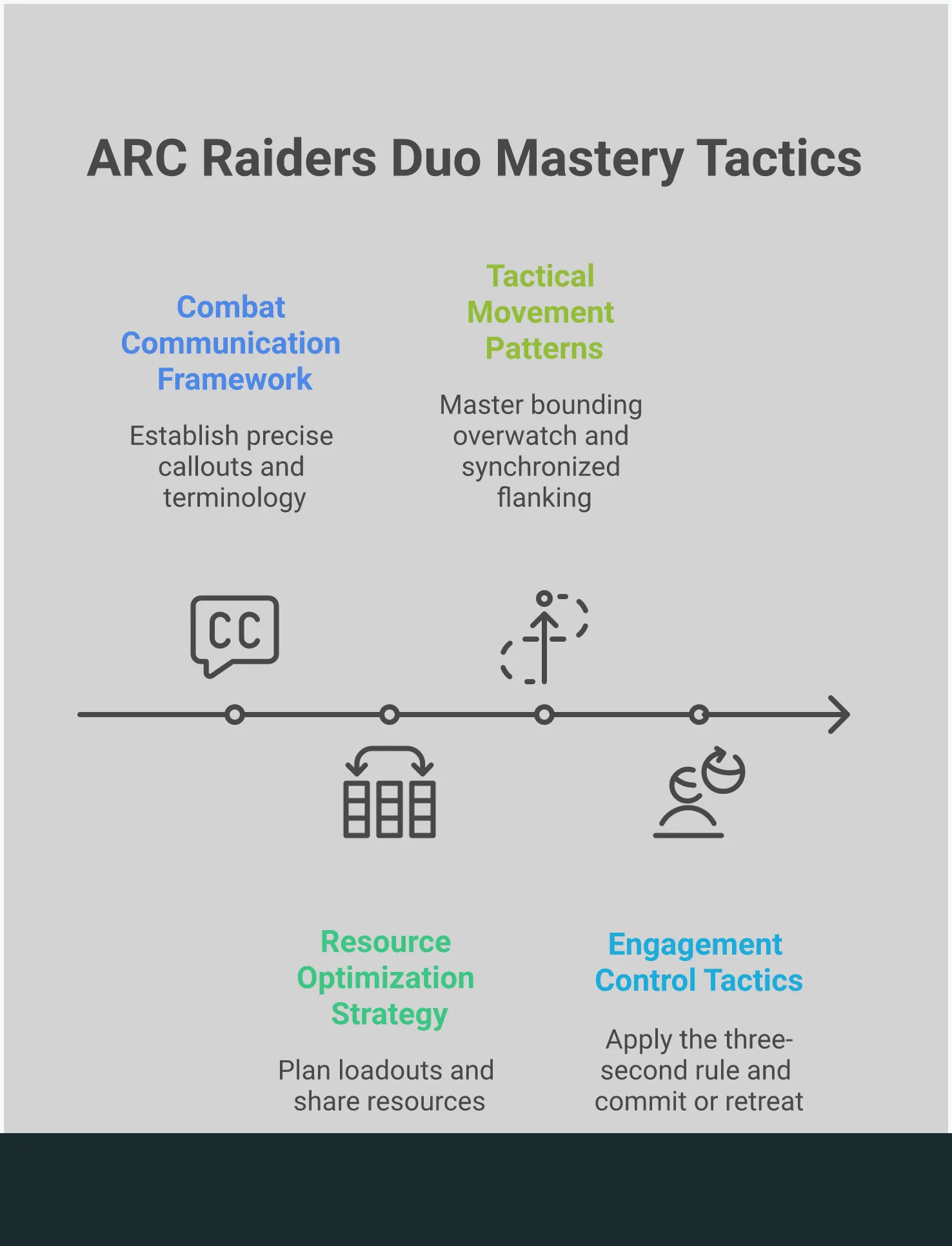
Effective Communication Tactics
Look, if I had to give one piece of advice for playing with a teammate, it’d be this: talk to each other! Seriously, good communication is everything. You and your duo partner need to be on the same wavelength, especially when things get crazy. Forget just shouting “Enemy there!” – that doesn’t help. Instead, try being specific, like, “One enemy, behind the blue container, I’ve pinged it.” That gives them info they can use right away. Before you even jump into the game, quickly agree on a basic plan and easy names for key spots. When you’re actually fighting, keep the chatter short and sweet – just call out enemy locations, your health, and what you’re planning to do. Save the long chats for when things calm down. Every word during a fight should have a purpose!
Sharing Resources and Gear
Focus on sharing resources as a team, not just collecting your own. When playing as a duo, you’re only as strong as the player with the least gear. If one of you has plenty of supplies while the other is struggling, you’re at a disadvantage. Regularly communicate your needs – a simple “I need light ammo” or “Anyone have shields?” can mean the difference between victory and defeat. This also applies to choosing weapons. Pick roles that complement each other and cover weaknesses. For example, if one person uses a close-range weapon, the other should use something better for longer distances. This lets you handle any fight. And if you find a really good weapon that suits your teammate better than you, give it to them – a small compromise for the team can lead to a big win.
Mastering Coordinated Movement
When two players act separately, they become easy targets. But when they move together, they become incredibly difficult to defeat. The key to this is coordination – always knowing your teammate’s location. You should move as a unit, covering different areas and creating overlapping fire. Think of yourselves as connected – stay close to avoid being picked off individually. Practice covering each other: one person moves while the other provides support, then switch. This allows you to safely cross open spaces and keep the pressure on your opponents. Always advance or retreat as a team. This synchronized movement makes you appear stronger and more intimidating, often causing enemies to make mistakes.
Executing Flanks and Defining Roles
Honestly, there’s nothing quite as awesome as pulling off a perfect flank with a teammate! It’s all about teamwork – one of us lays down some covering fire to keep the enemy focused, while the other swings around wide to hit them from the side or behind. It takes serious trust and being able to talk clearly. The person drawing the enemy’s attention has to stay alive long enough for the flanker to get into position. To make it work consistently, we always decide who’s doing what beforehand. Usually, I’m the one going around to flank, while my teammate keeps the pressure on from the front. We always tell each other the plan – like, “I’m going around left, keep them occupied!” Then, when I open fire from the side, they’re caught in a crossfire and it’s game over. It’s so satisfying when it works!
Making Split-Second Decisions Under Fire
When things get intense, like during a battle, there’s no time to overthink. You have to react instantly, trusting your instincts. Everyone plays differently in those high-pressure situations – some will do whatever it takes to win, while others might pause. Studies show that a player’s personal values can actually affect how they act when the pressure is on. Knowing your own tendencies, and being able to anticipate what your teammate will do, is what makes a team truly exceptional. It’s about taking that frantic energy and turning it into quick, effective action that catches the other team off guard.
How to Read Your Opponent
As a big ARC Raiders fan, I’ve learned that everyone has a habit, a ‘tell,’ you can pick up on. It’s like poker – if you really watch how people play, you can start to predict what they’ll do. For example, if someone’s always running and super aggressive, they might be the type to fall for a trap. On the other hand, a player who hangs back and peeks a lot? A well-timed grenade could really throw them off. It’s interesting because it seems like how people act in the game actually reflects who they are! It’s not about magic, it’s about paying attention, noticing those patterns, and using that knowledge to get the upper hand before the fighting even starts. It’s a really cool layer to the gameplay.
Eliminating Hesitation in Key Moments
It’s a common frustration: you see the perfect opening, but hesitate for a moment, and the chance slips away. That split-second delay can cost you the match. This often happens because you’re thinking too much, or even subconsciously don’t want to upset your opponent. While good sportsmanship is important, in a competitive game, you need to act quickly. The trick is to control your reactions and rely on your practice. Work on drills, warm up before playing, and mentally prepare for different situations. The more you practice until actions become automatic, the less likely you are to hesitate when it really matters.
Maintaining Situational Awareness
Making smart decisions depends on having good information. Knowing what’s happening around you – situational awareness – is crucial, and when you’re playing with a partner, it’s something you both need to focus on. That means constantly talking to each other! Share where enemies are, explain your strategy, and let your partner know when you’re vulnerable, like when you’re reloading or recovering health. When you coordinate well, you both understand the battlefield clearly, helping you react quickly and make better choices as a team. When you and your partner are truly connected, you become a single, adaptable force that can handle anything the game throws your way.
Your Playstyle, Your Rules: Defining Your Competitive Identity
Each player has their own strengths when playing, and finding out what yours are is crucial for consistent success. What works well in theory isn’t as important as what works well for you personally. Do you prefer carefully planned strategies, or do you excel when reacting quickly to unpredictable situations? Knowing how you naturally play is the first step to developing a style that feels comfortable and effective. When your actions feel instinctive, you’ll react faster and with more confidence. This isn’t about copying popular strategies; it’s about discovering your own unique approach and using it to win.
Honest vs. Deceptive Plays
As a gamer, I’ve noticed everyone plays a little differently. Some of us like to go straight for the win – a fair fight where skill decides everything. Others prefer to be sneaky, like pretending to attack one way while a teammate comes from behind, or tricking enemies with sounds. Honestly, neither way is better! It just depends on how you like to play. I personally get a kick out of outsmarting people with a clever plan, but my friend loves a direct showdown. It really comes down to what you find most satisfying when you win, and what feels right for you.
Letting Your Values Guide Your Play
How you act in real life often shows up in how you play games. If you’re generally careful and thoughtful, you’ll probably prefer a slower, more strategic approach that focuses on planning and knowing what’s happening around you. If you enjoy taking chances and excitement, you might do better with a fast-paced, aggressive style. Trying to play in a way that doesn’t feel natural can be frustrating and lead to mistakes when things get intense. It’s better to play to your strengths. Use your natural personality and values to shape your strategy, making them a reliable advantage in any game.
Building Your Competitive Identity
You ultimately choose how you want to play and compete. Your style comes from the strategies you like, your personal values, and what you enjoy most about the game. Do you focus on winning at all costs, or do you value a good, challenging match? Are you a team player who helps others, or do you prefer to take the lead? Knowing this helps you make consistent decisions. When you understand your playstyle, you can play with confidence and build a reliable reputation for yourself and your teammate.
The Secrets to a Winning Duo Partnership
In ARC Raiders, finding a good teammate is a huge advantage. Even skilled players need to work well together to succeed. A strong partnership isn’t just about aiming accurately or knowing the map – it’s about trusting each other, communicating smoothly, and always supporting one another. When you have that connection, two players become a powerful team that can overcome any challenge.
Great teamwork doesn’t just happen; it’s built through experience, clear communication, and making good decisions even when things get stressful. You need to understand how your partner operates – knowing when to be aggressive, when to hold back, and how to combine your skills to make up for each other’s weaknesses. It’s similar to creating the ideal weapon setup in Warzone – everything needs to work well together to be truly effective. In the following sections, we’ll explore what makes a winning duo so strong, covering essential communication skills and finding the right balance between taking risks and playing strategically. These are the key differences between good teams and truly dominant ones.
Building Trust with Supportive Comms
As a player who loves teaming up, I can tell you that communication is everything. It’s way more than just saying where enemies are. It’s about constantly sharing useful info. I’ve found that keeping callouts simple and clear – things like “Armor’s cracked!”, “Reloading!”, or “Watching the flank!” – really works. It keeps both of us informed without overwhelming the comms. Over time, it builds serious trust because you start to rely on what your teammate says almost like you’re seeing it yourself. Eventually, you even start anticipating each other! Good communication prevents accidental friendly fire, lets you coordinate attacks perfectly, and makes sure you’re never surprised. It’s what really takes two players and turns them into a single, effective team – it’s the glue that holds everything together.
Facing High-Stakes Moments as a Team
When you’re among the last players in a match and things get chaotic as you try to escape, staying calm is crucial. These are the moments that show how good a team really is. The most important thing is to make decisions together and fully commit to them – both players need to be on the same page. One person running away while the other wants to fight will lead to disaster. Quickly discuss a plan, like using cover and coordinating an attack. Controlling the situation is key; you decide when and where to fight. This kind of teamwork is essential for surviving, turning a confusing scramble into a well-planned strategy. It’s about sharing the responsibility, so neither player feels overwhelmed. As seen in the intense trailer for Vessel of Hatred, overcoming impossible odds truly tests a partnership.
Making the Most of the Defibrillator
The defibrillator isn’t just for emergencies—it’s a key to winning. Reviving your teammate immediately gives you a significant advantage and can turn the tide of a fight. To use it well, constantly let your partner know how much health you have. A quick “I’m low on health” warns them to play cautiously and prepare for a possible revive. But don’t rush in blindly! First, create a safe opening—maybe with a grenade to create distance, or by having your teammate move to cover. Successfully reviving someone while under attack is incredibly rewarding and shows you can rely on each other even in tough situations.
Balancing Aggression and Awareness
Successful partnerships often work because players complement each other, balancing bold and careful approaches. It’s uncommon for both players to be equally aggressive or equally cautious. The trick is to use these differences to your advantage. A more aggressive player can lead the charge, creating opportunities and starting fights, while a more observant player can provide support, watch for flanking enemies, communicate enemy movements, and finish off opponents. This allows for confident, yet controlled, play. Essentially, each player covers the other’s weaknesses. It’s best to decide who will take the lead and who will provide support before the match begins. This balance helps you control the fight and prevents opponents from finding easy openings.
Advanced Combat Tips for Aggressive Players
After you’re comfortable with basic movement and teamwork, it’s time to improve your fighting skills. Being aggressive isn’t just about constantly attacking – it’s about attacking intelligently. Top aggressive teams use everything available to them to disrupt the enemy, control the area, and end fights quickly. This involves creatively using items like grenades and ziplines to surprise opponents and gain an edge. It’s about making impactful, unexpected moves that catch enemies off guard. Adding these advanced tactics to your already aggressive style will make you a duo opponents will fear.
Using Grenades and Special Weapons Effectively
Throwing a grenade without a strategy is just hoping for the best. To really be effective, you and your teammate need to work together. The idea is to use grenades and special weapons to flush enemies out of their safe spots and into your partner’s line of sight. Good communication is key. Always tell your teammate what you’re planning before you throw – for example, saying “I’m using a grenade on the right cover” lets them know to wait and watch for the enemy to move. This turns a simple explosion into a well-coordinated attack, making sure you don’t just hurt the enemy, but actually eliminate them.
Using Ziplines for Strategic Repositioning
During combat, ziplines aren’t just for traveling across the map—they’re key to quickly changing your position. Using a zipline at the right moment can let you outmaneuver opponents or escape danger. If your teammate is holding an enemy’s attention, look for a zipline to quickly move to a better angle. This smart repositioning can quickly break a tie and lead to a win. Ziplines are also great for getting out of a bad fight. Instead of trying to run, a quick zip can give you the space you need to recover and rejoin the fight on your own terms.
Choosing the Right Weapon for the Job
Success in fights often depends on having the right weapons, and that preparation starts before the fighting begins. You and your teammate should choose weapons that work well together, so you’re ready for any situation. For example, if one of you uses a close-range weapon like an SMG or shotgun, the other should have a rifle for longer-distance targets. This teamwork prevents you from being caught off guard, and ensures you have a balanced, powerful attack that can handle anything you face. Consider how your weapon choices support your team’s plan.
Common Mistakes That Cost You the Match
Everyone who plays ARC Raiders has experienced that frustrating moment – you feel prepared, but one small mistake sends you back to the beginning. Winning and losing in this game often comes down to avoiding key errors, not just having great aim. Identifying these common mistakes is the first step to improving your gameplay. Let’s look at the most frequent errors that cost matches, and how you and your teammate can prevent them. Focusing on these areas will help you survive longer and win more often.
Mistiming Your Engagements
Getting into a fight at the wrong time will likely get you eliminated. A common error is starting a fight without checking on your teammate – knowing where they are, what abilities they have ready, and what weapons they’re using. For example, if you’re built for close-range combat and your partner is a sniper, running into a building by yourself is a bad idea. Good teamwork means deciding together when to fight. Before you start shooting, quickly ask yourself: Is my partner prepared? Do we have an edge, like better positioning or cover? Do we need to fight right now, or can we move to a safer spot? A coordinated attack, timed well, is much more effective than rushing in alone.
Getting Caught While Looting
It’s tempting to rush towards valuable loot, but that’s often where players get caught off guard and eliminated. When you’re focused on collecting gear, it’s easy to lose awareness of your surroundings and become vulnerable to attack. Always have a strategy before looting in a dangerous area. Ideally, one player should watch for enemies while the other quickly grabs necessary items. Clearly communicate what you need to avoid wasting time arguing over gear. Having the best equipment isn’t helpful if you don’t live long enough to use it. Learning to loot efficiently – knowing when to quickly grab what you need and move on – is a key skill for survival.
Pushing Too Far Without Backup
It feels great to damage an opponent, and your first thought might be to finish them off quickly. However, rushing in alone is a frequent cause of losing as a team. Remember, the downed player’s teammate knows your location and is likely preparing to attack. Before you push forward, make sure your teammate is right beside you and ready to help if needed. Getting too far ahead separates you, ruins teamwork, and makes you vulnerable. Always fight within close range of your partner for support.
Losing Coordination Under Pressure
Having a strategy is one thing, but executing it during intense moments – when things are chaotic – is much harder. Under pressure, teams often struggle to communicate, and players start making rushed decisions on their own instead of working together. This can lead to mistakes like one player falling back while the other charges forward, or both players exposing themselves to the same danger and getting eliminated. The key to avoiding these errors is clear and concise communication. Even a quick update like “reloading” or “healing” can prevent a deadly mistake. Staying calm and working together consistently is what truly distinguishes skilled duos from exceptional ones.
Master Your Mindset for Consistent Wins
Even with perfect skill and a great plan, you’ll find it hard to win consistently if you don’t have the right mental attitude. The most successful teams in ARC Raiders don’t just shoot better – they think smarter and persevere longer. Building a strong mindset is a skill you can improve with practice, just like aiming. It’s about bouncing back from setbacks, staying calm when things get intense, and learning from losses.
Your mindset is key to how well you play. When things go wrong – like getting attacked unexpectedly or losing a fight you expected to win – a strong mental game prevents you from getting frustrated and making careless errors. It helps you view every match, regardless of the outcome, as a chance to improve. By prioritizing your mental approach, you and your teammate can develop the consistency needed to rank up and perform at your best. It’s not about being perfect; it’s about how you react to setbacks.
Learn from Every Fight
Getting sent back to the lobby isn’t a failure—it’s a chance to learn. Instead of getting discouraged, talk things over with your teammate right away. What could you have done better? Were you out of position, or did you attack at the wrong moment? Could you have communicated more clearly? Players who take the time to think about what happened improve much faster. Don’t just dismiss a loss as luck and jump back in. Instead, review the fight, focus on one thing you could change next time, and put that lesson into practice. Making this a habit will turn defeats into valuable experience.
Adapt Your Strategy Mid-Match
As a fan, I’ve learned that no matter how much you prepare for a match, things always change the second you encounter another squad. You might drop in hoping to play it safe and get geared up, but if you see a perfect chance to jump in and take out someone else already fighting, you have to be ready to switch things up! The really good players aren’t stuck on one idea – they’re amazing at reading how the game is unfolding and changing their plans mid-fight. It takes quick thinking and clear communication with your teammate. Seriously, don’t get so fixated on your initial plan that you miss out on easy wins. Being able to adapt is way more important than stubbornly sticking with a strategy that’s clearly not working.
Control Your Reactions to Setbacks
Losing can be really annoying, and it’s tempting to get mad at your equipment, the game itself, or the other player. But giving in to that anger – what many gamers call “tilting” – almost guarantees you’ll lose again. When you’re upset, you don’t think clearly and start making careless errors. After a frustrating loss, take a moment to breathe and regain your focus. It’s okay to feel frustrated, but try to let it go. Staying calm under pressure is what makes good players truly great. Instead of dwelling on the last match, concentrate on what’s coming next.
Stay Competitive, But Have Fun
Ultimately, ARC Raiders is meant to be enjoyed. While winning is great, it’s important to have fun to avoid getting frustrated. Embrace the funny moments, don’t worry about mistakes, and relish playing with friends. Staying positive can help keep spirits up, even when you’re losing. In fact, studies show that players who balance competition with enjoyment tend to have a better experience and play for longer. So, aim to win, but remember to have fun while you’re at it!
Related Articles
- Deus Ex LFG: Connect with Other Augs in LFG Feature on Z League App
Frequently Asked Questions
It’s great if you and your teammate have different ways of playing! Instead of trying to change each other, figure out who does what best. If one of you is more aggressive, they should lead the charge in fights, creating opportunities. The other player can then focus on support – watching for enemies on the sides, communicating enemy positions, and finishing off opponents from a safe spot. This way, you’ll be both strong offensively and defensively, covering each other’s weaknesses.
To communicate better, focus on giving clear, helpful instructions. Instead of just pointing out an enemy, tell your teammate exactly what’s happening and where, like “One player attacking on the left side of the rock.” Before you start playing, agree on simple names for important places or situations. This creates a quick way to share vital information during intense moments without overwhelming everyone with unnecessary chatter.
Ugh, it’s SO frustrating! We always seem to choke when it really matters, just falling apart at the very end of a match. I’m looking for any tips to fix this. I’ve been told that everyone feels that endgame pressure, but the trick is to keep things simple. Before you do anything, just take a quick half-second to agree with your team on one basic plan – it doesn’t even have to be perfect! Seriously, a coordinated plan that’s a little flawed is way better than everyone doing their own thing. If you both decide to focus on the same enemy or push for the same cover, it stops that panicked feeling and keeps you from getting wiped out.
Should you play boldly or carefully to win more games? Top teams can do both. Winning isn’t about always being aggressive or always playing it safe—it’s about knowing when to change your approach. Being confidently aggressive can surprise opponents and control the game, but it’s equally important to know when to back off, find a better position, and wait for a better chance. The key is to attack when you have the upper hand and play cautiously when things aren’t in your favor.
It’s common to get upset after losing, but how can you avoid letting those losses ruin your game? The key is to learn from each defeat. Don’t rush into another match right away. Instead, take a quick moment – about thirty seconds – to discuss with your teammate what happened. Pinpointing one specific mistake, like a poor positioning choice or miscommunication, turns a frustrating loss into an opportunity for growth. This helps you clear your head and approach the next game with a fresh perspective and a new plan.
Read More
- Gold Rate Forecast
- What is Omoggle? The AI face-rating platform taking over Twitch
- Scientology speedrun trend escalates as viewers map out Hollywood facility
- Japanese Coast Guard rescue a “lone flamingo” that was lost at sea
- Man pulls car with his manhood while on fire to raise awareness for prostate cancer
- Beyond Traditional Risk Metrics: Forecasting Market Volatility with Bayesian Networks
- How To Grow Money Trees In Animal Crossing: New Horizons
- Crimson Desert Guide – How to Pay Fines, Bounties & Debt
- The Boys Confirm Why People Still Look Up to Homelander
- Audible opens first ‘bookless bookstore’ in New York
2026-01-02 18:07