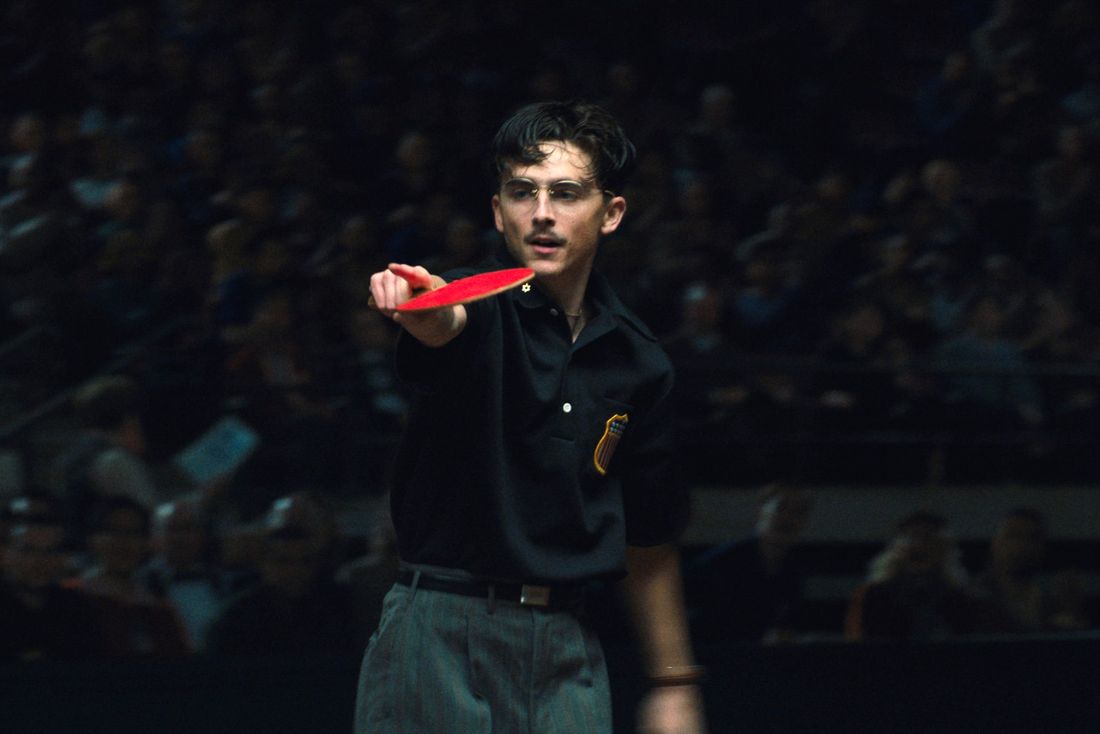
Timothée Chalamet is captivating in Josh Safdie’s Marty Supreme, and it takes a moment to realize he’s playing a flawed character. As Marty Mauser, a talented young table-tennis player in 1952 New York who dreams of becoming a world champion, Chalamet perfectly embodies the bold, fast-talking confidence of someone who knows their deception won’t last forever. We first meet Marty charming a customer at the shoe store where he works, discussing shoe sizes, before he sneaks off with his girlfriend, Rachel (played with energy by Odessa A’Zion). True to Josh Safdie’s style, the opening credits then offer a stark and detailed look at conception, showing sperm racing to fertilize an egg. The focus on the winning sperm suggests a theme: success belongs to those who act quickly, push boundaries, and don’t hesitate.
I have to admit, calling Marty a ‘con artist’ feels off. He’s genuinely incredible at table tennis – so competitive and captivating to watch! He throws himself into every shot, twisting and turning in ways that are just amazing, and you really believe him when he predicts table tennis will become huge. But then there’s this other side to him… that same confidence fuels a frustrating tendency to bend the truth, and he’s a terrible loser, always boasting. It’s hard to figure out if it’s all part of the act, or if he’s genuinely flawed. When Rachel shows up pregnant, he immediately denies it’s his child, and it’s heartbreaking. Is he afraid of responsibility, or is he just thoughtless and unkind? If an older man, especially a slick politician, acted like this, I’d find him completely unbearable. But this is Timothée Chalamet, and somehow, he makes it work. He’s utterly charming, and honestly, this is his best performance yet. He brings this complex, frustrating, and oddly lovable character to life.
Marty Supreme is simply fun to watch as a movie. The director keeps up with the fast-talking main character, showing one chaotic situation after another as Marty tries to earn enough money to get to a competition in Japan. While the film is set in the 1950s, the music is from the 1980s – a smart choice that broadens the film’s style and makes it feel even more energetic. However, you might start to wonder if the director is just leading you along, connecting a series of improbable events and illogical character choices without giving you time to question anyone’s behavior. For example, Marty somehow convinces a retired actress, Kay Stone (Gwyneth Paltrow), to have a secret hotel meeting with him, but it doesn’t really make sense why she would agree – it just happens because the plot needs it to. Paltrow’s performance as Kay, with her consistent look of disapproval, is intriguing and a welcome reminder of her talent, but their connection feels forced and artificial.
Likewise, when Marty volunteers to watch the dog of a tough, low-level criminal (Abel Ferrara), it’s obvious things will go wrong. The way things fall apart is so over-the-top and unbelievable that you might think Marty Supreme would have worked better as a silly, improvised comedy. Is this a flaw? Not necessarily. The sheer entertainment value is a big part of the film’s appeal, and it feels ungrateful to criticize it for rarely portraying realistic human behavior when it’s so quick and enjoyable.
The film Marty Supreme explores fascinating themes – Jewish integration into society, the atmosphere after the war, the meaning of home life, and the powerful desire to be liked and appreciated. (There’s a particularly striking close-up of Paltrow that really stands out.) However, the movie quickly moves past many of these ideas as it follows its energetic story. The film feels somewhat empty, and this may be deliberate – it’s a common trait in stories about con artists, where inner emptiness is what makes them compelling. Or perhaps Marty will eventually achieve his goals, change his ways, and become like Kay’s husband, Milton Rockwell (Kevin O’Leary) – a seemingly dull man whose quiet cruelty hints at a much more interesting past.
The film’s main character, Marty, is based on a real table tennis champion and hustler named Marty Reisman, a well-known figure in the sport. It’s odd, then, that he doesn’t feel fully developed as a person in this quick-paced and intense movie. Despite Timothée Chalamet’s excellent performance, it’s hard to truly connect with Marty – we don’t really cheer for him, sympathize with him, or even dislike him. He often feels like a tool used to move the plot forward, rather than a fully realized character. Still, there’s something compelling about this portrayal. Perhaps the film’s relentless pace and lack of introspection reflect something about Marty’s life and the era he lived in – an era that, ultimately, mirrors our own.
Read More
- Netflix’s Little House On The Prairie Reboot: Release Date, Cast & Everything We Know
- Off Campus Season 1 Soundtrack Guide
- YouTuber arrested after viral AI bodycam videos spark real police complaints
- Silver Rate Forecast
- Prime Video’s New R-Rated Spy Thriller Is Officially No.1 On Streaming Despite Poor Reviews
- Brent Oil Forecast
- Gold Rate Forecast
- Bulgakov’s Take: Koreans Bet the Farm on Chips, Crypto, and Chaos
- EUR ZAR PREDICTION
- Peaky Blinders: The Immortal Man’s Tommy Shelby Is a Better Father Than Michael Corleone
2025-12-22 19:55