A clear sign that streaming has entered a new phase came in April when Netflix stopped sharing its quarterly subscriber numbers. This wasn’t accidental – Netflix was essentially declaring victory in the first round of the streaming wars. While Netflix’s success is undeniable, simply having a large subscriber base and high profits isn’t the only measure of a streaming service’s worth. So, when looking back at streaming this year, we decided to focus on which services truly resonated with viewers. Which ones consistently grabbed attention and earned accolades? Which ones innovated with their content or improved their platforms? In other words, which services were the biggest successes of 2025?
This list comes from my reporting on the entertainment industry this year, combined with insights from three of my colleagues at Vulture: Roxana Hadadi, Nick Quah, and Kathryn VanArendonk. We discussed what worked and what didn’t with these platforms over the last year, considering both our expert opinions and what we’ve seen from people outside the industry—including whether they’re even paying attention. After a lot of discussion, we reached a consensus and created a list that accurately reflects the state of the industry this year.
We rank streaming services based on current buzz and excitement, not just things like size or how quickly they’re gaining subscribers. We believe major changes are coming to the streaming landscape within the next couple of years – almost like a second wave of competition is about to begin. Companies like Netflix and Paramount are likely to see ownership changes, and HBO Max could be completely different, or even disappear. YouTube might decide to invest in original shows again, and Comcast’s attempt to buy Warner Bros. Discovery shows they know Peacock needs to grow significantly to survive. Once things stabilize, the ranking of these services will probably look very different from how it does now.
the rankings
5. Apple TV
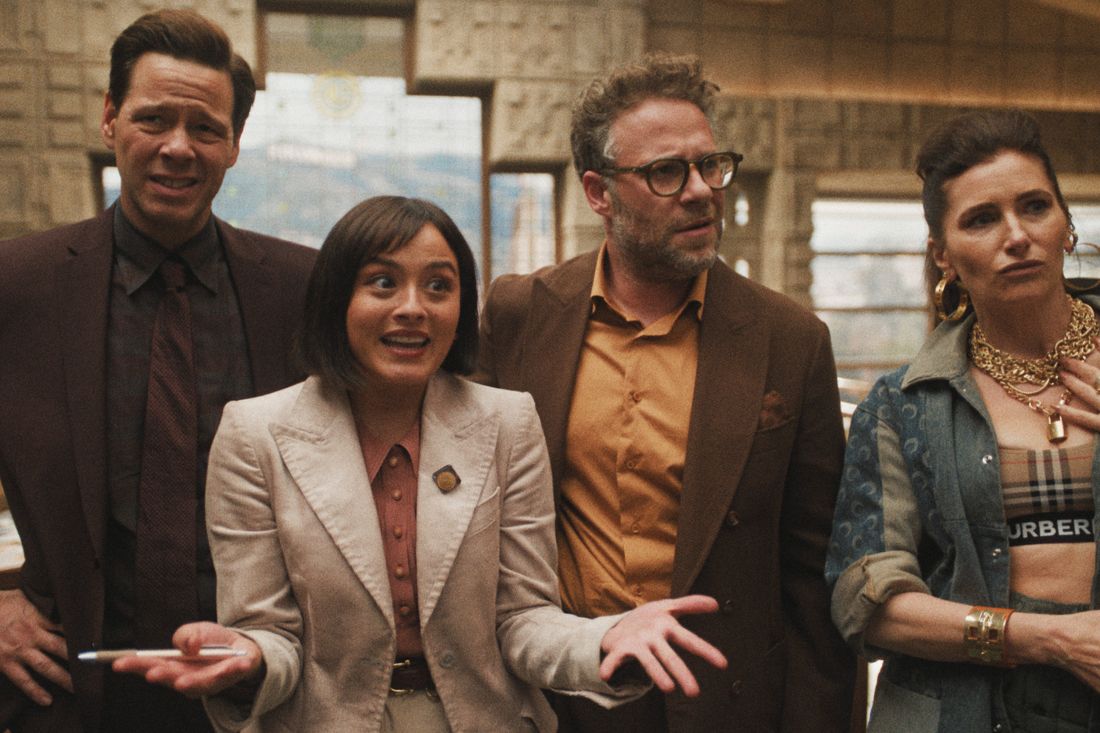
It was a significant year for Apple TV+. The new comedy The Studio and the long-awaited second season of Severance led to the platform’s best-ever performance at the Emmys, with The Studio winning more awards for a single comedy season than any show in history. Apple also started releasing shows more frequently, even surpassing ABC in the amount of scripted programming at one point this fall. The platform had a major theatrical hit with the Brad Pitt drama F1, giving it a longer run in cinemas than Netflix currently offers its creators. However, despite these successes, Apple TV+ still struggles with a perception that it doesn’t offer the same breadth of content as a complete streaming service—it’s aiming to be the next HBO, but isn’t consistently delivering at that level.
Kathryn VanArendonk says she really enjoys Pluribus, and it’s the first show in a long time that’s made her genuinely look forward to watching Apple’s preview content.
Roxana Hadadi believes Apple TV+ isn’t attracting new viewers in the same way services like Peacock are, through things like sports deals or popular reality shows. She feels Apple TV+ is simply repeating a successful formula without making any truly significant changes.
Nick Quah believes Apple doesn’t get a full passing grade, even though it deliberately focuses on a very specific area. He argues that if you’re going to concentrate on just one thing, you need to excel at it, and he doesn’t think Apple has done that this year. He sees their successes as minor achievements.
Apple has earned industry recognition with shows like Pluribus and Severance. However, I don’t think they’ve created the same cultural impact or ‘water cooler’ moments that many other streaming services have achieved.
Lately, it feels like Apple TV+ shows are released with a significant delay – what we’re watching now often feels like it was made two or three years ago. While it’s good they’re producing content and taking the time to polish it, I’m craving TV that feels more current and connected to what’s happening in the world. Everything on Apple TV+ seems noticeably behind the times.
As a critic, I have to be honest: Apple TV+ really feels… homogenous. Every time I open the app, I can’t help but wonder who they’re really making content for. It’s just my observation, but it feels like the programming is geared towards a very specific demographic, and frankly, it’s something I notice pretty consistently.
the leftovers
Where Are Paramount+ and Prime Video?
Both Paramount+ and Prime Video had some successful shows – Paramount+ with content from Taylor Sheridan, and Prime Video with The Summer I Turned Pretty – but overall, neither service made a big impression. Both felt like they were going through changes. At Paramount+, there was a change in leadership due to the Skydance acquisition, and a new content chief, Cindy Holland (formerly of Netflix), joined too late in the year to make a difference. Amazon Studios also saw its head, Jen Salke, leave after seven years, followed by her second-in-command six months later. While these leadership issues weren’t the main reason these streaming services struggled, they contributed to a feeling that 2024 wasn’t a strong year for either one.
4. Peacock

Despite being a smaller streaming service – partly because it’s not available worldwide – Peacock has consistently performed well, especially in its fifth year. It excels with unscripted shows like those from Bravo and the popular The Traitors and Love Island USA, which saw a significant increase in viewers and attention in 2025. Peacock also benefits from its parent company, Comcast, investing heavily in sports rights, making it a must-have for sports fans with access to NFL, NBA, and Premier League soccer. However, Peacock continues to face challenges finding long-lasting, successful scripted series. Poker Face received critical acclaim but was canceled after two seasons, joining other shows that showed promise but didn’t take off. While Sarah Snook’s thriller All Her Fault generated buzz and strong ratings, it’s currently being presented as a limited series.
This summer, everyone was talking about Love Island USA – it was impossible to avoid! Beyond that, Peacock has some strong content, especially within the Bravo lineup. While not massive in size, Bravo shows have a significant cultural impact, arguably even more so than anything Apple TV+ offers.
Look, when we’re talking about what people actually watch, we can’t ignore reality TV. It’s huge! And honestly, let’s not pretend Sunday Night Football isn’t a massive draw either. Both deserve to be part of the conversation about popular entertainment.
For me, Peacock’s success comes down to shows like Sunday Night Football and their growing lineup of reality series. The Traitors was a massive hit – it really came out of nowhere and quickly became a dominant force, winning Emmys and inspiring other shows like House of Villains. They also seem to have finally found a strong scripted series with All Her Fault. While they say people are watching Twisted Metal, I’m skeptical. All Her Fault felt like the show that really resonated with audiences. Overall, it was a surprisingly successful year for Peacock, with content that appealed to a wide range of viewers.
3. HBO Max

This year, Warner Bros. Discovery acknowledged they made a mistake by dropping “HBO” from the name of their streaming service. Ironically, it was a show called The Pitt – originally on the “Max” side of the platform – that became the defining moment for the service in 2025. The Pitt, a medical drama, was created to see if the successful formula of traditional network TV shows (releasing episodes weekly, having many episodes overall, and telling easy-to-follow stories) could work for streaming. It proved that it could, becoming a huge hit with viewers and even winning an Emmy for best drama. This success came alongside a strong year for the original HBO side of the platform, featuring popular, unique shows (The Rehearsal, The Chair Company), critically acclaimed dramas (The White Lotus, The Gilded Age, Task), and successful franchise installments (The Last of Us, Welcome to Derry). Now, with Netflix and Paramount competing with Warner Bros. Discovery, the big question is how long the current version of HBO Max will last.
HBO Max was a major focus for me this year. It really shaped the conversation around television, with standout shows like The Pitt, White Lotus, The Rehearsal, and The Chair Company. The platform consistently features innovative and unconventional content, and it still feels like the most exciting place to discover new shows.
I’m not overly impressed by the continued success of The White Lotus – it’s been around for a while now. But The Pitt really stands out. And the whole situation with HBO changing its name and then changing it back was actually pretty amusing. The amount of attention they got just for acknowledging the importance of the HBO brand was funny. It really shows how powerful the HBO name is – people immediately reacted, thinking, ‘Of course you should keep that in your name!’ It was obvious.
the leftovers
What About YouTube?
As I mentioned earlier this summer, YouTube TV has significantly increased viewership on televisions, moving beyond just mobile devices. Now, YouTube leads in total viewing time among all streaming services in the US. However, as VanArendok pointed out, YouTube isn’t primarily known for its original shows. It also differs from typical subscription services because most of its content is available for free. Quah compared it to a utility company like Con Edison, highlighting its consistent presence. The boundaries between these types of services are becoming increasingly unclear, as demonstrated by the Oscars’ decision to move to YouTube in 2029. It’s likely our perspective on this will change again within the next year.
2. Netflix

While Netflix dominates in terms of subscribers, revenue, and content variety, our ranking focuses on which streamer generated the most buzz and improved the most over the last year. Netflix nearly topped our list, proving its massive reach remains a key strength. No other platform can spark cultural conversations as quickly. Shows like Hunting Wives, Adolescence, and KPop Demon Hunters went from obscurity to widespread popularity in just weeks, thanks to Netflix’s scale. They also started producing more shows designed for yearly returns, similar to traditional network TV, such as The Diplomat and Nobody Wants This. However, Netflix’s size can also be a weakness – good shows can easily get lost, and the sheer volume of content sometimes includes a lot of average programming. As Netflix plans further changes to its business model, potentially mirroring Warner Bros., it’s clear 2025 will likely be another successful year for the platform.
This year, Netflix really stood out to me as the most talked-about streaming service. While Max had some interesting and noteworthy shows, Netflix’s success with series like KPop, Adolescence, and Hunting Wives was massive. I found myself using the Netflix preview app much more often this year than I did last year.
Originally, Hunting Wives was planned as a weekly release on Starz, but I believe it would have quickly been forgotten that way. Instead, releasing it all at once on Netflix made it a massive hit for months. Similarly, Sony sold KPop Demon Hunters to Netflix because they didn’t think it would be successful, but it turned out to be very popular thanks to Netflix’s release strategy.
I often evaluate Netflix similarly to how I look at Apple. Because it’s the leading streaming service, I naturally give it some leeway. Even with that in mind, Netflix had an amazing year. What’s fascinating is that many of their biggest successes seem to happen almost by chance. For example, KPop Demon Hunters became a huge hit unexpectedly, and now it’s playing in theaters. Hunting Wives feels like a typical Netflix show, but its popularity was surprising. And who would have predicted the success of Adolescence? That level of impact is a little unsettling.
1. Disney+/Hulu

Disney began integrating Hulu (and FX) content into Disney+ two years ago, but 2025 revealed the true benefits of combining these services. Disney’s streaming platforms now cover a wide range of TV genres, offering everything from reality hits like Secret Lives of Mormon Wives and Dancing With the Stars, to popular dramas and comedies such as Paradise and King of the Hill, Ryan Murphy’s signature style (All’s Fair, the 9-1-1 series), and critically acclaimed shows like Andor and Adults. Bringing Hulu and Disney+ together also boosted ABC’s viewership. Dancing With the Stars achieved record numbers due to its wider availability, and shows like High Potential and Paradise reached larger audiences thanks to Disney’s strategy of distributing content across multiple platforms.
Disney’s streaming success this year wasn’t just due to original shows on Hulu, FX, and Disney+. Popular movies released in theaters, like Lilo & Stitch and Moana 2, also drove a lot of viewers to the service – many kids especially enjoyed watching those films repeatedly! This summer, Disney also introduced a new ESPN app available on its own or as an addition to Disney+. Though the $20-$30 monthly cost limits its appeal to some, it’s another important tool in Disney’s effort to make Disney+ a major streaming competitor like Netflix.
Disney and Hulu working together had a huge impact. Combining the platforms allowed shows like All’s Fair to become incredibly popular, and Dancing With the Stars benefited from the increased reach and a strong social media presence. Andor, while not a big Emmy winner, received many nominations and critical acclaim, and it was a unique show – both in its subject matter and production cost – that no other streaming service has attempted. Ultimately, the combination of Disney and Hulu proved their strength in the streaming landscape.
I wasn’t a huge fan of the specific shows that were popular this year. However, the current mix of big, impactful programming is definitely generating a lot of buzz and capturing attention across various platforms. Reality shows like Dancing With the Stars, Paradise, and shows on FX – plus viral moments like Chad Powers and All’s Fair – all managed to get people talking.
I’m not quite as enthusiastic about Disney+ as some others, mainly because I don’t have children and I didn’t get into the show All’s Fair. While FX didn’t have a great year, Hulu hooked me with the revival of King of the Hill and, surprisingly, Chad Powers. When people started talking about canceling Disney+ over the Jimmy Kimmel controversy, I actually calculated what I’d be losing access to – and the fact that Andor is exclusive to that service made me reconsider. Overall, Disney+ seems like the most well-rounded streaming service available right now.
Read More
- Netflix’s Little House On The Prairie Reboot: Release Date, Cast & Everything We Know
- Off Campus Season 1 Soundtrack Guide
- YouTuber arrested after viral AI bodycam videos spark real police complaints
- Silver Rate Forecast
- Prime Video’s New R-Rated Spy Thriller Is Officially No.1 On Streaming Despite Poor Reviews
- Brent Oil Forecast
- Gold Rate Forecast
- Bulgakov’s Take: Koreans Bet the Farm on Chips, Crypto, and Chaos
- Peaky Blinders: The Immortal Man’s Tommy Shelby Is a Better Father Than Michael Corleone
- EUR ZAR PREDICTION
2025-12-22 17:57