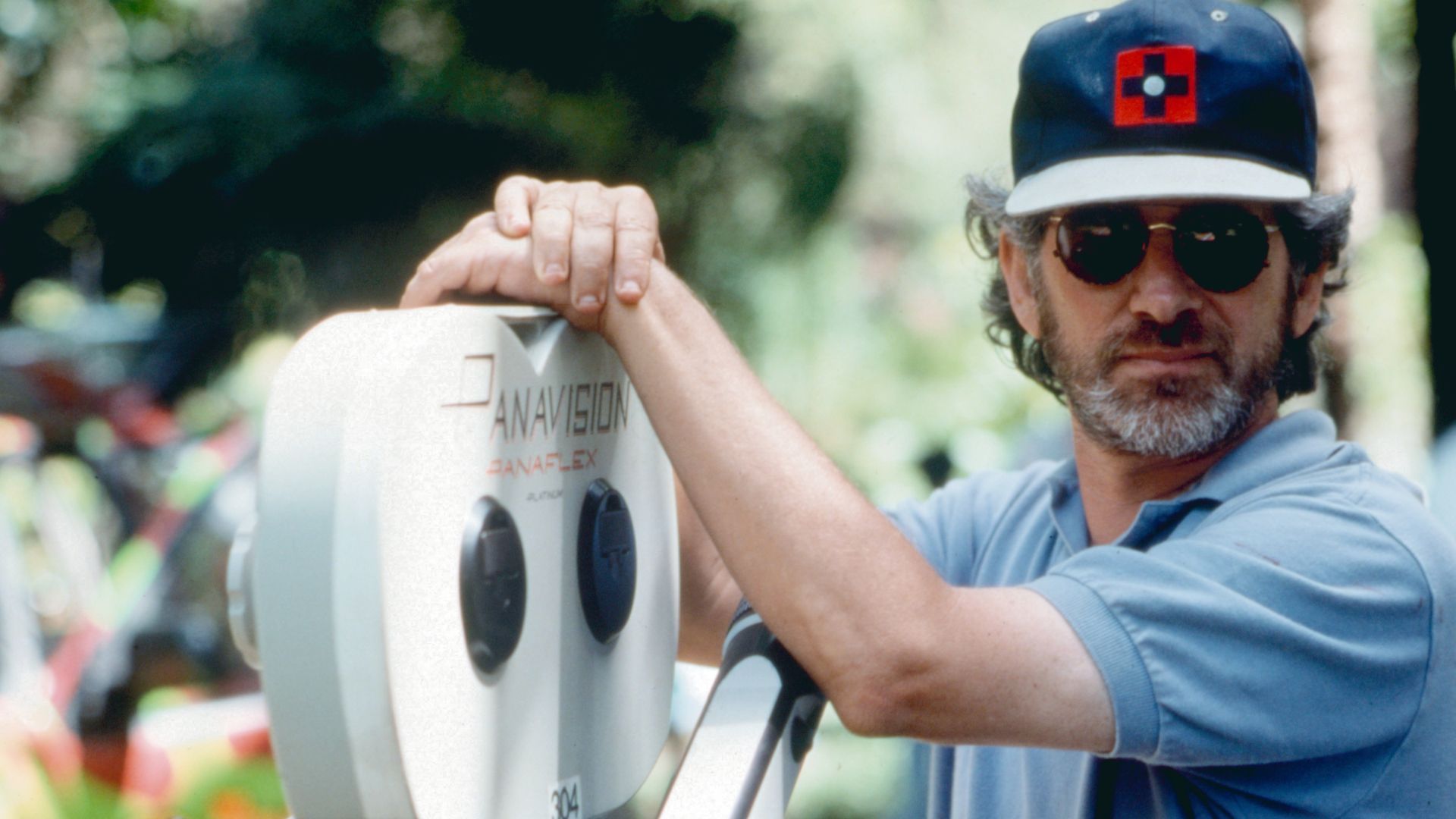
Steven Spielberg is directing a new science fiction movie, Disclosure Day, set to release in 2026. While he’s explored aliens before – most recently in 2008 – this film feels different. It’s less focused on action and more in the style of his thought-provoking sci-fi like Minority Report.
The initial trailer for Disclosure Day hints that aliens are already living on Earth, having secretly been among us for years. This film will be Steven Spielberg’s tenth science fiction project, building on a career that includes stories about welcoming aliens, hostile invasions, prehistoric clones, and futuristic AI. Despite the diverse themes, all of his sci-fi films share a distinctively Spielbergian touch.
Indiana Jones And The Kingdom Of The Crystal Skull (2008)

Some fans and critics felt the Indiana Jones movies went downhill when they introduced aliens in 2008. But considering the series already featured biblical artifacts, supernatural powers, and ancient mysteries, aliens weren’t really that out of place.
The premise of aliens in this film felt similar to stories about ancient knights or biblical relics fighting Nazis – a fantastical element meant to suggest aliens have been present on Earth for a very long time. This was a concept Spielberg had also explored in Disclosure Day. Despite this, audiences weren’t convinced by the storyline.
While Indiana Jones and the Kingdom of the Crystal Skull wasn’t terrible, it didn’t live up to expectations. Some issues included less impressive special effects, too much silly humor, and audiences not fully accepting Shia LaBeouf in his supporting role. It simply didn’t measure up to the previous films in the series.
The Lost World: Jurassic Park (1997)
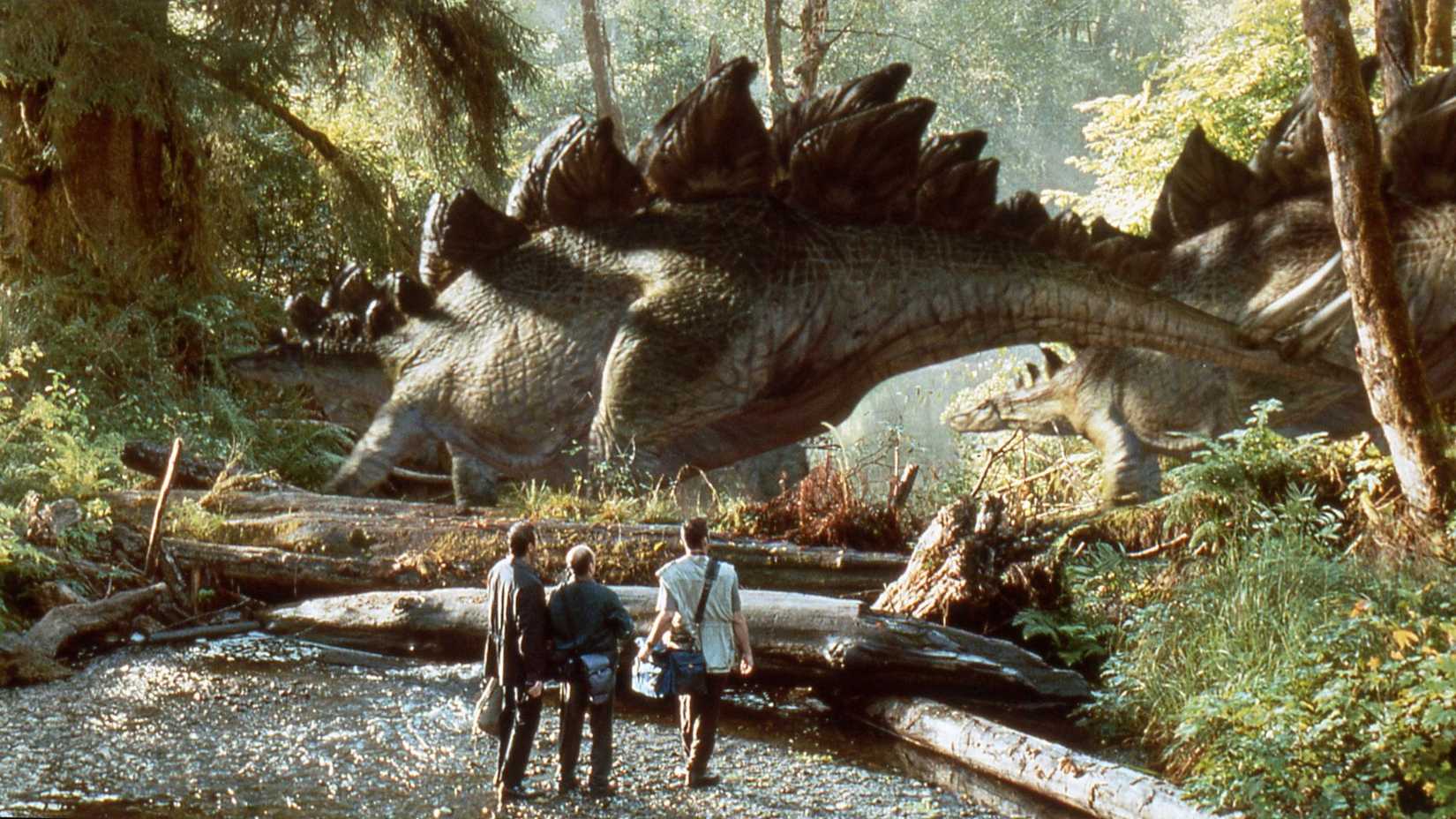
The Lost World: Jurassic Park didn’t achieve the same level of success as the original Jurassic Park. The first film was a revolutionary sci-fi hit that dramatically advanced computer-generated imagery in movies, and its dinosaurs still look remarkably good compared to many modern effects.
It was disappointing to see only Jeff Goldblum return from the original cast, even though he’s a fan favorite from the Jurassic Park films. Ultimately, the new movie felt like a rehash of the first one, with the main addition being more characters focused on using firearms.
Like King Kong before it, The Lost World featured a monster brought to the mainland, resulting in one of the most exciting action sequences in the second film. While the movie was still financially successful, critics weren’t impressed, and it marked the last time Steven Spielberg directed a film in the series.
A.I. Artificial Intelligence (2001)

The movie A.I. Artificial Intelligence has a unique backstory. Stanley Kubrick originally intended to direct it and developed the project before he passed away. After his death, Steven Spielberg took over, determined to complete the film as Kubrick envisioned. The result is an unusual mix of Kubrick’s typically somber science fiction style and Spielberg’s generally hopeful approach to filmmaking.
Haley Joel Osment plays David, a remarkably lifelike robotic boy designed to be a friend. Though programmed to feel love, a built-in self-defense system causes concern. When this system activates, he’s seen as a threat, and his owner sadly sets him free in the woods, instructing him to stay safe.
The movie shares similarities with the classic tale of Pinocchio, but with a futuristic setting. A ‘blue fairy’ appears when the main character, David, attempts suicide. While A.I. was well-received by critics and did well in theaters, many viewers feel it lacks a unified vision, as if it were directed by two different people.
Ready Player One (2018)

Released in 2018, Ready Player One was a huge hit with audiences, even though many critics weren’t as impressed. Still, the film felt distinctly like a classic Steven Spielberg production, filled with nostalgic references to the 1980s – a fitting choice given his well-known work from that decade.
Many viewers felt that Ready Player One depended too much on references to the 1980s, even though that was a key part of what made the original book so appealing. Overall, it was a very fun movie, particularly for those who experienced the 80s firsthand or younger audiences who now enjoy its pop culture.
While not one of Steven Spielberg’s most profound sci-fi films, this movie’s lightheartedness is a big part of what makes it enjoyable. It demonstrates Spielberg’s continued ability to create fun, crowd-pleasing blockbusters, even when the goal is simply entertainment.
War Of The Worlds (2005)
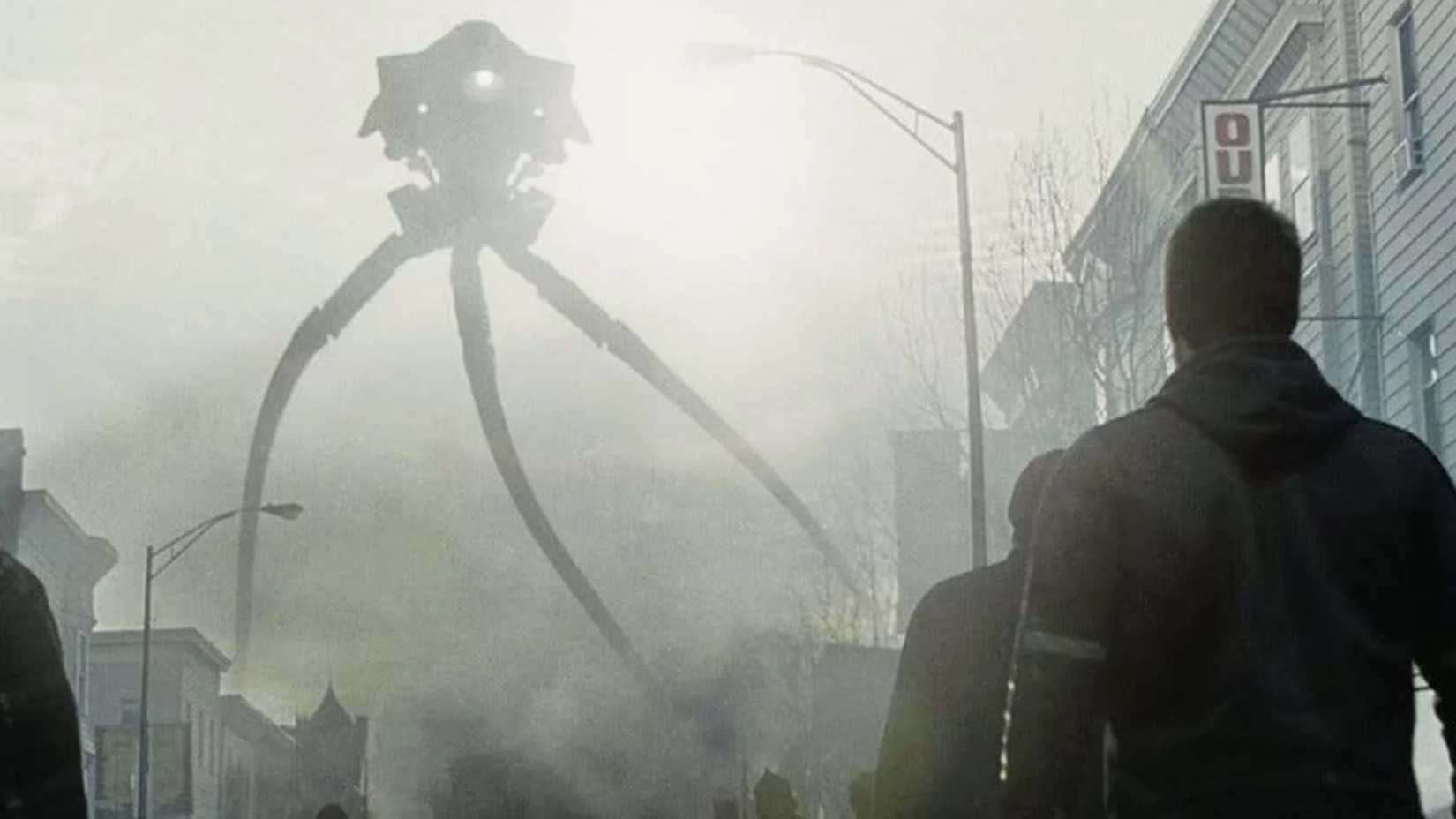
Steven Spielberg revisited the iconic science fiction tale The War of the Worlds in 2005, a story with a rich history. Originally written by H.G. Wells in 1898, it has been adapted for film eight times. But it was the 1938 radio broadcast, narrated by Orson Welles, that truly captured the public’s imagination.
While the 1953 film directed by George Pal is considered a classic, Steven Spielberg’s version of the alien invasion story is the most exciting to watch. It centers on a father, played by Tom Cruise, desperately trying to keep his daughter, Dakota Fanning, safe and reunite with his son, Justin Chatwin, as aliens attack Earth.
Steven Spielberg’s War of the Worlds was a huge financial hit, earning over $600 million worldwide despite costing only $132 million to make. While it received three Academy Award nominations recognizing its special effects and technical aspects, critics didn’t praise it as highly as some of Spielberg’s other science fiction films.
Minority Report (2002)
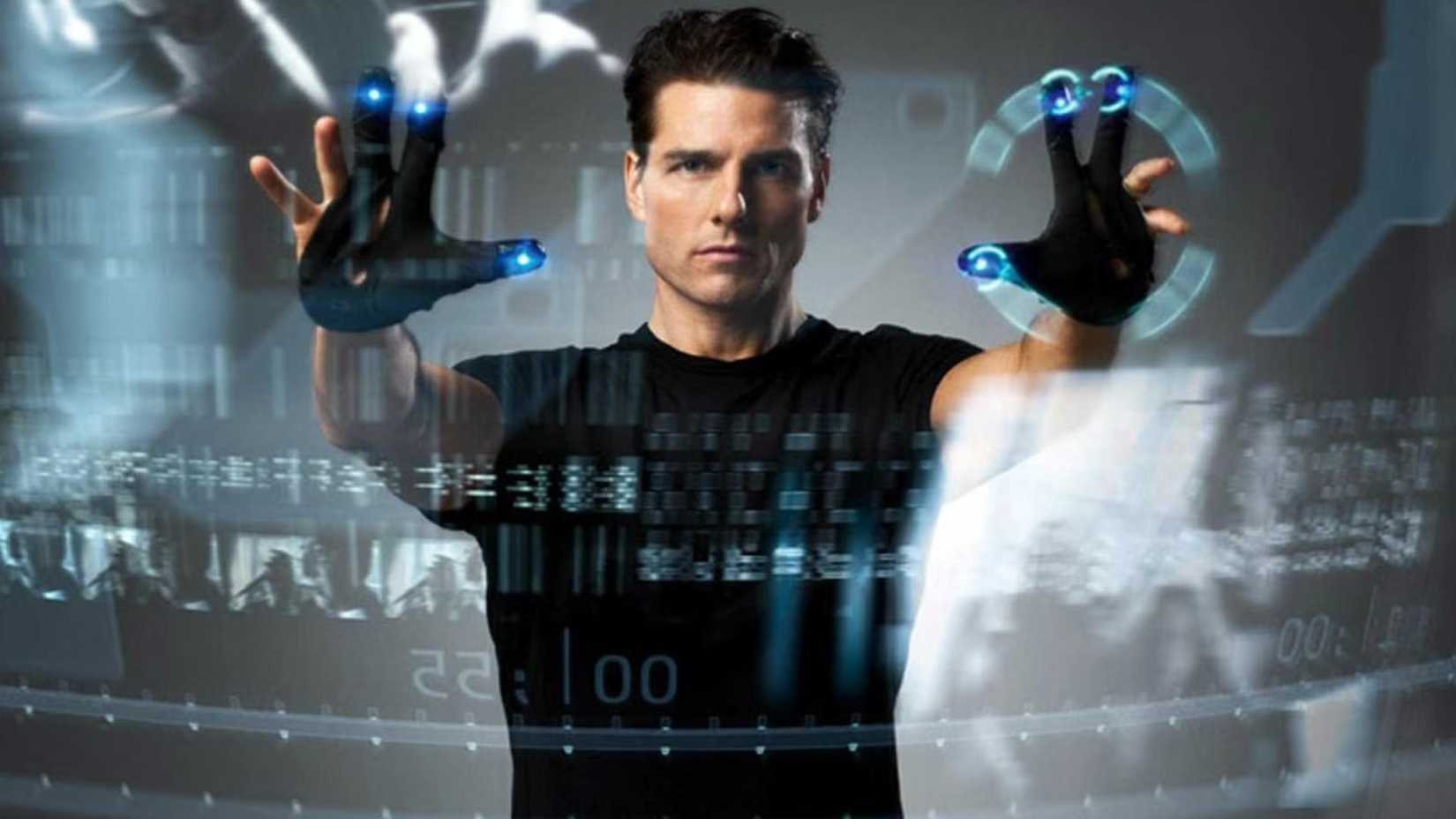
Interestingly, Minority Report is the only film directed by Steven Spielberg to be included in a recent list of the top 100 best movies of the 21st century, as chosen by people working in the film industry. It was also one of just two science fiction movies that Spielberg and Tom Cruise made together during the 2000s.
The movie Minority Report is based on a story by Philip K. Dick. It’s set in the future, where a system exists to predict and stop crimes before they happen. This system uses the visions of three psychics, called ‘pre-cogs,’ to identify potential criminals, who are then arrested. The story follows a police officer who is predicted to commit a crime and must flee to prove his innocence.
Okay, so everyone was calling this film one of the best of the 2000s, which is high praise! But honestly, it’s kind of weird that it only got one Oscar nod – for Sound Editing, of all things. It did kill it at the Saturn Awards, though, taking home four wins out of eleven nominations. Those awards are more focused on sci-fi, fantasy, and horror, so it makes a lot more sense that it was recognized there.
Jurassic Park (1993)

In 1993, Steven Spielberg showcased his incredible range as a director with two very different films. He released the powerful war drama, Schindler’s List, which tells the story of a man saving Jewish people during the Holocaust, and the thrilling science fiction adventure, Jurassic Park, about a theme park populated by cloned dinosaurs.
Although Schindler’s List received widespread critical acclaim – and rightfully so – Jurassic Park dominated the box office. Three decades later, both films are still considered masterpieces, pioneering achievements in filmmaking, and are widely loved by moviegoers. Jurassic Park notably broke new ground by being the first film to extensively use CGI to bring its creatures to life.
Ebaster Report
Ebaster Report
By subscribing, you agree to receive newsletter and marketing emails, and accept Valnet’s Terms of Use and Privacy Policy. You can unsubscribe anytime.
Jurassic Park demonstrated the incredible potential of computer-generated effects in movies and revolutionized how science fiction and fantasy films were made. Beyond its groundbreaking visuals, the film boasted a compelling story, thrilling action sequences, and earned three Academy Awards. In 2018, it was recognized for its cultural significance and preserved in the National Film Registry.
Close Encounters Of The Third Kind (1977)

Released in 1977, Close Encounters of the Third Kind marked Steven Spielberg’s first venture into science fiction. Unlike typical alien movies focused on invasion or danger, this film tells a more intimate story about one man’s longing to explore the unknown.
Richard Dreyfuss plays Roy Neary, a man consumed by the possibility of alien life, driving him to the point where he risks abandoning his family in pursuit of answers. This film, like many by Spielberg, explores the pain of fractured families, and it’s considered one of his best science fiction movies.
The movie builds to a powerful reveal: aliens are real, and the story focuses on making contact with them, making it a thought-provoking science fiction film. It was a huge success, receiving nine Academy Award nominations, including one for Best Director for Steven Spielberg. In 2007, Close Encounters of the Third Kind was recognized for its cultural significance and added to the National Film Registry.
E.T. The Extra-Terrestrial (1982)

Many consider Steven Spielberg’s E.T. the Extra-Terrestrial to be his finest alien film and a classic of the science fiction genre. The movie centers around a group of aliens visiting Earth to gather samples. When government officials try to capture them, most escape, but one gets left behind. This alien befriends a young boy and desperately wants to find a way back to its home planet.
Steven Spielberg’s E.T. is a unique alien film because it brilliantly combines two of his greatest strengths. The movie beautifully portrays the importance of family, with wonderfully natural performances from the child actors. It’s also intelligent science fiction – the aliens are friendly, and while the government poses a threat, they aren’t portrayed as purely villainous.
Released in 1982, E.T. the Extra-Terrestrial was a massive box office success, earning over $306 million—the equivalent of more than $2 billion today. It’s also considered one of director Steven Spielberg’s most acclaimed films. Many consider it the most beloved science fiction movie of all time, telling the story of a lonely alien simply trying to find his way home.
Read More
- Netflix’s Little House On The Prairie Reboot: Release Date, Cast & Everything We Know
- Off Campus Season 1 Soundtrack Guide
- YouTuber arrested after viral AI bodycam videos spark real police complaints
- Silver Rate Forecast
- Prime Video’s New R-Rated Spy Thriller Is Officially No.1 On Streaming Despite Poor Reviews
- Brent Oil Forecast
- Bulgakov’s Take: Koreans Bet the Farm on Chips, Crypto, and Chaos
- EUR ZAR PREDICTION
- Peaky Blinders: The Immortal Man’s Tommy Shelby Is a Better Father Than Michael Corleone
- Gold Rate Forecast
2025-12-21 21:12