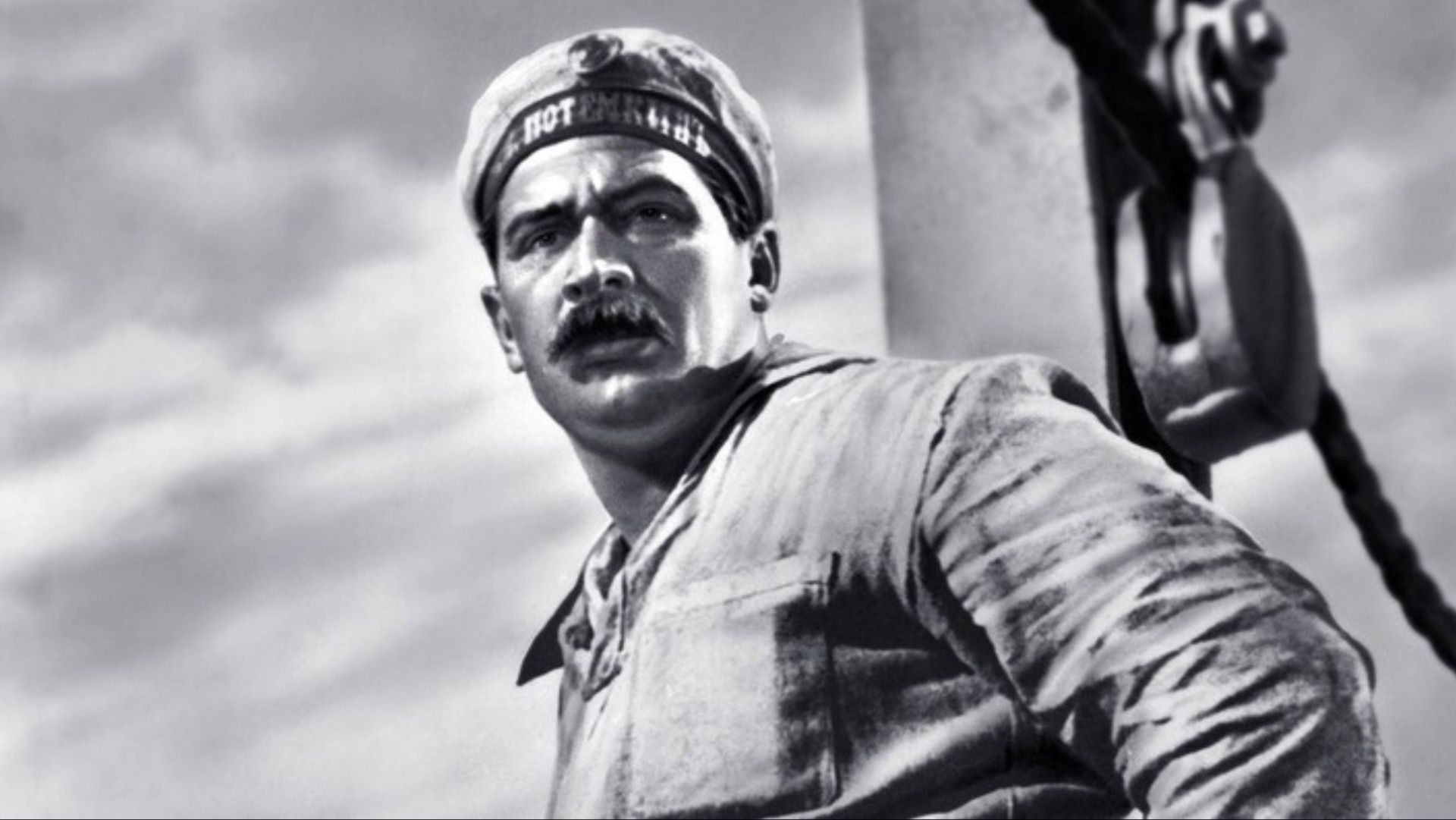
Opinions on Battleship Potemkin vary widely – some consider it a masterpiece, while others see it as a forgotten film. A century after its release, the style of silent, black-and-white filmmaking can seem quite outdated, much like the political beliefs of the time. However, judging the film solely on those grounds misses the point that art is a product of its time. When viewed that way, Battleship Potemkin isn’t just important – it’s a cornerstone of cinema.
Sergei Eisenstein’s 1925 film commemorates the twentieth anniversary of the Russian Revolution and was itself a groundbreaking work. It transformed filmmaking with its innovative use of montage – a technique that powerfully communicates ideas and feelings, rather than simply showing events. The film’s strong political message was so impactful that several governments banned or censored it, worried it would encourage rebellion.
A century later, it’s easy to forget how revolutionary early films were. Watching Battleship Potemkin is a powerful reminder of cinema’s former boldness and how seldom films directly address oppression and people uniting to fight against it.
Battleship Potemkin Tells A Singular Event In One of the Darkest Moments of Russian History
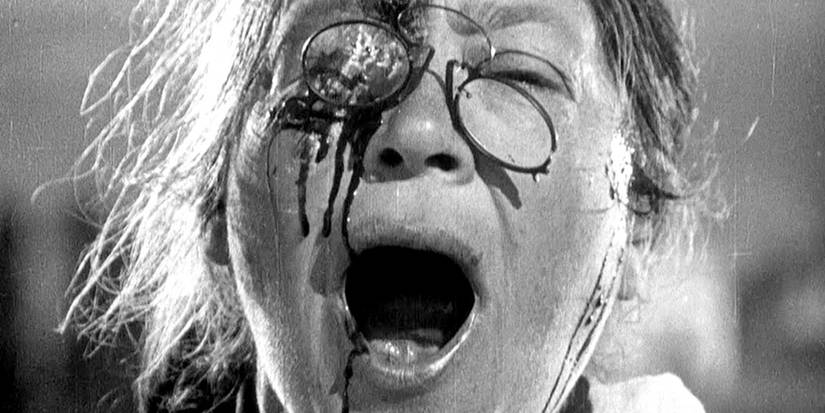
I’ve always been captivated by Battleship Potemkin. Even though it feels a bit different from modern epics, it powerfully tells the story of a 1905 mutiny on a Russian battleship. The film unfolds in five parts over about 75 minutes, and it really draws you in. The action takes place near Odessa, but the seeds of the rebellion were actually sown in St. Petersburg, where people were already fed up with the Tsar, Nicholas II. What’s so compelling is how the ordinary sailors on this huge ship – nearly 13,000 tons! – decided they couldn’t just stand by and watch things happen. You don’t need to be a history buff to understand why they felt that way; the film explains it all very quickly and effectively.
The crew felt used and abused by their officers, and were on the verge of mutiny – a single complaint about the awful food, or a brave sailor speaking out, could have been the final straw, and eventually it was. A sailor’s comment that Russian prisoners in Japan were eating better than they were highlighted the lingering bitterness over Russia’s recent defeat in the Russo-Japanese War.
The rebellion quickly gained widespread support when word reached Odessa, though it predictably upset those in command. In a now-famous scene, a Cossack unit violently suppressed the rioters in the streets while a naval squadron set sail to regain control of the battleship Potemkin.
Sergey Eisenstein’s Montage Editing in Battleship Potemkin Provokes Propaganda
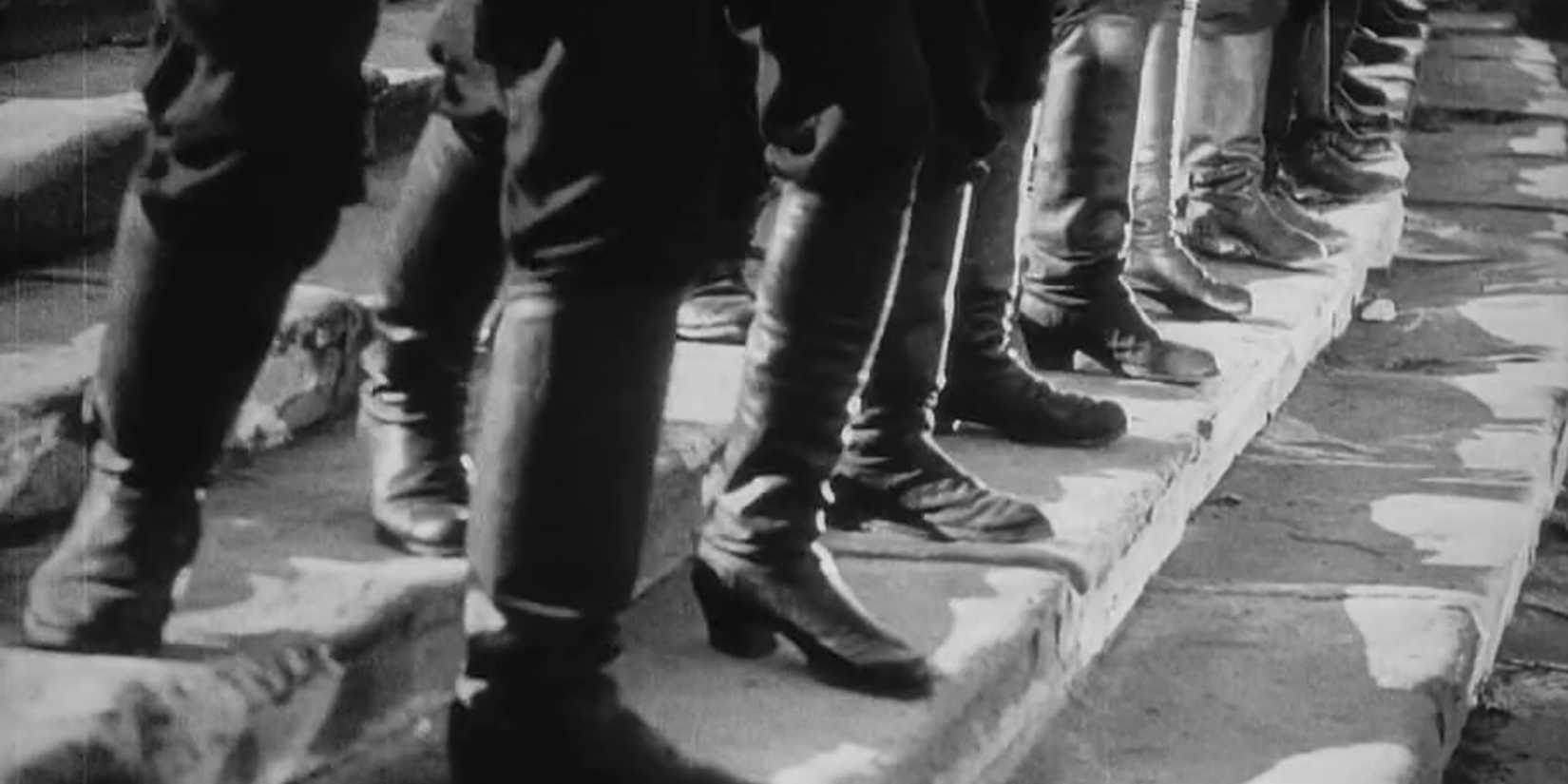
Watching Battleship Potemkin immediately reveals its distinct Soviet-era style, particularly through Eisenstein’s innovative montage editing. He uses quick cuts between different scenes and emotions to influence how the audience feels, clearly pushing them to sympathize with one side. For example, disgusting images of rotten meat are shown right after the faces of those who are supposed to eat it. Scenes of sailors preparing for battle are mixed with shots of panicked officers as the rebellion builds. Peaceful ocean views quickly change to rough seas, alternating with images of sleeping and restless sailors, all of which creates tension while the crew waits for news of the Tsar’s fleet.
As a film lover, I’m always blown away by Eisenstein’s work, and it’s not even about the ship itself in Battleship Potemkin – it’s what happens around it, especially the Odessa Steps sequence. It’s incredible how he builds tension. Most people don’t realize this scene didn’t actually happen, but the way he cuts between those wide shots of people running and those horrifying close-ups – terrified faces, bodies falling, and those soldiers’ boots… that image of a boot crushing a dead child’s hand is just devastating. It all creates this relentless, urgent rhythm of pure terror. It’s a masterpiece of editing, honestly.
This film isn’t just a random collection of scenes; it perfectly shows how Soviet filmmakers used contrasting images and editing to tell stories. Each cut is intentional, meant to evoke a strong emotional response. It’s easy to see how audiences in 1925, still excited by the Bolshevik revolution and deeply opposed to oppression, would have been powerfully moved. It’s no surprise the Soviet government funded the film, while other countries either prohibited or limited its showing.
Battleship Potemkin Intentionally Forgoes Individualism Yet Unintentionally Favors It
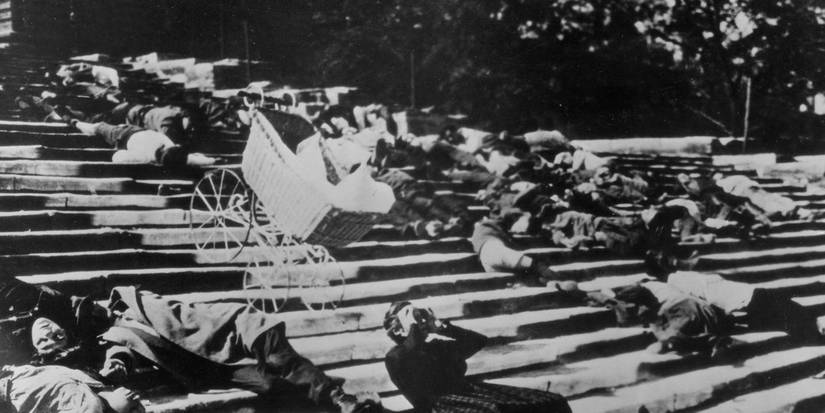
Reflecting the Soviet emphasis on collective action, Battleship Potemkin largely avoids focusing on individual characters. Instead, people act as parts of a larger machine, all working towards or running from the same objective. The film deliberately lacks a central hero; even Grigory Vakulinchuk, the closest thing it has, dies before the story is halfway over. Characters move and behave as a unified group, suppressing any sense of individuality. As a result, personal expressions of emotion – the kind you’d expect to hear in dialogue – are rare.
Eisenstein and those who commissioned the work aimed for a specific effect, and it largely succeeds. However, there’s a striking contradiction – whether intentional or not. While trying to show the group as a unified whole, Eisenstein surprisingly uses close-ups that briefly highlight individuals, creating a fleeting but powerful sense of personal identity within the larger crowd.
From a mother’s devastating loss to a grandmother’s terrifying near-miss and the sheer horror on a bystander’s face, Battleship Potemkin masterfully uses emotionally powerful scenes to pull viewers into the brutal reality of violence against ordinary people.
Pacing Hurts Battleship Potemkin Worse Than Technology Does
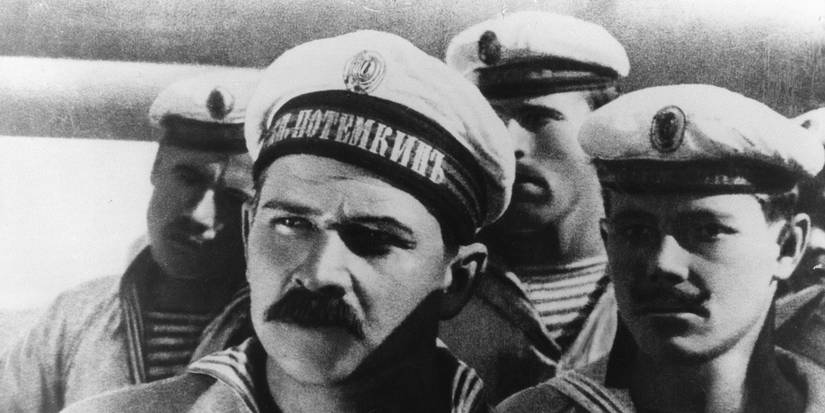
Compared to the silent, black-and-white films of the 1920s, modern audiences wouldn’t accept a movie with almost no color – like Battleship Potemkin, which only had a red flag for color. But that’s not even the main reason today’s viewers might find the film challenging.
Subscribe to our newsletter for deeper film history insights
Subscribe to our newsletter for deeper film history insights
By subscribing, you agree to receive newsletter and marketing emails, and accept Valnet’s Terms of Use and Privacy Policy. You can unsubscribe anytime.
Slow pacing can easily lose an audience, and Battleship Potemkin sometimes feels slow, especially during its extended shots of the ship’s machinery. However, these moments are understandable considering the film’s context. They highlight the importance of industry and labor to the Soviet government, and could even be seen as a display of the country’s advanced naval engineering. The film’s sound design remains strong, staying true to Eisenstein’s preference for music driven by rhythm, which perfectly complements the dramatic tension as the ship faces danger. This musical approach has been consistently maintained in all versions of the film.
If you’re planning to watch Battleship Potemkin, it’s helpful to understand the social and political climate of the time it was made. Even without that context, the film is still powerful, but you might see it as just an old movie instead of recognizing its original purpose: to influence people’s beliefs.
Read More
- Netflix’s Little House On The Prairie Reboot: Release Date, Cast & Everything We Know
- Off Campus Season 1 Soundtrack Guide
- YouTuber arrested after viral AI bodycam videos spark real police complaints
- Silver Rate Forecast
- Prime Video’s New R-Rated Spy Thriller Is Officially No.1 On Streaming Despite Poor Reviews
- Brent Oil Forecast
- Peaky Blinders: The Immortal Man’s Tommy Shelby Is a Better Father Than Michael Corleone
- Gold Rate Forecast
- Bulgakov’s Take: Koreans Bet the Farm on Chips, Crypto, and Chaos
- EUR ZAR PREDICTION
2025-12-21 17:03