Sharing art online is increasingly feeling stressful, like artists are constantly being judged. It’s become common for artists, even those with refined styles, to be falsely accused of using AI. This isn’t just frustrating; it undermines the hard work and years of practice artists put into their skills. This is especially harmful for artists within gaming communities who create amazing fan art for games like Diablo and Palworld, as this distrust can actually discourage the creativity that makes those games so vibrant.
Key Takeaways
- Your Process is Your Best Defense: Proactively share your sketches, layers, and timelapses. This not only builds a transparent reputation that protects you from false claims but also helps your audience appreciate the skill and hard work behind your art.
- Respond Calmly, Once: If you’re falsely accused, avoid a lengthy online battle. A single, professional response with a link to your process is the most powerful way to shut down criticism while maintaining your composure and credibility.
- Lead with Curiosity, Not Accusation: As a community member, shift your mindset from suspicion to support. Instead of questioning a piece’s origin, ask the artist about their technique or inspiration to foster a healthier, more encouraging environment for creators.
Why Is Everyone Accusing Artists of Using AI?
Many artists find posting their work online stressful, as it often feels like their skills are being questioned. They might share something they’re really proud of after spending a lot of time on it, only to receive comments demanding proof of their work – requests to see layers, explain their process, or even accusations that it was created by artificial intelligence. This is a frustrating experience that’s happening more and more to artists of all levels, from professionals to those just starting out and sharing their work as a hobby.
As a longtime fan of art and creators, I’ve been noticing a lot of worry lately, and it makes sense! The internet is overflowing with images made by AI, and honestly, it’s getting harder and harder to tell what a real person created and what a computer just spit out. It’s created this feeling of distrust, which I get – everyone wants to protect the value of human art. But it’s also led to a lot of accusations flying around without anyone really knowing what’s true. It’s messy online right now, and sadly, a lot of genuine artists are getting unfairly caught up in it all.
The issue is that people are often accused of wrongdoing based on just a feeling or impression, rather than actual evidence. An artist with a refined style, or one who rapidly improves their skills, might be wrongly flagged. This pattern of false accusations is causing significant stress and harm, leading to artists being bullied online and discouraging them from sharing their creations. This is especially concerning for artists within gaming communities—those who lovingly create fan art for games like Diablo and Palworld—because this environment of distrust can actually crush the creativity that makes those communities so lively.
What’s Driving the AI Art Debate?
Lately, there’s been a lot of discussion – and tension – in online art spaces. The debate over art created by AI has quickly moved from a technical issue to a major concern for artists, particularly in dedicated fan communities. It seems like people are constantly questioning whether a piece of art is genuinely made by a human. This widespread suspicion is causing problems, making artists hesitant to share their work and fans unsure how to enjoy it. To understand this situation, we need to consider the technology behind AI art, the legitimate worries of artists, and the growing lack of trust that’s developed.
How AI Art Generators Work
AI art generators work by learning from a huge collection of existing images – many gathered from the internet without artists’ consent. The AI identifies patterns, styles, and ideas within these images and then uses that knowledge to generate new pictures based on text descriptions. This has led to legal disputes, as some argue these tools essentially copy existing artwork. Since the AI doesn’t truly ‘create’ but instead combines and modifies what it has learned, it’s difficult to determine where inspiration ends and copyright infringement begins, leaving many artists concerned their work is being used to create tools that could replace them.
Why Human Artists Are Concerned
As a gamer who also dabbles in art, the whole AI art thing feels… complicated. It’s not just about AI being ‘competition,’ it’s more that it makes you question the value of actually learning to create. I’ve spent hours practicing, and seeing an AI whip up something polished in seconds is a bit disheartening, like all that effort doesn’t matter as much. Honestly, it’s created a lot of distrust in the art community – it’s getting hard to tell what’s real and what’s AI-generated. My biggest worry is that all this AI stuff will just flood the market, making it super tough for artists like me to get noticed, find work, and actually share our own unique style and skills.
The Growing Mistrust in Art Communities
The rapid rise of AI art is creating a really negative environment online for artists. Many now feel they have to defend their work and prove it’s genuinely made by a person, often by sharing detailed process shots or sketches. What began as a way to identify AI-generated images has turned into a suspicious culture where artists with refined styles are often wrongly accused of using AI. This not only harms artists’ feelings but also discourages them from sharing their creations, which is a loss for everyone, especially fans who enjoy seeing art for their favorite games.
Can You Tell AI Art from Human Art?
AI-generated art is becoming so common that it’s increasingly difficult to distinguish from art created by humans. While it’s not always easy to tell the difference, there are some things to look for. This isn’t just a discussion about technology, but also about what makes art meaningful – the talent, the narrative, and the emotion behind it. Knowing how to tell the difference helps us recognize and appreciate the unique work of human artists and think critically before assuming something was created by a machine. It’s about learning to recognize the small details that reveal whether an image is technically made or genuinely expressive.
Telltale Signs of AI-Generated Images
AI-generated art often looks very polished, sometimes to the point of feeling unnatural. You might notice things like overly smooth textures or patterns that are too perfect. While these images can be visually striking, they often lack the emotional depth we find in art created by humans. AI can copy a style, but it struggles with the small imperfections and subtle details that come from real human experience. It’s the difference between something looking sad and actually making you feel sad. Those little, organic details are usually the first things lost in AI art.
The Human Touch: What to Look For
As a gamer, I’ve been thinking about what really makes art, art, you know? It’s not about perfection, it’s about those little imperfections that show someone actually made it. Like, you can see the brushstrokes, maybe a line isn’t perfectly straight, or the way the colors mix – that’s not a flaw, it’s what makes it special! But even more than that, artists put their heart and soul into their work. That emotional connection is what really stays with you, the story behind the piece, the passion they felt while creating it, and their unique way of seeing the world. A machine just can’t capture that, and that’s what makes human art so powerful.
When High Skill Gets Mistaken for AI
Things get tricky because as artists improve, their work can look so perfect that people assume it was created by artificial intelligence. This is causing a growing distrust, where skilled artists are constantly forced to prove their work is genuinely handmade. An artist who’s dedicated years to honing their skills might suddenly have to defend their polished artwork simply because of how clean and professional it appears. This can be really harmful, particularly for artists who are early in their careers. It’s frustrating when the very skill they’ve worked so hard to develop becomes a source of doubt.
The Human Cost of False Accusations
Every artwork represents an artist’s dedication, talent, and passion. When someone falsely claims a piece was created by AI, it’s deeply hurtful and goes beyond a simple critique. It undermines an artist’s identity and effort, leading to self-doubt and discouragement. This is especially damaging in creative communities like those surrounding games such as Diablo and Palworld, where sharing and celebrating art is common. It’s important to remember that this isn’t just about the art itself; it’s about the real impact of unfounded suspicion and the kind of environment we foster for artists.
The Emotional Impact on Artists
It’s devastating for artists to have their work falsely flagged as AI-generated. After years of honing their skills and pouring effort into their creations, a quick, incorrect accusation feels like a personal blow. It undermines all the hard work and dedication they’ve put in, and it’s particularly harmful for artists who are just starting out or don’t have a large following to speak up. These false claims can cause significant stress and anxiety, turning the joy of sharing art into a discouraging experience that makes artists question whether it’s even worth sharing at all.
How Accusations Hurt an Artist’s Confidence
Honestly, posting my art online has become super stressful. It doesn’t feel like sharing anymore, it feels like I’m constantly on trial. Every time I upload something, I brace myself for someone to demand proof it’s actually my work. It’s really starting to kill my confidence. I used to focus on having fun and getting better, but now I’m always worried about having to defend how I create things. It’s a really frustrating cycle – especially when people flag my style as looking “too good” or like it was made by AI. It makes me second-guess everything and honestly, it’s stifling my creativity.
Why Artists Stop Sharing Their Work
It’s understandable when artists stop creating if it becomes stressful instead of enjoyable. Recently, a harmful trend of falsely accusing artists of using AI has created a toxic atmosphere online, leading to bullying and harassment that drives some creators off social media. This is eroding trust within the art community. When artists fear sharing their work, everyone suffers – our communities become less lively, and we miss out on amazing art inspired by the games and worlds we love. Every artist who stops sharing is a loss for all of us.
What to Do When You’re Falsely Accused
It’s really discouraging when you put a lot of effort into your art and someone assumes it was made by AI. Sharing your work online can sometimes feel like you’re constantly defending yourself, but don’t let unfair accusations stop you from creating. It’s helpful to think about how you’ll respond to these situations beforehand. Instead of getting upset, try to see these moments as chances to show off your talent and connect with people who genuinely appreciate your work. Staying calm, acting professionally, and being open about your process can help protect your reputation and keep the attention on what matters most: your art.
Document Your Process from Start to Finish
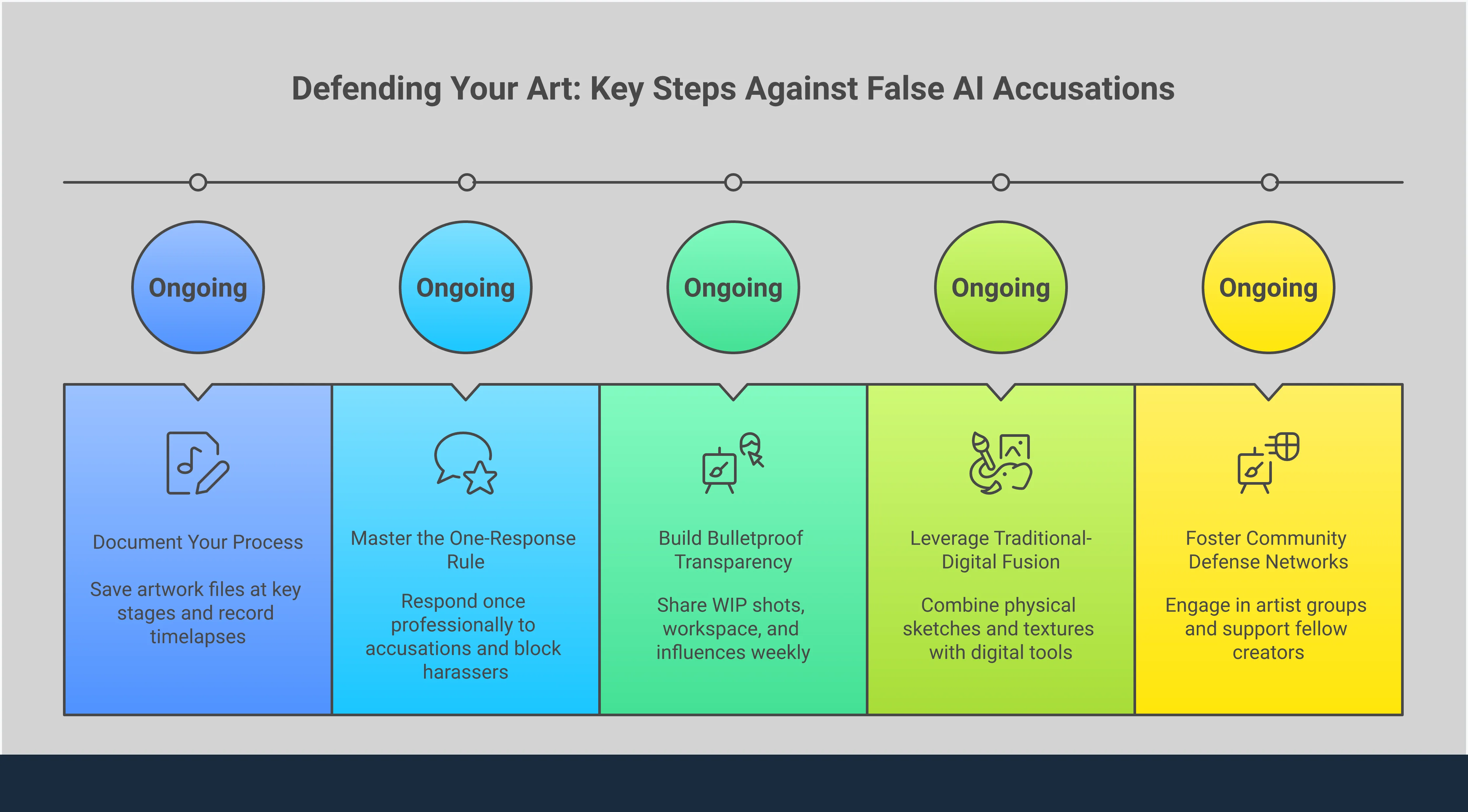
Protect yourself from accusations of plagiarism by documenting how you create your work. Even simple steps, like saving different versions of your files or taking pictures of sketches, can be powerful proof. This documentation isn’t just about defending yourself – it’s also a great way to track your progress as an artist and share your creative journey with others who appreciate seeing how a piece develops from start to finish.
Show Off Your Sketches and Layers
Don’t hesitate to share the process behind your finished work, even if it’s messy! Showing initial sketches, rough drafts, or screenshots of your digital layers can quickly dispel criticism. For example, when a fan artist for Baldur’s Gate 3 was accused of using AI, they simply shared their sketchbook, instantly proving their work was handmade. This not only validates your effort but also helps your audience connect with you and fosters a stronger sense of community. Turning a potential negative into a positive is a great way to build relationships with your followers.
How to Respond Calmly and Professionally
Okay, so if someone accuses me of something online – like using AI when I haven’t – my first reaction is usually to get all defensive. But I’ve learned to take a deep breath first. Seriously, getting into a big online fight never goes well and can actually hurt my reputation more than the original claim. Instead, I try to respond just once, and keep it calm and professional. I might say something like, ‘Hey, I appreciate you looking out for artists! I can assure you this piece is 100% made by me.’ Then I’ll share some proof of my process. It usually shuts down the argument right away, shows I’m professional, and lets my followers see I can handle tough feedback with grace.
Build a Trusted Reputation
Your reputation is your best defense. It’s becoming more common to face false claims, but being open and consistently connecting with your audience can minimize their impact. Don’t just share your process when you’re defending yourself – make it a regular habit! Share things like time-lapses, helpful tips, and what inspires you, even if it’s something simple like a favorite Warzone setup that led to a character design. When your followers already understand your work and how you create it, they’ll be quick to support you, and false accusations won’t gain much attention.
Prove It’s You: Showcasing Your Unique Process
Don’t wait for people to question your work – build trust from the start by sharing how you create it. Showing behind-the-scenes looks isn’t just proof you’re the artist; it helps people connect with you and understand the effort and skill involved. This creates an open and interesting story around your art, making it clear and authentic.
Let Your Gaming Passion Shine Through
It’s common for artists online to feel like they need to prove their work isn’t created by AI. A good way to avoid this is to really let your personality shine through your art. If you’re passionate about gaming, for example, don’t be afraid to show it! Share how a specific quest in Diablo 4 inspired a character, or a funny moment in Palworld that made you want to create something. By sharing your unique style and connecting it to things your audience enjoys, like gaming, you build a real connection with them. They’ll see the person – and the fellow fan – behind the artwork.
Translate Game Moments into Your Art
To make your artwork stand out and prove it’s genuinely yours, try using techniques that are difficult for AI to copy. For example, starting with traditional drawing methods like pencil or ink sketches adds a natural, human touch to your work. Consider sketching a scene you love from Honkai: Star Rail by hand before moving to a digital format. This combination of approaches not only creates a distinctive style but also clearly demonstrates your creative process. The small imperfections, strong lines, and the feel of the paper itself all show that a human artist created the piece – something AI can’t convincingly imitate.
Share Your Linework and Early Sketches
Look, as an artist, it really stings when people accuse you of not actually making your art, just because it looks good. Especially with all the AI stuff going around! I’ve learned that showing my process is the best defense. I’m not afraid to share my messy sketches, the ideas I scrapped, or even screenshots of my layered files looking totally chaotic. It’s like saying, ‘Hey, this didn’t just appear polished! It went through stages!’ Sharing those early lines or a glimpse of my layers proves I put in the work, the thought, and the skill. It’s the clearest way to show people it wasn’t just generated from a text prompt, you know?
Create Timelapses or Step-by-Step Guides
Documenting your creative process is a powerful way to demonstrate your work and skills. Whether it’s a screen recording or a photo series, showing your art develop from start to finish can silence criticism and engage your audience. It emphasizes the unique effort and skill involved, from initial ideas to finished details. People appreciate seeing the time, thought, and expertise that goes into creating art, and a timelapse video beautifully captures all of that.
How We Can Better Support Artists in Our Communities
The ongoing distrust of AI is creating difficulties for artists and creative communities. It’s unfair to expect artists to constantly prove their work is original; we all need to share the responsibility. As supporters of creativity, we should focus on encouraging artists and being curious about their process, rather than immediately suspecting AI involvement. Let’s choose to celebrate human creativity and foster a more positive and supportive environment for everyone.
Real change begins with small, deliberate steps. It’s about creating environments where artists feel secure sharing their work without worrying about unfair criticism. We need to appreciate the often imperfect process of creation, not just the finished result. And it’s important to learn how to offer and accept feedback that encourages artists, rather than discourages them. By prioritizing these things, we can counter the negative impact of false claims and build more supportive and thriving communities.
Foster Supportive and Safe Spaces
Making art can often feel isolating, and online communities can be a vital source of support. As one source notes, a strong artist community can help heal the pain of rejection and loneliness. However, when these spaces become negative, they can actually cause more harm than good. A healthy community should be a safe place for artists to try new things, be open about their struggles, and improve their skills without feeling attacked. This requires both moderators and members to actively discourage unfair accusations and promote constructive conversations. Instead of jumping to conclusions, we should prioritize asking questions with genuine curiosity, rather than trying to catch others out.
Encourage Sharing Behind-the-Scenes Work
Artists can connect with their audience more deeply by sharing how their work is made. Showing sketches, early drafts, and even mistakes helps people feel a real connection because it reminds us that art comes from a person’s unique perspective and feelings. We, as viewers, can support this by interacting with works in progress – liking process videos, commenting on sketches, or checking out tutorials. This shows artists we appreciate the effort and journey behind their work, not just the finished product. Sharing the human side of creation also makes it harder to falsely claim art is created by artificial intelligence.
Promote a Culture of Constructive Feedback
Let’s focus art discussions on the artwork itself – what it means, how it was made, and how it affects us – rather than trying to figure out if it was created by a person or AI. Instead of immediately questioning its origins, let’s offer helpful feedback. For example, instead of saying something looks AI-generated, try asking the artist about their process and how they achieved a specific effect. This encourages learning and shows respect. Creating a welcoming environment where artists can share and grow is essential. By offering constructive criticism and asking thoughtful questions, we build a supportive community focused on improvement and respect – which is much more valuable than one based on doubt.
The Damage Caused by Constant Suspicion
It’s honestly really frustrating seeing every new piece of art immediately questioned as being AI-generated. It’s not just annoying for artists, it’s actually damaging the whole creative community we all enjoy. This constant suspicion creates a really toxic environment – it erodes trust, makes people hesitant to share their work, and weakens the connections between creators. Whether I’m drawing fan art for the newest Diablo or designing a character inspired by Palworld, it’s exhausting and discouraging to constantly have to prove it’s actually my work.
Breaking Down Trust Between Creators
As an art fan, it’s really disheartening to see how things have changed online. It used to be such a supportive community, but now there’s this cloud of suspicion hanging over everything because of AI. It feels like artists aren’t sharing their work with excitement anymore – they’re bracing for accusations and feel like they need to prove they created it themselves. Instead of seeing fellow artists and fans as people to connect with, they’re starting to see them as potential judges. It’s ruining those safe spaces where artists used to share advice and lift each other up, and honestly, it’s just making everyone feel isolated.
Discouraging New and Talented Artists
It’s devastating for artists when, after creating something they’re proud of, they’re immediately accused of not making it themselves. This is especially tough for those just starting out, and the worry about these false claims is stopping many talented people from sharing their work. These unfounded accusations hurt the art community as a whole, making it harder to appreciate real skill. When artists are driven to stop creating because of bullying, everyone misses out on the new and exciting ideas they could have brought to our favorite communities.
Weakening Our Community Bonds
Art brings people together, allowing us to bond over common interests, like our love for certain games. Fan art communities thrive on this shared enthusiasm. But when we immediately suspect each other, it damages the positive spirit of these groups. Art should help people feel connected, yet lately, it’s often creating division. Instead of uniting over beautiful fan creations – like those for Honkai: Star Rail – we’re getting caught up in arguments about whether they’re genuine or not. This internal conflict makes the community less friendly and inviting for everyone.
Moving Forward: How to Protect Human Creativity
The debate around AI art has created tension within creative communities, but it doesn’t have to end there. Rather than focusing on what we’re worried about, we can actively support artists and protect human creativity, especially in fields like game development where their work brings worlds to life. We need to move away from simply trying to control AI art and instead celebrate the art itself. By intentionally supporting creators, we can heal divisions and build a stronger, more supportive community. This involves finding a healthy balance, recognizing and valuing the unique skills of artists, and working to restore trust.
Find a Balance Between Caution and Support
It’s natural to be cautious about art created by AI, but accusing an artist of using it simply based on a feeling can be really harmful. The increasing use of AI has unfortunately eroded trust between artists and those who appreciate their work. Instead of immediately suspecting AI involvement, let’s be curious and ask questions. If something looks exceptionally well-done, ask the artist about how they created it or what tools they use. Supporting artists and giving them the benefit of the doubt allows them to showcase their talent and helps everyone get better at telling the difference between human-made and AI-generated art. This thoughtful approach protects artists from unfair accusations while still allowing for a constructive conversation about AI.
Champion Skill and Practice
To stand out from the growing amount of AI-generated content, we should focus on and celebrate the unique skills of human artists. Things like confident lines built through practice, the special feel of a brushstroke, and thoughtful composition are things algorithms can’t easily copy. Even learning basic drawing and sketching can offer a hands-on experience that digital tools alone can’t match. By appreciating the effort, the initial drafts, and the dedication that goes into creating art, we emphasize the true value of human creativity – that art is a skill developed through hard work, not just something created by a computer.
Rebuild Trust and Understanding
Honestly, it feels like a lot of artists are really holding back and afraid to share what they’re working on. I think the best thing we can do is rebuild those art communities we used to have. We need places where it’s okay to post works in progress, talk about when things are tough, and just connect with other creators. A good community can really help with all the negativity and burnout you see online. When everyone’s supportive and respectful, it builds this amazing network where you can get your confidence back. It’s easy to forget there’s a real person with a ton of passion behind every cool piece of fanart, and they deserve our support and appreciation.
Frequently Asked Questions
Lately, there’s been a lot of skepticism surrounding digital art. This is largely because AI art generators have become popular, and many were built using artwork created by human artists without their permission. While it’s understandable to want to protect artists and their work, this concern has sometimes led to unfair accusations against real artists, based on just a hunch or feeling.
As an artist with a refined and polished style, you might worry about people falsely claiming your work isn’t original. The best way to prevent this is to openly share your creative process. Don’t wait for accusations – show your early sketches, screenshots of your work in progress, or even short time-lapse videos. When people see how you create your art, it builds trust and makes false claims less likely to succeed.
Being accused of using AI can be frustrating. It’s best to avoid getting into a long argument, as that usually doesn’t help. Instead, respond once with a calm, professional answer. Share evidence of your work – like a link to a process video, a screenshot of your layers, or an initial sketch – to show how it was created. This simple, factual response can quickly resolve the issue without damaging your reputation.
If you suspect a piece of art was created using AI, it’s best to investigate before publicly questioning the artist. First, check their profile for things like sketches or time-lapse videos that show their process. If you’re still uncertain, politely ask them about their techniques or tools. Being curious and wanting to understand, instead of immediately accusing, helps foster a positive and supportive environment for artists.
Want to support artists in the gaming communities you love? A great way to do that is to appreciate their creative process, not just the finished artwork. When an artist shares sketches, works-in-progress, or time-lapse videos, offer encouraging feedback. Recognizing the time, skill, and effort they put in shows you value human creativity and helps them feel supported and appreciated.
Read More
- Netflix’s Little House On The Prairie Reboot: Release Date, Cast & Everything We Know
- Off Campus Season 1 Soundtrack Guide
- Gold Rate Forecast
- Infinity Nikki Candlelight Reverie Challenge and Rewards Guide
- Prime Video’s New R-Rated Spy Thriller Is Officially No.1 On Streaming Despite Poor Reviews
- Silver Rate Forecast
- Brent Oil Forecast
- EUR ZAR PREDICTION
- 24 Jump Street in the works with Jonah Hill and Channing Tatum set to return
- KPop Demon Hunters Meets Avatar: The Last Airbender In Netflix’s 3-Part Fantasy Series
2025-12-19 17:05