It’s taken a long time, but video game adaptations are finally starting to be seen as potentially good. A lot of this change is thanks to television, especially HBO’s popular and critically acclaimed adaptation of The Last of Us, which millions watched in its first season. Fallout followed a year later, and its success presented a challenge: it was naturally compared to The Last of Us, which many considered one of the best shows of the year, or even the decade. However, The Last of Us also proved that game-based movies and shows didn’t have to be cheaply made and bad, unlike the original Super Mario Bros. movie and the films made by Uwe Boll.
If you followed my thoughts on the first season of Fallout last year, you already know how much I loved it! And let me tell you, I’m a huge fan – seriously, my bedroom is overflowing with Fallout collectibles (and yes, it’s a conversation starter!). As both a new way to experience the Fallout universe and just a TV show on its own, it was fantastic. The show nailed the weird, funny tone, but it also had genuinely touching and dark moments, largely thanks to Walton Goggins. He brought so much depth and sincerity to the role – everyone kept calling his character the ‘irradiated cowboy’ or ‘the hot zombie,’ but he made it so much more. It’s right up there with The Last of Us as one of the best video game adaptations ever – which, admittedly, isn’t saying much, but it still managed to clear the bar!
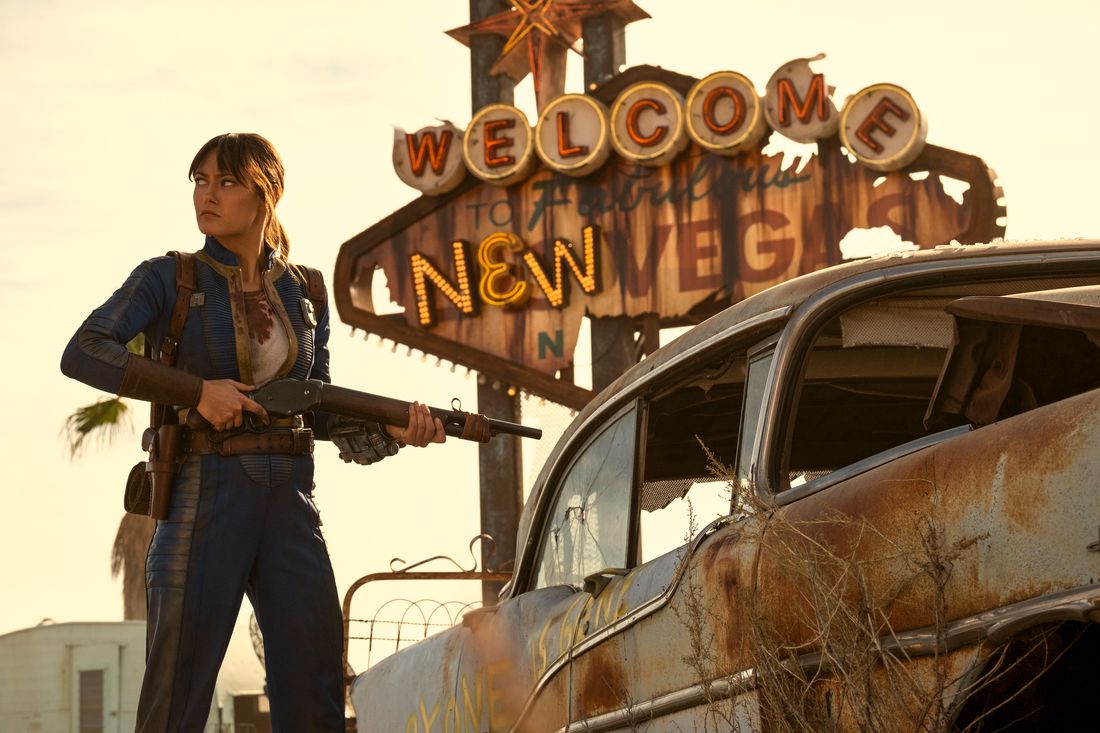
The success of the Fallout TV show differs from The Last of Us. While TLOU could directly adapt its story from the PlayStation game, Fallout needed to capture the feel of its unique world, style, and quirky humor. (The show tells an original story, but it exists within the same universe as the games.) For the most part, the writing team, led by Graham Wagner and Geneva Robertson-Dworet, did an excellent job. Though some choices about the show’s lore upset hardcore fans – like the destruction of Shady Sands and the apparent fall of the New California Republic – most viewers agreed the show was made with genuine affection and respect for the Fallout universe. We’re only a few episodes into season two, but early signs indicate they’re continuing this successful approach. The production design, a standout feature of season one, remains impressive, with props and sets that look like they came directly from the Bethesda games. They’ve even meticulously recreated details like the Novac sign from Fallout: New Vegas, perfectly matching the color of the rusted metal and the flickering lights.
The show isn’t just catering to fans; the first season of Fallout proved the writers were willing to take chances with the established story, like the surprising destruction of the NCR. Season two takes us to even more complex territory as Ghoul (Walter Goggins) and Lucy (Ella Purnell) pursue Hank (Kyle MacLachlan) into the Mojave Wasteland, the setting for the most beloved Fallout game. In the game, New Vegas is the only major American city that survived the nuclear war, at least in part, thanks to the brilliant and eccentric Robert House. We briefly saw someone who appeared to be House in the season one finale, at the meeting where Vault-Tec revealed its plan to drop the bomb. However, that was actually a body double, played by Rafi Silver. The real Robert House – a genius reminiscent of Walt Disney and Howard Hughes, with a touch of Elon Musk’s ruthlessness – is introduced in a flashback at the start of the new season, and is played by Justin Theroux, who is presented as “The Man Who Knew.”
The character of Mr. House makes a striking entrance, revealing his cruel nature to a group of striking workers from his robotics company. He provokes one of them into hitting him, then shockingly uses a mind-control device to force the worker to attack his friends with a baseball bat, culminating in a gruesome explosion. This bizarre introduction establishes House as a key player in the season. He’s a compelling and complex character from the original game – a powerful leader who controls New Vegas with robots and believes any action is justified to save humanity. Notably, he’s the first major character from the games to have a significant role in the show. The season takes place 15 years after the events of New Vegas, and while it’s unclear if House survived those events (depending on player choices in the game), the show’s writers aim to avoid adhering strictly to any one New Vegas ending. It’s interesting to see how they’ll manage that with House seemingly alive, but it’s a welcome addition to see his backstory explored through flashbacks.
We rejoin the Ghoul and Lucy in the present day, finding themselves in trouble in Novac, a rundown motel with a broken “No Vacancy” sign. Once a peaceful stop for travelers, it’s now controlled by the Great Khans, a ruthless group of raiders known for their drug trafficking. The Ghoul is captured and hung up, while Lucy watches from the town’s famous dinosaur statue, Dinky. Lucy tries to negotiate with the Khans, but her optimism is met with a threat to Dogmeat. Once freed, the Ghoul unleashes a shockingly violent attack on the gang, culminating in a gruesome grenade explosion. Afterward, Lucy and the Ghoul continue their journey, arguing about morality – Lucy insists on trying to avoid violence, while the Ghoul believes it’s necessary for survival. Lucy declares, “I won’t apologize for not murdering people,” and the Ghoul retorts, “Well, all that matters to me is that you shoot that fuckin’ rope.” As they travel, they spot New Vegas on the horizon. It looks like it will take them at least two or three episodes to reach it, especially with all the side quests they’re likely to encounter along the way.
The show returns to the residents of Vaults 32 and 33, who are mostly back to normal after the raider attack at the start of the season, except for a water problem in Vault 33. While there are some amusing moments – like Davey being confused by the mirrored design of his new home, and the new Vault 32 overseer, Stephanie, slicing an orange with surprising intensity – I found the storylines happening outside the vaults much more engaging. The same is true for Norm, who’s stuck in Vault 31 with Bud’s Brain-on-a-Roomba. He quickly defeats Bud and then decides to revive all the frozen Vault-Tec employees, figuring it probably can’t make things any worse.
Okay, so the big mystery hanging over this episode – and likely for the rest of the season – is just how everyone is connected to Mr. House. We get a little bit of an answer through a flashback with the Ghoul, showing a meeting between him and Cooper Howard with Moldaver. She reveals House is building a massive missile system in Vegas. Now, in Fallout: New Vegas, we always thought that system saved Vegas, that House managed to destroy or disable almost all the warheads before they could launch. But Moldaver sees it much darker – she believes House intends to use that system, to actually trigger a nuclear war himself! She wants Cooper to stop him, even if it means… well, let’s just say she strongly implies getting rid of House permanently. Cooper asks if she’s asking him to spy, and Moldaver corrects him – it’s more than that. The Ghoul is definitely capable of cold-blooded murder, but I don’t get the sense Cooper is that kind of guy.
While tracking Hank, Ghoul and Lucy discover a ruined vault concealed behind an old drive-in theater. It appears the vault was once the site of a disturbing experiment focused on mind control and psychological manipulation. The experiment involved brainwashing wealthy Americans into supporting communist ideas – a clear nod to One Flew Over the Cuckoo’s Nest. (Lucy’s reaction to this is particularly funny, delivered brilliantly by Purnell.) As the episode progresses, Hank’s interest in the vault’s research becomes more apparent, leading them to a massive underground Vault-Tec lab. It’s revealed that he worked with Mr. House before the war, contributing to the same brain-computer interface technology seen in the opening flashback with the RobCo employees. This raises serious questions about where Hank’s true allegiance lies – is he the loyal Vault-Tec insider he seemed to be? It’s safe to say any potential promotion is probably off the table now.
Bottle Caps
The production design in this show is incredible. The way they’ve recreated props and sets from the original game is truly exceptional. While the layout of Novac isn’t exactly the same – Dinky’s position is off, and the motel lacks a pool – they’ve nailed all the important details.
I was surprised the show used the iconic and often-memed song “Big Iron” from Fallout: New Vegas so early on, but they did it really well.
I’ve seen this episode several times, including once at a London screening. The moment with the biggest reaction from the audience was definitely when the Vault-Tec representative appeared in the flashback sequence.
It’s likely we’ll see the characters Ghoul and Lucy travel through Goodsprings on their way to Las Vegas. Considering the town is where players start in Fallout: New Vegas and is based on a real-life location that looks almost identical, it would be surprising if it wasn’t included in the show.
Read More
- Netflix’s Little House On The Prairie Reboot: Release Date, Cast & Everything We Know
- Off Campus Season 1 Soundtrack Guide
- YouTuber arrested after viral AI bodycam videos spark real police complaints
- Silver Rate Forecast
- Prime Video’s New R-Rated Spy Thriller Is Officially No.1 On Streaming Despite Poor Reviews
- Peaky Blinders: The Immortal Man’s Tommy Shelby Is a Better Father Than Michael Corleone
- EUR ZAR PREDICTION
- Gold Rate Forecast
- Bulgakov’s Take: Koreans Bet the Farm on Chips, Crypto, and Chaos
- Resident Evil producer reveals series could finally head to Japan
2025-12-17 05:56