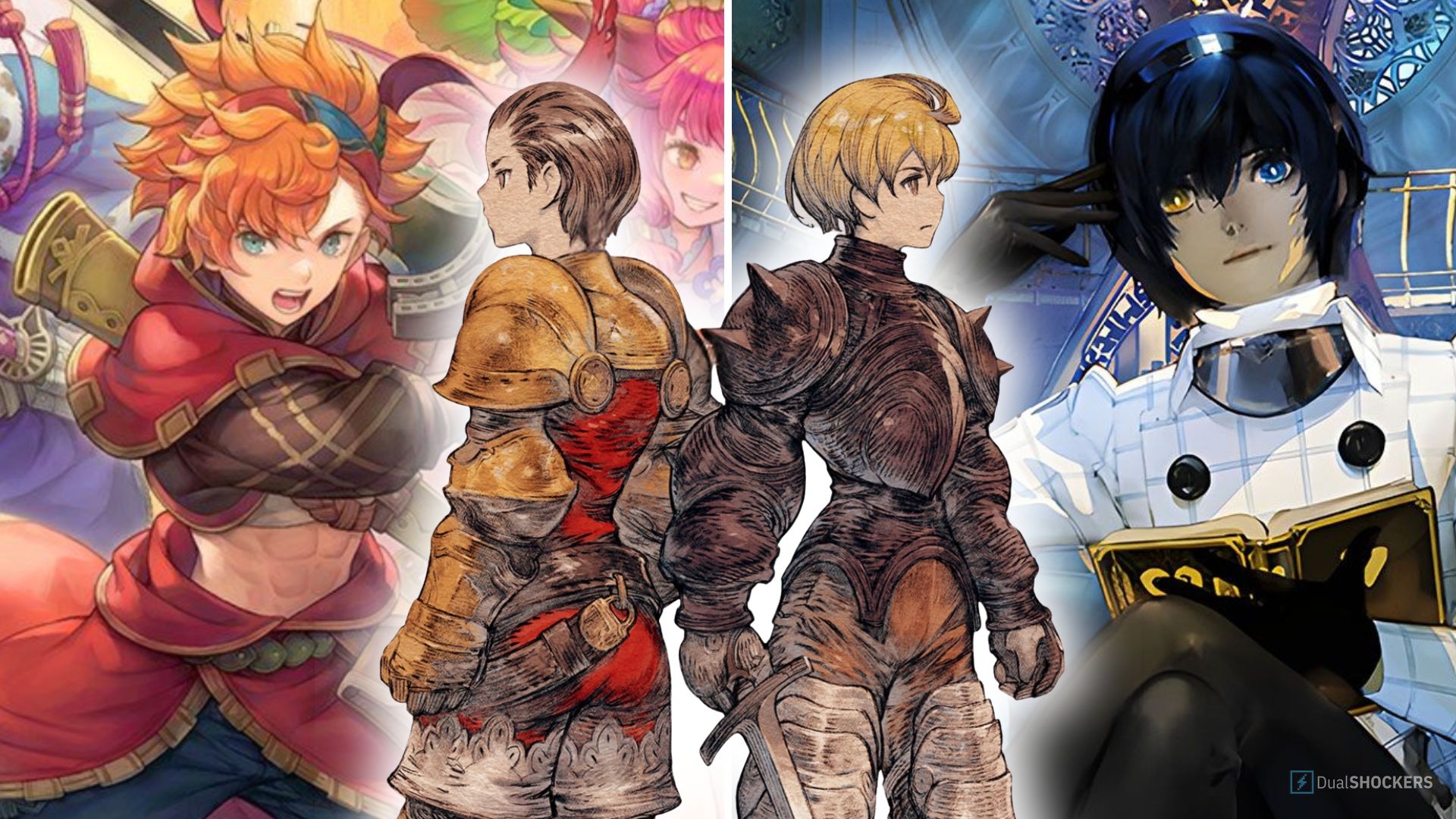
Role-playing games were heavily influenced by Dungeons & Dragons, especially the idea of character classes. This concept quickly spread to Japanese RPGs, and developers soon began to build upon it, creating unique and imaginative class systems of their own.
JRPGs use different names for character classes – like Jobs, Vocations, or Archetypes – but they all serve the same purpose: letting you customize and develop your team’s abilities.
Some creators build their worlds in simple, charming ways, while others completely redesign everything, even adding complex social structures to their settings.
Today, I’m sharing a few JRPGs with fantastic class systems – perfect for players who enjoy deeply customizing their characters and parties, just like I do.
This isn’t a ranking. We’re mentioning these games in random order, but each one has a fantastic class system.
10. Final Fantasy V
The Benchmarking For The System
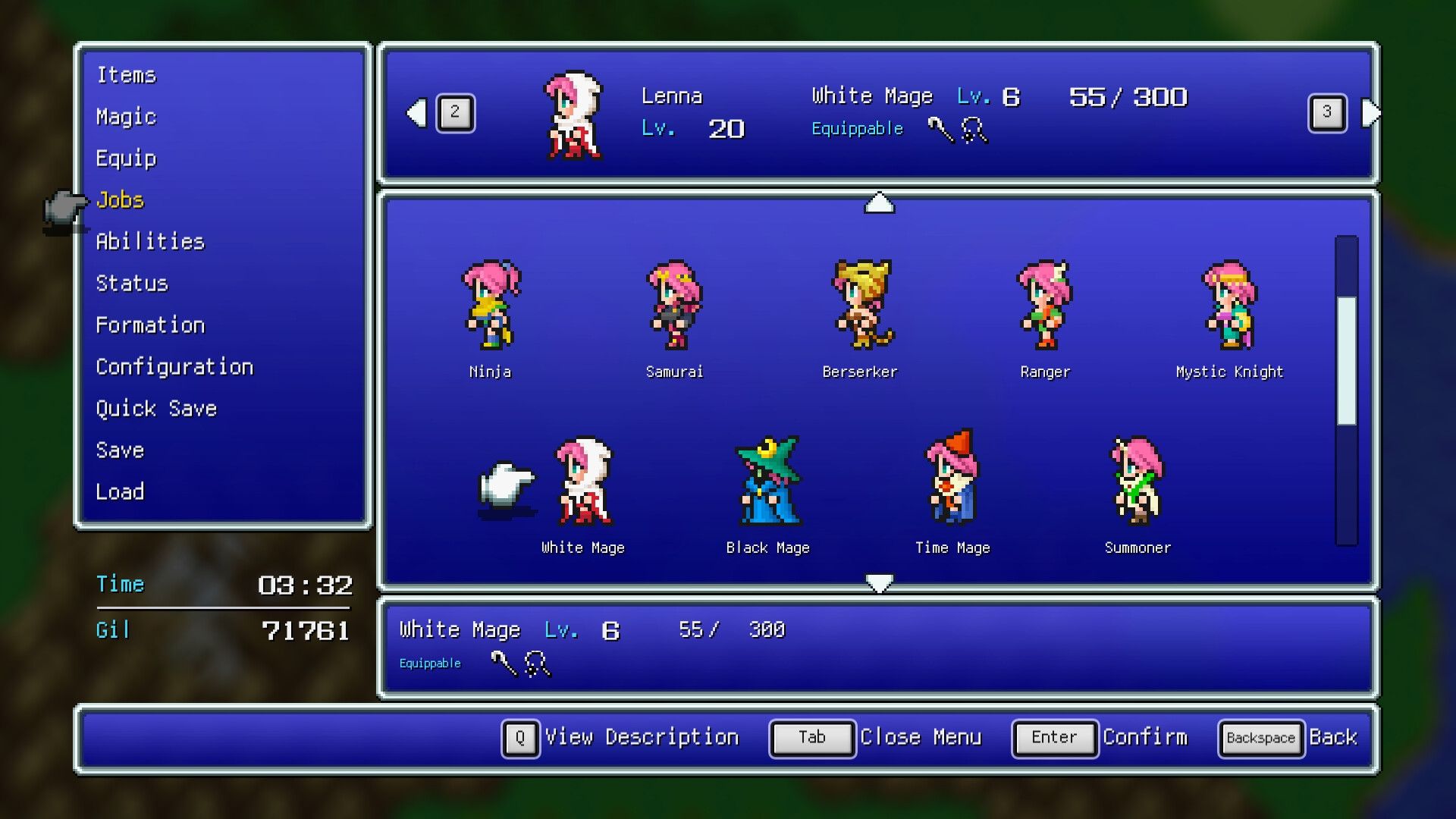
Let’s quickly talk about Final Fantasy V. While Final Fantasy III first experimented with letting players change character classes, Final Fantasy V perfected this system. It became a model for how many other role-playing games handle classes and character progression.
It’s amazing that a game from 1992 had such a flexible and well-developed character progression system. Final Fantasy V slowly introduces new character classes as you play, giving you time to learn and master each one before moving on.
This system helps us naturally discover which Job combinations work best together. We’re also adding a second command ability to each Job, giving players more ways to customize their characters. Plus, you’ll be able to equip passive abilities, opening up even more build possibilities. And honestly, the potential with Jobs like Freelancer or Mime is huge – we could talk about that all night!
Simply put, Final Fantasy V had a huge influence on almost every Japanese role-playing game (JRPG) made since its release, and you can still see its impact on the genre today.
9. Golden Sun
Gotta Catch All Djinns
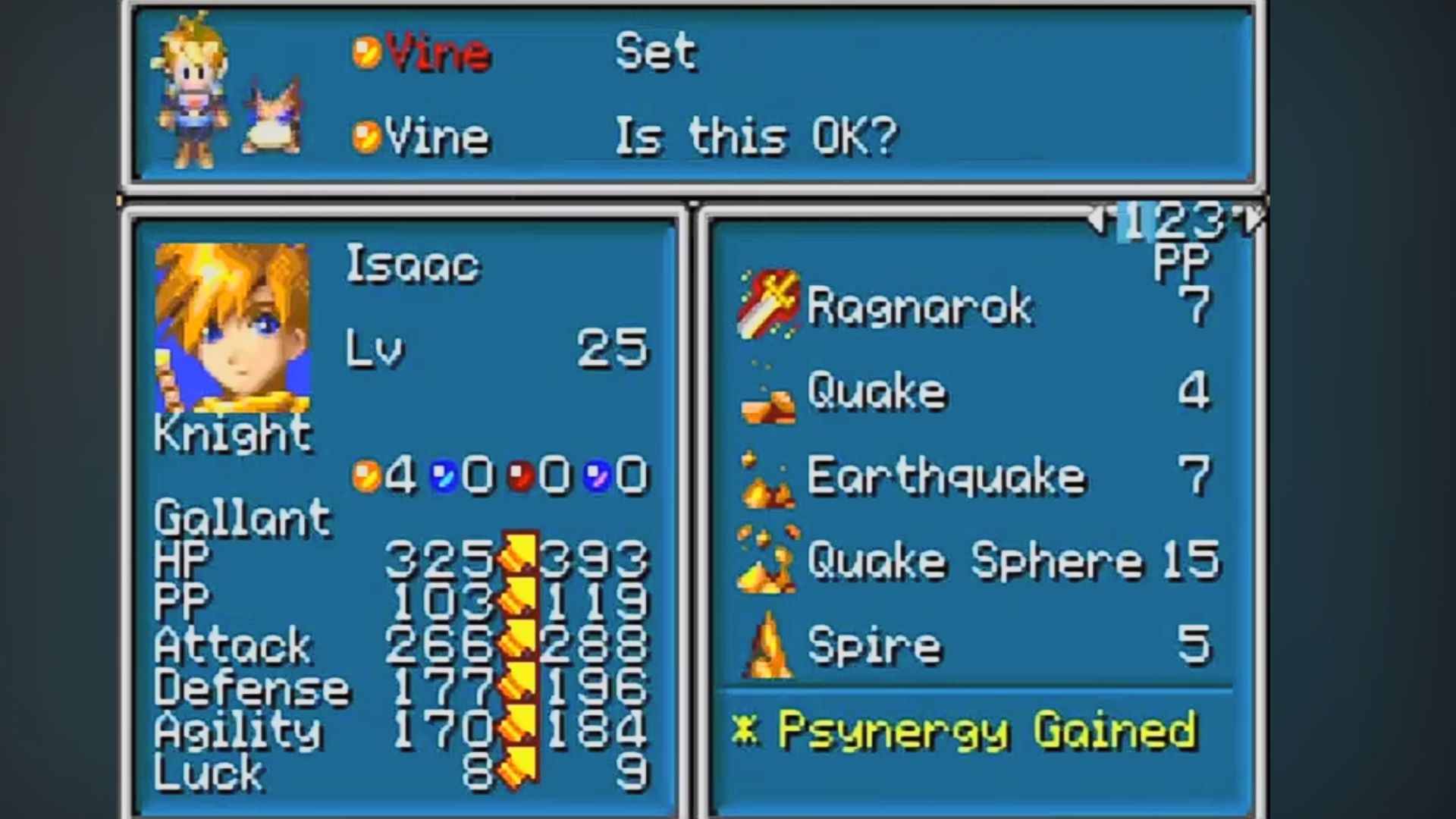
In Golden Sun, characters gain abilities through Djinn, which act like classes. This system is simple to use but very rewarding. You’ll find Djinn throughout the game world, and equipping them to your characters determines their skills.
Djinni are creatures tied to one of four elements – earth, wind, water, or fire. The Djinni equipped to a character determine their class, abilities, and the spells they learn. For instance, Isaac is naturally connected to the earth element, so equipping him with more earth Djinni will allow him to advance from a Squire to a Lord, unlocking new skills along the way.
If you give a character just one fire Djinn, they’ll automatically become a powerful Brute. Adding more fire Djinns will continue to evolve their class, eventually turning them into a Berserker. This progression system works for all characters, each with unique traits, though some similarities exist. It’s a fantastic way to encourage players to collect Djinns, try out different team combinations, and unlock new classes.
8. Dragon Quest III HD-2D Remake
Master of Every Vocation
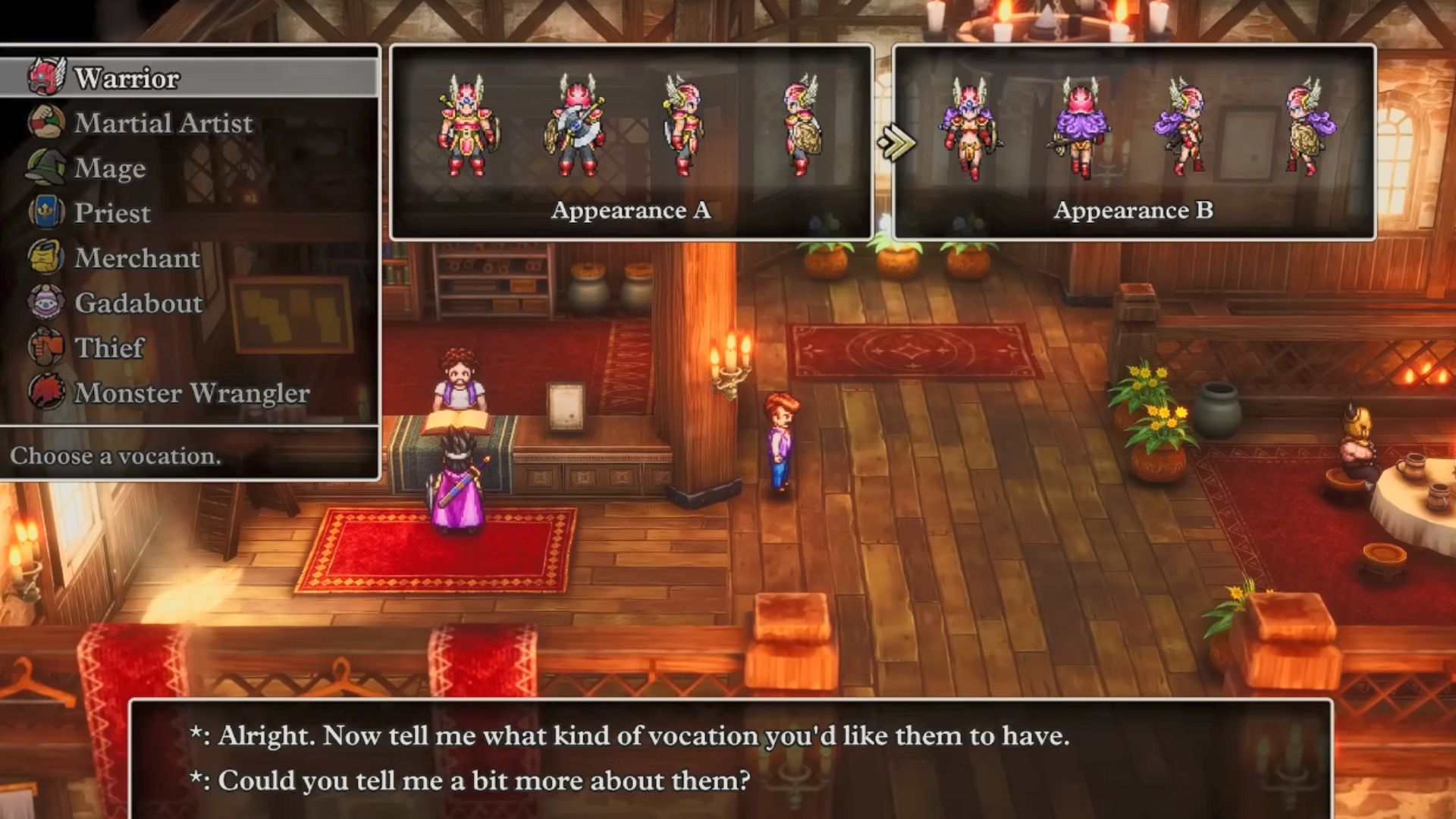
You might be wondering why I didn’t include Dragon Quest VII or IX. The reason is simple: I haven’t played those games, so I wouldn’t feel comfortable discussing them. However, I did play Dragon Quest III HD-2D Remake and even earned its platinum trophy, which required mastering every skill and trying out all character classes.
A great improvement in this new version of Dragon Quest III is how each character class feels more unique. Unlike the original, Warriors and Martial Artists can now learn special skills, making them more than just basic attackers. The Thief class is also much more useful, with abilities that helped me find every treasure chest and collectible item in the game.
One of the coolest additions in this remake is the Monster Wrangler class, though leveling it up is a bit of a pain. You basically have to collect every friendly monster in the game! But trust me, once you’ve built up a good team, it’s incredibly strong. And the best part? Switching classes resets you to level 1, but you don’t lose any of the abilities or spells you’ve already learned. So all that grinding really does pay off in the end!
7. Visions of Mana
Let’s Nurture the Mana Tree
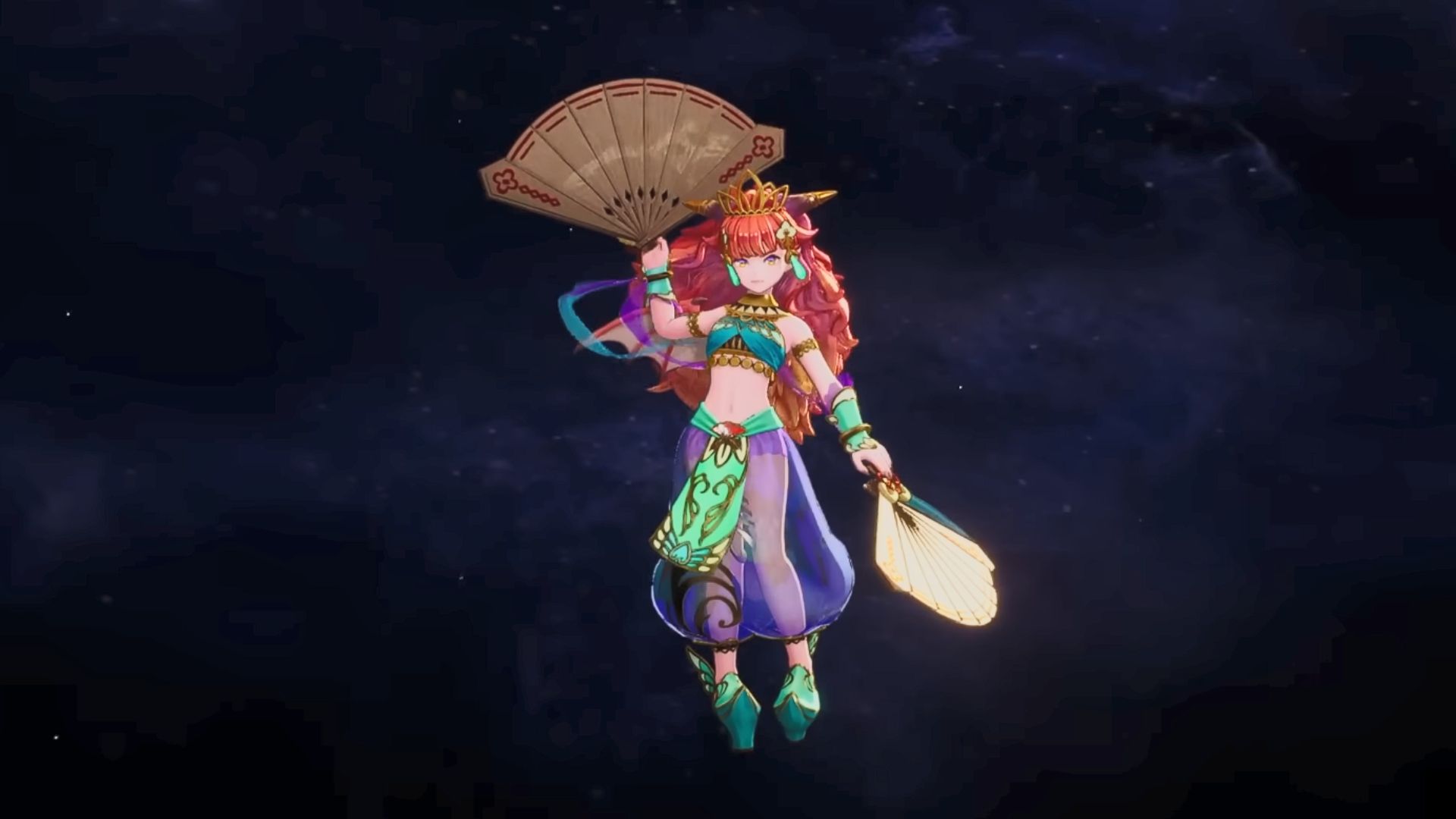
I still feel disappointed that Visions of Mana wasn’t more successful. It’s one of my favorite action RPGs, capturing all the delightful charm of the Mana series. The game also features a fantastic class system that adds a lot to the gameplay while remaining faithful to the story and world.
In Visions of Mana, players search for Elemental Vessels. Once found, each of the game’s five characters gains access to unique classes – a total of 45 different classes, each with its own look and set of skills. While characters can use three different weapon types, these weapons are shared across multiple classes.
Like many Square Enix games, once you fully master a class in Visions of Mana, its special ability becomes available even when you’re using your basic character class. This greatly expands your customization options, particularly after you finish the main story. Even if you don’t aim to complete everything the game offers, you can still enjoy the core experience and appreciate how much flexibility and variety each new Elemental Vessel adds.
This JRPG is fantastic and sadly overlooked. It’s frustrating – whenever something great comes along, it feels like people quickly stop appreciating it.
6. Costume Quest
Halloween At Its Finest
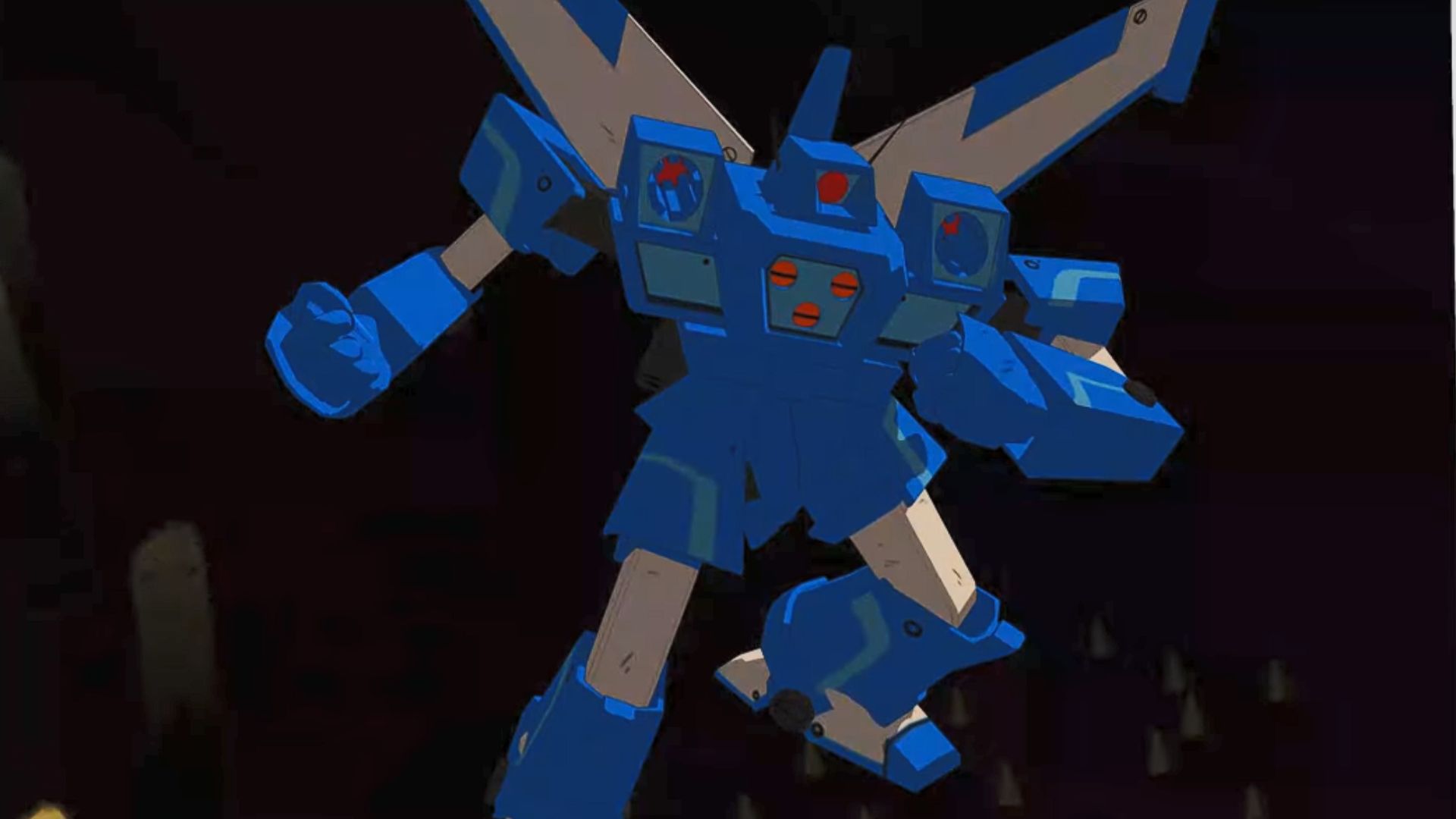
I sometimes like to browse for smaller, independent RPGs to relax after finishing a really long Japanese RPG. During one of these searches, I came across Costume Quest. I didn’t have high expectations, but I was pleasantly surprised! It’s not a revolutionary game, but it’s charming and genuinely enjoyable to play.
While trick-or-treating, our sibling was snatched by a monster! Thankfully, our kids can harness the power of our costumes, turning into giant, powerful versions of whatever we’re dressed as. So, if we’re wearing a robot or Statue of Liberty costume, we become giant robots and Statues of Liberty, battling enemies with unique abilities in turn-based combat.
Costumes aren’t just for looks; they actually help you explore the game world. While Costume Quest might initially seem simple and geared towards kids, that’s an unfair assessment. The game brilliantly captures the joy and imagination of childhood, and it excels at bringing back those wonderful feelings.
5. Octopath Traveler
Boosting Your Jobs
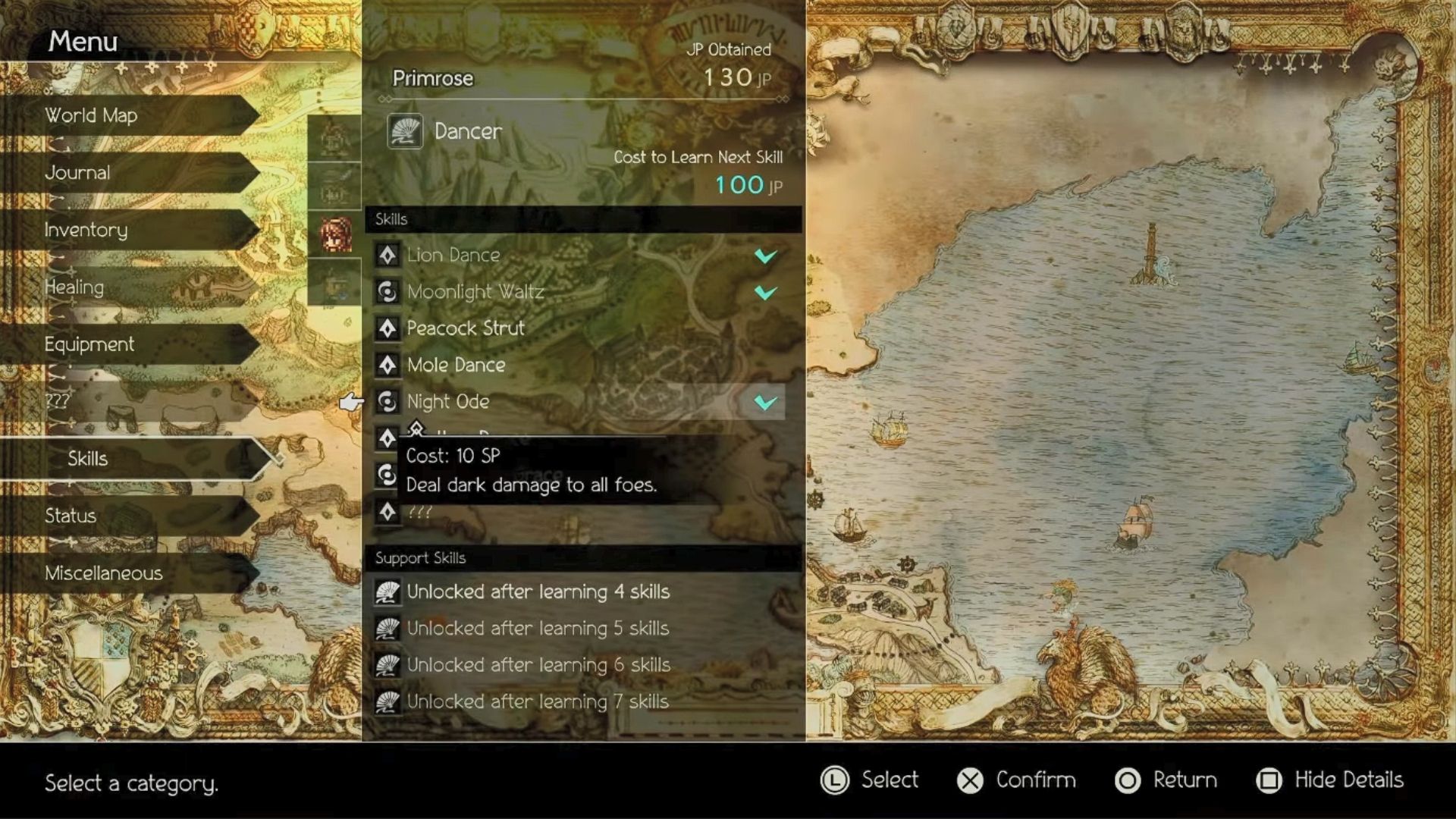
Initially, I wasn’t very impressed with the job system in Octopath Traveler. Each of the eight main characters has a unique skill set, and later in the game, you can add those same skills as secondary jobs to other characters. It felt a little repetitive, honestly – just the same abilities being copied and reused.
At first, I wasn’t sure about the game, but then the customization options really clicked. Combining a Thief skill with a Warrior and an Apothecary passive created incredible, unpredictable results, and I was amazed. I immediately started thinking about other ways to quickly and powerfully defeat my enemies, either in just a few turns or with one massive attack.
Just when I thought I’d seen everything, I discovered four powerful Jobs with completely new skills. It’s really impressive! I’m focusing on the original Octopath Traveler because the sequel already starts with a ton of unique Jobs, making the turn-based battles even more interesting.
4. Metaphor: ReFantazio
Breaking Archetype Patterns
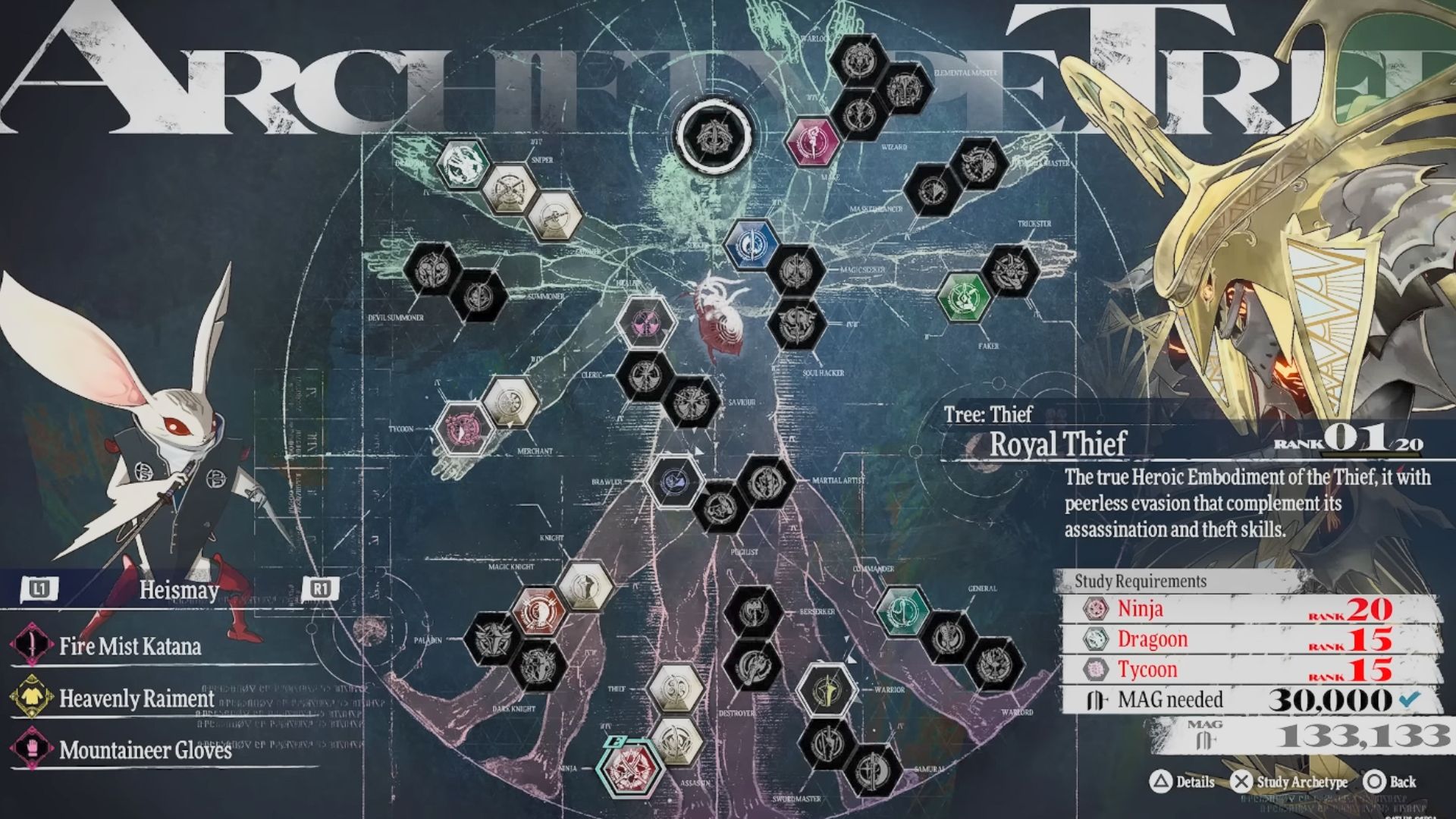
I realize I’m saying this again, but playing Metaphor: ReFantazio reminded me of Octopath Traveler. The more I experimented with different character builds, the more I worried that everyone would eventually feel the same, because they all ended up with access to the same skills and abilities.
The key difference is that each teammate specializes in different areas. Plus, every character has their own special Bond abilities. For example, Hulkenberg can protect the main character from attacks that target their weaknesses, but if she does that while using a less defensive build, she’ll be the one who takes the damage. So, there are still optimal builds for each character – and for the player character too, depending on how you customize their skills.
Things really take off towards the end of the game when you unlock each character’s Royal Archetype – it’s like their ultimate class! I ended up equipping everyone with their Royal class and then spent ages customizing them with skills I’d learned from other Archetypes. It’s an incredibly flexible system, and I even saw some amazing players beat the final boss on the hardest setting with just two party members – seriously impressive!
3. Bravely Default
Final Fantasy V Spiritual Successor
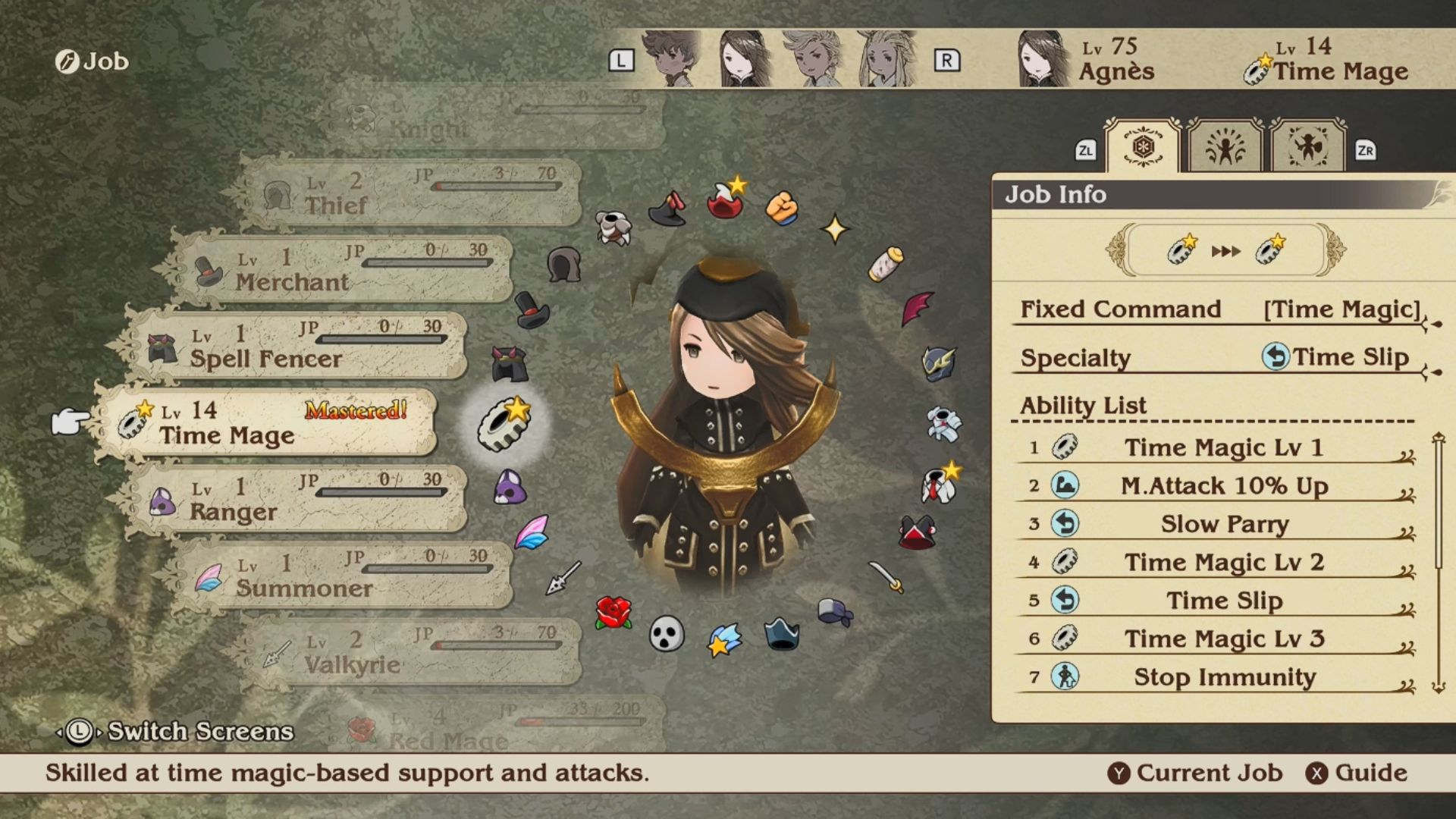
Masashi Takahashi, the producer of Bravely Default, has stated the game was designed to feel like a modern take on Final Fantasy V. This is most evident in the game’s Job system, which functions very similarly to the one in Final Fantasy V. In fact, the similarities are so strong that it’s almost self-explanatory, but I’ll still explain how it works.
As you fight, you gain Job Points which let you improve your Job levels and unlock new abilities. You can switch between Jobs, and even combine a second Job to use its skills and passive abilities based on its level. This works similarly to other games, but Bravely Default has a unique system called support costs that changes things up.
As a fan, I’m really excited about how the support system works! Once you unlock a support ability with one job, you can actually equip it onto other jobs, which is awesome for customization. There’s a bit of a trade-off, though – these abilities take up slots, and you only get five total. Some of the more powerful support skills need two or more slots, while simpler ones only take one. That means you could potentially load up a single job with five different support abilities, making it incredibly versatile! When you combine that with the Brave and Default system, the possibilities for creating unique and powerful combos seem endless. It’s a really cool way to build your characters!
2. Xenoblade Chronicles 3
Learning From Heroes
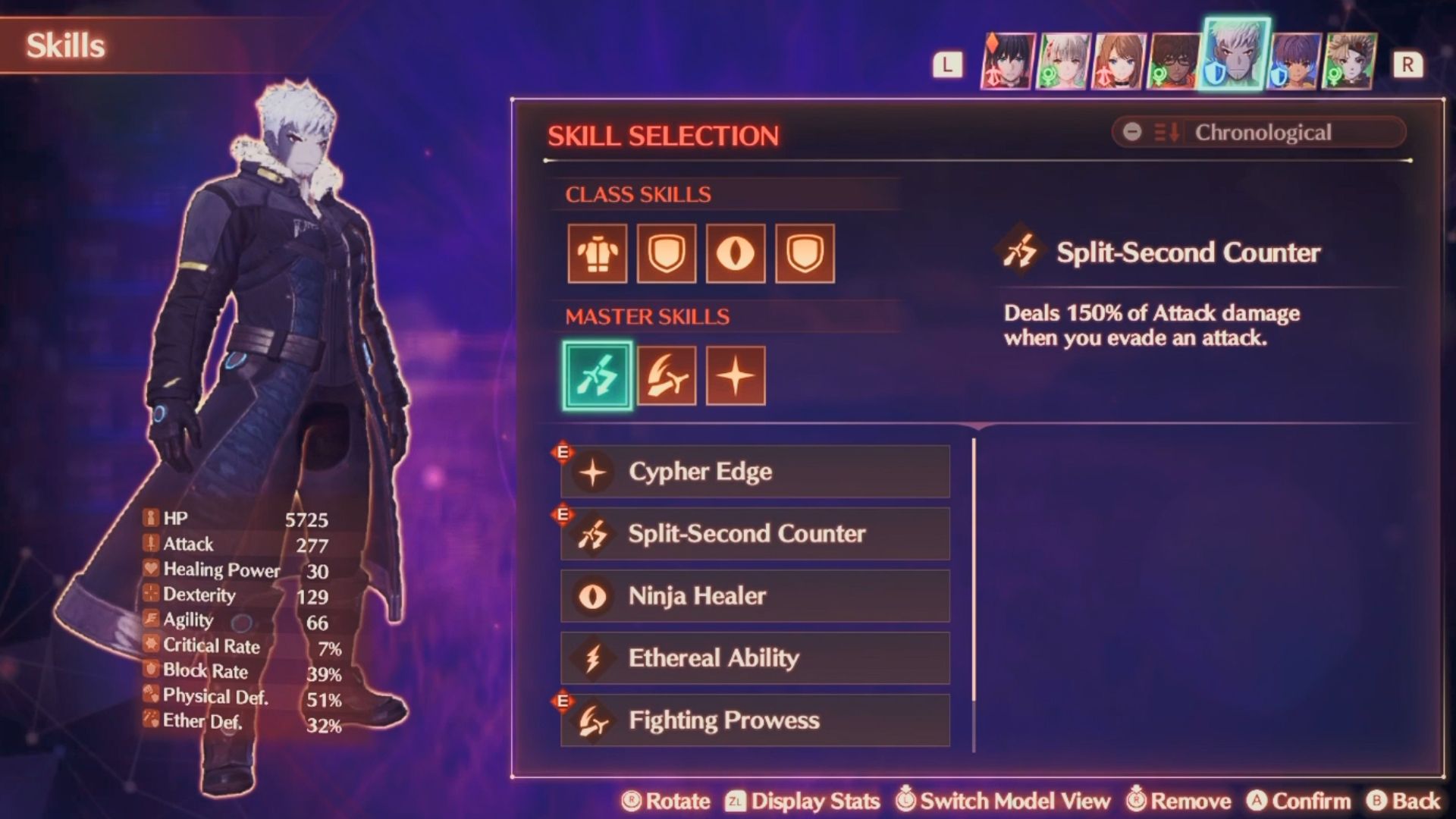
Having played all the previous Xenoblade Chronicles games, I was initially skeptical when I learned Xenoblade Chronicles 3 would feature up to seven characters in battle. After experiencing the complex combat of Xenoblade 2, I wasn’t sure if the new game could keep things organized. However, the developers at Monolith Soft really delivered, creating a fantastic combat system and a well-designed class system.
In Xenoblade Chronicles 3, each character class focuses on one of three roles: dealing damage (Attackers), protecting allies (Defenders), or providing healing (Healers). Before changing classes, a character’s rank impacts how easily they learn and improve in that new role – a higher rank means faster leveling.
Learning a new Master Art allows any class, even those on the opposing side, to use it. Master Skills provide ongoing, passive benefits. Plus, certain Arts can be combined to create powerful Fusion Arts, making it worthwhile to develop multiple classes with each character. Although leveling up can be challenging if you’re too far ahead, mastering a variety of classes ultimately gives you a huge advantage in the late game, letting you easily defeat your enemies.
1. Final Fantasy Tactics
Job Customization + Strategy = Perfection
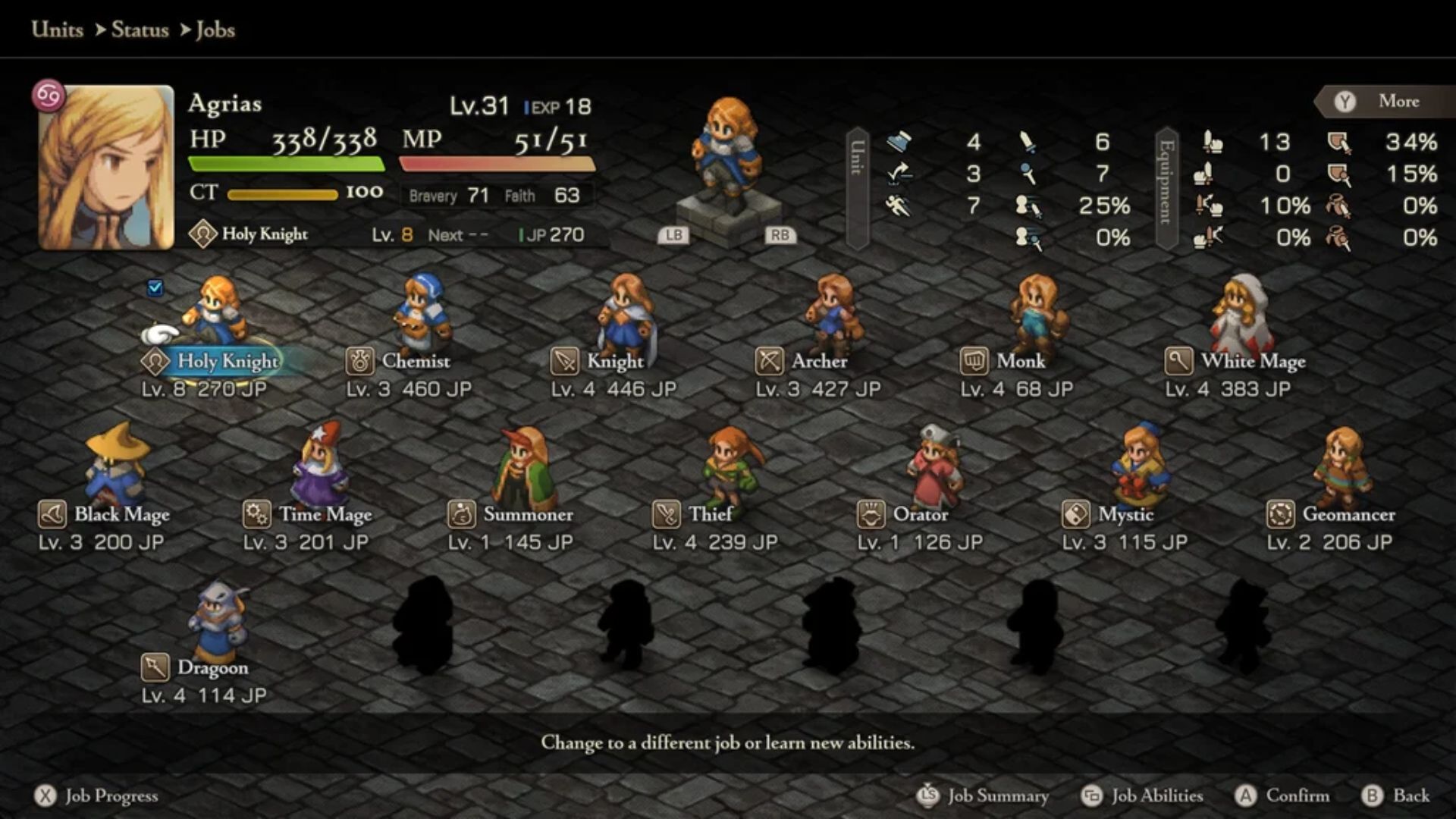
Honestly, if you want to see a game really get jobs and all the cool ways you can build your characters, tactical JRPGs are the way to go. I could rattle off a bunch of examples like Fire Emblem, Vandal Hearts, or Triangle Strategy, but I’m most familiar with Final Fantasy Tactics, so let’s talk about that one.
Okay, so most games with job systems have you pick a class, grind for points, learn skills, and then maybe switch to a new one. But Final Fantasy Tactics does things a little differently, and it’s what makes it so great! Not only can you combine abilities from two jobs, but you also get these extra slots for things like quick reactions, helpful support skills, and different ways to move around the battlefield. It really lets you customize your characters in a way I haven’t seen in many other games.
When your character is attacked, Reaction abilities activate. Support abilities provide constant benefits, and Movement controls how your character gets around. Imagine having 20 different Jobs, each with unique abilities, and being able to combine them however you like! Plus, some characters have access to Special Jobs that no one else can take.
In Final Fantasy Tactics, you can improve jobs you’ve already unlocked, which is a rare feature. A classic and reliable strategy involves unlocking the Ninja job, learning the Dual Wield ability, and then switching back to the Monk. This effectively doubles the Monk’s attacks, making them incredibly powerful and able to quickly defeat enemies.
Read More
- Netflix’s Little House On The Prairie Reboot: Release Date, Cast & Everything We Know
- Off Campus Season 1 Soundtrack Guide
- YouTuber arrested after viral AI bodycam videos spark real police complaints
- Silver Rate Forecast
- Prime Video’s New R-Rated Spy Thriller Is Officially No.1 On Streaming Despite Poor Reviews
- Brent Oil Forecast
- Peaky Blinders: The Immortal Man’s Tommy Shelby Is a Better Father Than Michael Corleone
- Gold Rate Forecast
- Bulgakov’s Take: Koreans Bet the Farm on Chips, Crypto, and Chaos
- EUR ZAR PREDICTION
2025-12-04 22:42