What truly makes a gaming stream stand out isn’t just the game itself, but the streamer’s personality. It’s the commentator who can make you laugh even when things get tough, or get you excited during a critical moment. Being a great commentator is a skill – it combines knowing the game inside and out with humor and genuine emotion. This is what builds a strong community and keeps people tuning in. In this guide, we’ll reveal the techniques pros use to succeed, covering everything from technical skills to emotional connection and storytelling, so you can level up your stream.
Key Takeaways
- Let Your Real Personality Shine: Your audience tunes in for you, not just the game. Build a genuine connection by letting your authentic reactions, humor, and passion lead your commentary, which is the foundation for a loyal community.
- Translate Gameplay into a Compelling Story: Go beyond describing what’s on screen by explaining the strategy behind the action. Weave in analysis, predict player intentions, and connect individual plays to the bigger picture to give every moment meaning.
- Control the Flow with Your Voice: Use your vocal tone and pacing as a tool to guide the viewer’s experience. Match your energy to the game’s intensity and stay clear during chaotic fights to create a smooth, professional, and immersive broadcast.
What Makes Gaming Commentary So Captivating?
Watching a gaming stream without sound just isn’t the same experience. Great commentary turns playing a game alone into something exciting and shared. It’s the difference between simply seeing a game and truly feeling like you’re part of it. A talented commentator doesn’t just explain what’s happening – they add their own personality, jokes, and helpful observations, making everything more engaging. They’re like a companion on our gaming adventure, and their voice is what keeps us hooked.
Truly great commentary isn’t just about what is said, but how it’s said. The best commentators expertly use their voice to guide the audience’s emotions – building excitement during tense moments, sharing the disappointment of close calls, and celebrating victories with genuine enthusiasm. This emotional connection is what keeps people watching. Think about how a movie trailer can make you feel – effective commentary does the same thing, deeply engaging viewers and making them care about what happens.
The best commentary does more than just express excitement – it truly draws viewers into the game. It connects what’s happening on screen to what’s happening in the audience’s imagination by breaking down quick decisions, explaining strategy, and pointing out important details. This transforms confusing moments into understandable, impressive plays. When everyone understands what’s going on, it creates a fun, shared experience – like being part of an inside joke or a winning team – which builds positive feelings and a dedicated community. Ultimately, this combination of emotional connection and shared understanding is what makes a playthrough truly memorable.
Master Real-Time Narration
Good commentary sounds natural, but it takes practice to become skilled at narrating live. It’s not just about what is happening in the game, but about crafting a story as it unfolds. Think of yourself as a guide, a cheerleader, and an analyst, all at once. Your job is to take the fast-moving, often unpredictable gameplay and turn it into something clear and exciting for your viewers. Whether you’re commentating on a competitive Warzone match or simply streaming your own progress, your ability to talk through the action is what keeps people watching. The trick is to balance describing the events, explaining their importance, and letting your personality shine. By working on your voice, connecting with your audience, and reacting at the right moments, you can make any gameplay session captivating.
Build Tension with Your Voice
Okay, so I’ve learned that my voice is seriously a game-changer when I’m streaming or making videos. It’s not just what I say, but how I say it. Apparently, studies show I can actually control how people feel while they’re watching, which is wild! I’m trying to use that to my advantage. If things get crazy and the action picks up, I’m speeding up my talking and raising my voice. But when there’s a really tense moment, like right before a boss fight, I’m dropping my voice down low, almost whispering, to really pull people in. And I’ve realized that silence can be powerful too – letting a big play sink in for a second before I react makes it way more impactful. I’m basically trying to treat my voice like a soundtrack to the game, matching the energy and making the highs and lows really hit home.
Connect Genuinely with Your Audience
What truly makes a commentator stand out is being genuine. Audiences can easily spot a fake reaction, and it ruins the experience. To really connect with people, let your true personality show. If you’re naturally humorous, be funny. If you’re good at analyzing things, explain the details. Think of it as a conversation with your audience, not just talking at them. Respond to their comments, ask them questions, and make them feel included. Creating this shared experience is how you build a dedicated community and keep viewers engaged and coming back for more.
Time Your Reactions for Maximum Impact
Great commentary relies heavily on timing. Saying the right thing at the perfect moment can transform an ordinary play into something truly memorable. It’s not just what you say, but when you say it. Top commentators seem to instinctively understand the rhythm of a game, allowing them to predict key moments and react immediately. This skill keeps viewers engaged and makes the broadcast more exciting. To improve your timing, practice describing plays live, even when you’re just playing for fun. Review recordings of your commentary to identify moments where your timing was strong and areas where you could have reacted faster. The ultimate aim is to make your commentary feel seamless and natural, as if it’s an integral part of the game itself.
The Essentials of Engaging Commentary
Truly great sports commentary feels like you’re watching the game with a really smart and funny friend. It goes beyond simply describing what’s happening – it adds excitement, understanding, and personality to make the game more memorable. The best commentators draw you in, making amazing plays feel even bigger and mistakes more painful. They’re essentially storytellers, analysts, and enthusiastic cheerleaders all in one.
To become a great commentator, focus on a few key things. First, be yourself – viewers can always tell when you’re being fake. Next, find a balance between explaining things clearly and keeping the excitement level up. Since broadcasts can be long, it’s also crucial to pace yourself and maintain your energy. If you master these basics, you’ll create a commentary style that’s both informative and engaging, keeping your audience captivated throughout the entire stream.
React Authentically to Big Plays
How you react is the most important part of commentating. When something amazing happens – like an incredible play or a quickly changing team fight – your honest excitement or surprise is what truly connects with viewers. Studies show that a commentator’s voice can actually affect how people feel, so letting your genuine emotions show lets the audience feel that excitement too.
Don’t try to pretend to be overly excited – it will come across as insincere. Be genuine and share your honest thoughts about the game. This builds trust with your audience and helps them connect with you on a deeper level. Remember, they want to hear your authentic opinion.
Balance Strategy with Entertainment
Audiences are interested in the smart decisions players make, but they want it explained in an engaging way, not like a boring lesson. Your goal is to blend insightful analysis with an entertaining story. Instead of just stating what happened, explain why a player’s move was clever or how a particular combination of skills changed the game—and do it with enthusiasm! Treat each strategic decision like a key moment in the match’s narrative.
Focus your commentary on what’s happening as it happens. Don’t stop to explain game mechanics – point them out during the action. For instance, instead of saying ‘This game has smoke grenades that block vision,’ say something like, ‘Wow, they just used the smoke to cut off the sniper’s view!’ This keeps the energy up and helps viewers understand and enjoy the game more fully.
Manage Your Energy During Long Sessions
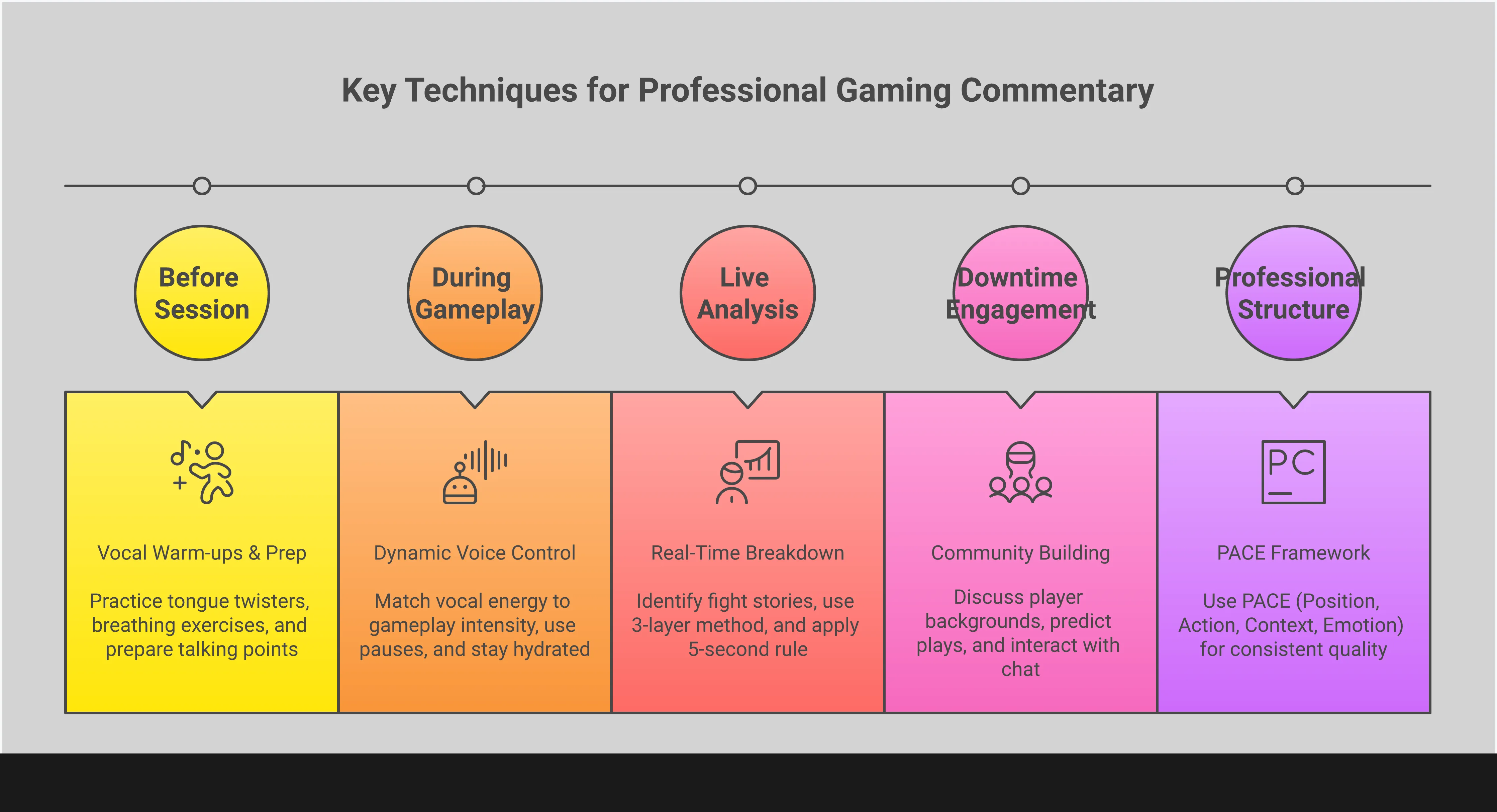
Broadcasting for a long time is about endurance, not just initial energy. Whether it’s a lengthy tournament or a long stream, it’s impossible to stay incredibly enthusiastic the whole time. Losing energy halfway through can happen, and viewers will definitely notice. The trick is to manage your energy levels to match the flow of the game. When things slow down—like between rounds or during setup screens—take a moment to relax, hydrate, and speak more calmly.
It’s like the game is constantly giving you signals – telling you when to go all-out and when to hold back. Getting good at recognizing these moments helps you save your energy and focus it on the most important parts of the game. Knowing how the game works also lets you predict what’s going to happen, which makes it easier to control your pace and avoid getting burned out.
How to Commentate Movement and Combat
The real challenge in game commentary comes with fast-paced action and intense battles – that’s what truly distinguishes experienced commentators. Describing calm moments is one thing, but keeping viewers engaged when things get chaotic requires a different skill set. You need to turn that fast-moving action into a clear and exciting narrative. This means using precise language, mirroring the game’s energy, and pointing out the quick thinking that determines the outcome. Whether it’s a one-on-one showdown or a large team battle, your commentary must change to match the speed and scope of what’s happening.
Imagine you’re the viewer’s perfect teammate, not just describing the gameplay, but enhancing it. Explain why things are happening, build excitement, and highlight the skill behind every move – whether it’s a clever tactic in Warzone or a smooth play in Apex Legends. Becoming a great commentator takes practice, a strong grasp of the game, and quick thinking. It’s all about feeling the flow of the match, recognizing important players and moments, and leading your audience through the action without missing anything.
Call Out Jumps and Positioning
As a commentator, focus on the choices players make, not just what they’re doing. Instead of saying someone is simply ‘moving,’ describe how they’re moving – a well-timed wall bounce, a skillful grapple, or a quick sprint into a slide. This shows you understand the game’s nuances. Explain the thinking behind their actions – how they use cover or gain the high ground. These are often split-second decisions that showcase incredible skill. By clearly describing these small, impactful plays, you help your audience truly appreciate the player’s talent.
Narrate Kills Without Losing Momentum
When someone scores a kill, react quickly and with energy, but don’t let it interrupt the flow of the broadcast. Highlight the moment with powerful, descriptive language, then immediately return to covering the ongoing fight. Your commentary has a big impact on how viewers feel, so a quick, enthusiastic call can turn an ordinary kill into something truly memorable. Don’t waste time on replays or detailed analysis when the battle is still happening. Stay fast-paced, energetic, and focused on the action.
Predict Player Intentions
The best commentators don’t just describe what’s happening – they predict it. By studying the map, the current situation in the game, and how players usually behave, you can guess their next move. Pointing out potential strategies, like a player preparing to attack from the side or holding onto a powerful ability for a crucial moment, creates excitement and makes you seem insightful when your prediction comes true. Regularly analyzing the game and sharing these possibilities transforms the match into a fascinating strategic battle for the viewers. These predictions aren’t just guesses; they help viewers understand the complex thinking behind competitive gameplay and draw them deeper into the experience.
What Separates Good Commentators from Great Ones?
Becoming a truly great commentator isn’t about mastering a few new techniques—it’s about completely changing how you engage with the game and your audience. While a good commentator simply describes what’s happening, a great one immerses themselves in the action, influencing how viewers experience the event. They craft the narrative, build excitement, and connect with the emotional heart of the match. Instead of just explaining what’s happening, they make viewers feel like they’re right there.
Top commentators seem to instinctively understand how a game unfolds as a story. They know exactly when to create suspense, add a touch of humor, or allow a significant moment to fully resonate. This skill in controlling the audience’s feelings is what transforms a regular broadcast into something truly memorable. Studies have shown that a commentator’s voice and enthusiasm can directly affect how viewers feel and what they think, highlighting their immense influence. It’s this combination of deep game knowledge and skillful performance that distinguishes the very best. They don’t just describe the action; they shape the discussion, making every game feel like a crucial, can’t-miss event.
Match Your Energy to the Action
Imagine your commentary as another layer of sound in the game, like a secondary soundtrack. Your energy should match what’s happening on screen – calm and thoughtful during strategic moments, and full of excitement when the action heats up. This contrast keeps viewers hooked. A flat, unchanging voice during an exciting play feels awkward, and shouting during a quiet moment is equally disruptive. By adjusting your tone to match the game’s pace, you amplify the audience’s emotions and help them fully experience the thrills and challenges of the match.
Stay Clear During Chaotic Fights
When things get hectic, your main role is to explain what’s happening clearly. It’s easy to get caught up in the excitement when big plays happen, but the best commentators focus on the most important details. They quickly tell viewers who’s making the key plays, who got the first kill, or which ultimate ability just changed the game. Providing this clear, quick information is vital for keeping viewers interested and helping them understand what’s going on. Instead of adding to the confusion, you become the source that makes everything understandable.
Develop Your Signature Style
What truly sets you apart as a commentator? It’s the special mix of your personality, how you use humor, and your own way of looking at the game. Don’t try to be someone else or rely on a gimmick – focus on what you naturally bring to the table. Are you known for your deep analysis and understanding of the game? Do you make people laugh? Or do you excel at telling a captivating story as the action unfolds? Developing a unique style creates an enjoyable experience that draws viewers in and makes them want to watch you specifically. This is how you build a dedicated fanbase and turn casual viewers into loyal fans who love your perspective.
How Emotion Shapes Your Commentary
Truly great commentary isn’t just about what happens in a game, it’s about how it makes you feel, and sharing those feelings with your audience. When you genuinely express your excitement during a close win, your disappointment after a loss, or even just how funny a weird moment is, you build a real connection with people. That emotional connection turns viewers into an engaged community – it’s the difference between simply watching a recording and feeling like you’re part of the experience, cheering alongside the commentator.
When you recall amazing gaming highlights, the commentator’s reaction often stands out. Learning to express your genuine emotions will make your commentary more exciting, connect with viewers, and create lasting impressions. It’s not about forcing excitement, but about being fully engaged and letting your love for the game shine through.
Let Authentic Reactions Guide Your Calls
Viewers can easily spot insincerity. Trying too hard to seem excited or using a practiced reaction will likely seem fake and can actually distance your audience. The best commentary comes from honest, spontaneous reactions. When you genuinely express your surprise, happiness, or even frustration, it allows viewers to share those feelings with you. Studies show that how real a commentator’s reactions are can significantly affect how engaged viewers become with the game. Your true emotions give viewers permission to invest their own, creating a connection that feels authentic and immediate. Don’t hesitate to laugh at funny mistakes or get truly excited about a great play.
Handle Stress in High-Stakes Moments
Those intense, final moments in games—like the last circle in Warzone, defusing a bomb at the last second, or beating a tough boss—are what really get players excited. As a commentator, staying calm under pressure is crucial. Showing enthusiasm is good, but losing control can make your commentary confusing. Your voice should be a steady guide for viewers, helping them navigate the excitement. Instead of just yelling, use that energy to create focused and lively narration. A little bit of a tremble in your voice or a quick breath can actually show the pressure better than loud noise, letting your audience know you’re experiencing the tension right alongside them and helping them understand what’s happening.
Use Emotion to Hook Your Viewers
Connecting with your audience through genuine emotion is the best way to create a warm and engaging stream. Share what you personally enjoy about the game – whether it’s funny moments, tough challenges, or simply what you love about it – to instantly build a connection with viewers. This turns a simple broadcast into a community gathering. Instead of just describing the game, share how you feel while playing. Don’t be afraid to laugh at mistakes and celebrate successes, and let your personality come through. This honesty makes your content relatable and keeps people watching, even after the game ends. It’s the shared fun and excitement that truly builds a loyal community.
Technical Skills Every Commentator Needs
While exciting highlights and memorable lines grab attention, truly great gaming commentary relies on strong underlying skills. These skills are the core of the experience – often unseen, but essential for making everything work. A skilled commentator can take a fast-paced, confusing battle and turn it into an engaging story for viewers. It’s not just about speaking, but quickly understanding what’s happening, guiding the audience’s focus, and keeping them entertained throughout the entire game.
The skills discussed here are what distinguish a hobbyist streamer from a professional esports commentator. It’s the difference between just watching a game and truly leading the viewer’s understanding of it. While these skills take time and practice to develop, anyone can learn them. Whether you’re breaking down a complicated tactic in Diablo 4 or describing a game-winning moment in Warzone, improving these core abilities will make your commentary clearer, more interesting, and more professional. We’ll focus on three key skills every aspiring commentator should work on: staying smooth under pressure, thinking and speaking quickly, and keeping the commentary flowing even when the game slows down.
Keep a Smooth Flow Under Pressure
As a fan, I’ve noticed that when a game gets really exciting – like during those final moments, huge team battles, or when someone’s rushing to finish an objective – it’s easy for commentators to just start yelling. But the best ones? They don’t! They keep things clear and easy to follow, even with all the action. Honestly, that’s so important because their commentary actually shapes how we experience the game. When a commentator stays calm and focused, they help us stay focused, and they build up the tension perfectly without making things confusing. It’s like they’re guiding us through the chaos, and it makes watching so much better.
Focus your commentary on the most important moments happening in the fight. Try to identify the overall narrative of what’s happening and stay focused on that story. Speak clearly and briefly, and remember to breathe steadily so you don’t get tired. A calm and consistent voice builds trust with the audience and can actually make the action feel even more thrilling as they rely on you to guide them.
Make Quick Decisions While Talking
Commentating is incredibly demanding, requiring you to do many things at once. Commentators need to watch the game, listen to their partners, understand what’s happening strategically, and talk – all simultaneously. The best commentators make it seem effortless because they’re skilled at thinking and speaking quickly. They can instantly explain complicated moments – like where players are positioned, how they’re using their abilities, or a fast-paced fight – in a way that’s easy for viewers to understand.
Being able to quickly analyze gameplay and explain it effectively is a valuable skill. It lets you choose the most important moments to focus on. Developing this skill requires a strong understanding of the game itself – the better you know how things work, the faster you can react and explain what’s happening. A great way to practice is to review your own recorded games and try commentating over them, concentrating on making one clear observation at a time instead of trying to describe everything at once.
Fill the Silence During Quiet Moments
Games aren’t always full of intense action. There are often slower periods where players are gathering items, moving to new locations, or preparing for their next move. These quiet moments can feel strange if not handled well, but a good commentator can really shine during them. Engaging commentary is key to keeping viewers interested when the action slows down, and it greatly affects how they feel about the game.
When there’s a pause in the action, use the time to give viewers more information. Share the bigger picture – like the overall game plan, a player’s background, or what’s happening within the team. You can also discuss what just happened in the last round or offer your thoughts on what’s coming up. These breaks are great opportunities to tell a story and show your personality. Having a few key points ready beforehand will help you always have something interesting to say, keeping your audience engaged and adding extra value to your broadcast.
Avoid These Common Commentary Mistakes
To become a truly excellent commentator, it’s important to learn from mistakes as much as to focus on what to do right. It’s tempting to constantly talk, especially when you’re starting out, but great commentary enhances what viewers are watching without pulling focus. It’s a delicate balance, and avoiding a few common pitfalls can help you achieve it.
Instead of simply describing what’s happening, aim to provide insightful commentary. Your viewers are intelligent and can follow the action themselves. Focus on offering context, explaining the strategies involved, and highlighting the emotional weight of the game – things they can’t perceive just by watching. Avoid over-explaining, sounding overly enthusiastic, or getting bogged down in minor details, as these can distract viewers. Remember, commentary can significantly shape how people feel and understand the game, so choose your words carefully. Let’s look at three common mistakes to avoid, ensuring your commentary always enhances the experience.
Don’t Over-Explain the Obvious
Remember, your audience is made up of gaming fans, so they already know the fundamentals. You don’t need to explain basic actions like reloading or using a health pack – they can see it happening on screen. Pointing out the obvious can feel condescending. Instead of describing what’s going on, try to explain why things are happening.
What was the reasoning behind that player’s movement? How will that particular combination of abilities impact the opposing team? Your expertise lies in offering observations that aren’t obvious. By analyzing the strategy behind the game, you show respect for your viewers’ understanding and help them enjoy the match on a more meaningful level.
Don’t Force Excitement
Being genuine is key. Audiences can easily spot insincerity, and trying to create excitement when there isn’t any will quickly lose their attention. Not every part of a game is incredibly intense, and that’s perfectly fine. Those calmer, more thoughtful moments actually make the exciting plays feel even more powerful.
Follow the flow of the game and match your energy to it. Use slower parts to talk about strategy, guess what might happen next, or share a quick story. When something amazing happens, let your genuine excitement show – that’s what makes the game memorable and keeps people watching.
Keep the Big Picture in Mind
It’s tempting to just focus on who’s getting eliminated, but the best commentators do more than that – they tell a story. They explain how each action fits into the bigger picture of the match. A single kill isn’t just a score; it could be the turning point that hurts the opposing team’s resources, gives a team control of an important area, or creates a memorable highlight for a player.
Before you talk about what’s happening, always think about what’s at stake and how this moment could change the game. Giving context to each action makes it more meaningful. It’s important to understand why players do what they do – for example, instead of just listing the weapons a player uses in a final showdown in Warzone, explain why they chose that particular setup. That creates a much more compelling narrative.
Find Your Unique Commentary Voice
Great commentators aren’t just knowledgeable—they have a unique personality that shines through. It’s not just how they sound, but their entire style—their wit, how they see the game, and how they connect with viewers. Developing this individual style is what keeps people coming back for more. It transforms you from someone who simply describes the action into someone who creates a shared experience with fans. When you think about your favorite commentators, you realize you’re not just watching the game with them, you’re tuning in for them.
For me, finding your voice as a creator is all about being yourself. Are you the person who calmly explains complicated game tactics, like you’re building the ultimate Call of Duty setup? Or are you the one who keeps everyone laughing, even when things go totally wrong? Honestly, there’s no single ‘right’ way to do it. It’s about creating a style that feels good and you can keep up with. Trying to be someone else is draining, and viewers can always tell when you’re not being genuine. Your personality is your brand, and that’s what brings people back to your streams time and time again.
Find Your Natural Rhythm and Catchphrases
We all have a natural way of speaking. The trick is to identify yours and embrace it. Do you tend to speak quickly and with a lot of energy, or do you prefer a slower, more storytelling approach? Don’t try to force a style that doesn’t feel natural. Listen to recordings of yourself to get a better sense of your own speaking patterns – this rhythm will become your unique style. As for memorable phrases, the best ones usually happen spontaneously, often stemming from a funny moment or something you notice repeatedly. Let these phrases emerge naturally, and your audience will likely turn them into shared jokes. This creates a sense of connection and makes your audience feel like they’re part of an inside group.
Develop a Consistent On-Air Personality
Your on-air personality is how viewers recognize and connect with you. It’s not about being someone you’re not, but about consistently showing your true self. Are you energetic and enthusiastic, calm and thoughtful, funny and sarcastic, or always positive? Whatever your style, embrace it! Being consistent builds trust and makes your stream feel comfortable and familiar to your audience. This allows you to share the fun, excitement, and even the challenges of gaming with them in a genuine way.
Practice Techniques That Feel Authentic
The most effective commentary comes from being yourself. While it’s helpful to learn from experienced commentators, trying to imitate a style that doesn’t match your personality won’t resonate with viewers. Don’t force energy or humor that doesn’t feel natural to you. Genuine connection with your audience comes from authenticity. Try different things, but always prioritize what feels right and true to who you are. Your viewers want to connect with you, so be real.
Related Articles
- Deus Ex LFG: Connect with Other Augs in LFG Feature on Z League App
Frequently Asked Questions
It’s common to feel anxious and lose your train of thought when you’re trying to commentate. Don’t be discouraged! A great way to improve is to practice by yourself, without anyone watching. Start by simply talking through your gameplay – explain what you’re doing and why. This helps you get comfortable talking while playing without any pressure. Once you feel more confident, you can try recording yourself, and then eventually move on to live streaming.
You don’t need a dramatic, ‘announcer’ voice to be a great commentator. Trying to force a voice that isn’t your own can actually sound fake and alienate listeners. The best commentators are authentic – just be yourself! Focus on speaking clearly and using your normal voice to show your emotions. Genuine excitement, surprise, or concentration will have a much bigger impact than trying to achieve a certain tone or pitch.
It’s tricky to explain a game to both new and experienced viewers at the same time. The best way to do it is to focus on why something is happening, not just what is happening. Don’t stop to explain basic rules; instead, explain how actions affect the game as you’re commentating. For example, instead of saying “That’s a health pack,” try “Picking up that health pack is important because it will let them get back into the fight.” This gives experienced players useful strategy information, while still helping new viewers understand what’s going on.
Want to improve your commentary when you’re not streaming? A really helpful thing to do is watch recordings of your past broadcasts. It might feel awkward, but it lets you see what you do well and what you can improve in terms of pacing and habits. Try muting the sound on a recording and then practicing commentating over it as if it were live. This is a great way to boost your reaction speed and find a natural rhythm without the stress of a live game.
It’s common to feel tired during long streams. Here’s how to stay energized: Remember that streaming is a test of endurance, not a sprint. You don’t need to be super hyped the whole time! Use the natural flow of the game to help you. When things are quiet – like when collecting items or moving to a new area – lower your energy level, talk more casually, and drink some water. This will save your voice and mental focus for the exciting parts of the game when you really want to be energetic.
Read More
- Netflix’s Little House On The Prairie Reboot: Release Date, Cast & Everything We Know
- Off Campus Season 1 Soundtrack Guide
- YouTuber arrested after viral AI bodycam videos spark real police complaints
- Silver Rate Forecast
- Prime Video’s New R-Rated Spy Thriller Is Officially No.1 On Streaming Despite Poor Reviews
- Brent Oil Forecast
- Peaky Blinders: The Immortal Man’s Tommy Shelby Is a Better Father Than Michael Corleone
- EUR ZAR PREDICTION
- Gold Rate Forecast
- Bulgakov’s Take: Koreans Bet the Farm on Chips, Crypto, and Chaos
2025-12-04 17:52