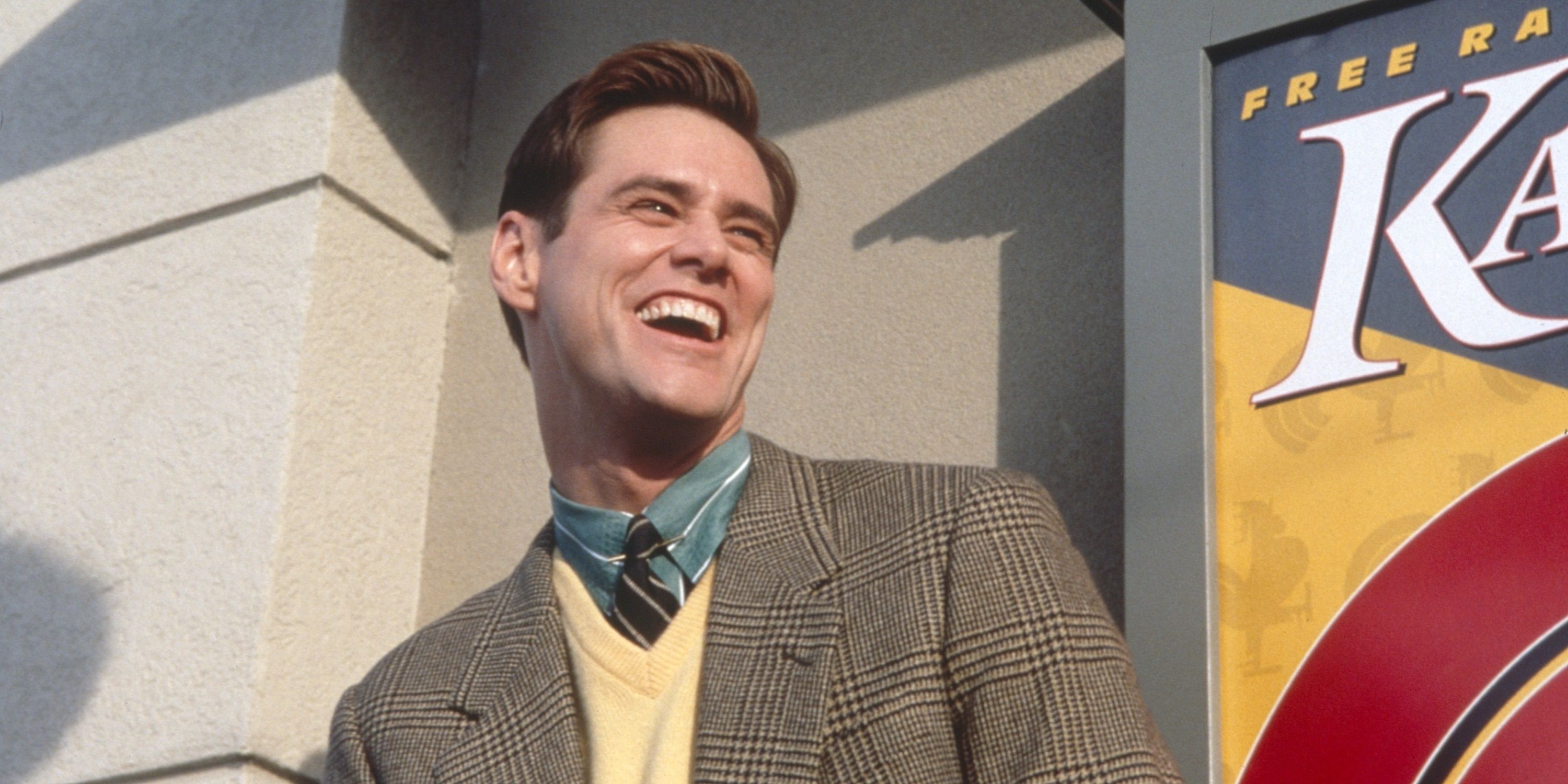
The 1998 film is a science fiction comedy that’s become well-known – and sometimes notorious – in Jim Carrey’s career. Carrey is a highly skilled comedic actor, as demonstrated in films like Bruce Almighty (2003), his portrayal of Doctor Eggman in Sonic the Hedgehog (2020), and the live-action How the Grinch Stole Christmas (2000). He’s clearly an expert at making audiences laugh.
Given Jim Carrey’s history of comedic roles, and the fact that The Truman Show was initially marketed as a comedy, many viewers expected a lighthearted and cheerful movie. However, that expectation is completely off base. The Truman Show centers on Truman Burbank, played by Jim Carrey, who is unknowingly the star of a continuous reality TV show. While the premise seems simple enough, the film takes a deeply unsettling and almost dystopian turn in its final act, leaving a lasting impression on audiences even after nearly thirty years.
Truman Burbank is the Unknowing Star of The Truman Show
The film, The Truman Show, centers around a continuous reality TV program of the same name. The show presents itself as a realistic portrayal of everyday life, following Truman as he goes about his days in the town of Seahaven Island. It’s broadcast live around the world, 24 hours a day, every day, allowing viewers to watch everything that happens in Truman’s life.
What makes this TV show different is how genuinely real it is. Truman Burbank is a normal man simply living his life, and the show portrays that in a remarkably convincing way. However, Truman doesn’t realize he’s the star of a reality show – he has no idea that everything and everyone around him are part of an elaborate set. The entire show is filmed with hidden cameras placed throughout his home and the town.
Seahaven Island, the town Truman believes is his home, is actually a huge set built for a television show. It’s designed to look completely real using clever props and special effects. Nearly everyone Truman knows – his friends, family, and neighbors – are actors playing a role in the show. They all work together to create the illusion of a normal life for Truman, with people like the mail carrier, butcher, and his neighbor all being part of the cast and crew.
Truman Burbank lives a seemingly ordinary life, but everything around him is artificial. He was adopted as a baby by a television studio and has been the unwitting star of a 24/7 reality show ever since. Christof, the show’s creator and director, orchestrates every aspect of Truman’s world from behind the scenes, even trying to influence who he loves and marries.
Christof manipulates Truman into believing he’s choosing to stay in Seahaven. He does this by faking Truman’s father’s death in a staged boating accident, which gives Truman a crippling fear of the ocean. Essentially, Christof intentionally traumatizes Truman with fabricated events to keep him confined to the island. Because of this intense fear, Truman avoids the water at all costs and can’t even consider leaving.
What’s most disturbing about The Truman Show is that everyone around Truman knows his life isn’t real. All the actors and crew are aware of what’s happening, and they don’t just keep it a secret—they actively help the studio maintain the illusion. They even worsen Truman’s fears to discourage him from ever wanting to leave the artificial world they’ve created.
Beyond the artificial world of Seahaven Island, a group of people starts campaigning for Truman’s freedom. This “Free Truman” movement is a rare moment in the film where viewers see others acknowledge he’s essentially a prisoner. Truman has been completely deprived of his freedom, though he’s unaware of it due to Christof’s careful control. Even Sylvia, an actress who plays a character Truman is attracted to, joins the movement after being removed from the show for trying to reveal the truth to him.
The Truman Show is a Genre-Bending Masterpiece
Fans expecting a typical Jim Carrey comedy were in for a surprise with The Truman Show. While the film is certainly funny – as you’d expect from Carrey – it’s also deeply unsettling. It’s a clever mix of satire, social commentary, and drama, exploring themes of simulated reality, surveillance, and the loss of privacy, all wrapped in a dystopian setting.
Truman becomes increasingly uneasy, starting to notice strange things around him. It rains only on him, a studio light falls from above, and he unexpectedly sees the actor who portrayed his father – a man he thought had died in a boating accident.
Truman eventually tries to break free from Seahaven by tunneling out of his basement and heading for the ocean. Though he’s afraid of the water, he bravely gets into a boat and sails away. Surprisingly, Christof tries to stop him by creating a violent storm, nearly causing Truman to drown. Christof is willing to let Truman die rather than allow him to leave, a clear commentary on the exploitative nature of the entertainment industry.
Even after nearly losing his life, Truman reaches the edge of the studio and discovers a staircase leading to an exit. Christof tries to convince him to stay, arguing that there’s nothing better for him outside. This raises a thought-provoking point about how Truman’s life, while artificial, was actually comfortable – he was safe, had a predictable life, and never worried about money.
Because Truman’s entire world revolves around him, he’s generally shielded from serious difficulties. The show’s creator, Christof, only introduces problems when ratings need a boost or to ensure Truman remains cooperative. This raises a question: is a life free from major hardship, even if it’s artificial, preferable to the struggles of the real world? And if Truman doesn’t know his life isn’t real, is this manufactured existence actually harmful to him?
The Truman Show raises big philosophical questions, but its impact goes beyond that. The film delves into issues like privacy, being watched, and our obsession with celebrities – and these themes are still relevant today. With the rise of social media and constant internet access, people increasingly feel they have a right to know everything about others’ lives.
The Truman Show tackles some surprisingly unsettling ideas. While it initially appears lighthearted and unusual, the film really makes you think about privacy and the ethics of watching someone else’s life. It even subtly challenges the audience, placing us in the position of those who casually observe Truman without considering if it’s right.
The Ending is Bittersweet in the Best & Worst Way
Many parts of The Truman Show stay with you after the credits roll, but the ending is particularly powerful and unsettling. Truman faces his fear of the water and almost dies trying to reach the edge of his artificial world, ultimately choosing to escape into reality. This decision brings The Truman Show – and 30 years of fabricated life – to a close, with the final scene focusing on the open doorway he walks through.
People everywhere are celebrating Truman’s newfound freedom. Those involved in the movement to free him are thrilled with his success and his journey to understand himself. The story also hints at a possible future for Truman and Sylvia, as she seeks him out in the real world.
Watching Truman’s story unfold always gets to me. It’s so joyful to see him finally break free and experience the real world, but it’s also incredibly sad. He’s lost everything familiar, and the realization that his whole life was a fabrication… it’s just devastating to think about the trust issues and paranoia he’ll probably struggle with forever. But honestly, what really haunts me is the thought of the audience – the people who watched his life as entertainment. It’s a chilling thought.
Once Truman breaks free and the thirty-year show concludes with him walking through the door, viewers immediately switch to something else. Without a second thought, they move on, completely ignoring the impact on Truman’s life and the disturbing reality that his entire existence was a fabricated performance for their entertainment.
This situation mirrors how we often view celebrities and other public figures. They become less like real people and more like sources of entertainment, valued only for their ability to keep us amused. While we expect a lot from them, they can also be quickly discarded when they no longer entertain us. Ultimately, the story makes us think about our own actions and how we behave.
Read More
- Netflix’s Little House On The Prairie Reboot: Release Date, Cast & Everything We Know
- Off Campus Season 1 Soundtrack Guide
- YouTuber arrested after viral AI bodycam videos spark real police complaints
- Silver Rate Forecast
- Prime Video’s New R-Rated Spy Thriller Is Officially No.1 On Streaming Despite Poor Reviews
- Brent Oil Forecast
- Peaky Blinders: The Immortal Man’s Tommy Shelby Is a Better Father Than Michael Corleone
- Gold Rate Forecast
- EUR ZAR PREDICTION
- Bulgakov’s Take: Koreans Bet the Farm on Chips, Crypto, and Chaos
2025-12-03 23:08