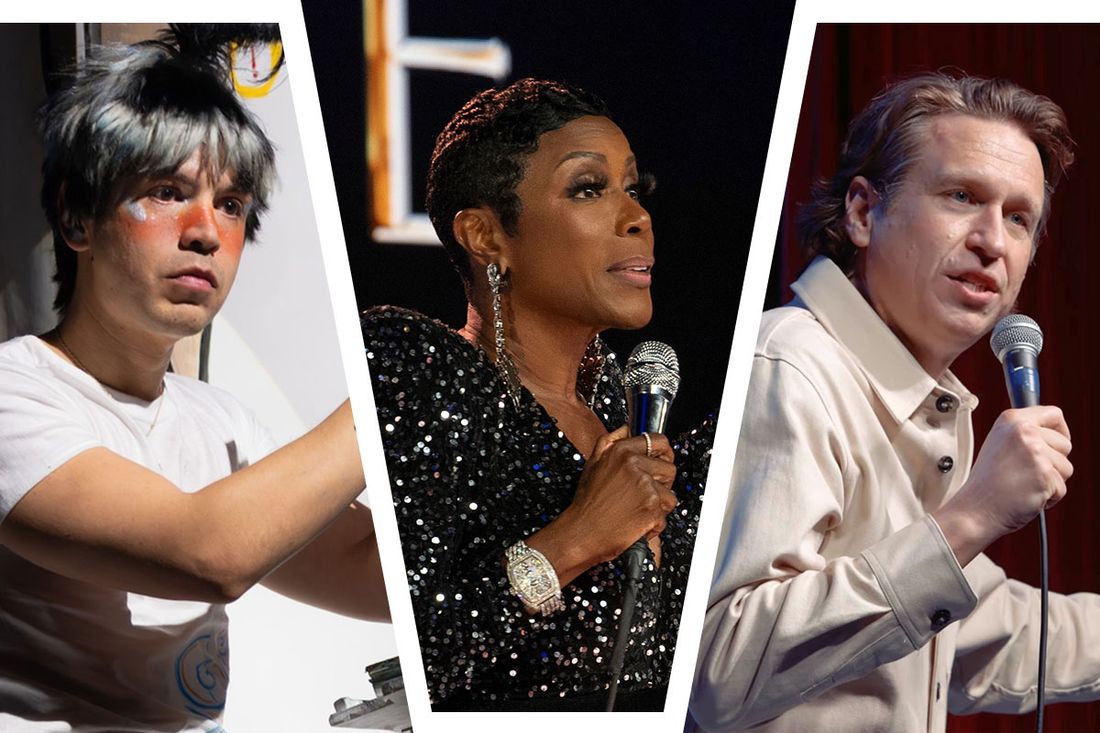
I remember when Netflix was all about DVDs, and they took a chance on a relatively unknown Zach Galifianakis back in 2006 with his special, Live at the Purple Onion. It wasn’t your typical comedy hour – it was really creative and different. At the time, bigger names were getting deals with HBO and Showtime, but Netflix believed in him. Little did anyone know, that special, and the streaming service they launched the next year, would completely change the game for stand-up comedy. It really feels like that one hour kicked off a revolution that’s still going strong today!
It used to be that comedy fans might watch a few stand-up specials each year. Now, with so many options on streaming services – everything from established stars to up-and-coming performers – it’s much harder to find the good ones. Since relying on algorithms isn’t always the best approach, we’re here to help. We recommend the specials that are truly worth watching – the ones that are excellent, unique, or push the boundaries, even if they don’t always succeed perfectly. Occasionally, we’ll also discuss specials that have noticeable problems, especially if those issues raise interesting points about comedy itself. Whether you want to watch a few specials a year or many more, we aim to highlight the best of the bunch and separate the truly worthwhile from the rest.
Julio Torres, Color Theories (HBO)
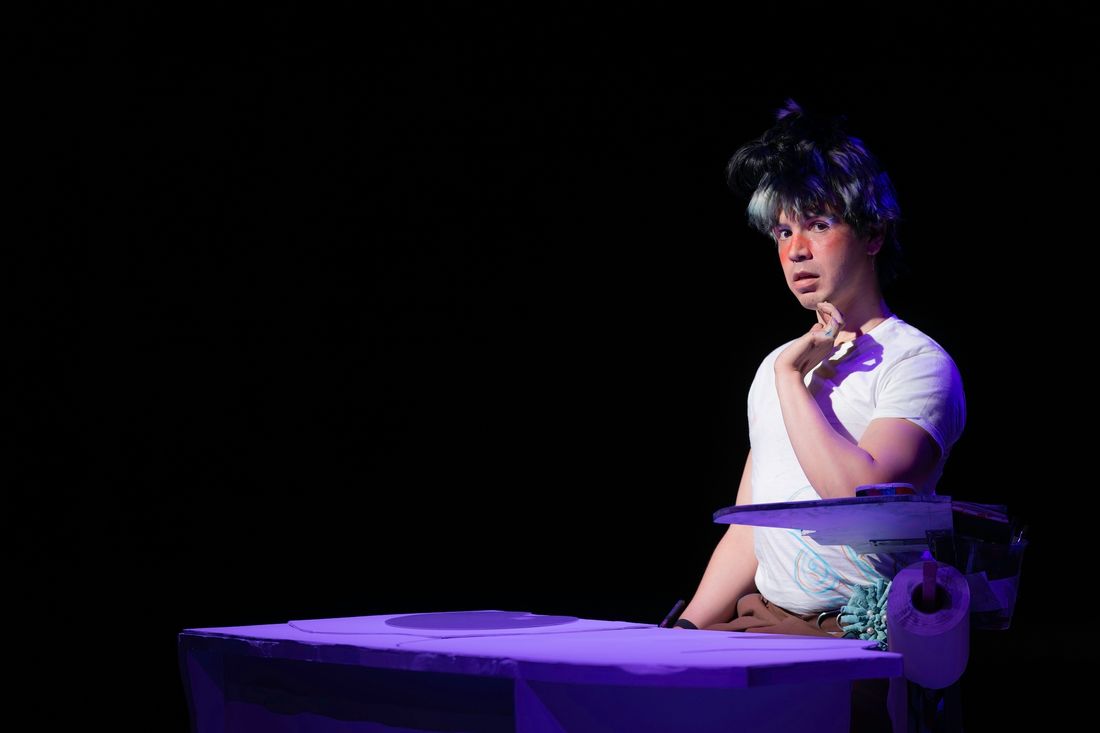
Julio Torres’s comedy special, Color Theories, starts with wonderfully strange premises – like airports being navy blue and stepmothers being purple – that somehow feel perfectly logical within his unique world. The show isn’t just about color symbolism; it’s a remarkably creative and detailed performance. Torres begins by emerging from a hole in the stage, which is designed like a children’s pop-up book, and even interacts with a charming robot named Bibo – he’s essentially given Bibo his logical thinking so he can focus on being an artist. He presents Color Theories as a way of looking at the world, and while it might not be a completely new system, it definitely suggests that the way we currently see things is pretty random.
Torres, in his book Color Theories, believes the root of rigid and unnecessary rules comes from the color navy blue. He argues that navy blue symbolizes attempts by those in power – both legitimate and self-proclaimed – to control and impose order. He points to examples like airports, suggesting their use of navy blue is a way of enforcing boundaries and rejecting anything considered disruptive. He even recalls a Google review of a Costa Rican waterfall as embodying this principle. According to Torres, navy blue is created by combining the logic of blue with the hidden bias of black, ultimately creating restrictive “cells” that frustrate people (represented by the color red). He illustrates this with a diagram of red dots confined within a tight blue grid, explaining that people are often made to feel they must compete for limited space. He then unexpectedly adds, “Anyway, these are a bunch of little Latinos for Trump.”
In Color Theories, Torres delves into the nuances of color, but he’s particularly fascinated by navy blue and how it impacts all other colors. He explores this topic so thoroughly that the show’s ending feels a little foreshadowed. However, calling anything in such a creative and brilliant show “predictable” feels overly critical, so it’s best to take that observation with a grain of salt.
Pete Holmes, Silly Silly Fun Boy (YouTube)
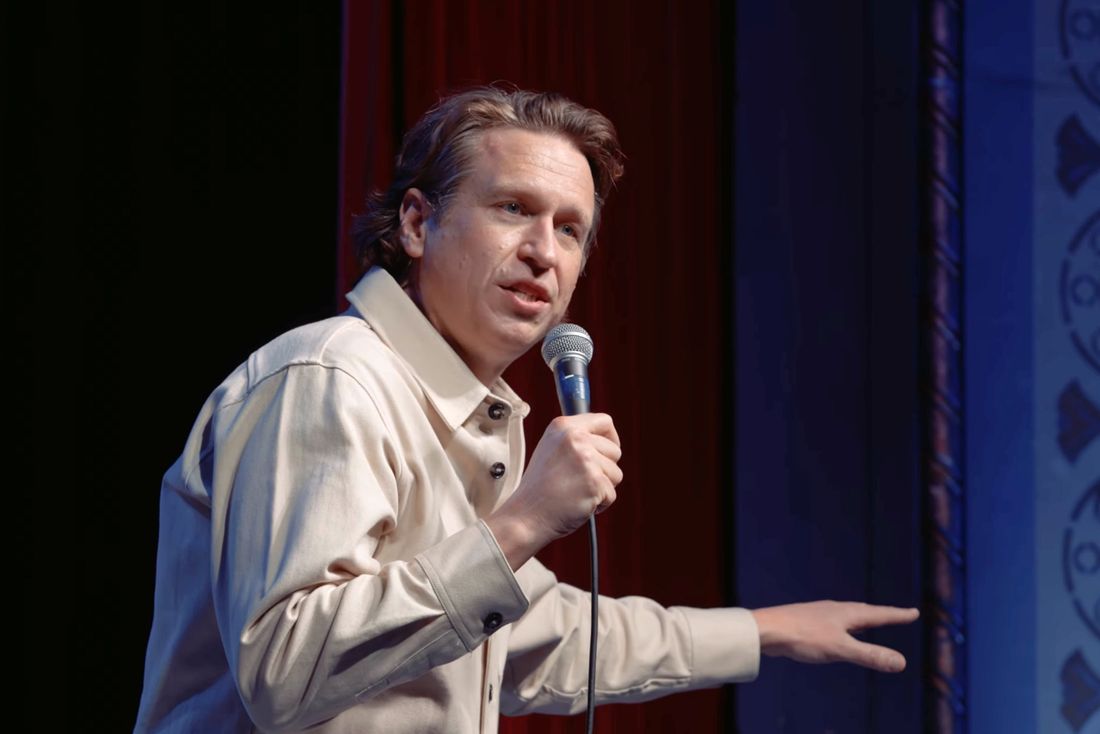
Comedians face a tricky balance: they want to perform new jokes while they’re still fresh and exciting, but also want those jokes to be polished. Pete Holmes nails this balance in his special, Silly Silly Fun Boy. It truly captures what it’s like to see him perform live – well-written material combined with the ability to spontaneously connect with the audience. In a world obsessed with comedians simply riffing at the crowd, Holmes stands out by genuinely seeking connection and understanding. A perfect example happens early in the special when he’s joking about Q-tips, and an audience member yells, “Keyboards!” Holmes instantly replies with a knowing smile, “You’ve been bored in the bathroom as well.” These small, authentic moments happen throughout the special, making it a truly enjoyable experience.
Comedian Holmes’s new show, Silly Silly Fun Boy, feels more energetic because his stage persona is developing. He’s always balanced his playful, endearing style with darker material, but now he’s using anger as a contrast. Building on the popularity of his “That doesn’t make any sense” routine, the show is full of playfully frustrated outbursts. For instance, after a bit about Q-tips, he launches into a rant, adopting a strong Boston accent: “Cleaning keyboards!? What kind of manipulative nonsense is this? They have the nerve to look us in the eye and ask about dirty keyboards at home? You know what we’re doing! You lying…!” He then playfully imagines a secret Q-tip company meeting where they pretend their product is for keyboards, only to discuss their real business behind closed doors. Instead of relying on typical edgy topics, Holmes connects with audiences by voicing their anger and frustration in a relatable and heartfelt way.
Shane Mauss, Trips: First Dose (YouTube)
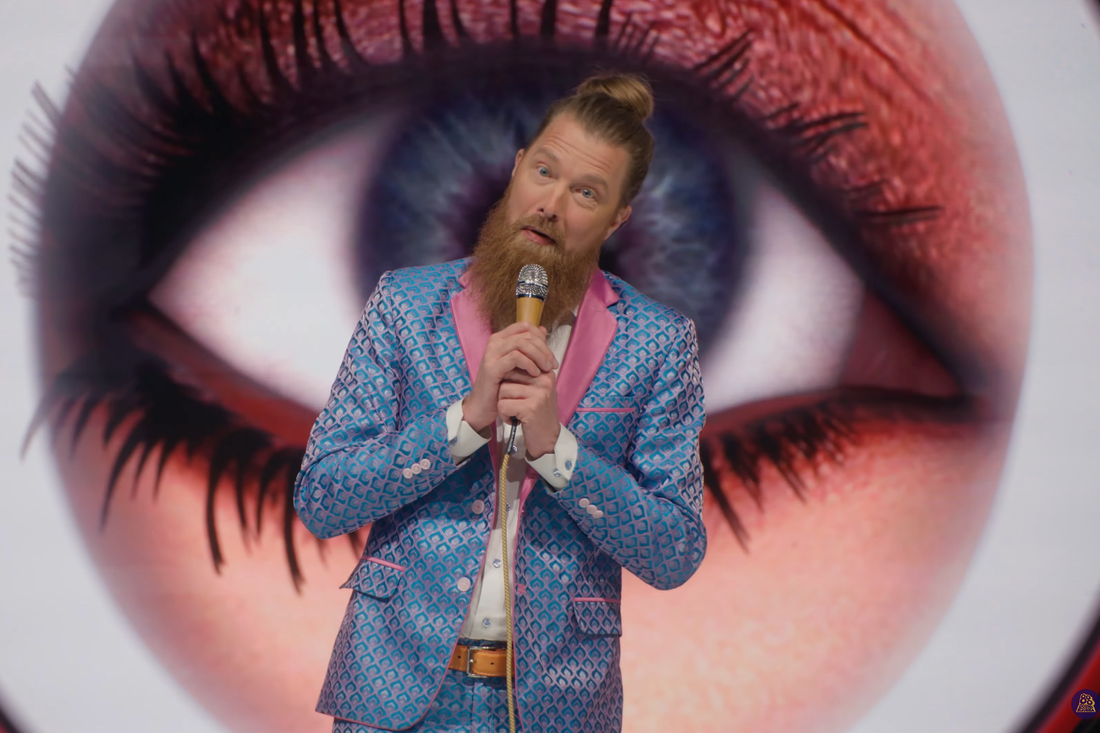
After over ten years of talking about psychedelics through his podcast, documentaries, and stand-up comedy, Shane Mauss has gained a lot of insight into the topic. He’s discovered that it’s nearly impossible to describe a powerful psychedelic experience with words. As he jokes in his latest special, First Dose, any attempt to do so just sounds like a tired, old saying – something you might find stitched onto a pillow at your grandmother’s house. He playfully imitates a common, and perhaps misguided, attempt: “’Oh, I get it,’” he says, “‘Home is where the heart is.’”
In First Dose, Mauss functions almost like a shaman, attempting to connect audiences with the experience of psychedelics. He discusses these substances in a balanced and straightforward manner, avoiding both overly enthusiastic promotion and scare tactics. To make his ideas more impactful, he created a captivating multimedia show. Throughout his presentation, psychedelic visuals from 20 artists are blended live and projected onto the walls by artist Michael Strauss. For example, when Mauss describes how LSD can help someone see trees with a sense of wonder, the audience sees beautiful, flowing footage of trees. And when he talks about the paranoia and unsettling feelings that can occur later in a trip—like feeling like his vision will be distorted forever—a deliberately disturbing animation plays to emphasize the point.
While not everything in Mauss’s performance translates perfectly to visuals, and some animations occasionally pull focus, the show’s overall ambition is impressive, especially considering how many comedy specials look these days. It’s a genuinely visually striking performance – the first I’ve seen that feels like it could really fill a massive venue like the Las Vegas Sphere.
Chris Fleming, Live at the Palace (HBO)
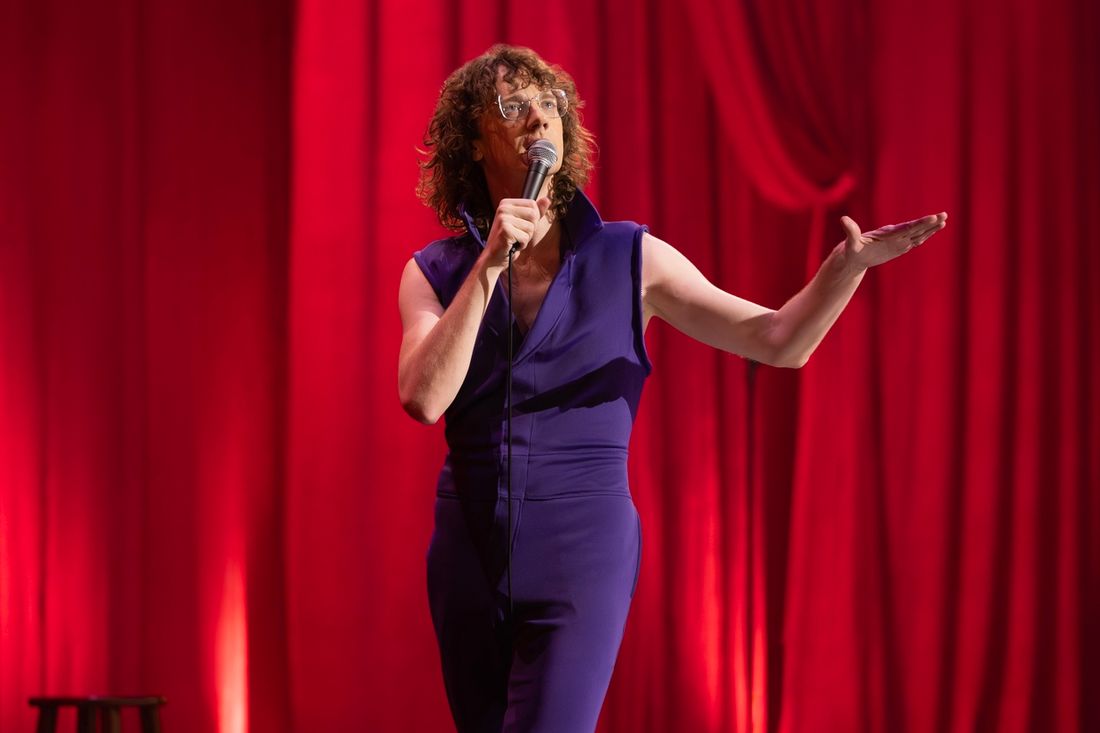
As director Bill Benz observed, watching Chris Fleming’s Live at the Palace is like observing an animal in the wild – the camera work feels focused on capturing something truly unique. However, the content itself is a bit like watching a quirky animated film from another country. It’s imaginative and insightful, but not necessarily relatable to everyday life. Fleming often presents celebrities and character types in a way that’s reminiscent of Studio Ghibli films – you’re constantly wondering if he’s portraying a real person or someone he invented. For example, he does a bit about the type of person who insists you shouldn’t wash your cast-iron skillet. You might recognize the idea of that person, but not a specific individual, and that’s exactly where Fleming excels. He’ll then perform a scene as that person’s skillet, which he describes as subtly moving at night as it plots an escape with their kombucha SCOBY.
Fleming is a truly unique comedian, and his performances are unlike anything else you’ll see. He delivers his worldview rapidly and powerfully, overwhelming the audience with layers of meaning and references. Everything in his act feels truthful in its own way, but he presents ideas and jokes in unexpected ways to make you see them differently. A great example is his bit about Trader Joe’s recalls: instead of taking responsibility, they simply post a crumpled notice, almost as if saying, ‘We found something gross in the cantaloupe, not your problem.’ He expands on this, imagining it as a childish power move, like a kid on a bike boasting about finding eels in the water and questioning who even bought caprese sandwiches with Jimmy Hoffa inside. This isn’t just exaggeration; it’s a kind of comedic magic realism that feels surprisingly real despite being completely absurd.
Jackie Kashian, Alter-Kashian (YouTube)
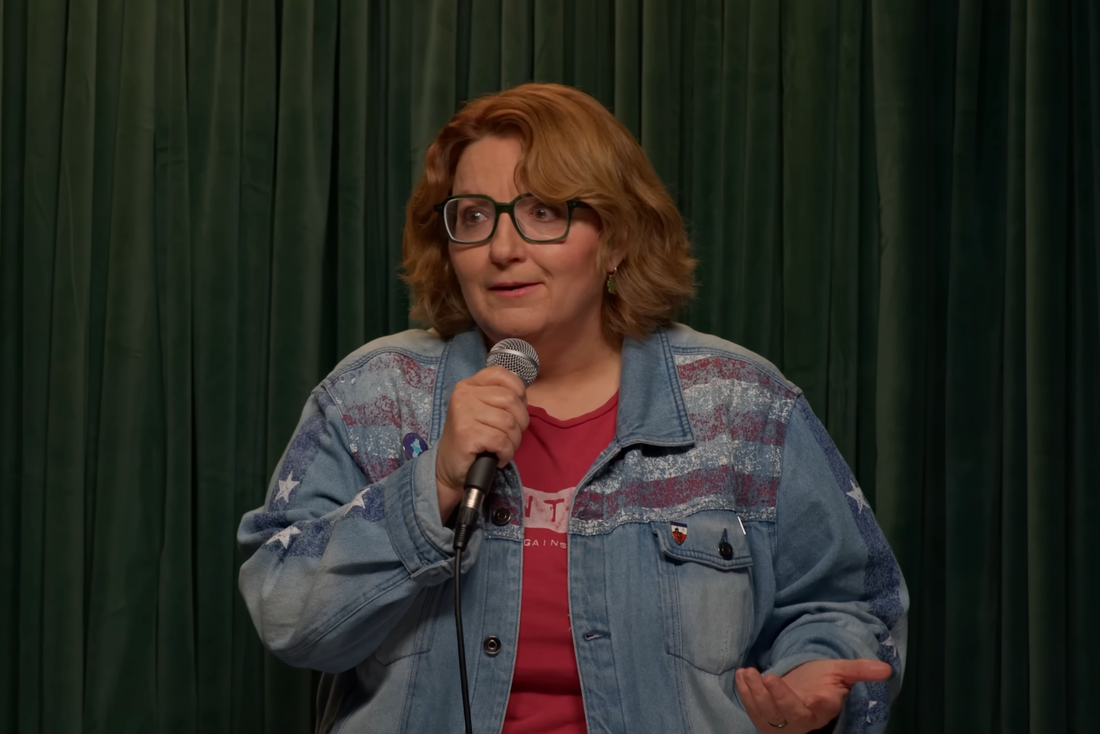
Jackie Kashian is a well-respected comedian, and she usually doesn’t feel the need to make self-deprecating jokes about how she looks. But if you’re new to her work, her special Alter-Kashian gives you a good sense of her style. She jokes that people might see her as either a favorite aunt or someone who will fixate on small annoyances while ignoring larger injustices. While she doesn’t necessarily agree with that image, she does understand misplaced anger, which is a central theme of this special. Kashian is frustrated with many things, especially the current political climate, feeling like she’s been under attack for years. However, she struggles with what to do with that anger, as she was raised to be peaceful without being given any guidance on how to handle strong emotions. She has thoughts on how to deal with it, but she’s also aware that some of those ideas aren’t very practical. She playfully admits, “The reason I shouldn’t own a gun is exactly how much I want a gun.”
Like all Kashian’s work, Alter-Kashian is densely packed, and her breakneck, digressive style doesn’t leave much room to come up for air. But where other comics might lean on quantity as a crutch to compensate for quality, Kashian genuinely just has this much to say. Her anecdotes have a way of spinning off into sub-anecdotes, and they’re layered with punch line after punch line that enter sideways. In addition to her material about anger, she has a customary chunk about her bombastic salesman father, observations about driving, and a closer about sex with her husband that would crush on the road in any city. Still, the special’s strongest moments are when she returns to the theme at hand. She’s a lot like her 9-year-old Chihuahua, she says at one point, because “both of us are constantly picking fights with animals that’ll bite us in half.” The difference is her Chihuahua knows to pick fights while on a leash. “He’ll be on the leash, pulling at it, going, ‘Let me add him. I can take him,’” she says. “But then he’ll look back at me and go, ‘Pull me back.’”
Taylor Tomlinson, Prodigal Daughter (Netflix)
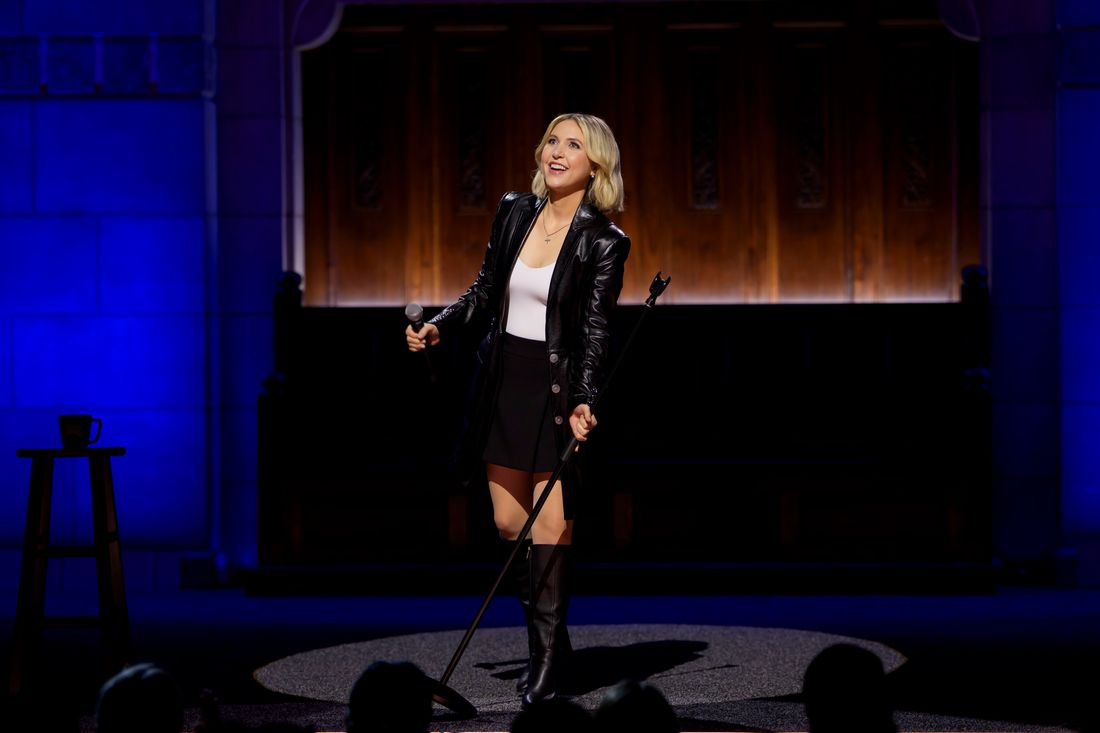
Taylor Tomlinson’s latest comedy special, Prodigal Daughter, feels different from her previous one, Have It All. While Have It All was filmed shortly after she turned 30, Prodigal Daughter is her first special created entirely as a thirty-year-old. Though it’s her fourth special in six years, Tomlinson demonstrates a clear growth in maturity as a comedian. However, she hasn’t abandoned her comedic style for serious reflection. Even when tackling personal topics like coming out later in life, she maintains her self-deprecating humor. She jokes, “Coming out as bisexual at 30 feels like telling a waiter, ‘By the way, it’s my birthday.’ They just think, ‘Okay, celebrate yourself,’ and you’re left thinking, ‘Wait, I was courageous!’ but they just respond, ‘Yeah, but it was obvious.’” Tomlinson is a quick and clever joke writer, and she approaches even vulnerable topics with wit and self-awareness.
What really stands out this time is how at ease Tomlinson is on stage. Many new comedians rush through their jokes, driven by nerves, but Tomlinson is learning to take her time. She’s realized that a little extra setup can make a joke land much better. This means she’s focusing on smooth transitions and carefully crafting the context for each bit. For example, after talking about coming out, she sets the stage by saying, “Growing up in a strict religious environment often means spending your twenties figuring out who you are, separate from who they wanted you to be.” Her jokes are still funny, but these thoughtful moments make them even more impactful and memorable.
Sommore, Queen Chandelier (Netflix)
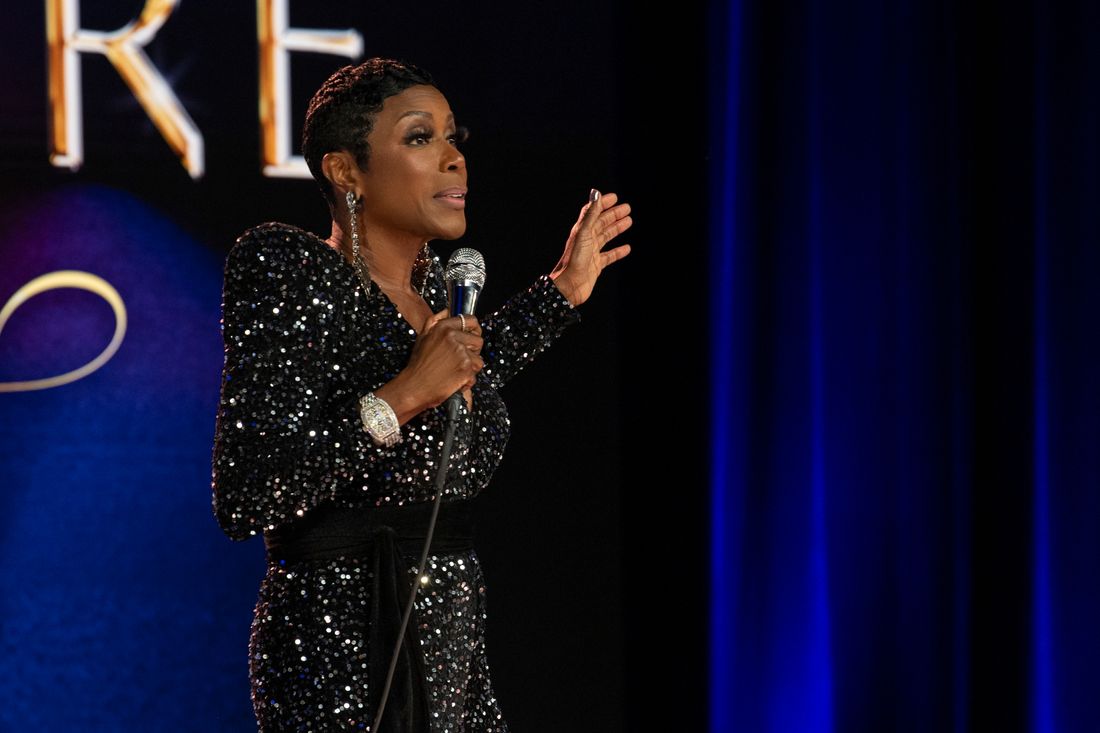
Comedians often struggle with how to begin a comedy special. While walking on stage to applause feels great, turning that initial moment into something more than just a pause can be tricky. That’s why Jerrod Carmichael’s 8 was so groundbreaking – he and director Bo Burnham started the trend of jumping right into the performance. In her special, Chandelier Fly, Sommore avoids a typical introduction altogether. Instead of simply greeting the audience, she immediately launches into her act. After acknowledging the applause, she quickly transitions into a bit comparing the song “Before I Let Go” to the way white audiences respond to “Sweet Caroline,” and discusses the enduring love Black people have for Luther Vandross, regardless of his sexuality. For Sommore, the opening isn’t just a formality – she starts strong and doesn’t waste any time.
Sommore’s new special feels like a chat with that fun, outspoken aunt who loves to share her opinions. She maintains a lively, gossipy tone throughout, diving into topics surrounding Black celebrity. She playfully discusses current events like Oprah’s weight loss journey, her confusion over Kendrick Lamar’s Super Bowl performance, and the Will Smith-Chris Rock incident, even finding a fresh angle on the slap – joking that it knocked the Fire Stick out of her TV. The set culminates with Sommore reflecting on GloRilla’s defiant response to online bullying – “I’m gonna keep making hits and I’m gonna keep getting money. And at the end of the day, pussy still good.” This leads Sommore to a thoughtful realization: when you’re famous, people will always have their own perceptions of you, which may not align with how you see yourself.
Janet McNamara, Not Smart Enough (YouTube)
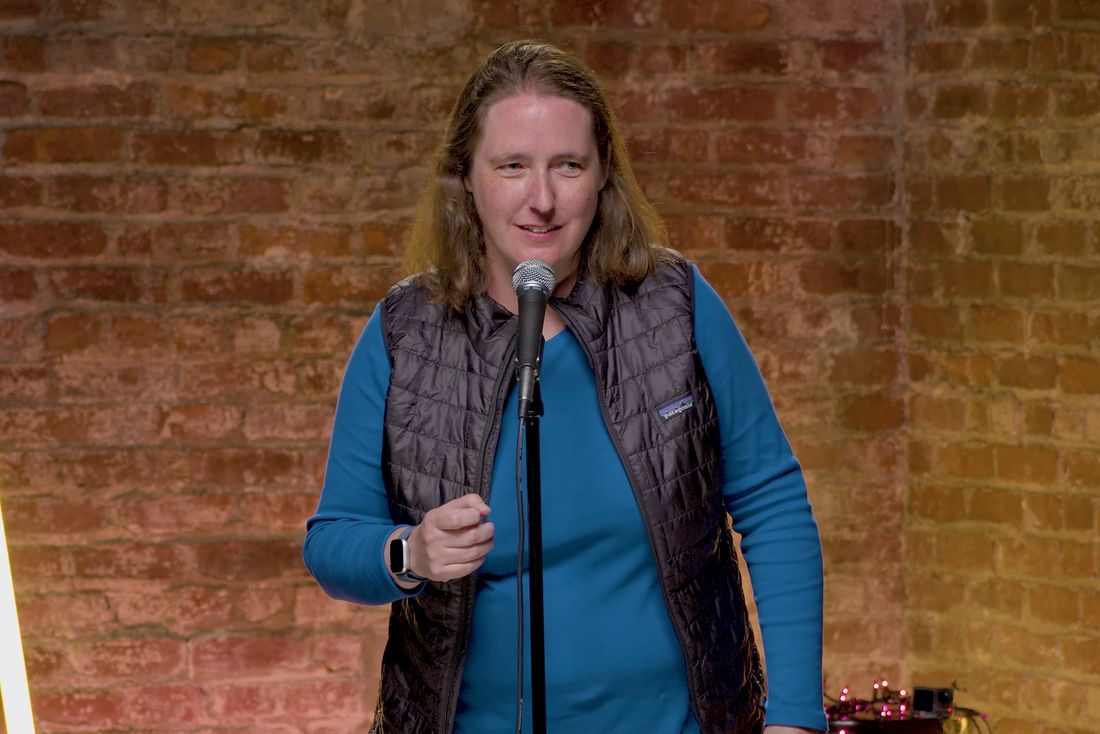
Before becoming a stand-up comedian, Janet McNamara playfully auditioned for American Idol in 2010 just to entertain her friends. She created an exaggerated character, jokingly told producers she’d prepared by playing the American Idol video game, and then sang Natasha Bedingfield’s “Pocketful of Sunshine” in a ridiculously high voice. She didn’t realize millions of people would see her audition and think she was serious. As she recalls in her comedy special, Not Smart Enough, she woke up months later to a flood of negative emails and tweets calling her terrible. But she thinks the real problem lies with the people who went to the effort of finding her contact information. “I was on TV for four minutes, and you found my work email?” she jokes. “You just proved I’m famous! This isn’t a breakdown, like my doctor thinks! I don’t need medication!” While this story would be a highlight for many comedians, McNamara only spends about a minute on it in Not Smart Enough.
I’ve been a fan of Hannah Gadsby, and Hannah McNamara reminds me so much of her! She brings the same dedication to her stage character that she once did performing for Simon Cowell. Watching her is like getting hit by a battering ram – she’s direct, doesn’t shy away from a fight, and her delivery is sharp and quick. She doesn’t bother with typical social stuff, like making eye contact, and she’s even been tested for autism three times because people kept noticing. Her new special, Not Smart Enough, touches on her journey to understand if she’s neurodivergent and also talks about times she’s felt manic. But what’s different about it is that she doesn’t see her brain as a weakness. She actually frames it as a strength. She tells this hilarious story about getting completely fixated on a confusing one-way street and calling the mayor’s office hundreds of times until they finally put up a sign just to make her stop! She puts it perfectly: everyone talks about people with mental health challenges, but nobody ever acknowledges that we’re often the ones actually doing something about it, like contacting our representatives.
Marcello Hernández, American Boy (Netflix)
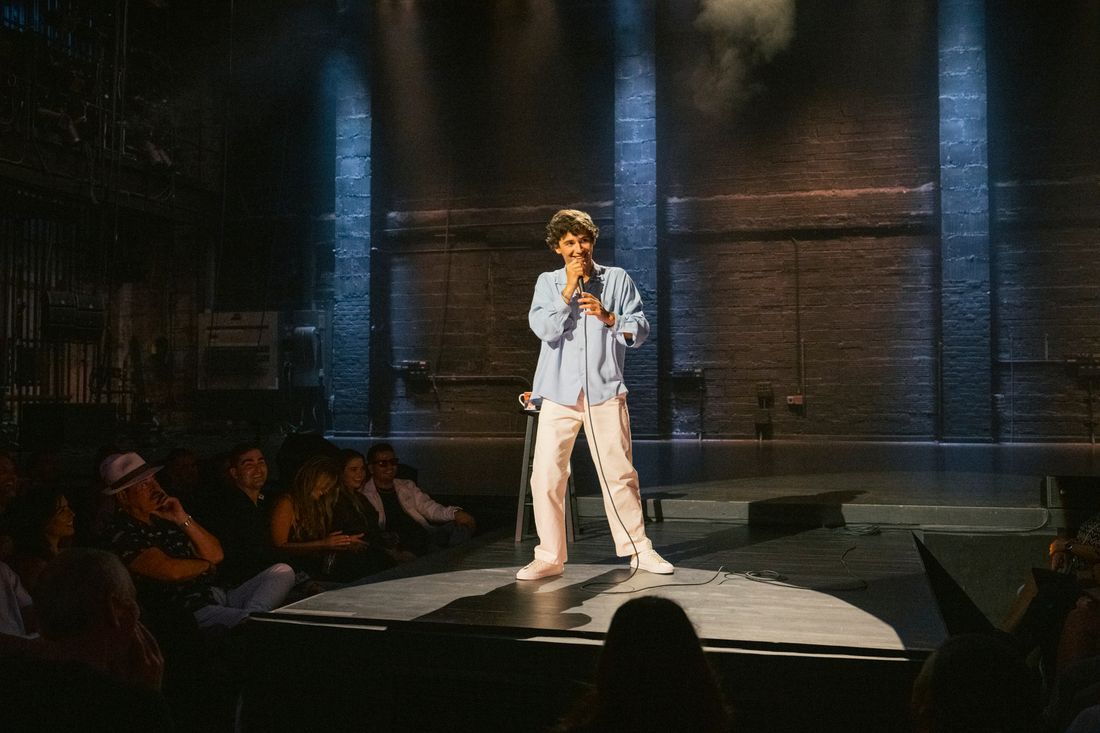
Marcello Hernández of SNL is best known for one really impressive impression: Sebastian Maniscalco. After watching his stand-up special, American Boy, it’s easy to understand why. Both comedians are energetic performers who focus on observations about people and their childhoods, and they both have a strong stage presence. You can see the similarities in the way they work, especially in the opening joke of Hernández’s special. He vividly describes a childhood party, starting with his mom making him dance with relatives, which he clearly disliked. He’s then allowed to join his cousins, and they end up in a hidden part of the house where one cousin tries to get him to eat a cockroach. His unpredictable uncle then gives him a small sip of whiskey, assuring him it’s harmless. Eventually, Hernández finds himself back on the dance floor, a little tipsy and enthusiastically dancing with his aunt, who is energetically letting loose because she’s going through a divorce. In these kinds of stories, Hernández combines his storytelling skills with the ability to seamlessly switch between himself and different characters – a skill he’s developed on SNL – creating a really compelling performance.
While American Boy doesn’t always flow as a complete show, it’s filled with funny moments. Hernández sometimes gets sidetracked with stories about college or jokes about immigration that don’t quite fit, but the special shines when it focuses on his relationship with his mom. She appears at the beginning and end, and her strict parenting is the source of some of the best material. The ending, where he jokingly defends her tough approach and says he’ll repeat the cycle with his own kids, feels a little weak because of those earlier detours. However, given that the show’s humor is often based on quick, unexpected bits—like a woman putting on a gymnastics outfit—a strong storyline isn’t essential. Hernández, like Sebastian Maniscalco, understands what makes audiences laugh, and he’s carrying on that tradition.
Read More
- United Airlines can now kick passengers off flights and ban them for not using headphones
- Katanire’s Yae Miko Cosplay: Genshin Impact Masterpiece
- All Itzaland Animal Locations in Infinity Nikki
- How to Complete Bloom of Tranquility Challenge in Infinity Nikki
- How to Get to the Undercoast in Esoteric Ebb
- Gold Rate Forecast
- All Golden Ball Locations in Yakuza Kiwami 3 & Dark Ties
- A Dark Scream Theory Rewrites the Only Movie to Break the 2-Killer Rule
- 6 Ways Invincible Season 4’s Hell Episode Rewrites The Comics
- Fire Force Season 3 Part 2 Episode 24 Release Date, Time, Where to Watch
2026-03-30 19:58