
It feels great to win, and that’s why we keep playing! But constantly focusing on winning can actually hold you back. When you’re too concerned with your win rate, you might start playing cautiously, avoiding challenges, and overlooking your errors – even in games you win. This can lead to a frustrating situation where you play a lot but don’t get any better. The key is to change how you view losing. This article will show you how to learn from every game, whether you win or lose, so you can develop the skills to become a consistently better player in the long run.
Key Takeaways
- Shift your focus from winning to learning: Your win rate is a poor measure of skill. Instead, actively seek out tougher opponents and treat every loss as a lesson that reveals exactly what you need to work on next.
- Make your practice time count: Endless hours of ranked play just reinforce bad habits. To truly improve, you need focused training sessions that target specific weaknesses, from mechanical skill to strategic decision-making.
- Get an outside perspective on your gameplay: You can’t fix the mistakes you don’t know you’re making. An objective view from a coach, a practice partner, or even a critical replay analysis is the fastest way to identify the deep-rooted habits that are holding you back.
Is Your Obsession with Winning Holding You Back?
Winning feels great – that’s why we keep playing, working to improve, and practicing. But focusing only on winning might actually hold you back from becoming as good as you could be. It’s a common problem for skilled players, and it’s hard to recognize because wanting to win seems like the natural goal.
It’s easy to hide weaknesses when you’re winning. If a victory is close, the good feeling of winning often makes you forget about the errors you made. You’re less likely to analyze what went wrong – the poor choices or mistakes – that nearly caused you to lose. Instead, you move forward, unintentionally repeating those same problems. This leads to a frustrating situation where you play a lot but don’t improve. You reach a point where you’re stuck, and your focus on winning is actually preventing you from getting better.
To truly improve, you need to shift how you think about losing. Instead of seeing it as a failure, view each loss as valuable information. It highlights areas where you can get better and shows you exactly what needs work. Some games, like Palworld, even intentionally use setbacks to help you learn and accept that challenges are a natural part of progress. If you only compete against easier opponents, you might win a lot, but you won’t actually grow your skills.
Don’t measure your progress by wins and losses. Instead, focus on what you’re learning. Did you try out a new tactic? Are you getting better at managing your resources? Work on one area for improvement at a time, and remember that it takes consistent, focused effort over months to fix significant weaknesses. If you’re not seeing progress, it means your practice methods need to change, regardless of your win rate. Prioritize developing long-term skills over short-term victories – that’s how you’ll truly become a better player.
Why You’re Skipping the Coach You Actually Need
It’s common to think that if you’re skilled, you can master something yourself through practice and by learning from experts. The thought of hiring a coach might feel like admitting weakness or a waste of money. However, this way of thinking can actually hold you back from reaching your full potential. In every field – from sports to chess – even the very best rely on coaches to provide insights they can’t see on their own.
Coaching isn’t just for new players. A good coach offers a fresh, expert viewpoint that helps you overcome your own blind spots and unconscious bad habits. You might be skilled in certain areas, but a coach can identify subtle weaknesses – like slow rotations or poor resource management under pressure – that you wouldn’t notice yourself. They don’t teach you how to play; they teach you how to win. Spending countless hours practicing without professional guidance is like building a house without a plan. You might create something, but it won’t be strong enough to succeed at a competitive level.
Find a Coach with a Proven Track Record
Good advice and coaching aren’t one-size-fits-all. Don’t just look for someone who’s better than you; find a professional coach with a history of helping players improve. A truly great coach does more than point out mistakes in your gameplay. They create a complete plan tailored to how you play, including optimal loot routes, drop strategies for any situation, and a clear understanding of your weaknesses in combat. They handle the strategy – like building the best weapon setups – so you can focus on performing at your best. When choosing a coach, prioritize experience training skilled players and a clear, organized path to improvement.
Know the Difference: Casual Advice vs. Pro Guidance
Look, I love my friends, and watching streams is cool, but getting advice from them isn’t the same as having a real coach. They usually just point out little things, like how I messed up a specific move. A coach actually watches my gameplay and figures out how everything connects – like, why that early mistake cost me the whole game. They’ll tell me the tough stuff my friends would avoid, and honestly, it makes a huge difference. I’ve heard from guys who’ve put thousands of hours into a game that coaching makes competing ten times easier. It’s like going from stumbling around in the dark to having someone with a flashlight showing you exactly where to go.
The Practice Trap: Stop Doing What Doesn’t Work
It’s frustrating when you put in a lot of practice, playing game after game, but don’t see your rank improve. This is a common problem for players hoping to become professionals. The reality is, just playing more doesn’t automatically make you better. Without a focused approach, you might end up repeating the same mistakes. Real improvement comes from shifting your focus from endless play to deliberate practice – working smarter, not just harder.
Break the Cycle of Repetitive Mistakes
At the beginning of any game, you’ll likely improve quickly, learning something new with each match. However, progress often slows down over time. This happens when you start making the same errors repeatedly without noticing. Simply playing more games won’t help if you’re stuck in this pattern – it just reinforces what you’re already doing, good or bad. For example, if you’re constantly getting caught out of position, playing the same way won’t solve the problem. Instead, you need to intentionally change things up by focusing on specific skills, like learning a new character or improving your aim with optimized equipment.
Identify and Rank Your Weaknesses
If you don’t know what’s wrong, you can’t fix it. To start improving, be honest with yourself about your weaknesses. Write down everything you struggle with – things like aiming, crosshair control, understanding the game, communicating with teammates, or playing after planting the bomb. Once you have a complete list, put the items in order from easiest to hardest to improve. This turns a general desire to ‘get better’ into a specific plan. Now you know exactly where to start, which makes improving feel much more manageable.
Create Targeted Practice Sessions
Now that you know your biggest weaknesses, stop just playing endlessly and start practicing intentionally. Instead of spending hours playing without a plan, focus each practice session on improving just one or two specific skills. For example, if aiming is your top weakness, spend 30 minutes in an aim trainer before playing a match. If you struggle in post-plant scenarios, practice those situations in a custom game. This focused practice is much more effective than simply playing. Keep in mind that one hour of focused training will give you better results than five hours of playing on autopilot in ranked games.
Are You Playing It Too Safe?
It’s natural to enjoy winning and feeling successful, but constantly seeking easy victories can actually hold you back. If you only play against weaker opponents, you won’t truly improve – you’ll just stay at the same level. True skill development happens when you challenge yourself, step outside your comfort zone, and risk losing. That’s where real progress is made, and every experienced player knows it.
To truly improve, you need to embrace challenges and even accept defeat. Losing isn’t fun, but it’s a valuable learning opportunity. A promising player once realized they wished they’d been more comfortable with losing, because consistent practice with losses leads to faster growth. If you mostly win, it might mean you’re not pushing yourself hard enough. Stop focusing on maintaining a high win rate and start prioritizing your development as a player.
Why Your Comfort Zone Is Killing Your Progress
Everyone has a comfort zone – that place where you feel safe and capable. When it comes to gaming, this usually means playing against opponents who aren’t very challenging. While it feels good to win, it actually hinders your improvement. You end up practicing strategies that only work against less skilled players and will quickly be exposed by anyone better. You don’t have to learn new techniques, get creative, or truly test your abilities.
Real progress starts when you realize that setbacks are a normal part of growth. Losing isn’t a sign you’re not good enough—it’s a chance to learn. When you avoid challenging opponents, you’re missing out on valuable learning opportunities. It’s better to focus on long-term improvement, even if it means facing difficult situations, than to only seek easy wins.
Find Higher-Level Opponents
If you want to become truly skilled, you can’t just practice against players at your own level. The difference in skill between casual players and the best is huge. To improve dramatically, you need to challenge yourself by playing with those who are much better than you – join competitive matches, tournaments, and communities where you’ll be pushed to your limits.
To improve your competitive gaming, find Discord servers focused on serious players of your game. Join leagues or tournaments where the competition is a bit better than your current skill level. It’ll be challenging, and you’ll likely lose often at first. However, playing against stronger, more skilled opponents is the best way to understand what it takes to compete at the highest level and identify areas where you can improve.
Learn More from Your Losses Than Your Wins
Winning usually just proves you’re good at what you already do. But losing is a powerful way to learn about your weaknesses. Instead of getting upset and jumping into another game right away, think of each loss as a chance to improve. What went wrong? Did you run out of resources? Were you in the wrong position? Did you misread what your opponent was going to do?
If you begin playing against opponents who are significantly more skilled, you’ll start to identify how you’re losing. These recurring losses actually highlight exactly what you need to improve. One player realized they hadn’t improved for years until they started consistently playing against stronger opponents, and then they began to see real progress. Every loss becomes a clear opportunity to practice and get better, transforming frustration into a valuable learning experience.
What Are You Really Learning From Replays?
Everyone who plays competitive games has experienced this: you review a recording of your match and immediately focus on all the mistakes – missed shots, awkward movements, and so on. It’s tempting to dwell on those mechanical errors, the times when your actions didn’t quite match your intentions. However, focusing only on those mistakes will limit how much you improve. Real progress comes from looking beyond the mechanics and figuring out why you made those choices in the first place.
Watching recordings of your own gameplay can really help you improve, but it’s important to do it the right way. Don’t focus on beating yourself up over mistakes. Instead, try to figure out why you won or lost by looking at the decisions you made along the way. Skilled players aren’t perfect; they’re just better at making smart choices than their opponents, from the start of the match to the very end. Let’s explore how to use replays to learn and become a better player.
Analyze Your Decisions, Not Just Your Mechanics
Let’s look at the bigger picture. Instead of dwelling on a single mistake during a fight, consider why you engaged in the first place. Was it a smart move? Did you have enough resources beforehand? Truly understanding what went wrong means examining your whole strategy. Think back to the beginning of the match: How well are you gathering resources? Are you farming efficiently, or are you putting yourself at risk? These early choices heavily influence how the rest of your game will go. A poor decision early on can lead to defeat, even if you’re a skilled player.
Focus on Resource Management and Strategy
For me, every match feels like a really complicated puzzle – it’s all about juggling resources and figuring out where to be. But I’ve learned that just watching gameplay isn’t enough. Now, when I review my own replays or watch pros, I hit pause and put myself in their shoes. I ask myself, ‘What would I do here?’ Then I see what they did and try to understand why. This game really comes down to smart choices, and studying how the best players handle their gear, build their loadouts, and move around the map is like getting a cheat sheet. It’s helped me think ahead and stop just reacting to what’s happening, and start making things happen instead.
Use Pause-and-Reflect Techniques for Review
Don’t just watch your replays – really study them. A quick pause at key moments can teach you a lot. Instead of immediately moving on after a loss, rewind to just before the fight and break down what happened. Consider your positioning, your opponent’s, your health, and what items you had. What could you have done differently to change the outcome? This pause-and-reflect technique helps pinpoint exactly why you made mistakes – whether it’s about your gameplay skills or your overall strategy. This is especially helpful when reviewing important matches, like those in a tournament, so you can understand how you perform under pressure and make better decisions when they count.
The Speed vs. Strategy Mistake
It’s tempting to be wowed by players who react incredibly quickly and have amazing actions per minute. While speed is certainly impressive, it can actually hold talented gamers back. Focusing only on fast reflexes means you’re hoping to simply outplay your opponent mechanically, which isn’t a reliable strategy. More often than not, the player with the best strategy wins, not necessarily the fastest one. Rushing into battles without thinking things through leads to obvious moves, lost chances, and disappointing defeats against opponents you could have easily overcome.
This isn’t about playing slowly; it’s about playing without thinking. You might be skilled, but if you act impulsively, you’ll quickly make poor choices. Truly great players are controlled and precise. They mentally slow the game down, even when it looks fast-paced on screen. This lets them see the whole situation, predict what opponents will do, and make the best possible move instead of just reacting.
Why Playing Too Fast Backfires
Playing too quickly can actually hurt your performance by making you overly focused. One aspiring pro gamer explained they’d get so caught up in speed that they’d miss crucial details during fights and at the end of matches. This ‘tunnel vision’ means you might flawlessly perform a difficult move but fail to notice a quick opening from your opponent – and those split-second opportunities often decide the outcome. The key isn’t simply being fast; it’s about capitalizing on every mistake your opponent makes. This requires staying aware and being patient, not just relying on speed.
Develop Strategic Thinking, Not Just Reactions
Most competitive gamers spend a lot of time perfecting their reflexes and aiming, but surprisingly few focus on the bigger picture – understanding the game’s strategy. Consider how much time you spend practicing aim compared to thinking about things like where to move on the map or how to best manage resources. Knowing the strategy is just as crucial as having good aim. This means going beyond simple practice and really learning things like the best weapon choices in Warzone or how spending money affects the game in Valorant. Think of it this way: your mechanical skills are the tools, and your strategy is the plan that shows you how to use those tools to win.
Balance Quick Execution with Smart Decisions
Want to improve your strategic thinking? A great way to start is by reviewing your own gameplay or watching professionals. Don’t just watch – pause the video during key moments, like fights or important decisions. Ask yourself what you would do in that situation, and think through all your choices – whether to attack, retreat, use an ability, or move to a better position. This helps you think things through instead of just reacting on instinct. The more you practice this, the more strategic options you’ll remember, and eventually, you’ll be able to make smart decisions quickly, letting your skills execute a well-planned strategy instead of a panicked response.
How to Know If You’re Actually Improving
It’s common to feel stuck when you’re putting in a lot of effort but not seeing consistent progress. Your ranking can go up and down, and some days you’ll feel great while others will be disappointing. Focusing solely on your win/loss record can be discouraging, because that one number doesn’t give you the whole picture. Many things beyond your control – like who you’re matched with, how your teammates are playing, or technical issues – can affect it. Just looking at wins and losses doesn’t tell you if you are actually improving.
Genuine progress isn’t just about winning; it’s about how you play. Instead of fixating on the result, focus on the things you can control – your skills, choices, and how well you communicate with your team. Are you improving your aim? Are you making better decisions about when to move around the map? Are you surviving longer early in the game? These are the signs you’re actually getting better. This approach not only helps you improve over time, but it also keeps you from getting frustrated when you lose. To truly see how far you’ve come, you need to look beyond simply winning or losing and focus on what really matters: your own performance.
Set Benchmarks Beyond Just Win Rates
Just looking at whether you win or lose doesn’t tell the whole story – it can be really deceiving. You might win even if you don’t play well, or lose despite playing great yourself. Instead of focusing solely on wins, set specific goals for different aspects of your gameplay, like your mechanical skills, how you make decisions, and how well you work with your team. For instance, you could try to deal more damage each round, make fewer mistakes at the beginning of a match, or communicate better with your teammates. This broader approach gives you a more accurate understanding of how you’re improving. By recognizing these smaller achievements, you’ll gain confidence and develop the skills you need to improve your rank effectively.
Track Specific Performance Metrics
To really understand how you’re improving, pay attention to detailed stats. For example, if you’re working on your aim in a game like Warzone, track your accuracy and headshot rate over several weeks, not just one game. Remember that significant skill development takes time – becoming a top player is a long process that requires consistent effort over months. Tracking specific numbers helps you see your gradual progress, which can keep you motivated. It also lets you identify exactly what you need to improve, so you can focus your practice and use the best strategies and equipment.
Build an Improvement System from Tournaments
Playing in ranked games is different from competing in tournaments. Many players who want to become pros struggle because they don’t practice against stronger opponents in a formal, competitive environment. Tournaments push you to improve and reveal areas where you need to get better. It’s not just about winning—it’s about learning and growing. Competing against the best players helps you quickly understand the current strategies, improve your own gameplay, and honestly assess your skill level. Without this experience, it’s very difficult to develop the abilities and mental toughness needed to succeed as a professional.
The Time Investment Reality Check
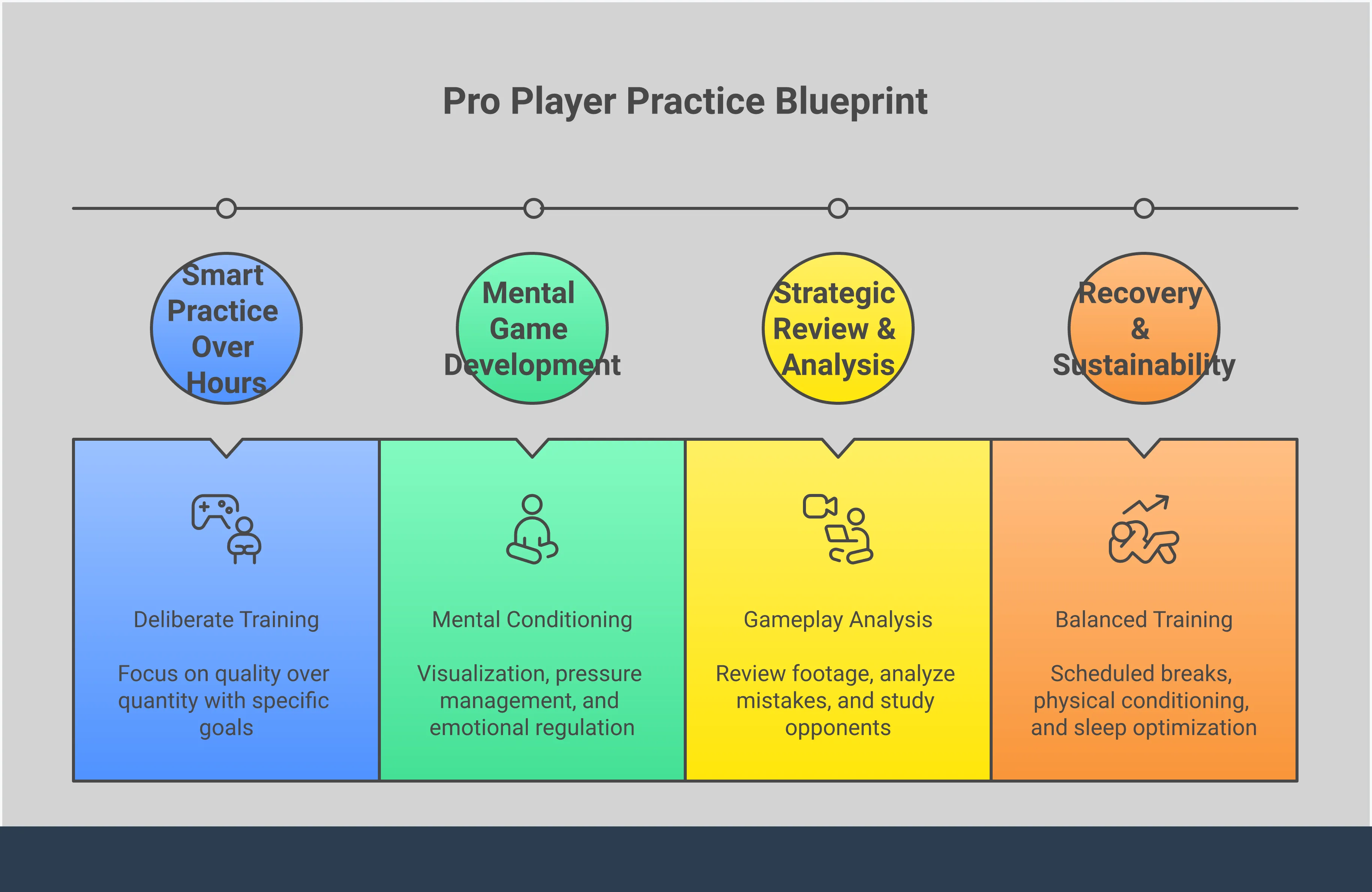
Forget the idea that becoming a pro gamer is all about endless practice. While hard work is essential, simply playing for countless hours isn’t enough. Many skilled players get discouraged and quit because they think more playtime automatically equals improvement. They end up playing all night, but don’t see any real progress, getting stuck at the same level and repeating the same errors. The truth is, becoming truly great at a game isn’t about how much you play, but how you play – focusing on quality practice and a structured approach is far more important.
Becoming a professional player is a long-term commitment, not something that happens overnight. Success requires a thoughtful and consistent plan that emphasizes effective practice over simply repeating actions. Remember that your energy and concentration are limited, so manage them carefully, just like resources in the game. Instead of focusing on how much you play, ask yourself what you achieved during your practice sessions. We’ll show you how to maximize your time by practicing intentionally, creating a schedule that avoids burnout, and finding supportive people to help you stay motivated and on course.
Choose Quality Practice Over Grinding Hours
If you’re practicing for a long time without seeing improvement, you likely need to change your approach. Real progress is noticeable – if you feel stuck, your practice isn’t effective. Simply playing for hours isn’t enough; how you practice matters more. Instead of endlessly playing ranked matches, focus on intentional practice. Identify your weaknesses – if your aim is off, use an aim trainer. If you’re struggling with a particular game situation, watch recordings of your gameplay and practice those specific scenarios. Becoming truly skilled involves mastering the small details, like optimizing your equipment – that’s what distinguishes good players from the best.
Build a Sustainable Schedule to Avoid Burnout
Becoming a professional player takes time and dedication. Significant improvement in a key area can realistically take six months or more of consistent, focused effort. While that might seem daunting, it’s actually a relief to understand. It means you can stop hoping for quick wins and instead build a practice schedule you can stick with. Trying to practice for 12 hours a day will likely just lead to burnout and frustration. A better approach is a well-rounded plan that includes focused practice, reviewing recordings of your gameplay, playing competitive matches, and, crucially, getting enough rest. The ups and downs of competition are normal, and a consistent routine helps you stay balanced and focused on improving over the long term, preventing the burnout that stops many players from reaching their goals.
Find a Partner to Stay Accountable
Becoming a professional gamer is rarely a solo journey, even in individual games. Having a reliable partner – whether it’s a duo teammate, or just a trusted friend – can significantly simplify the process. This person helps keep you accountable, offering a sounding board for strategies, someone to review gameplay footage with, and honest feedback when you slip into old, negative patterns. A good partner offers a valuable outside perspective that’s hard to achieve when you’re focused on your own game. They’ll also help you stay motivated when things get tough and share in your successes. Connecting with supportive people within the gaming community is one of the best things you can do for your career.
Related Articles
- Deus Ex LFG: Connect with Other Augs in LFG Feature on Z League App
Frequently Asked Questions
It’s true that losing can help you learn, but ultimately, isn’t the aim to win? It can be tough to balance that. While winning is always the immediate goal, try shifting how you define a ‘good’ practice session. Don’t focus only on whether you won or lost. Instead, focus on whether you improved a specific skill. Even if you lose while trying something new and challenging, it’s a successful session if you perform that new skill better than before. Think of it like this: being willing to lose now helps you win in the long run.
It’s understandable to wonder about the cost of a professional coach. While coaching is a valuable investment, there are affordable alternatives. You can create your own support system by finding a practice partner who’s as good as or better than you, and agreeing to give each other honest feedback on your gameplay. Joining competitive online communities, like Discord servers, is another way to find practice matches and get advice from more experienced players. The key is to get an unbiased opinion to help you identify areas for improvement and avoid making excuses.
It can be tough to know if you’re practicing effectively or just repeating actions without thinking. The key difference is having a clear intention. Before you start playing, ask yourself what one specific thing you want to improve today. If you don’t have a goal in mind, you’re likely just ‘grinding’ – playing repeatedly without focus. Purposeful practice means starting a session with a defined target, like getting better at early-game strategy or mastering a particular move combination. Simply pressing ‘play again’ without thinking isn’t as valuable. Even one hour of focused practice can be more beneficial than five hours of mindless repetition.
It’s understandable to feel discouraged when losing to stronger players. However, try to view those matches as opportunities to learn. Getting consistently beaten actually shows you exactly what top-level players are doing well. Instead of getting upset, be curious! Record your games and analyze how your opponent is winning. What strategies are they using? How are they handling resources? Every loss is a valuable, free lesson that highlights the difference between your current skill level and your goals, and shows you what areas need improvement.
Instead of focusing on how much time you practice, think about practicing consistently. Short, regular sessions are much more effective than long, infrequent ones. Someone who practices for two hours every day will improve faster than someone who plays for twelve hours straight one day and then stops for the rest of the week. Create a practice schedule you can maintain over time, including focused practice, reviewing your gameplay, playing matches, and importantly, getting enough rest.
Read More
- United Airlines can now kick passengers off flights and ban them for not using headphones
- Crimson Desert: Disconnected Truth Puzzle Guide
- All 9 Coalition Heroes In Invincible Season 4 & Their Powers
- Mewgenics vinyl limited editions now available to pre-order
- Invincible Season 4 Episode 6 Release Date, Time, Where to Watch
- The Boys Season 5 Spoilers: Every Major Character Death If the Show Follows the Comics
- Grok’s ‘Ask’ feature no longer free as X moves it behind paywall
- Assassin’s Creed Shadows will get upgraded PSSR support on PS5 Pro with Title Update 1.1.9 launching April 7
- ‘Timur’ Trailer Sees Martial Arts Action Collide With a Real-Life War Rescue
- Nintendo Officially Rewrites Princess Peach After 41 Years
2025-12-03 14:14