Dystopian stories have always been popular – and frightening – for audiences, whether in films like the Mad Max series or classic books like George Orwell’s 1984. Some dystopian works use extreme and over-the-top settings to examine issues like unfairness and control, while others resonate with viewers because they feel strikingly realistic. Increasingly, these stories are connecting with current events and reflecting real-world problems.
Dystopian stories often aim to teach us something about society, and some have turned out to be surprisingly accurate in their predictions. With all the challenges and uncertainty of the 2020s – from the COVID-19 pandemic to political unrest – many dark visions of the future now feel eerily realistic. As the world becomes more difficult, even well-made dystopian films can be unsettlingly close to our current reality.
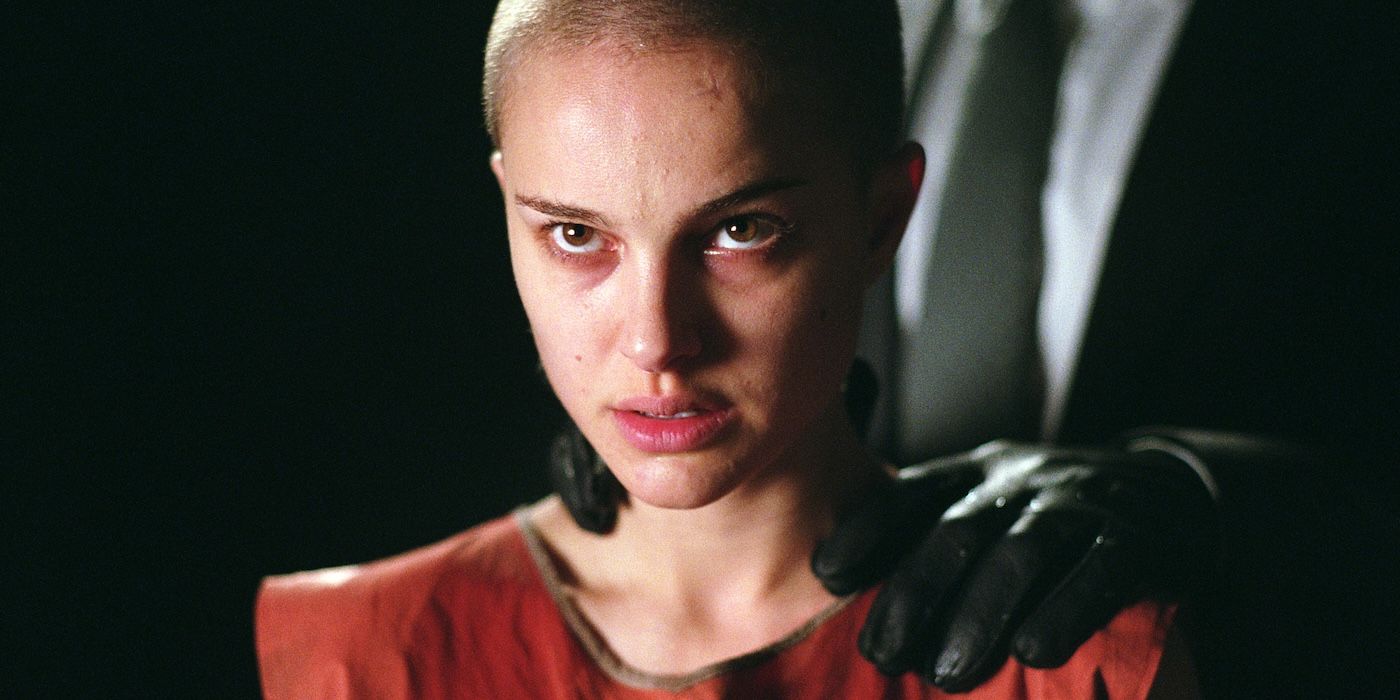
V for Vendetta’s Realism Overcomes Its Science Fiction
In a future Britain controlled by a harsh and oppressive government, Chancellor Adam Sutler uses a powerful secret police force to maintain order. When a woman named Evey Hammond is targeted by the authorities, a mysterious masked figure known as V intervenes. V begins a solo fight against the government, hoping to inspire a larger uprising with Evey’s assistance.
Watching ‘V for Vendetta’ feels different now than it used to. It’s unsettling how much of the story – especially the way democracies can slip into authoritarian rule – is actually happening in the real world. Seeing inside Sutler’s government, with all the propaganda and obvious double standards, is honestly scary because it feels so relevant today. What’s really impressive is that even though it’s a sci-fi action movie with a superhero, it feels incredibly grounded and realistic, which just proves how smart the writing is.
In Time Is a Perfect Showcase of Oppressive Inequality
The movie In Time is set in a future where money is no longer used – instead, people use their own life expectancy as currency, trading seconds, minutes, and years to buy goods and services. In this world, the rich can live for centuries, while the poor struggle to survive. When a man from a working-class background unexpectedly receives a large amount of time from a stranger, he sees an opportunity to fight against this unfair system. He travels to the wealthiest part of the country and, along with a kidnapped heiress, begins a series of daring robberies.
While the movie In Time wasn’t perfect, its depiction of how stressful and damaging poverty can be feels especially relevant today. The 2020s have seen a huge shift of wealth from those with less to those with more, particularly during the COVID-19 pandemic, leading to widespread conversations about growing inequality. Despite its flaws, In Time effectively illustrates the consequences of this widening gap, perhaps better than many other films.
Civil War Was Prescient Just Two Years Ago
A brutal civil war has torn the country apart, dividing it into opposing groups while the president struggles to maintain control. The story centers on a team of journalists traveling across the nation to report on the conflict as troops advance towards Washington D.C. During their journey, they witness the widespread social, emotional, and physical toll the war is taking on America.
The film provides a thought-provoking look at a potential future for America, as political divisions grow wider. Jesse Plemons’ haunting question, “What kind of American are you?” feels even more impactful today, just two years after the film came out. In that short time, the country has faced political violence and instability, making the movie seem less like fiction and more like a preview of real events.
Gattaca Shows the Unbearable Weight of Social Discrimination
The film Gattaca takes place in the near future, where genetic engineering is highly advanced, creating a divided society between those born with genetic advantages (‘Valids’) and those conceived naturally (‘In-Valids’). The story follows Vincent, an In-Valid who dreams of working for the Gattaca Aerospace Corporation and traveling to space. He pretends to be a Valid to overcome prejudice, but his plans are jeopardized when a murder investigation begins.
Since the film Gattaca, the possibility of genetically engineering babies has become a major and often controversial topic, with some predicting it could happen soon. Beyond the futuristic elements, the movie powerfully portrays discrimination as a subtle yet pervasive issue – it’s considered one of the most effective depictions of systemic bias in Hollywood. The film’s themes and writing remain remarkably relevant and well-crafted even today.
Carriers Became Relevant in the Pandemic
Carriers is set after a devastating pandemic that wiped out most of the population, leaving only a few survivors. The film centers on two brothers and their girlfriends as they travel across the country, searching for a safe haven – a beach from their childhood. Along the way, they face numerous obstacles, including the threat of the virus itself and a dangerous group of former soldiers.
The real COVID-19 pandemic, thankfully, wasn’t as dramatic as portrayed in movies. Initially, many people worldwide feared widespread societal breakdown, largely because the severity of the illness was unknown. Unlike some Hollywood pandemic films that focus on intense horror, this movie took a more realistic approach, emphasizing the emotional and social impacts of the crisis.
Children of Men Feels More Realistic Than Ever
In the not-so-distant future, a pandemic has left all women infertile, and for eighteen years, no children have been born. As society crumbles globally, Theo Faron, a former activist, is tasked with escorting a miraculously pregnant refugee to a group offering help. Their journey is fraught with danger, as they must navigate a repressive police state in a Britain on the verge of total chaos.
Since 2006, the world has felt increasingly similar to the grim setting of the Clive Owen thriller, with issues like falling birth rates, rising anxiety, and the mistreatment of immigrants. The film itself is a stark and intense dystopian thriller.
Read More
- United Airlines can now kick passengers off flights and ban them for not using headphones
- How to Complete Bloom of Tranquility Challenge in Infinity Nikki
- Gold Rate Forecast
- How to Solve the Glenbright Manor Puzzle in Crimson Desert
- All Itzaland Animal Locations in Infinity Nikki
- Katanire’s Yae Miko Cosplay: Genshin Impact Masterpiece
- All Golden Ball Locations in Yakuza Kiwami 3 & Dark Ties
- 8 Actors Who Could Play Blackbeard In One Piece Live-Action Season 3
- All 10 Potential New Avengers Leaders in Doomsday, Ranked by Their Power
- A Dark Scream Theory Rewrites the Only Movie to Break the 2-Killer Rule
2026-02-15 06:37