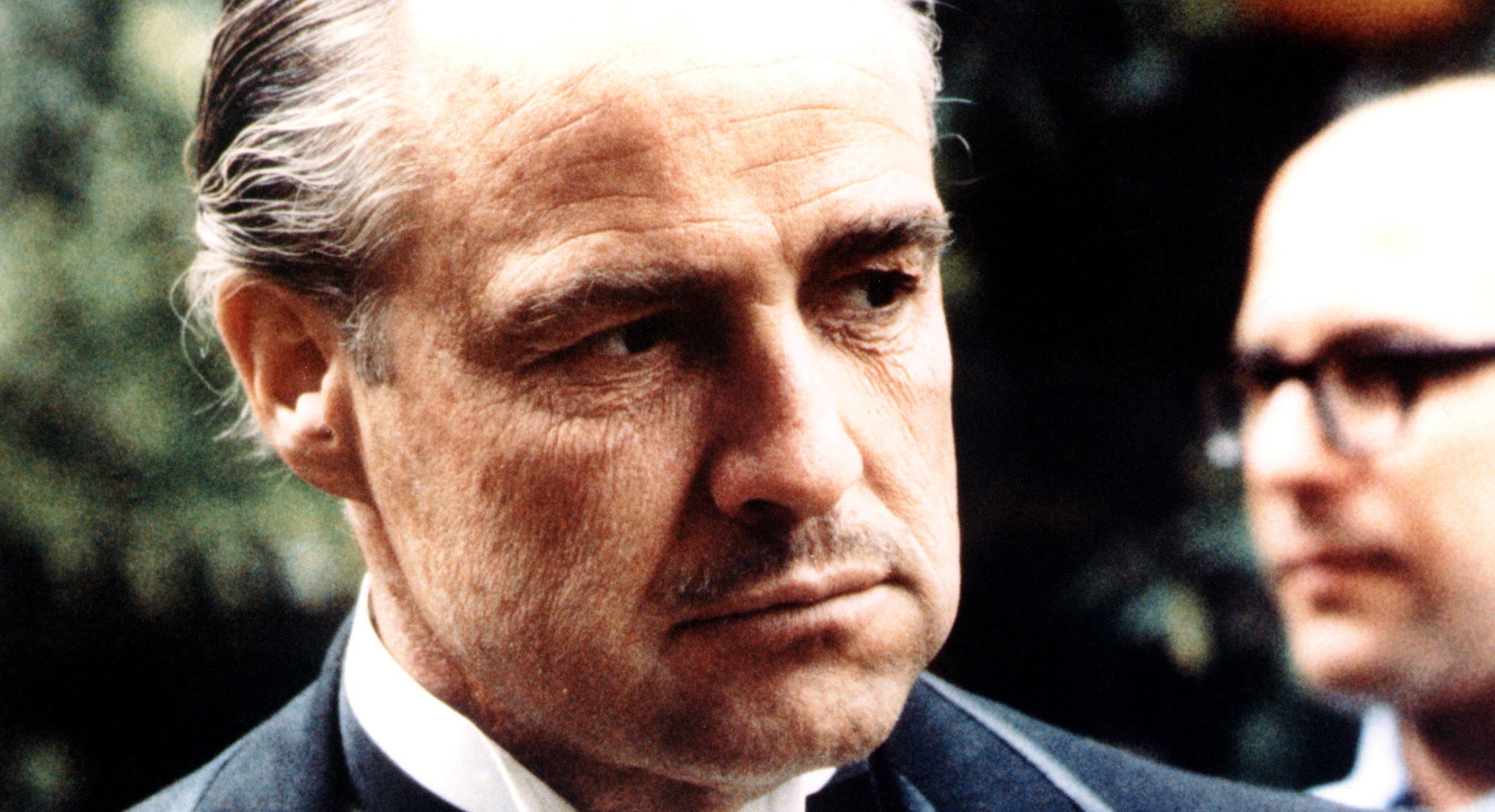
Francis Ford Coppola’s Godfather trilogy is full of unforgettable lines and scenes. Whether it’s a witty remark like “Leave the gun, take the cannoli,” or a powerful moment of sadness and treachery, the film’s dialogue is what makes it truly special.
The opening scene of The Godfather is famous for its memorable lines, especially Vito Corleone’s threat, “I’ll make him an offer he can’t refuse.” However, his powerful response to the pleading Bonasera is equally striking, immediately establishing Vito as a man of unwavering principles and demanding respect.
This Opening Line Perfectly Introduces Vito’s Character
The story begins on the day of Don Corleone’s daughter’s wedding. During the celebration, Bonasera, an Italian immigrant who runs a funeral home, asks the Godfather for help. His daughter was brutally attacked by her boyfriend and another man, and he wants justice.
Bonasera describes the attack he suffered, the subsequent arrest of the attackers, and their trial. To his dismay, the judge gave them a lenient sentence, allowing them to go free. Feeling deeply humiliated and angry, Bonasera seeks help to get justice.
Bonasera quietly tells Vito he wants the people who harmed his daughter killed. When Vito refuses, Bonasera offers him money. Vito is offended, replying that Bonasera comes to him asking for justice without proper respect, and doesn’t even address him as ‘Godfather’.
This single line makes it clear Vito doesn’t work for money. When Bonasera offers him a bribe, Vito’s rejection shows what he values and how he operates. He believes in building relationships based on loyalty, respect, and returning favors – not just earning a profit. He helps people he cares about, or those he believes have been treated unfairly, but not as a paid service.
When Vito complains that people don’t call him ‘Godfather,’ he’s really asserting his position as a leader and protector of his community. For him, being a godfather means being someone his people can always rely on. He makes it clear that he can’t be bribed, and that if Bonasera had asked for help as a friend, those who hurt his daughter would have already been punished.
This pattern continues throughout the entire series. While Vito is certainly capable of violence, he only uses it when he feels it’s absolutely necessary – never out of anger or for his own benefit. He chose not to retaliate after Sonny’s death, instead offering a truce to safeguard Michael and, more broadly, to protect Little Italy from Michael’s growing power.
As a critic, I found Bonasera’s offer of money to the Don particularly revealing. It wasn’t just a failed attempt at persuasion; it completely missed the point of who Vito Corleone is. He’s not some thug you can simply pay to solve problems. His violence isn’t random; it’s carefully considered and serves a specific purpose. By trying to buy his services, Bonasera actually insults the very foundation of the Corleone family – their insistence on earning respect and loyalty, not just taking money. It highlights how out of touch he is with the true nature of their power.
This Opening Line Contradicts The Godfather’s Biggest Complaint
Some viewers have criticized The Godfather for seemingly glorifying the Corleone family, suggesting it downplays the violence and presents them as more honorable than they actually were.
Although the movies show us the human side of the Corleone family, it’s crucial to remember they aren’t portrayed as good or honorable people. The story doesn’t try to make them seem like heroes, but rather focuses on the harsh reality of their criminal world.
They act with a clear purpose, driven by loyalty and a desire to protect others, not by greed or malice. This focus on positive motivations is what distinguishes them from groups that frequently resort to violence or act purely for their own benefit.
It seems contradictory, but like Bonasera, Vito is driven by a desire to protect others. He uses violence only to safeguard his family and community, not to profit from fear or control people for his own benefit.
Throughout the three movies, the Corleone family is shown as deeply connected by duty and a sense of community. They resort to violence not out of greed, but because they feel it’s essential for protecting their family and surviving difficult circumstances.
Vito’s first line immediately establishes this idea. It portrays a man with straightforward motivations. This concept originates from the natural instinct of families to defend each other, typically when faced with harm or unfair treatment towards those they care about.
The notion that these films praise the family’s behavior isn’t accurate. Instead of celebrating what they do, the story helps us understand their perspective. Most people would go to great lengths to defend their families, and the films tap into that natural instinct, showing it without justifying the violence.
Vito’s Meeting with Bonasera Sets Up the Entire Trilogy
It’s not just about how something works, but also what happens when it doesn’t. In the film’s opening, Bonasera states his belief in America, then describes how his daughter was assaulted and the attackers avoided punishment through a legal system he once believed in.
The story starts with Bonasera seeking Don Corleone’s help to get revenge on those who harmed his daughter, and this moment hints at a larger shift in the film. We begin to see a pattern where initial hopefulness slowly turns into disillusionment. This change is especially evident in the character of Michael Corleone, who starts as a war hero wanting no part of his family’s criminal life, but eventually becomes a ruthless mafia figure with little respect for the law.
This highlights a central idea: the clash between what’s right and wrong. A lawful society, the kind Bonasera and Michael want to live in, is perfect when it functions as it should. However, when the system fails, people feel betrayed and may be drawn to take matters into their own hands.
As Vito points out, Bonasera initially stayed away from criminals after finding success in America. But when the legal system let him down, he turned to the Mafia for help. Like Michael throughout the films, Bonasera discovers the appeal and power of organized crime are hard to ignore.
The path Bonasera takes – from trusting in the American dream to ultimately relying on the Mafia – mirrors Michael’s own transformation. Throughout the first movie, Michael slowly gives up on American ideals and increasingly prioritizes his family’s strength and influence.
The movie begins with a story about how Vito helped Johnny Fontane at the start of his singing career. When a bandleader refused to let Johnny out of his contract, Vito and Luca Brasi paid him a visit. Within an hour, the contract was released for a mere $1,000.
When Kay asks Michael how he pulled something off, he explains that Luca Brasi threatened the man with a gun, and Vito made it clear the man would sign the contract one way or another—either willingly, or not at all. Michael then emphasizes, “That wasn’t me, Kay, that was my family.”
As a film fan, I always feel like this moment is crucial right at the start. It really hammers home how powerful Vito is, and how much control he has over everything. But even more than that, it subtly introduces the central tension of the movie – the struggle between his family life and his criminal business.
Throughout the movie, the quote highlights the strong bonds of loyalty within the Corleone family. Michael initially wanted to stay separate from his father’s criminal life, but his deep love and desire to protect his family ultimately led him to become involved.
Initially, his words hint at his eventual change – from someone avoiding his family’s criminal activities to someone who reluctantly takes control. By the end of the movie, he’s become the very figure old man Bonasera sought help from – a symbol of a hidden, powerful force stepping in where traditional American ideals have failed.
Read More
- United Airlines can now kick passengers off flights and ban them for not using headphones
- Crimson Desert: Disconnected Truth Puzzle Guide
- All 9 Coalition Heroes In Invincible Season 4 & Their Powers
- Mewgenics vinyl limited editions now available to pre-order
- Assassin’s Creed Shadows will get upgraded PSSR support on PS5 Pro with Title Update 1.1.9 launching April 7
- Viral Letterboxd keychain lets cinephiles show off their favorite movies on the go
- Grey’s Anatomy Season 23 Confirmed for 2026-2027 Broadcast Season
- Does Mark survive Invincible vs Conquest 2? Comics reveal fate after S4E5
- All Golden Ball Locations in Yakuza Kiwami 3 & Dark Ties
- How to Get to the Undercoast in Esoteric Ebb
2025-12-05 01:12