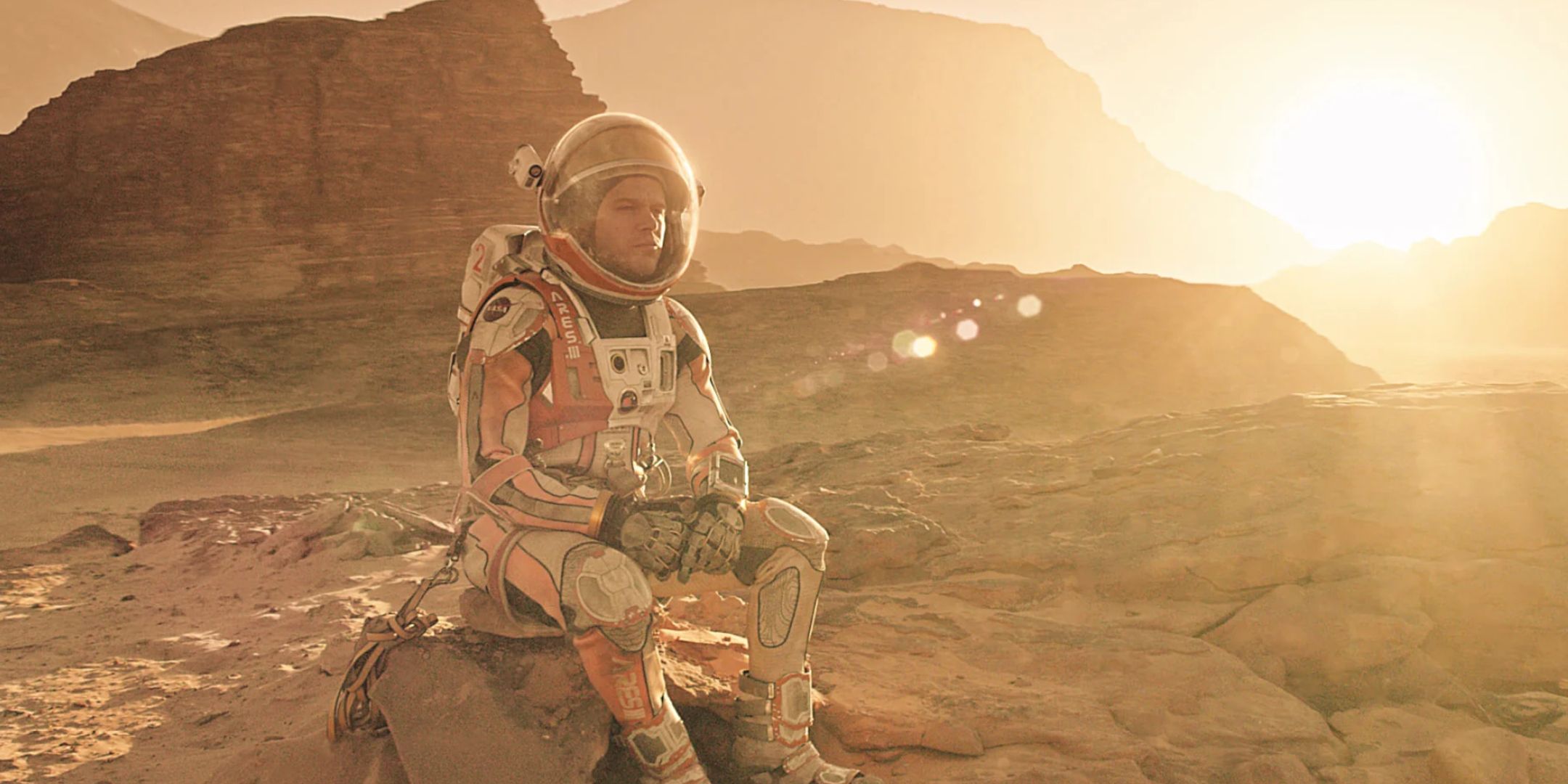
Space has become a popular setting for countless TV shows and movies, almost creating its own distinct genre. While epic space adventures like Star Wars and Dune often grab the most attention, realistic science fiction is becoming increasingly popular and respected. Today’s viewers appreciate stories that feel believable and demand that science and technology are portrayed accurately in science fiction.
TV has embraced complex, scientifically accurate science fiction more readily than movies, as filmmakers often worry about appealing to a broad audience. However, a few recent space movies prioritize accuracy, and advancements in computer-generated imagery (CGI) now allow them to realistically portray complex scientific details, from how things move in space to the challenges the human body faces in those conditions.
The Martian Showcases How Science Enables Human Survival
Ridley Scott, the director known for sci-fi classics like Alien and Prometheus, brilliantly brought Andy Weir’s novel The Martian to the screen. The film stars Matt Damon as an astronaut stranded on Mars who must use his ingenuity and resilience to survive for months while awaiting rescue. Throughout his ordeal, Dr. Mark Watney showcases remarkable skill and unwavering determination.
NASA played a key role in making the film, providing experts to ensure accuracy. They contributed details about everything from the Martian landscape to the inner workings of Mission Control. According to Newsweek, the agency helped shape the story throughout the entire filmmaking process, from the initial script to the final shots. An aerospace engineer writing in The Guardian called The Martian the first film to realistically portray the challenges of human space exploration on Mars.
While there are a few minor technical details to note, the film stands out for its commitment to realism. It accurately portrays scientific concepts like ion propulsion, potato gardening, water chemistry, spacecraft maneuvers, and mathematical principles, and notably avoids using made-up technology, instead sticking to established physics.
Interstellar Examines Humanity Through Modern Physics
Christopher Nolan’s film, Interstellar, takes place on a future Earth facing an environmental crisis that could wipe out humanity. A team of astronauts travels through a wormhole, searching for a new planet where people can live. The movie is famous for its stunning visual effects, including incredible scenes of spaceships near Jupiter and black holes, and was highly praised for these effects.
As a huge movie fan, I always appreciate when filmmakers really commit to getting things right. With Interstellar, Nolan wanted it to be scientifically accurate, so he brought in physicist Kip Thorne as a consultant. Thorne agreed to help, but only if the script didn’t break any known laws of physics! It’s amazing because the visuals ended up being so realistic that even he learned new things about things like accretion disks and how gravity bends light from the movie’s special effects. It just shows how dedicated the team was to making something truly believable.
The film has received high praise from many scientists, including renowned astrophysicist Neil deGrasse Tyson, NASA engineer Timothy Reyes, theoretical physicist Michio Kaku, and Jean-Pierre Luminey, the scientist who created the first computer simulation of a black hole. While Rotten Tomatoes critics acknowledged that Interstellar aimed for ambitious ideas, their main criticism focused on the film’s sometimes clumsy philosophical discussions, not its scientific accuracy.
2001: A Space Odyssey Treats Science as a Visual Language
Early space films prioritized entertainment over accuracy, leading to stories with shaky science, like Destination Moon, Conquest of Space, and Forbidden Planet – all popular during the 1950s space boom. It wasn’t until 1968, with Stanley Kubrick’s 2001: A Space Odyssey – co-written by Arthur C. Clarke – that a real focus on scientific realism arrived in cinema, setting a new standard for the genre.
I’m sorry, Dave, I’m afraid I can’t do that – 2001: A Space Odyssey (Clip)
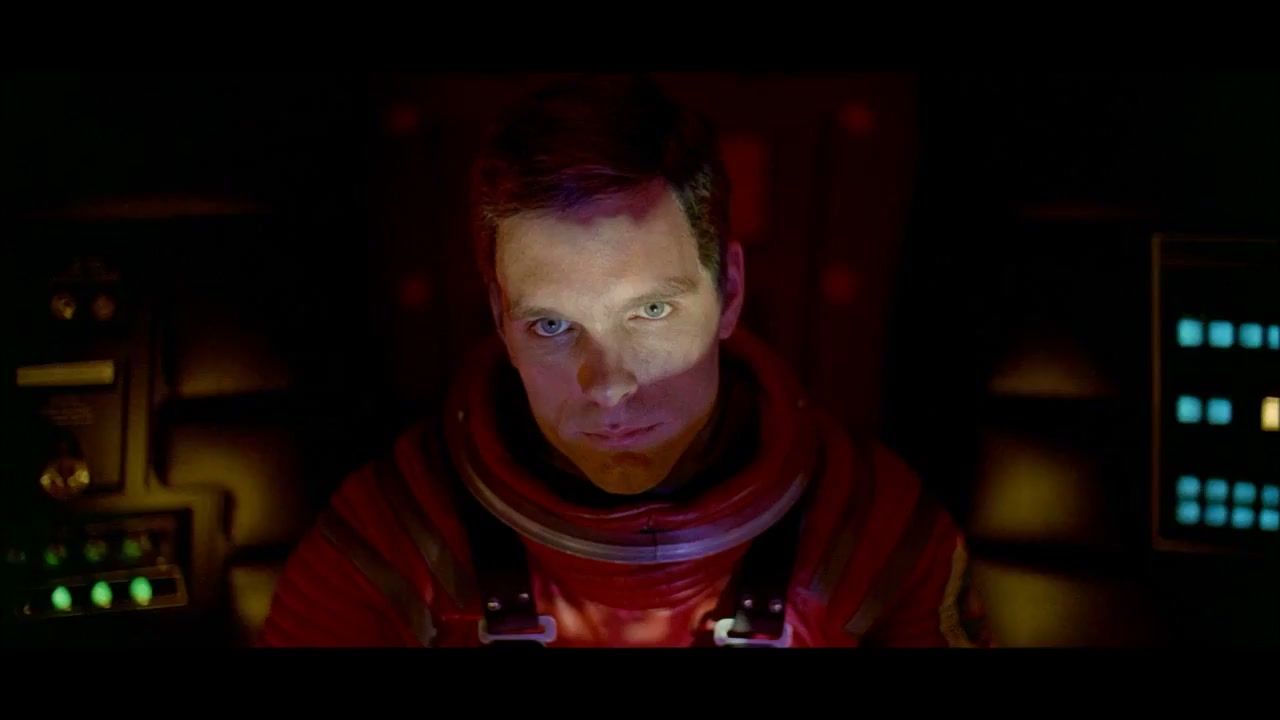
The spaceships and locations observed in 2001 were based on detailed physical models, with the movie exploiting an array of Kubrickian techniques to ensure realism. As explained by Keir Dullea, who plays protagonist David Bowman, “not one foot of this film was made with computer-generated special effects.” And yet, the orbital mechanics were deeply compelling, astronaut ennui was portrayed perfectly, and the zero-gravity looked convincing despite the use of suspension wires.2001 obeys the laws of Newtonian physics with a conviction that cinema never saw again for decades. In fact, early reviews were polarized with a few exceptions. a glowing 4-star review, asserting that the movie “fails on the human level but succeeds magnificently on a cosmic scale.” In fact, Alien‘s tagline, “In space, no one can hear you scream,” was long predated by 2001‘s actual depiction of silence in outer space.
Gravity Depicts Survival Within the Limits of Physics
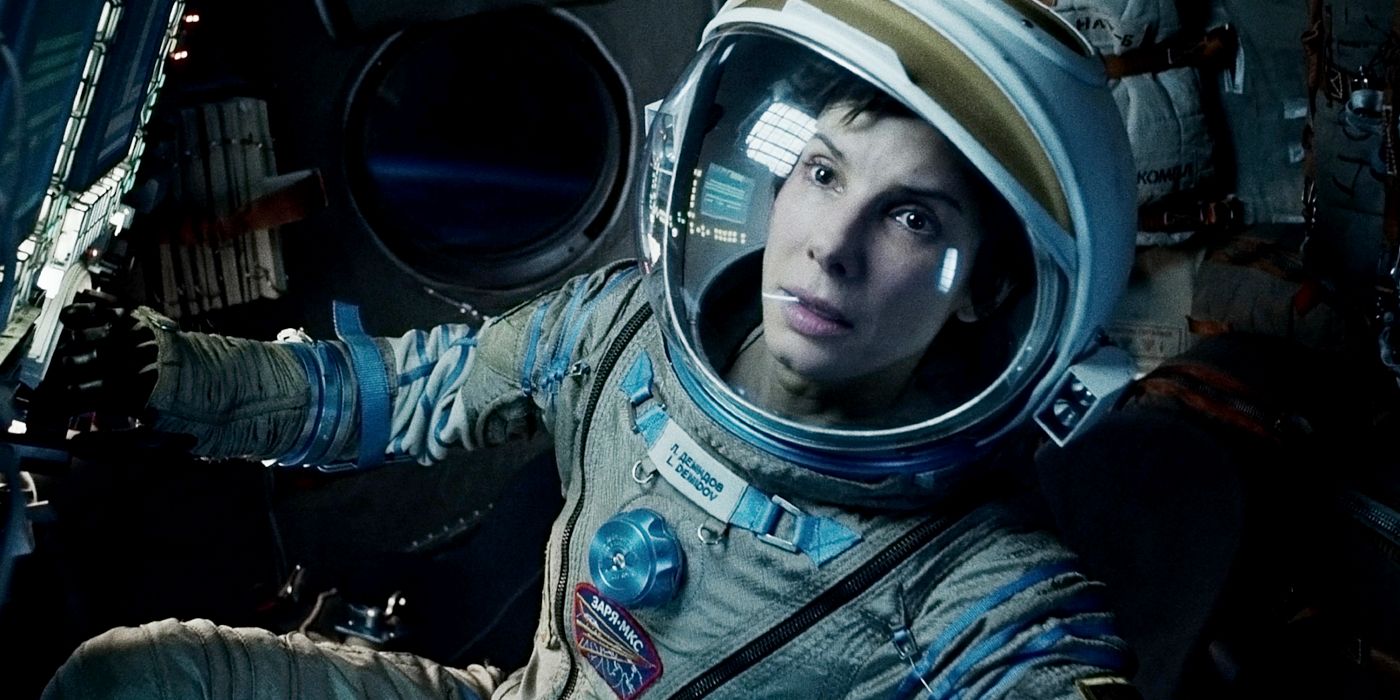 that soon became an equally prodigious achievement. With Sandra Bullock in the lead role and George Clooney for support, the film’s premise is deceptively simple. Like Dr. Watney in The Martian, astronauts are stranded far away from their home. However, Cuarón’s characters face a completely different set of problems, each of which was designed with scientific accuracy in mind.NASA astronauts commenting on Gravity had nothing but admiration. Even Buzz Aldrin, the second man on the moon, was “extravagantly impressed by the portrayal of the reality of zero gravity.” Aldrin noted the importance of focusing on the “hazards in the space business, especially in activities outside the spacecraft.” Cuarón would be the first to remind his viewers that Gravity wasn’t exactly flawless, though the Kessler syndrome implied by Aldrin was arguably one of the story’s biggest facets.A rare accomplishment for , Gravity also heightened the presence of female astronauts. While critics had both positive and negative things to say, Anne Hathaway’s performance was unquestionably a step forward for women in STEM. Scientific realism doesn’t just refer to science; it also includes the network of humans immersed in their respective fields.
Sunshine Blends Scientific Realism with Existential Fear
 Written by Alex Garland and directed by Danny Boyle, on the extremes of the human condition. The Sun is dying, poised to take the Earth along with it, forcing astronauts to embark on the riskiest mission imaginable. They fly the Icarus II spacecraft so close to the photosphere that it evaporates everything and everyone, but not before completing the mission by rekindling the Sun.Advisers of every type invested their time and attention in building the scientific basis for Sunshine. Particle physics Professor Brian Cox explained the nuances of solar physics so both the cast and crew would understand exactly what they were dealing with. NASA provided technical specifications and recommended the oxygen garden that goes up in flames during the movie’s first act, whereas the gold-leaf shielding was loosely based on previously existing NASA frameworks.In a 2025 video interview of astrophysicist Paul M. Sutter, Business Insider revealed . Sutter praised “the beautiful and very, very accurate… surface of the Sun,” highlighting “great images of these giant arcs, and flares and prominences” confirmed by “high-resolution imagery.” As with every space film, Sunshine features a medley of inaccuracies that hardliners tend to pounce on. But that’s not how cinema works; storytelling demands compromise, and Sunshine manages to fulfill the viewers’ basic needs for authenticity.
Read More
- United Airlines can now kick passengers off flights and ban them for not using headphones
- Crimson Desert: Disconnected Truth Puzzle Guide
- All 9 Coalition Heroes In Invincible Season 4 & Their Powers
- Mewgenics vinyl limited editions now available to pre-order
- Grey’s Anatomy Season 23 Confirmed for 2026-2027 Broadcast Season
- Viral Letterboxd keychain lets cinephiles show off their favorite movies on the go
- The Boys Season 5 Spoilers: Every Major Character Death If the Show Follows the Comics
- Assassin’s Creed Shadows will get upgraded PSSR support on PS5 Pro with Title Update 1.1.9 launching April 7
- Does Mark survive Invincible vs Conquest 2? Comics reveal fate after S4E5
- How to Get to the Undercoast in Esoteric Ebb
2026-01-15 04:38