Even years after it ended, the show continues to draw in both new and longtime science fiction fans. While the series is known for its exploration of space and new worlds, some of its most memorable episodes focus on the characters themselves. These glimpses into the personal lives of the crew helped viewers connect with them and see them as more than just explorers.
It took a little time for the cast of Star Trek: The Next Generation to really connect with their characters and find their rhythm, but once they did, the show became a classic. Commander Riker’s development is a great illustration of this. He starts out as a very self-assured and seemingly perfect leader, but a particular episode in season six really challenged that image and allowed him to grow.
This Episode of Star Trek: The Next Generation Delves into Commander Riker’s Psyche
Right from the start of Star Trek: The Next Generation, Commander Will Riker was presented as the ideal Starfleet officer. He consistently appeared calm and capable, even in dangerous situations. Riker always seemed to make the right decisions, and his natural charm and self-assurance helped put the crew at ease. He was a stabilizing force whenever the Enterprise faced crisis.
Commander Riker was Captain Picard’s most trusted officer and became known as the steady, dependable presence on the Enterprise. Throughout Star Trek: The Next Generation, the show consistently highlighted Riker’s reliability. Even when offered the chance to captain his own ship early in the series, he chose to remain Picard’s second-in-command.
Often, Commander Riker served as the voice of conscience for the crew, especially when Captain Picard faced difficult ethical dilemmas. Riker consistently demonstrated strong moral principles and his sharp instincts, quick thinking, and leadership were crucial in navigating complex and challenging situations aboard the Enterprise. For example, the episode “Chain of Command” highlighted his skills as a strategic thinker.
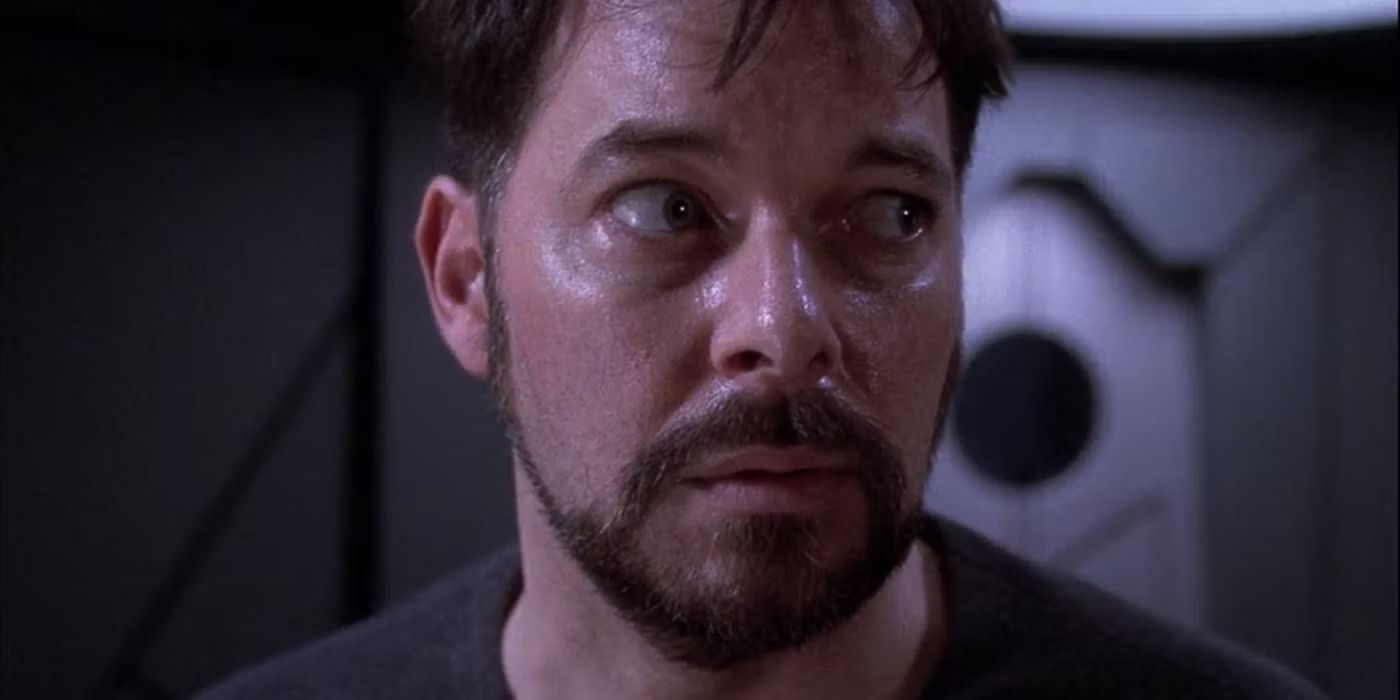
A particular episode of Star Trek: The Next Generation showed a rare vulnerable side of Commander Riker, who was usually calm and self-assured. In Season 6, Episode 21, titled “Frame of Mind,” Riker faced a situation that made him doubt his own mental state. This was surprising to viewers, who were accustomed to seeing him handle any challenge with ease, and that’s why the episode was so impactful.
A key idea explored in Season 6 was testing how sure of himself Commander Riker really was. This was especially clear in the episode “Second Chances,” where Riker met an alternate version of himself and began to doubt his past choices. Both this episode and others like it made Riker question who he really was, revealing a vulnerable side that viewers hadn’t often seen before.
In the sixth season of Star Trek: The Next Generation, the writers intentionally tried to unsettle Commander Riker, adding more complexity to his character. It had taken them several seasons to figure out how to delve deeper into the personal lives of the main crew – including Dr. Crusher, Worf, and, to some degree, Riker – and this effort finally allowed Riker to show more depth.
The episode “Frame of Mind” cleverly targets Riker’s personality, testing his core strengths. Instead of action, the story focuses on a psychological attack, revealing a rare side of Riker – vulnerability – to both the crew and viewers. This was a smart move for the show and the character, as Riker was in danger of becoming stale and predictable.
The episode cleverly puts Riker in a situation where his usual skills actually hinder him, giving us a deeper look at his personality beyond his role as commander. Jonathan Frakes delivers a particularly strong performance, and both he and his character were given a chance to evolve and be seen in a new light within Star Trek: The Next Generation.
Commander Rike Battles His Own Mind in Star Trek: The Next Generation
The Star Trek: The Next Generation episode “Frame of Mind” is a suspenseful story where Commander Riker becomes paranoid and disoriented, leading him to doubt everything around him. The real danger isn’t an external threat, but his own mind and perceptions. The episode prioritizes building tension over action, and cleverly leaves the audience questioning what’s actually real.
The episode begins with Commander Riker getting ready for a play called “Frame of Mind.” The play is about a man who’s been kept prisoner in a mental hospital. Riker was unhappy with how his rehearsal went, but everything seemed normal otherwise. After leaving the stage, he continued to practice his lines as he walked down the hallway.
Even before things get really weird, the episode hints at a playful unreality. We first see Riker acting like a stage performer, and watching Jonathan Frakes play a character pretending to be an actor immediately signals that “Frame of Mind” will be a mind-bending experience. The beginning establishes a sense that Riker can’t be fully trusted as a storyteller, setting the stage for an unreliable narrative.
“Frame of Mind” unfolds gradually, with Riker slowly realizing things are off aboard the Enterprise. A key part of the story is a pressing mission to Tilonia, but the Enterprise won’t reach its destination until after a performance is over. The writers deliberately downplay this timing issue, creating suspense and setting up the episode’s central mystery.
What initially appears to be a minor detail about the mission to Tilonia is actually the core of the entire episode. Almost everything Commander Riker goes through, and everything the viewers see, is a carefully constructed illusion designed to manipulate his mind. For Star Trek: The Next Generation, it’s a particularly clever example of how to mislead the audience. The initial briefing Worf gives Riker about the Tilonian mission is quickly forgotten as the deception takes hold.
Riker starts experiencing confusing shifts between reality and the fictional world of the play he’s rehearsing. He finds himself both on the Enterprise, practicing lines, and as a patient in the play’s setting, receiving treatment from a doctor—a role Data plays in the rehearsal. As Riker gets increasingly lost in the confusion, the rest of the crew notices his growing instability and uncertainty.
The episode frequently jumps back and forth between the asylum and the Enterprise, leaving viewers unsure of what’s actually happening. This disorientation is experienced alongside Riker, making the story particularly compelling. The climax reveals, through a shifting set, that Riker has been in the asylum cell the entire time.
Riker’s recovery from the false realities stemmed from the mission to Tilonia. He had genuinely visited Tilonia and been abducted there, and remembering this real event gave him a crucial point of reference. This realization brought him back to consciousness in a medical facility, where he discovered his captors from Tilonia were experimenting on him.
“Frame of Mind” Is a Critical Star Trek Episode for Commander Riker
“Frame of Mind” is a significant episode for both Star Trek: The Next Generation and the character of Commander Riker. It showcased a level of storytelling complexity that was unusual for the series, demonstrating how much the writing team had improved since the show began.
Brannon Braga reportedly wrote this episode in only three days, working under a tight deadline. It has a unique feel, blending thriller and horror elements, and Braga was inspired by films like Repulsion. Many fans consider it a standout episode because it’s different from typical Star Trek stories.
As a huge fan, I always thought “Frame of Mind” was special, and it really is for both Riker as a character and Jonathan Frakes himself. He’s often said it’s one of his favorites, and I can see why! It let him show off so many different sides to Riker, and the whole idea of him playing a character within the show – an actor playing a role – was a really cool, complex challenge for him to pull off.
The episode challenged Commander Riker in a way we rarely saw, revealing a vulnerable side to his character. Ultimately, he overcame the situation using his own strength and intelligence. Even today, “Frame of Mind” is celebrated as a standout example of strong writing and compelling character development.
Read More
- United Airlines can now kick passengers off flights and ban them for not using headphones
- Crimson Desert: Disconnected Truth Puzzle Guide
- All 9 Coalition Heroes In Invincible Season 4 & Their Powers
- Mewgenics vinyl limited editions now available to pre-order
- The Boys Season 5 Spoilers: Every Major Character Death If the Show Follows the Comics
- Invincible Season 4 Episode 6 Release Date, Time, Where to Watch
- Does Mark survive Invincible vs Conquest 2? Comics reveal fate after S4E5
- Grok’s ‘Ask’ feature no longer free as X moves it behind paywall
- Assassin’s Creed Shadows will get upgraded PSSR support on PS5 Pro with Title Update 1.1.9 launching April 7
- Grey’s Anatomy Season 23 Confirmed for 2026-2027 Broadcast Season
2025-12-15 04:14